
FlyCart 30 Best Practices for Low-Light Power Line
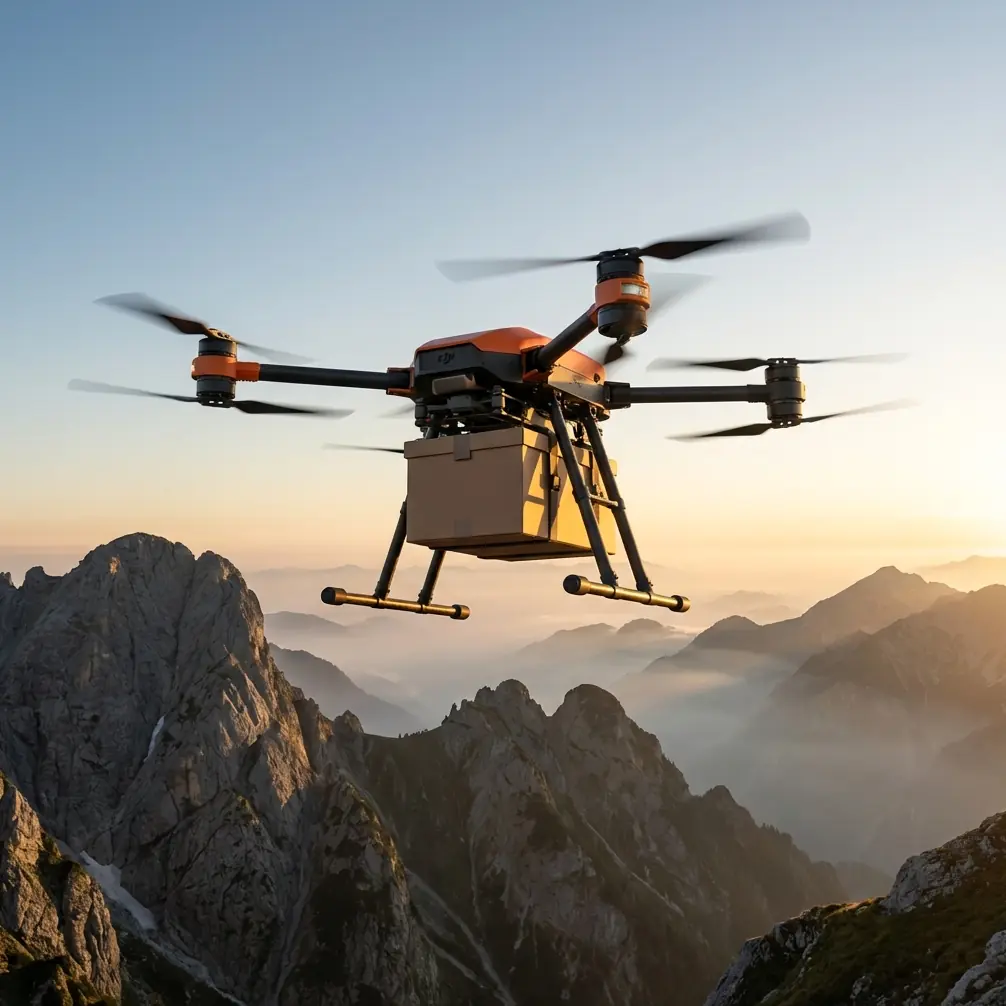
FlyCart 30 Best Practices for Low-Light Power Line Monitoring
META: A practical FlyCart 30 how-to for low-light power line monitoring, covering pre-flight safety checks, route planning, winch use, dual-battery strategy, and BVLOS workflow decisions.
Power line monitoring in low light is the kind of mission that exposes weak habits fast. Tiny oversights become operational problems. A smudged sensor window, dust around a safety latch, a rushed route setup—none of that looks serious on the ground. In the air, especially around utility corridors at dawn, dusk, or under overcast conditions, it matters.
I approach the FlyCart 30 from a logistics lead’s perspective, not as someone chasing specs for their own sake. The aircraft earns its place when it helps teams complete repeatable, safe, efficient field work. For low-light power line monitoring, that means building a workflow around reliability: payload planning, route discipline, safety-system checks, and a realistic understanding of what the platform can and cannot compensate for.
There is a useful lesson here from outside the drone world. A recent long-term comparison between flagship smartphones and entry-level mirrorless cameras made a sharp point: people often buy gear impulsively because they’ve seen impressive results elsewhere, then leave it unused when reality feels more demanding than expected. The author described friends who bought a mirrorless camera and let it gather dust within half a month. That same mistake shows up in enterprise UAV adoption. Teams assume a more capable aircraft will automatically produce better inspection outcomes. It won’t. A FlyCart 30 only becomes valuable when the mission design matches the work.
For low-light utility monitoring, that principle is everything.
Start with the mission, not the aircraft
The first question is not “What can the FlyCart 30 carry?” It is “What are we actually trying to see, confirm, and document along the line?”
Low-light power line monitoring usually falls into a few operational categories:
- checking corridor access and obstacles before maintenance crews arrive
- confirming line condition after weather events
- monitoring tower approaches and right-of-way sections with reduced daylight
- transporting lightweight field items to crews while simultaneously supporting visual assessment
- conducting repeatable route observation over long linear infrastructure
That mission profile affects every downstream choice. Payload ratio matters because the aircraft is doing more than simply getting airborne. It may be carrying optical equipment, support tools, or items for field teams. As payload climbs, endurance and route flexibility change. If your route plan ignores that tradeoff, you create a mission that looks good on a whiteboard and underperforms in the field.
This is where many operators repeat the same mistake seen in consumer camera buying: they focus on the hardware headline and skip the use-case discipline. More capability is not wasted money by itself. Capability without a practical operating method is.
The pre-flight cleaning step most crews rush through
Before discussing route optimization or BVLOS planning, there is one unglamorous habit worth locking in: clean the safety-critical contact points and exposed surfaces before every low-light mission.
I mean an actual tactile inspection, not a quick glance.
For the FlyCart 30, crews should build a short cleaning sequence into pre-flight:
Wipe camera and sensing surfaces Low light already reduces visual margin. Dust, moisture residue, insect marks, or oily fingerprints can degrade image interpretation and obstacle awareness. In utility corridors, that can turn a manageable inspection pass into a data-quality problem.
Inspect the emergency parachute housing area The parachute is a last-resort safety feature, not a box to tick. Dirt, debris, or improper handling around deployment-related components deserves attention. If your platform includes this safety layer, treat it like one.
Check the winch system for contamination If the mission includes suspended delivery or line-adjacent placement of items, inspect the winch cable path, attachment points, and moving surfaces. Grit and snag risks become harder to spot in low light. A clean winch system is not housekeeping; it is part of load stability.
Clean battery contact areas and verify seating Dual-battery operation supports continuity and resilience, but only if both batteries are properly seated and the connection areas are clean. Power irregularities are not something you want to diagnose while operating near utility infrastructure.
That cleaning step sounds basic. Good. Basic is what keeps missions boring in the best way.
Why low light changes the route planning equation
A lot of utility teams think low light only affects image quality. It affects routing just as much.
In bright daytime conditions, operators can often compensate visually for a route that is slightly too ambitious. In low light, that tolerance shrinks. The route should be optimized around predictable geometry, known reference points, and conservative turning behavior.
For linear assets like power lines, route optimization should account for:
- tower spacing and terrain transitions
- likely signal interference zones
- safe lateral offset from conductors and structures
- turnaround points with enough margin for visibility and control confidence
- battery reserve thresholds that assume less room for improvisation
This is where the FlyCart 30’s role in structured logistics becomes useful. If your team uses the same aircraft for both transport and monitoring support, route planning needs to reflect actual field priorities. Do not load the route with unnecessary inspection ambitions just because the aircraft can carry more. Payload ratio influences maneuvering behavior and energy use, which in turn affects how confidently you can complete line segments under dim conditions.
A practical rule: if a route only works when every estimate goes right, it is a bad low-light route.
Using the winch system without turning the aircraft into a distraction
The winch system is one of those features that can either streamline field operations or complicate them, depending on discipline.
For power line monitoring, the winch can support civilian utility workflows such as delivering small tools, sensors, or support items to hard-to-access work points without forcing a full landing in awkward terrain. That can reduce ground crew movement and shorten outage-related tasks. But the operational significance is not just convenience.
A suspended-load workflow changes how the aircraft behaves, especially in low light.
Three best practices matter here:
1. Separate monitoring legs from delivery legs when possible
If the mission requires both observation and item transfer, avoid blending them into one continuous improvisation. Finish the transport leg, stabilize the operation, then transition into the monitoring segment. This keeps crew attention from being split between load management and visual assessment.
2. Keep descent zones simple
The winch is most useful when the delivery point is obvious, open, and pre-briefed. Around power infrastructure, cluttered or uncertain ground zones create unnecessary risk. Low light makes that worse.
3. Recheck line management after every use
After winch deployment or retrieval, do a fast visual confirmation for twists, contamination, or snag exposure before continuing the route. One rough retrieval can affect the next segment if ignored.
The winch is not just a feature to mention on a spec sheet. In a utility corridor workflow, it can reduce vehicle movement and help teams support line crews efficiently. But it only works cleanly when the mission design respects the complexity it adds.
Dual-battery thinking: plan for continuity, not optimism
Dual-battery architecture is valuable for more than endurance. In operations like low-light power line monitoring, it supports mission continuity and power redundancy thinking. That changes how teams should plan.
Too many crews treat battery management like a rough estimate. For this kind of mission, it should be a written part of the task brief.
Build your flight around these questions:
- At what battery threshold does the aircraft stop collecting useful data and start simply trying to finish?
- How much reserve is needed for a return if visibility cues become less reliable?
- If payload weight shifts between outbound and return legs, how does that affect route pacing?
- Are temperatures or environmental conditions likely to reduce expected battery behavior?
This is where logistics habits help. Think in buffers, not best-case scenarios. A dual-battery setup is not permission to stretch a mission. It is an opportunity to create safer margins.
BVLOS only works when the information chain is clean
BVLOS can be relevant for long utility corridors, but people often discuss it as though it is a switch you flip. In reality, BVLOS performance depends on the quality of your planning, observation logic, communications, and contingency handling.
For low-light power line monitoring, BVLOS is operationally significant because it allows broader corridor coverage without forcing repeated repositioning of crews. That can save time and reduce unnecessary vehicle movement along difficult access routes. But wider reach is only useful if the mission remains interpretable and controlled.
A strong BVLOS workflow for this scenario should include:
- pre-defined segment boundaries
- explicit lost-link or degraded-visibility response actions
- clear crew roles for pilot, observer, and field coordination
- route naming and waypoint logic that crews can follow without ambiguity
- documented go/no-go criteria tied to visibility, weather, and corridor conditions
The point is not to make the mission bureaucratic. The point is to avoid the “buy it first, figure it out later” trap that also shows up in other gear categories. The smartphone-versus-mirrorless comparison mentioned earlier was really about practical fit. Some people buy advanced equipment because they admire the output, then discover the workflow burden doesn’t match their real habits. Enterprise UAV programs can suffer from the same mismatch. A FlyCart 30 deployed for utility monitoring has to be integrated into a field process, not treated as a magic upgrade.
Don’t expect the aircraft to fix weak visual discipline
Low-light monitoring often tempts teams into overconfidence. They assume the platform, sensor package, or aircraft stability will somehow compensate for rushed visual interpretation. It doesn’t.
The better approach is to define what “good enough” observation actually means before launch.
For example:
- Are you trying to confirm gross obstruction, encroachment, or access issues?
- Are you identifying obvious structural anomalies for follow-up?
- Are you collecting repeatable corridor footage for comparison over time?
Those are different missions. If your crew has not agreed on the objective, the sortie tends to produce a lot of footage and very little decision-ready information.
This is another place where the external camera analogy applies. The article’s author emphasized not just the differences between devices, but also how a smartphone can be used intelligently to compensate for image-quality limitations. That mindset translates well here. Good operators do not rely on a single tool to solve every problem. They build layered workflows. A FlyCart 30 mission may be strongest when paired with ground observations, prior route data, tower-specific notes, and post-flight review standards.
A simple field workflow that works
If I were setting a repeatable low-light power line monitoring routine for a FlyCart 30 team, it would look like this:
Step 1: Define the inspection intent
Choose one primary outcome for the sortie: corridor clearance, post-weather confirmation, crew support, or repeat-pass observation.
Step 2: Match payload to outcome
Review payload ratio and remove anything that does not directly support the task. Weight without purpose is just reduced margin.
Step 3: Perform the cleaning and safety check
Clean lenses and sensing surfaces, inspect the emergency parachute area, verify dual-battery seating, and confirm the winch system is free of dirt or snags.
Step 4: Build a conservative route
Use shorter, clear segments with decision points. Do not rely on in-flight improvisation under dim conditions.
Step 5: Brief crew roles
Who is watching route progress? Who manages utility coordination? Who confirms delivery-zone readiness if the winch is used?
Step 6: Fly for data quality, not route vanity
If the route must be shortened to preserve visibility confidence and battery reserve, shorten it.
Step 7: Review immediately after landing
Flag route segments with poor visibility, unexpected obstacles, or questionable imagery while memory is fresh.
If your team is refining this kind of workflow and wants to compare operating notes, you can message here for practical FlyCart 30 field discussion.
The real value of the FlyCart 30 in this scenario
For low-light power line monitoring, the FlyCart 30 is most useful when treated as a disciplined field platform rather than a prestige asset. Its operational value comes from how well it supports a structured job: carrying the right load, enabling controlled route execution, assisting remote crews through the winch system when needed, maintaining continuity through dual-battery planning, and adding safety layers such as an emergency parachute that deserve genuine pre-flight attention.
That is the difference between owning advanced equipment and running an effective operation.
The best utility drone programs are rarely the ones with the flashiest deployment stories. They are the ones where crews know exactly why the aircraft is in the air, what tradeoffs the payload creates, how the route was chosen, and what safety checks cannot be skipped even when the mission feels routine.
Low light has a way of revealing whether that discipline is real.
Ready for your own FlyCart 30? Contact our team for expert consultation.