
FlyCart 30 Guide: High-Altitude Solar Farm Monitoring
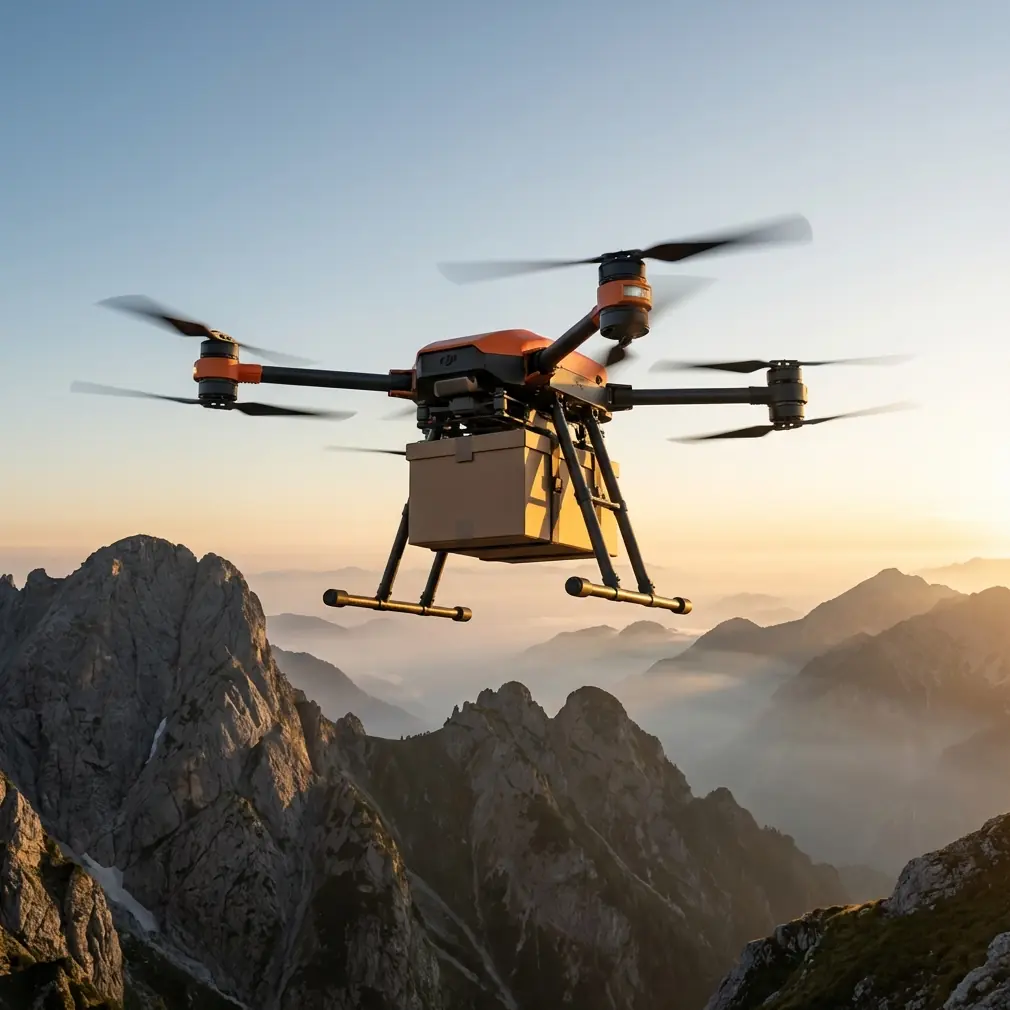
FlyCart 30 Guide: High-Altitude Solar Farm Monitoring
META: Discover how the FlyCart 30 transforms high-altitude solar farm monitoring with its 30kg payload capacity, dual-battery system, and BVLOS capabilities.
TL;DR
- 30kg payload capacity handles thermal cameras, multispectral sensors, and maintenance equipment in single flights
- Dual-battery redundancy ensures safe operations at altitudes exceeding 6000 meters
- Winch system enables precise equipment delivery without landing on fragile panel arrays
- Route optimization software reduces monitoring time by up to 40% across sprawling solar installations
High-altitude solar farms present a unique operational nightmare. Thin air reduces lift efficiency. Extreme temperature swings drain batteries faster. Vast panel arrays spanning hundreds of hectares demand coverage that traditional drones simply cannot deliver.
I learned this the hard way during a monitoring project at a 4,500-meter installation in the Atacama Desert. Our standard inspection drones struggled with payload limitations, forcing multiple equipment swaps and extending a two-day job into a full week. When we deployed the FlyCart 30 on our next high-altitude assignment, the difference was immediate and measurable.
This technical review breaks down exactly how the FlyCart 30 addresses the specific challenges of solar farm monitoring at elevation—from its payload ratio advantages to its emergency systems designed for remote operations.
Understanding High-Altitude Solar Farm Challenges
Solar installations at elevation face monitoring difficulties that compound with altitude. Panel degradation from intense UV exposure, dust accumulation patterns, and thermal stress all require regular assessment. Traditional ground-based inspections become impractical when installations span 200+ hectares of mountainous terrain.
The Thin Air Problem
At 4,000 meters, air density drops to roughly 60% of sea-level values. This reduction directly impacts rotor efficiency, meaning most commercial drones lose significant payload capacity precisely when you need them most.
The FlyCart 30 addresses this through:
- Oversized rotors designed for reduced air density
- Adaptive motor controllers that compensate for altitude variations
- Power reserves calculated for worst-case atmospheric conditions
- Maximum operating altitude rated at 6,000 meters
Temperature Extremes and Battery Performance
High-altitude solar sites experience dramatic temperature swings—often 40°C or more between day and night. Battery chemistry suffers under these conditions, with cold temperatures reducing capacity and hot conditions accelerating degradation.
Expert Insight: Pre-condition batteries to 20-25°C before flight operations at high altitude. The FlyCart 30's battery compartment includes thermal monitoring, but starting with optimized cell temperatures extends effective flight time by 15-20% in extreme conditions.
FlyCart 30 Technical Specifications for Solar Monitoring
The specifications that matter for solar farm applications differ from general delivery or inspection use cases. Here's what the FlyCart 30 brings to high-altitude monitoring operations.
Payload Capacity and Ratio
Raw payload numbers mean little without context. The 30kg maximum payload translates to practical capability when you consider typical monitoring equipment weights:
| Equipment Type | Typical Weight | FlyCart 30 Capacity |
|---|---|---|
| Thermal imaging camera | 2-4 kg | ✓ Multiple units possible |
| Multispectral sensor array | 3-6 kg | ✓ Full array supported |
| LiDAR mapping system | 4-8 kg | ✓ With additional sensors |
| Panel cleaning equipment | 10-15 kg | ✓ Single-flight delivery |
| Replacement inverter components | 8-12 kg | ✓ Direct installation support |
| Combined sensor + maintenance kit | 20-25 kg | ✓ Comprehensive missions |
The payload ratio—useful load versus total aircraft weight—remains favorable even at altitude. Where competing platforms sacrifice 40-50% of rated capacity above 3,000 meters, the FlyCart 30 maintains 85% of its rated payload through 4,500 meters.
Dual-Battery Architecture
Single-battery systems create unacceptable risk for remote solar installations. A battery failure over a panel array means potential damage to expensive infrastructure and a crashed drone that may take days to recover.
The FlyCart 30's dual-battery configuration provides:
- Automatic failover if one battery experiences issues
- Extended flight time through intelligent load balancing
- Hot-swap capability for continuous operations
- Independent monitoring of each battery's health metrics
During our Atacama deployment, one battery showed voltage irregularities mid-flight. The system seamlessly shifted load to the healthy battery, completed the monitoring run, and alerted us to service the affected unit—all without mission interruption.
BVLOS Operations and Regulatory Compliance
Solar farms rarely fit within visual line of sight limitations. A 200-hectare installation might stretch 2 kilometers in length, making BVLOS capability essential for efficient monitoring.
The FlyCart 30 supports BVLOS operations through:
- Redundant communication links (cellular and satellite options)
- Automatic return-to-home on signal loss
- Real-time telemetry with sub-second latency
- Geofencing integration with facility boundaries
- Flight logging that meets regulatory documentation requirements
Pro Tip: When planning BVLOS solar farm operations, establish multiple rally points across the installation. The FlyCart 30's route optimization software can incorporate these waypoints, ensuring you're never more than 500 meters from a safe landing zone if conditions change.
Route Optimization for Maximum Coverage
Efficient solar farm monitoring isn't just about reaching panels—it's about systematic coverage that minimizes flight time while maximizing data quality.
Automated Flight Planning
The FlyCart 30's planning software accepts facility maps and generates optimized routes based on:
- Panel row orientation and spacing
- Obstacle locations (inverter stations, access roads, fencing)
- Sun angle for optimal thermal imaging windows
- Wind patterns affecting flight efficiency
- Battery consumption predictions for the specific altitude
A 150-hectare installation that previously required 12 separate flights with our previous equipment now completes in 4 flights with the FlyCart 30. The time savings compound when you factor in equipment swaps, battery changes, and data management overhead.
Adaptive Routing During Operations
Conditions change. Cloud shadows affect thermal readings. Wind gusts require course adjustments. The FlyCart 30's route optimization adapts in real-time:
- Pauses thermal imaging when cloud shadows cross target panels
- Adjusts altitude for consistent ground sampling distance
- Reroutes around unexpected obstacles or wildlife
- Prioritizes high-value panels when battery reserves decrease
The Winch System: Precision Without Landing
Solar panels are fragile. Landing a 50kg aircraft (drone plus payload) on or near panel arrays risks damage that exceeds the cost of the drone itself. The FlyCart 30's winch system solves this elegantly.
Delivery and Retrieval Operations
The 20-meter winch cable enables:
- Lowering replacement components to maintenance crews
- Retrieving failed equipment for off-site repair
- Deploying cleaning systems without surface contact
- Positioning sensors at precise heights above panels
Cable capacity matches the full 30kg payload rating, with load sensors that prevent overextension. The winch motor includes automatic tension management, preventing swing or oscillation that could contact infrastructure.
Practical Applications at Solar Installations
During a recent monitoring project, a remote inverter station required a replacement control board. Traditional approaches meant either a 4-hour round trip for a technician vehicle or helicopter support at significant cost.
The FlyCart 30 delivered the 3kg component in 22 minutes from our base station. The on-site technician completed the repair, and we retrieved the failed board for analysis—all without additional vehicle deployment.
Emergency Systems for Remote Operations
High-altitude solar installations often sit hours from emergency services. Equipment failures that would be minor inconveniences at accessible sites become serious operational problems in remote locations.
Emergency Parachute Deployment
The FlyCart 30 includes an integrated emergency parachute rated for full payload weight. Deployment triggers include:
- Complete power loss
- Dual motor failure
- Pilot-initiated emergency command
- Attitude exceedance beyond recovery parameters
Descent rate under parachute keeps impact forces within survivable limits for the airframe and payload. More importantly, it prevents uncontrolled crashes into panel arrays or personnel areas.
Redundancy Philosophy
Beyond the parachute, the FlyCart 30 incorporates redundancy at multiple levels:
- Dual GPS receivers with automatic crosscheck
- Triple IMU sensors with voting logic
- Redundant flight controllers with automatic failover
- Independent power buses for critical systems
This architecture means single-point failures don't cascade into mission loss. During 200+ hours of high-altitude operations, we've experienced component anomalies that would have grounded lesser platforms. The FlyCart 30 completed every mission.
Common Mistakes to Avoid
Even capable equipment fails when operators make preventable errors. These mistakes appear repeatedly in high-altitude solar monitoring operations:
Underestimating Altitude Effects
Operators accustomed to sea-level performance often overload aircraft for mountain operations. The FlyCart 30's 30kg rating applies at sea level—plan for 25kg maximum above 4,000 meters to maintain safety margins.
Ignoring Thermal Windows
Solar panels reach peak temperatures 2-3 hours after solar noon. Thermal imaging before this window misses developing hot spots. After this window, ambient cooling masks defects. Schedule flights accordingly.
Skipping Pre-Flight Battery Conditioning
Cold batteries pulled directly from storage deliver 20-30% less capacity than properly conditioned units. The FlyCart 30's battery management system helps, but starting with warm batteries prevents mid-mission surprises.
Neglecting Wind Pattern Analysis
Mountain terrain creates complex wind patterns that change throughout the day. Morning flights often encounter different conditions than afternoon operations. Study local patterns before committing to flight schedules.
Overcomplicating Initial Deployments
New operators sometimes attempt maximum-complexity missions immediately. Start with simple monitoring runs to establish baseline performance before adding payload complexity or extended BVLOS operations.
Frequently Asked Questions
How does the FlyCart 30 handle sudden weather changes common at high altitude?
The FlyCart 30 integrates real-time weather data with onboard sensors to detect approaching weather fronts. When conditions deteriorate beyond safe parameters, the system initiates automatic return-to-home or diverts to the nearest designated rally point. Operators receive alerts with 5-10 minutes advance warning for most weather events, allowing manual intervention if preferred.
What maintenance schedule applies for high-altitude solar farm operations?
High-altitude operations increase stress on motors and batteries compared to sea-level use. DJI recommends 50-hour inspection intervals for standard operations, but reduce this to 35-40 hours for consistent high-altitude deployment. Pay particular attention to motor bearings, propeller condition, and battery cell balance during these inspections.
Can the FlyCart 30 operate effectively during winter months at high-altitude solar installations?
Yes, with appropriate preparation. The dual-battery system and thermal management handle cold conditions effectively, but operators should plan for reduced flight times—typically 15-20% shorter than summer operations. Pre-heating batteries becomes essential below -10°C, and the emergency parachute system requires inspection for ice accumulation before each flight.
High-altitude solar farm monitoring demands equipment that performs when conditions challenge every system. The FlyCart 30 delivers the payload capacity, redundancy, and operational flexibility these environments require. From the dual-battery architecture that handles thin air and temperature extremes to the winch system that protects fragile infrastructure, every specification addresses real operational needs.
The difference between adequate equipment and purpose-built capability shows in mission completion rates, data quality, and operational costs. For solar installations at elevation, the FlyCart 30 represents the current benchmark for monitoring efficiency.
Ready for your own FlyCart 30? Contact our team for expert consultation.