
FlyCart 30 for Dusty Solar Farm Operations
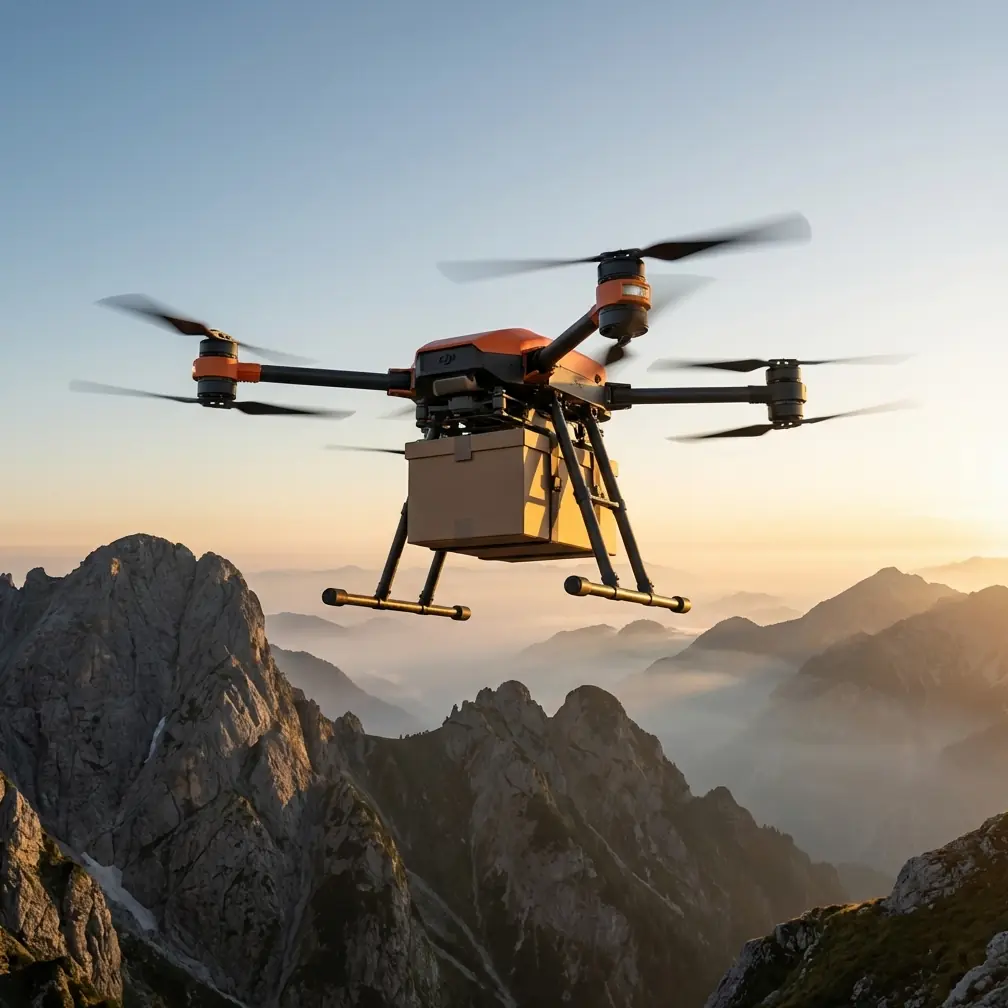
FlyCart 30 for Dusty Solar Farm Operations: A Practical Field Guide
META: Learn how to use the DJI FlyCart 30 on dusty solar farm sites with better battery management, safer route planning, and more reliable payload handling.
Solar farms look simple from a distance. Long rows of panels. Access roads. Open sky. In practice, they are some of the more punishing environments for drone logistics and technical support work. Dust gets everywhere. Heat builds early. Distances are deceptive. And when a team needs parts, tools, sensors, or emergency supplies moved across a large site, every extra trip eats time and battery.
That is where the FlyCart 30 becomes especially interesting.
I am not talking about it as a generic heavy-lift aircraft or as a headline-grabbing cargo drone. I mean its value in a very specific setting: supporting monitoring and maintenance activity across dusty solar installations where uptime, route discipline, and battery management matter more than flashy specs.
From a logistics lead’s perspective, the FlyCart 30 stands out because it combines meaningful carrying ability with systems that reduce workload in the field. Two details matter immediately for solar farm operations. First, it supports a substantial payload profile for moving real maintenance items rather than just lightweight samples. Second, it includes a winch delivery option, which changes how crews can move equipment into awkward or contamination-sensitive areas without forcing the aircraft to land in loose dust.
Those details are not abstract. They shape how the platform behaves on a real site.
Why dusty solar farms are a distinct use case
A solar farm is not just an open field with panels. It is a maze of repeating geometry, glare, heat pockets, service corridors, fencing, substations, and maintenance zones. If the site is arid, rotor wash becomes an operational issue. Even when takeoff and landing zones are prepared, there are still moments when a direct touchdown near panel arrays or inverter skids creates more contamination than the task is worth.
That is exactly why the FlyCart 30’s winch system deserves attention. Instead of committing the aircraft to a full landing in dirty conditions, operators can hover and lower a tool bag, replacement sensor, cable set, or inspection kit. Operationally, that reduces dust ingestion risk at the delivery point and limits the chance of debris being blown onto equipment. On solar assets, that matters. A delivery method that avoids unnecessary surface disturbance is often better than brute-force convenience.
The other major factor is route length. Solar farms spread wide, and walking or driving between sectors is slower than many planners expect. A drone that can carry more than small consumables starts to change site rhythm. It can consolidate movement of test gear, connectors, small spare components, and even water or safety items to crews working far from the main operations area. That is where payload ratio becomes more than a spec-sheet phrase. If the aircraft carries enough useful material relative to the battery investment required for the trip, it earns its keep. If not, it becomes a demonstration tool instead of a field asset.
Where the FlyCart 30 fits operationally
The FlyCart 30 is best used on solar sites for internal logistics support rather than broad, unscripted flying. That means defined routes, known drop points, and a disciplined task list. In my experience, the teams that get the most out of this class of platform treat it like a flying utility vehicle, not a roaming camera drone.
Here is the practical framing:
- Move higher-value items that are time-sensitive.
- Avoid unnecessary landings in dusty sectors.
- Build repeatable routes between battery staging, maintenance teams, and control points.
- Use the aircraft to cut low-value transit time, not to replace every vehicle movement.
That approach also aligns well with BVLOS thinking, even where regulations and approvals vary. The FlyCart 30 becomes much more useful when route planning is standardized and flights are predictable. On large solar sites, line-of-sight limitations quickly become the bottleneck if every mission is improvised. A well-structured route network, by contrast, gives operators cleaner mission profiles, easier risk assessment, and better battery forecasting.
The battery management tip I wish more crews used
Dusty solar farms teach battery discipline fast. Heat, long legs, and payload weight punish lazy planning. The field habit I recommend most is simple: do not launch your heaviest mid-site delivery on the freshest-looking battery pair without checking temperature history and matching.
The FlyCart 30’s dual-battery architecture is a strength, but only if crews treat both batteries as a matched working set rather than two interchangeable bricks. In the field, I have seen teams make the same mistake repeatedly: they grab two units with similar state of charge, assume they are “close enough,” and send the aircraft on a long outbound run carrying a meaningful load. One battery has already had a hotter turnaround cycle or sat longer in a dusty charging zone. Under load, the pair does not behave as evenly as expected. The aircraft compensates, but your comfort margin shrinks.
My rule on solar sites is this: pair batteries by charge level, recent thermal exposure, and cycle rhythm. If one pack came off a high-heat sortie and the other has been resting in the shade, do not mix them for a demanding mission unless you have no better option. Save mismatched pairs for lighter tasks or shorter repositioning flights.
That one adjustment improves mission consistency more than many operators expect.
A second habit helps just as much: reserve your best-balanced battery set for the leg with the highest combination of distance, headwind, and payload mass. Not for the first flight of the morning. Not for the easiest flight. For the hardest one on the board. Too many crews burn ideal batteries on low-risk early tasks, then discover that site temperature has climbed by the time the critical delivery is ready.
On a dusty solar farm, battery planning is route planning.
Route optimization is not optional
The fastest route on a map is not always the best route for the FlyCart 30. On solar sites, route optimization needs to account for more than distance. You also need to think about:
- Repetitive panel geometry that can affect visual orientation
- Localized thermal lift and gust behavior near open corridors
- Dust concentration around service roads
- Crew access points and safe receiving zones
- Communication reliability around electrical infrastructure
A clean route network usually includes fixed launch and recovery pads, designated hover-delivery zones, and alternate paths for changing wind. When teams skip this work, they end up making constant small judgment calls in the field, which increases cognitive load and erodes safety margins.
The FlyCart 30 rewards structure. If your site has six common maintenance sectors, define six delivery templates. If one area consistently kicks up dust after noon, shift heavy deliveries earlier and use winch drops later in the day. If inverter technicians often need the same tool categories, pre-build payload kits with known weights and attachment checks. These are small logistics decisions, but together they make the aircraft easier to trust.
The winch system is more than a convenience feature
On paper, the winch system sounds like a delivery add-on. On a solar farm, it can be central to how you keep the aircraft clean and the operation efficient.
Consider a typical scenario. A monitoring crew working near an inverter block needs a replacement module and test instrument. The ground around the work zone is dry and loose. Landing nearby means rotor wash, dust circulation, and a higher chance that you contaminate tools or create extra cleanup before work even starts. Hovering and lowering the package avoids most of that disruption.
There is another benefit. The receiving crew can stay in a controlled position while the pilot maintains aircraft separation from obstacles and fragile infrastructure. That reduces rushed approach decisions. It also makes it easier to define exactly where transfers happen.
For solar operators, that is the key operational significance of the winch: it turns delivery into a managed handoff rather than a landing event.
Safety systems matter more when the mission is repetitive
Repetitive site logistics can create false confidence. That is why I put unusual value on safety layers such as the emergency parachute on a platform like the FlyCart 30. Crews flying over large private energy assets may start to treat internal deliveries as routine utility work, but repetitive missions are exactly where discipline can slip. An emergency recovery layer does not replace training or route control, yet it changes the risk picture when flying a loaded aircraft around high-value infrastructure.
The same goes for disciplined preflight checks tied to the payload attachment method, winch inspection, and battery condition. On solar farms, small oversights scale quickly because the missions often repeat all day. A single loose habit can become a pattern before anyone stops to correct it.
A practical tutorial setup for solar farm teams
If you are deploying the FlyCart 30 at a dusty solar site, start with a conservative operating model.
Step one: map the site by logistics need, not just geography. Identify where crews actually request materials, where safe hover delivery is possible, and where dust makes landing undesirable.
Step two: define payload classes. Separate delicate electronics, tool kits, fasteners, cable runs, and emergency support items. Record their weight ranges. This gives you a clearer picture of payload ratio in real operations instead of theoretical maximums.
Step three: create route tiers. Short, medium, and long. Add wind limits and preferred time windows for each. On hot afternoons, some routes that look acceptable in the morning may no longer deserve the same payload.
Step four: assign battery sets to mission difficulty. This is where the dual-battery system becomes a planning asset rather than just a hardware feature. Track which sets are your high-confidence pairs.
Step five: use the winch whenever it reduces dust risk or avoids awkward landings. Not every mission needs it, but on solar farms it is often the cleaner solution.
Step six: review every recurring mission after a week. You will usually find that two or three routes account for most deliveries. Standardize them first.
If your team is building that workflow now, I would share field notes and route-planning ideas through this FlyCart operations chat.
What readers should realistically expect
The FlyCart 30 does not eliminate the need for vehicles, ground runners, or careful site planning. It is not a shortcut around weak process. What it does offer is a way to reduce wasted movement across large solar assets, especially when maintenance teams are spread out and dust complicates ground access and landing choices.
Its operational value on a solar farm comes from the combination of three things working together:
- Useful carrying capability for real field items
- A winch system that supports cleaner handoffs
- A dual-battery design that benefits disciplined energy management
Add structured routes and sensible BVLOS planning where permitted, and the aircraft starts to feel less like a specialty tool and more like part of the site logistics system.
That is the right way to think about it. Not as a novelty. Not as a replacement for every existing process. As a force multiplier for the narrow, expensive gaps in solar farm operations: the delays, extra miles, avoidable contamination, and poorly timed equipment runs that drag down maintenance efficiency.
For dusty solar environments, that focus matters. The teams that succeed with the FlyCart 30 are usually the ones that stay boring in the best sense. They standardize routes. They respect battery matching. They use the winch to avoid unnecessary landings. They treat payload planning as operational math, not guesswork.
And once that discipline is in place, the aircraft begins to justify itself flight after flight.
Ready for your own FlyCart 30? Contact our team for expert consultation.