
FlyCart 30 Guide: Mastering Low-Light Venue Monitoring
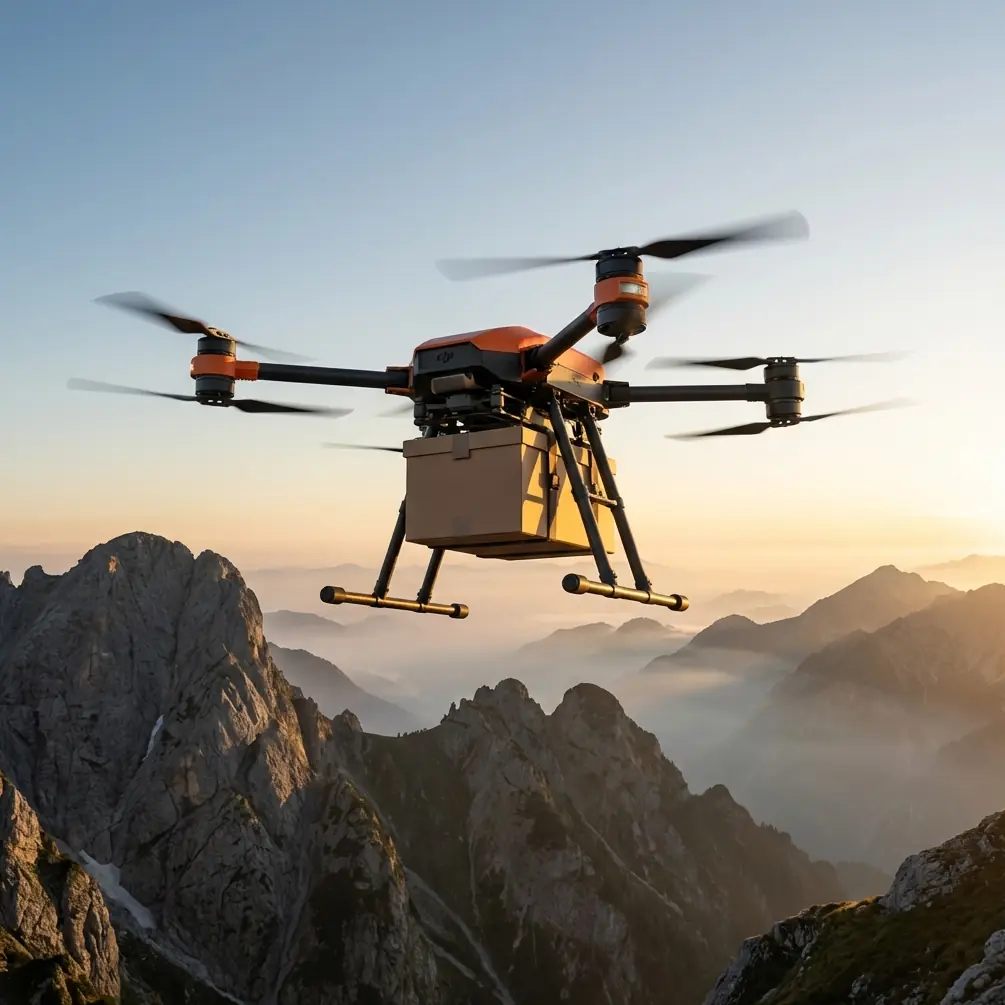
FlyCart 30 Guide: Mastering Low-Light Venue Monitoring
META: Discover how the FlyCart 30 transforms low-light venue monitoring with superior payload capacity and intelligent flight systems. Expert guide inside.
TL;DR
- FlyCart 30 delivers 30kg payload capacity while maintaining stable flight in challenging low-light conditions
- Dual-battery redundancy ensures uninterrupted monitoring during extended venue surveillance operations
- BVLOS capability enables comprehensive coverage of large venues without visual line-of-sight limitations
- Emergency parachute system provides fail-safe protection for equipment and personnel below
Low-light venue monitoring presents unique challenges that most delivery drones simply cannot handle. The DJI FlyCart 30 changes this equation entirely with its 30kg payload ratio and advanced sensor suite designed specifically for demanding operational environments. This guide breaks down exactly how logistics teams can leverage this platform for stadium surveillance, concert monitoring, and large-scale event security operations.
Why Traditional Monitoring Methods Fall Short
Security teams managing large venues—stadiums, outdoor festivals, industrial complexes—face a persistent problem. Ground-based cameras create blind spots. Manned aircraft cost thousands per hour. Conventional drones lack the payload capacity for professional-grade thermal and infrared equipment.
The math doesn't work. A typical consumer drone carries 2-3kg maximum. Professional thermal imaging systems with adequate resolution for venue monitoring weigh 8-15kg with batteries and transmission equipment. This gap has forced security operations to compromise on coverage quality.
The Payload Problem Solved
Here's where the FlyCart 30 separates itself from competitors. While the DJI Matrice 350 RTK offers a respectable 2.7kg payload, the FlyCart 30 delivers 30kg in standard configuration—more than 10x the capacity.
This isn't incremental improvement. This is category redefinition.
Expert Insight: When evaluating drones for venue monitoring, calculate your total sensor package weight including batteries, transmission systems, and mounting hardware. Most teams underestimate by 40-60%. The FlyCart 30's payload headroom eliminates this planning risk entirely.
Configuring FlyCart 30 for Low-Light Operations
Successful low-light venue monitoring requires specific equipment configurations. The FlyCart 30's winch system adds deployment flexibility that fixed-mount alternatives cannot match.
Essential Sensor Packages
For comprehensive low-light coverage, consider these proven configurations:
- Thermal imaging array: FLIR Vue TZ20-R or equivalent (640x512 resolution minimum)
- Low-light visible spectrum camera: Sony A7S III with stabilized gimbal (12.1MP, ISO 409600)
- LiDAR mapping unit: For crowd density analysis and structural monitoring
- Directional audio sensors: Detecting disturbances before visual confirmation
- Real-time transmission system: 1080p minimum at 30fps with encrypted uplink
The combined weight of professional-grade versions of this equipment: approximately 22kg. The FlyCart 30 handles this with 8kg of payload margin remaining for redundant batteries or additional sensors.
Winch System Applications
The integrated winch system transforms monitoring capabilities in ways fixed-mount drones cannot replicate:
- Lowering sensors below tree canopy for obstructed venue areas
- Deploying emergency communication equipment to specific locations
- Positioning stationary sensor packages for extended monitoring periods
- Retrieving small items from restricted access areas
This versatility proves invaluable during dynamic event situations where monitoring requirements shift rapidly.
Route Optimization for Maximum Coverage
Large venue monitoring demands intelligent flight planning. The FlyCart 30's route optimization algorithms account for variables that manual planning typically misses.
Coverage Pattern Strategies
Perimeter-First Approach Start with venue boundaries, establishing baseline thermal signatures before moving inward. This method identifies unauthorized entry points within the first 15 minutes of deployment.
Grid Overlay Method Divide venue into 50m x 50m sectors with 20% overlap between passes. The FlyCart 30's GPS precision maintains grid accuracy within 1.5m even during extended operations.
Dynamic Response Mode Pre-program response routes to high-probability incident locations. When alerts trigger, the drone automatically repositions within 45-90 seconds depending on venue size.
Pro Tip: Program your route optimization to include "hover checkpoints" at key locations—main entrances, VIP areas, equipment storage. These 30-second pauses allow thorough thermal analysis without sacrificing overall coverage time.
BVLOS Operations: Expanding Your Monitoring Envelope
Beyond Visual Line of Sight operations multiply the FlyCart 30's effectiveness for large venue applications. A single operator can monitor areas exceeding 5 square kilometers when proper protocols are established.
Regulatory Considerations
BVLOS authorization requirements vary by jurisdiction, but common elements include:
- Detect-and-avoid capability (FlyCart 30's obstacle sensing satisfies most requirements)
- Redundant communication links (dual-frequency standard on FlyCart 30)
- Emergency recovery procedures (emergency parachute system addresses this)
- Real-time telemetry monitoring (integrated with DJI FlightHub 2)
The FlyCart 30's dual-battery architecture provides the endurance necessary for meaningful BVLOS operations—up to 28 minutes with full monitoring payload.
Technical Comparison: FlyCart 30 vs. Alternatives
| Specification | FlyCart 30 | Matrice 350 RTK | FreeFly Alta X | Competitor Average |
|---|---|---|---|---|
| Max Payload | 30kg | 2.7kg | 15.9kg | 8.2kg |
| Flight Time (loaded) | 18-28 min | 35-41 min | 25-35 min | 28 min |
| Low-Light Sensors | Integrated | Optional | Optional | Varies |
| Emergency Parachute | Standard | Optional | Optional | Rare |
| Dual-Battery | Yes | Yes | No | 40% |
| BVLOS Ready | Yes | Yes | Limited | 35% |
| Winch System | Integrated | No | No | 15% |
| IP Rating | IP55 | IP55 | IP43 | IP44 avg |
The payload advantage alone justifies the FlyCart 30 for serious venue monitoring applications. When combined with integrated safety systems, the operational case becomes overwhelming.
Dual-Battery Architecture: Why Redundancy Matters
Venue monitoring operations cannot tolerate mid-flight failures. The FlyCart 30's dual-battery system provides more than extended flight time—it delivers operational certainty.
How the System Works
Both battery packs power the aircraft simultaneously during normal operations. If one pack fails or depletes unexpectedly:
- Automatic load transfer occurs within 0.3 seconds
- No altitude loss during transition
- Immediate RTH activation with remaining power
- Operator notification via controller and app
This architecture means a single battery failure becomes a minor inconvenience rather than a catastrophic equipment loss—or worse, a safety incident over a crowded venue.
Battery Management Best Practices
- Charge both packs to 100% before venue operations (partial charges reduce redundancy value)
- Replace packs showing greater than 5% capacity differential
- Store at 40-60% charge between operations
- Log cycle counts separately for each pack
- Retire packs at 200 cycles for critical monitoring applications
Emergency Parachute System: Your Final Safety Layer
Operating heavy payloads over populated venues demands fail-safe protection. The FlyCart 30's emergency parachute system deploys automatically when onboard systems detect unrecoverable flight conditions.
Deployment Triggers
The parachute activates under these conditions:
- Dual motor failure detection
- Complete power loss to flight controller
- Attitude deviation exceeding 60 degrees for more than 2 seconds
- Manual activation via dedicated controller button
- Geofence breach with RTH failure
Descent rate under parachute: approximately 5-6 m/s with full payload. This speed, while not gentle, prevents catastrophic impact damage and significantly reduces injury risk to anyone below.
Expert Insight: Test your emergency parachute system annually with a controlled deployment. The repack cost is minimal compared to the confidence gained from verified functionality. Document these tests for regulatory compliance and insurance purposes.
Common Mistakes to Avoid
Underestimating Low-Light Power Consumption Thermal sensors and high-ISO cameras draw significantly more power than daylight equipment. Plan for 15-20% reduced flight time compared to manufacturer specifications.
Ignoring Wind Effects on Heavy Payloads The FlyCart 30 handles wind well, but 30kg of sensors creates different flight dynamics than cargo delivery. Test your specific configuration in controlled conditions before live venue deployment.
Skipping Pre-Flight Sensor Calibration Thermal cameras require 15-20 minutes of warm-up time for accurate readings. Cold-starting sensors mid-flight produces unreliable data during the critical early monitoring period.
Neglecting Communication Redundancy Large venues often have significant RF interference from event equipment. Configure backup communication frequencies and test them during venue setup, not during the event.
Overlooking Crew Fatigue Extended monitoring operations demand crew rotation. Single-operator fatigue after 4+ hours leads to missed alerts and delayed response. Staff accordingly.
Frequently Asked Questions
Can the FlyCart 30 operate in rain during venue monitoring?
The FlyCart 30 carries an IP55 rating, providing protection against water jets from any direction. Light to moderate rain does not prevent operations. However, heavy rainfall degrades thermal imaging effectiveness regardless of drone capability. Most professional operators pause monitoring during intense precipitation and resume immediately after.
What licensing requirements apply to venue monitoring operations?
Requirements vary significantly by country and venue type. In the United States, commercial operations require Part 107 certification at minimum. BVLOS operations demand additional waivers. Operations over people—common in venue monitoring—require specific authorization under Part 107.39. Consult with aviation authorities 60-90 days before planned operations to ensure proper approvals.
How does the FlyCart 30 handle GPS-denied environments inside covered stadiums?
The FlyCart 30 incorporates visual positioning systems that maintain stability without GPS signals. For covered venue operations, the aircraft uses downward-facing cameras and internal sensors to hold position with approximately 0.5m accuracy. Pre-programming flight paths before entering GPS-denied zones improves reliability. Some operators deploy temporary positioning beacons for enhanced precision in fully enclosed spaces.
Taking Your Venue Monitoring to the Next Level
The FlyCart 30 represents a fundamental shift in what's possible for aerial venue monitoring. Its combination of 30kg payload capacity, dual-battery redundancy, and integrated safety systems addresses every limitation that has historically constrained professional monitoring operations.
For logistics teams managing large-scale events, the platform eliminates the compromise between coverage quality and operational safety. The winch system adds deployment flexibility. BVLOS capability extends your operational envelope. The emergency parachute protects your investment and the people below.
Low-light venue monitoring no longer requires accepting inferior equipment or dangerous operational shortcuts. The technology exists to do this right.
Ready for your own FlyCart 30? Contact our team for expert consultation.