
FlyCart 30 in Windy Venue Operations: A Field Case Study
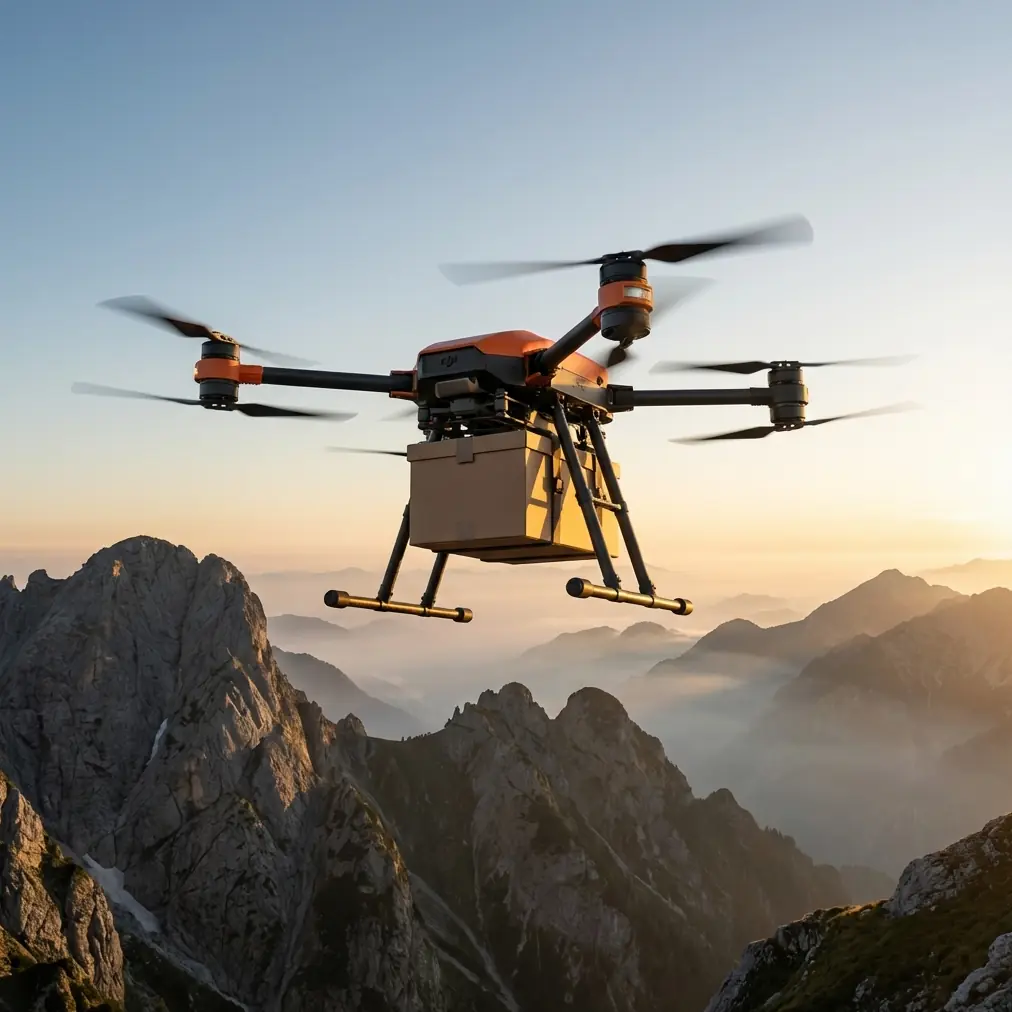
FlyCart 30 in Windy Venue Operations: A Field Case Study From a Logistics Lead
META: A practical FlyCart 30 case study for windy venue monitoring, covering payload ratio, winch use, dual-battery endurance, route optimization, BVLOS planning, and mid-flight weather response.
I’ve used the FlyCart 30 in environments where the mission looked simple on paper and turned complicated the moment the wind shifted. Venue monitoring is one of those jobs. It sits in an awkward middle ground between inspection, logistics, and live operations support. You are not just moving equipment. You are feeding a live site with batteries, sensors, radios, medical kits, and replacement parts while conditions keep changing around crews, temporary structures, and restricted movement corridors.
That is where the FlyCart 30 starts to show its real character.
This is a case study drawn from the kind of operation logistics teams actually face: a large outdoor venue, exposed sections, changing gusts, moving personnel, and a task list that expands by the hour. I’m writing this from the perspective of a logistics lead because that’s the lens that matters most in the field. Aircraft specs are useful. What counts is whether the platform keeps a site functioning when the weather turns halfway through the shift.
The Mission Profile
The assignment was venue monitoring in windy conditions, with a parallel requirement to move critical items between staging zones without sending staff through congested or restricted areas. The site had multiple elevated structures, temporary fencing, utility trailers, broadcast gear, and a perimeter that looked neat on the planning map but became messy once operations were live.
This is exactly the sort of job where people underestimate the aircraft requirement. They hear “monitoring” and think camera platform. In practice, a venue operation often needs a cargo drone with disciplined flight behavior more than it needs a pure imaging drone. The FlyCart 30 fits that gap because it can support aerial observation while still carrying useful loads into hard-to-reach pockets of the site.
The first planning decision was payload ratio. That sounds like an engineering term, but in the field it affects every choice. If the aircraft is technically capable of lifting a substantial load, that does not mean you should launch near the upper envelope when wind is already a factor. A smart venue team treats payload ratio as a risk-control tool, not just a capacity number. Reducing the carried mass relative to mission demand preserves handling margin, improves climb response, and gives the pilot and route supervisor more options if gusts rise unexpectedly.
On this job, that mattered.
Why the Winch System Changed the Operation
A lot of teams look at cargo aircraft and focus only on point-to-point delivery. For venue work, the winch system is often the more operationally valuable feature. You do not always have a clean landing area. You may have antenna masts, crowd barriers, parked vehicles, uneven ground, or active crews below. In those conditions, the ability to hover clear of obstacles and lower a payload becomes more than a convenience. It becomes the difference between a usable route and a cancelled one.
The FlyCart 30’s winch-based delivery profile is especially relevant for monitoring venues because the delivery target is rarely a permanent loading pad. It may be a narrow service lane behind a temporary stage. It may be a roof access point. It may be a fenced technical compound where foot traffic is controlled and landing a large aircraft would create more complexity than it solves.
We used the winch to deliver replacement batteries and a compact sensor pack to an elevated position where direct landing was not practical. That removed the need to bring ground staff through a wind-exposed access route carrying equipment by hand. The time savings were real, but the bigger benefit was procedural. The operation stayed cleaner. Fewer people moved through exposed corridors. Fewer variables entered the safety picture.
For venue monitoring, that is a major point that often gets missed. A winch system is not just about cargo handling. It is about reducing surface disruption.
Mid-Flight Weather Shift: What Actually Happened
The day started within acceptable operating expectations. Wind was present, but manageable. Then the weather changed mid-flight.
Not a dramatic storm wall. Not a cinematic emergency. Just the kind of shift that causes real-world operational friction: gusts strengthening across open sections of the venue while airflow around structures became more erratic than the forecast suggested.
This is where people find out whether their planning discipline was real or cosmetic.
Because we had left margin in the payload ratio, the aircraft was not fighting unnecessary mass. Because the route had been optimized around known turbulence pockets rather than only shortest distance, the pilot was not forced into the most exposed line. Because the mission was built around practical alternates, we had options. And because the FlyCart 30 is designed as a working transport platform rather than a lightly adapted camera drone, its behavior under load felt purposeful rather than fragile.
The dual-battery configuration played a quiet but critical role here. On paper, dual-battery architecture is easy to treat as just another system feature. In actual venue work, it changes the quality of decision-making. When wind picks up, power management stops being abstract. You need confidence that the aircraft can absorb a more conservative return profile, hold stable during a controlled lowering sequence, or divert without turning every calculation into a narrow margin exercise.
That was exactly the value on this mission. We did not need to force the aircraft home aggressively. We had enough energy confidence to prioritize stability and route integrity over speed. In my view, that is one of the strongest operational arguments for the FlyCart 30 in windy site support: not merely that it carries cargo, but that it gives the crew room to make better decisions when the atmosphere stops cooperating.
Route Optimization Was Not Optional
Venue maps can deceive you. They flatten terrain, hide rotor wash interactions near structures, and tell you almost nothing about how wind behaves around temporary installations. Route optimization in this environment has to go beyond simple waypoint efficiency.
We segmented the venue into exposure bands. Open lots, roof edges, scaffold-adjacent paths, utility corridors, and sheltered transfer points each behaved differently. The best route was not the shortest line between dispatch and drop. It was the line that preserved aircraft stability, minimized overflight of busy sections, and kept a reliable emergency return path available if conditions worsened.
That matters for two reasons.
First, it protects mission continuity. If your route is too brittle, one wind shift can invalidate the whole operation. Second, it supports regulatory and operational discipline, especially in scenarios where BVLOS planning is relevant. Even when a specific venue mission is conducted under tighter line-of-sight constraints, the same thinking applies: define corridors, preserve predictability, and avoid ad hoc improvisation once the aircraft is airborne.
The FlyCart 30 benefits from that style of planning because it is fundamentally a systems drone. It rewards crews who think in terms of logistics architecture rather than isolated flights. If you are monitoring venues in windy conditions, you should be building repeatable route logic, not treating every launch as a standalone event.
The Safety Layer That Changes Crew Confidence
One reason logistics teams can be hesitant around larger cargo UAV operations is that the consequences of failure feel more serious than with a small imaging drone. That concern is not irrational. Venue environments are populated, dynamic, and full of temporary infrastructure.
This is why features such as an emergency parachute deserve practical discussion, not brochure treatment.
In a windy venue scenario, nobody wants to think about worst cases, but every serious team has to. An emergency parachute is operationally significant because it changes how risk is contained when multiple uncertainties overlap: wind, payload, structures, and active personnel zones. It is not a substitute for sound planning, nor a reason to relax margins. What it does provide is another defensive layer in an environment where a layered safety model is the only credible model.
From a crew management standpoint, that matters. Pilots, spotters, and site coordinators work better when the aircraft’s safety architecture is robust and clearly understood. Better crew confidence usually means clearer communication, calmer go/no-go decisions, and less temptation to press a mission into poor conditions.
That cultural effect is often undervalued. On complex venue jobs, the aircraft is not just moving cargo. It is shaping human behavior around the mission.
Why FlyCart 30 Fits Venue Monitoring Better Than People Expect
Some people still separate “monitoring” from “delivery” as if they were unrelated mission sets. In venue operations, they often belong together. Monitoring tells you what the site needs next. Delivery closes the loop.
A radio relay fails at a perimeter checkpoint. A battery bank runs low at a camera mast. A weather sensor needs to be repositioned. A first-aid package needs to reach a sector blocked by vehicle movement. Those are not theoretical edge cases. They are normal operational interruptions. If your aircraft can observe but not support, you still end up sending people through the same bottlenecks that caused delays in the first place.
The FlyCart 30 solves a very specific venue problem: it compresses detection-to-response time. That is especially useful when wind complicates foot movement and surface transport. A site can look accessible from above while being frustratingly inefficient on the ground.
In this case, the weather shift proved the point. As gusts increased, certain pedestrian routes became slower and less attractive for moving equipment. The aircraft, with a conservative load and a well-managed route, remained the more orderly option. Not always the fastest in raw speed. But the most controlled. And in venue logistics, controlled usually wins.
If your team is evaluating how to apply the FlyCart 30 in a live site environment, I’d suggest talking through your mission profile with someone who understands operational planning rather than just aircraft features. A quick field-use discussion often surfaces issues that spec sheets never will, and a direct line like message our operations desk can be more useful than another generic product summary.
What I Would Do the Same Way Again
Three decisions made the mission resilient.
First, we kept the payload ratio disciplined. That single choice preserved handling quality after the wind picked up. Teams that push too close to maximum carry limits in variable conditions usually end up borrowing trouble.
Second, we committed to winch-based delivery points instead of forcing landings where the site geometry did not support them. That reduced exposure, simplified ground coordination, and kept the operation moving.
Third, we planned for route integrity rather than route minimalism. The extra thinking up front paid back once the atmosphere became less predictable.
I would also make the same call on using the dual-battery setup as a strategic margin tool rather than just an endurance feature. In a windy venue environment, extra energy confidence is not a luxury. It is what allows a crew to fly conservatively when conservative flying becomes the right answer.
Where BVLOS Thinking Enters the Picture
Even when a venue operation is not fully executed under BVLOS authority, BVLOS-style planning can improve the mission. That means structured corridors, defined contingency areas, explicit communication triggers, and a clearer relationship between route design and operational control.
The FlyCart 30 is well suited to that planning mentality. It is not a casual aircraft. It asks for process. For professional teams, that is a strength. In venue monitoring, especially under shifting weather, disciplined process usually outperforms improvisation.
This is also where organizations can mature their UAV programs. They stop treating each cargo flight as a special event and start building repeatable logistics doctrine. Once that happens, the aircraft becomes part of the venue’s operational fabric rather than an occasional add-on.
Final Take From the Field
If you strip away the marketing language and look at the FlyCart 30 as a working tool, its value in windy venue operations comes down to four things: sensible payload management, useful winch deployment, dependable power margin through a dual-battery design, and a safety framework that supports serious operational planning.
The weather change during this mission did not make the aircraft look heroic. That is exactly the point. It kept the mission boring in the best possible way. Stable responses, measured decisions, no dramatic scramble. For logistics leads, that is what success looks like.
Venue monitoring in wind is not really about watching the site. It is about keeping the site functioning while conditions become less forgiving. The FlyCart 30 earns attention here because it does more than carry a load. It gives operations teams a controlled way to solve emerging problems without adding surface congestion, avoidable exposure, or unnecessary delay.
That is why I keep coming back to it for these scenarios. Not because the mission is easy. Because it usually isn’t.
Ready for your own FlyCart 30? Contact our team for expert consultation.