
FlyCart 30 for Windy Venue Monitoring: A Technical Review
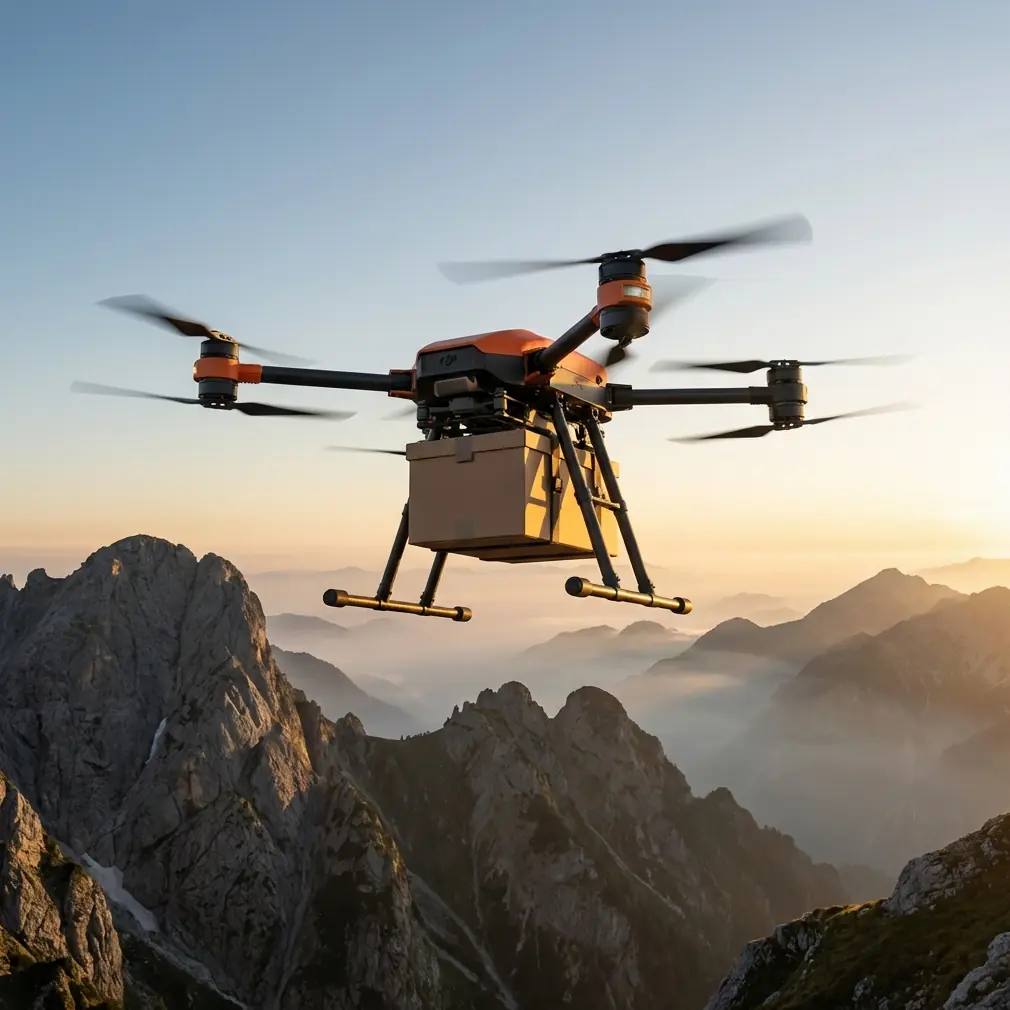
FlyCart 30 for Windy Venue Monitoring: A Technical Review from an Operations Perspective
META: A technical review of FlyCart 30 for monitoring large venues in windy conditions, with practical analysis of payload ratio, winch system, dual-battery design, BVLOS workflow, route optimization, and emergency parachute implications.
Most articles about the FlyCart 30 start in the wrong place.
They open with specs, then stack buzzwords, then drift into broad claims about logistics automation. That approach misses what venue teams actually care about. If you are responsible for monitoring a large outdoor site in wind—festival grounds, race venues, temporary event infrastructure, open-air exhibition spaces, sports facilities, or mixed-use compounds—you do not need abstract drone theory. You need to know whether the aircraft can deliver stable, repeatable results when the environment is messy, the background is cluttered, and the mission objective can easily get lost in noise.
That may sound like an odd framing for a heavy-lift platform. It is not.
One of the more useful ideas from a recent photography piece on smartphone flower shooting was this: the gap between what the human eye sees and what the camera captures often comes down to cluttered backgrounds and poor subject separation. The article argued that expensive equipment is not the real answer; simple technique and the right shooting logic matter more. That same principle applies to venue monitoring with the FlyCart 30. On a windy site, the challenge is rarely just getting a drone into the air. The challenge is extracting clean operational awareness from a visually chaotic environment.
And this is where the FC30 becomes more interesting than its “cargo drone” label suggests.
Why wind changes the venue-monitoring equation
Wind exposes weaknesses fast. It affects hover quality, route timing, battery margin, downwash behavior near temporary structures, and the reliability of any suspended delivery or sensor deployment task. It also magnifies human decision errors. A route that looked efficient on a map becomes wasteful in practice. A manual inspection pass that worked in calm weather becomes inconsistent. A drone with enough lift on paper may still struggle to operate with confidence if the payload setup, power architecture, and recovery systems are not designed for real field variability.
For venue teams, that matters because monitoring is rarely just passive observation. It often includes moving light equipment between zones, checking perimeter changes, assessing tent lines or temporary roof sections after gust events, supporting technical crews, carrying communication devices, or placing small support items where ground access is slow. In other words, the aircraft may be doing both aerial oversight and logistics support in the same operating window.
The FlyCart 30 is built for that blended role better than many platforms that are strong in only one direction.
Payload ratio is not just a number
The phrase “payload ratio” gets thrown around as if it were merely a headline spec. In venue operations, it is a planning tool.
A strong payload ratio means the aircraft is not using all of its capability simply to stay airborne with a useful mission load. That translates into operational flexibility. In windy monitoring scenarios, flexibility is what lets teams preserve safety margins instead of burning them up. If you need to carry a sensor package, a communications relay, a compact emergency kit, or a suspended item for controlled placement, the aircraft’s carrying efficiency affects how much reserve remains for route correction, hover stabilization, and unexpected repositioning.
That is where the FC30 tends to outclass lighter-duty competitors that can technically “do” venue work but become narrow-purpose aircraft once the weather picks up. Some drones are fine as observers in calm conditions, then quickly lose practicality when asked to combine monitoring with transport or deployment tasks. The FlyCart 30 excels because its design premise is not built around a minimalist camera mission. It starts from a more demanding logistics baseline and brings that stability into monitoring work.
For venue managers, this means fewer compromises. You are less likely to split what should be one coordinated aerial workflow into separate flights with separate aircraft.
The winch system changes how monitoring gets done
The winch system is often discussed as a cargo feature. That undersells it.
In windy venues, landing is not always the most efficient or safest way to interact with the ground environment. Wet turf, crowd-control barriers, uneven temporary flooring, cable runs, and equipment staging areas can all make touchdown undesirable. A winch allows the aircraft to stay clear of obstacles while placing or retrieving items with more control than a direct landing sequence.
Operationally, that matters in at least three ways.
First, it reduces the need to commit the aircraft to unstable or obstructed landing zones. Second, it shortens task time when the goal is to deliver a small item or retrieve material from a specific point. Third, it supports cleaner route planning because you can service nodes without redesigning the mission around landing access.
For venue monitoring, that can include dropping a handheld radio battery to a field team, moving a lightweight inspection tool to a technician, or retrieving a sample or tag from a restricted section. The aircraft remains an aerial platform while still interacting with the site physically. That is much more efficient than using a conventional drone that can only observe.
Compared with competitors that rely on direct landing for every transfer step, the FC30’s winch system gives operations teams a practical buffer against wind, terrain inconsistency, and temporary-site disorder.
Dual-battery architecture matters more in gusty environments
A windy mission is a power-management mission.
Anyone who has run repeated site flights knows battery stress is not just about flight time. Wind forces more aggressive stabilization input, introduces route deviations, and increases hover demand at the exact moments crews are trying to make close operational judgments. That is why the dual-battery configuration on the FlyCart 30 is not a background feature. It is central to mission reliability.
Redundancy improves confidence, but there is also a workflow advantage. For venue teams working against changing weather windows, battery strategy influences sortie turnover, mission continuity, and the willingness to launch again after a partial task completion. A platform with a robust dual-battery setup can support more disciplined dispatch decisions because planners are not operating with razor-thin assumptions.
This becomes especially relevant when monitoring large outdoor venues where one mission can evolve quickly. A flight launched to inspect wind impact on fencing may turn into a relocation support task for a technical crew on the far side of the grounds. If the aircraft’s power architecture gives the pilot and operations lead more room to adapt, the platform becomes genuinely useful rather than merely available.
BVLOS and route optimization are where the FC30 earns its keep
For large venues and distributed event footprints, BVLOS workflow is not just a regulatory talking point. It is how scale becomes manageable.
A lot of drones can perform isolated inspection flights. Fewer can support structured beyond visual line of sight operations in a way that makes logistical sense for a recurring commercial environment. The FlyCart 30 stands out because its design language aligns with route-based operations rather than ad hoc piloting. That distinction matters.
Monitoring a windy venue is often repetitive. You need perimeter sweeps, elevated checks on fixed intervals, predictable service loops between command points, and contingency routes for sudden weather damage assessments. Route optimization lets teams standardize those patterns so the drone does not just “go look.” It executes a repeatable operational geometry.
This directly connects back to that photography idea of reducing clutter and making the subject stand out. In venue monitoring, clutter shows up as unnecessary flight path complexity. The more improvised the route, the harder it is to compare conditions over time, the more battery is wasted, and the more room there is for pilot inconsistency. Optimized routes make anomalies visible. That is the whole point.
The FC30’s value here is not that it can fly from A to B. Many aircraft can. Its value is that it makes A-to-B-to-C venue workflows realistic even when the site is large, windy, and functionally mixed.
Emergency parachute: not a brochure feature
There are features people mention because they sound reassuring. Then there are features that materially change operating posture. An emergency parachute belongs in the second category.
For venue monitoring, especially around temporary structures or partially occupied zones, risk management cannot be treated as decorative language. Wind elevates uncertainty. So does repeated low-altitude repositioning near infrastructure. The presence of an emergency parachute system does not erase risk, but it improves the safety architecture around missions that would otherwise demand stricter exclusion assumptions or narrower operating envelopes.
In practical terms, that can influence where you choose to fly, how you set internal approval thresholds, and whether a mission remains viable when weather begins to degrade. Teams that operate in event environments understand this immediately: the more robust the recovery and fail-safe strategy, the more realistic it becomes to integrate the aircraft into standard operating procedure rather than treat it as a special-case experiment.
Competitors that lack equivalent safety depth may still fit simple inspection roles, but they often require more conservative planning buffers. The FC30’s emergency parachute helps close the gap between capability and deployability.
Why this platform fits venue work better than generic camera drones
The market is full of drones that can collect images. That is not the same as supporting venue operations.
The FlyCart 30 is stronger in this role because it solves a broader field problem. It can monitor, transport, stage, and adapt within one airframe concept. In wind, that matters even more. A drone that only sees is often less useful than a drone that can see and act.
This is also why comparisons to smaller competitors tend to break in the FC30’s favor. Many alternatives are optimized for lighter inspection tasks and become constrained once you ask for a practical payload, a controlled deployment method, route repeatability, and serious safety measures in one platform. The FC30 does not feel like a camera drone trying to impersonate a logistics aircraft. It feels like a logistics aircraft that can bring discipline to aerial monitoring.
That distinction becomes operationally significant the moment a venue team has to do more than collect footage.
Technique still matters more than hardware alone
There is a useful lesson hidden in that smartphone flower article. It argued that beginners do not need expensive gear or complicated post-processing to produce cleaner images; they need better habits and a simple method. The article specifically framed improvement around three practical techniques. That same logic should guide FC30 deployment.
A powerful aircraft does not automatically produce a strong venue-monitoring program. Clean results come from method:
- define the subject before launch
- remove route clutter
- standardize repeat passes
- use the winch only where it adds measurable value
- preserve battery margin for wind-driven contingencies
- build BVLOS plans around actual site logic, not idealized maps
In other words, the drone’s capability only becomes valuable when the workflow makes the mission legible.
That is why some teams underuse advanced platforms. They treat every task as a fresh improvisation. Better teams build repeatable templates. They know which perimeter legs reveal the most wind damage first. They know which staging zones are poor landing candidates and should be served by winch. They know when route optimization improves comparison data from one flight window to the next.
If you are evaluating whether the FC30 fits your venue operation, that is the real question: not “Can it fly here?” but “Can we build a cleaner decision system around it?”
Final assessment
For monitoring venues in windy conditions, the FlyCart 30 is compelling because it does not reduce the mission to aerial observation alone. Its payload ratio supports flexibility when winds create extra energy and control demands. Its winch system allows site interaction without forcing risky or inefficient landings. Its dual-battery design strengthens mission continuity. Its BVLOS and route optimization value show up on large, repetitive monitoring circuits. Its emergency parachute adds genuine operational weight to the safety case.
Those features are not isolated selling points. Together, they create a platform that is better aligned with how real venues function: dynamic, cluttered, time-sensitive, and rarely ideal.
If you are mapping out a site program and need to pressure-test whether the FC30 suits your airspace, workflow, or support model, you can share your mission profile directly through this WhatsApp line.
The best way to think about the FlyCart 30 is simple. Not as a drone that happens to carry things, and not as a cargo aircraft that happens to monitor. For windy venue operations, it is a system that reduces friction between seeing, deciding, and acting.
Ready for your own FlyCart 30? Contact our team for expert consultation.