
FlyCart 30 for Dusty Venue Monitoring: A Practical Field
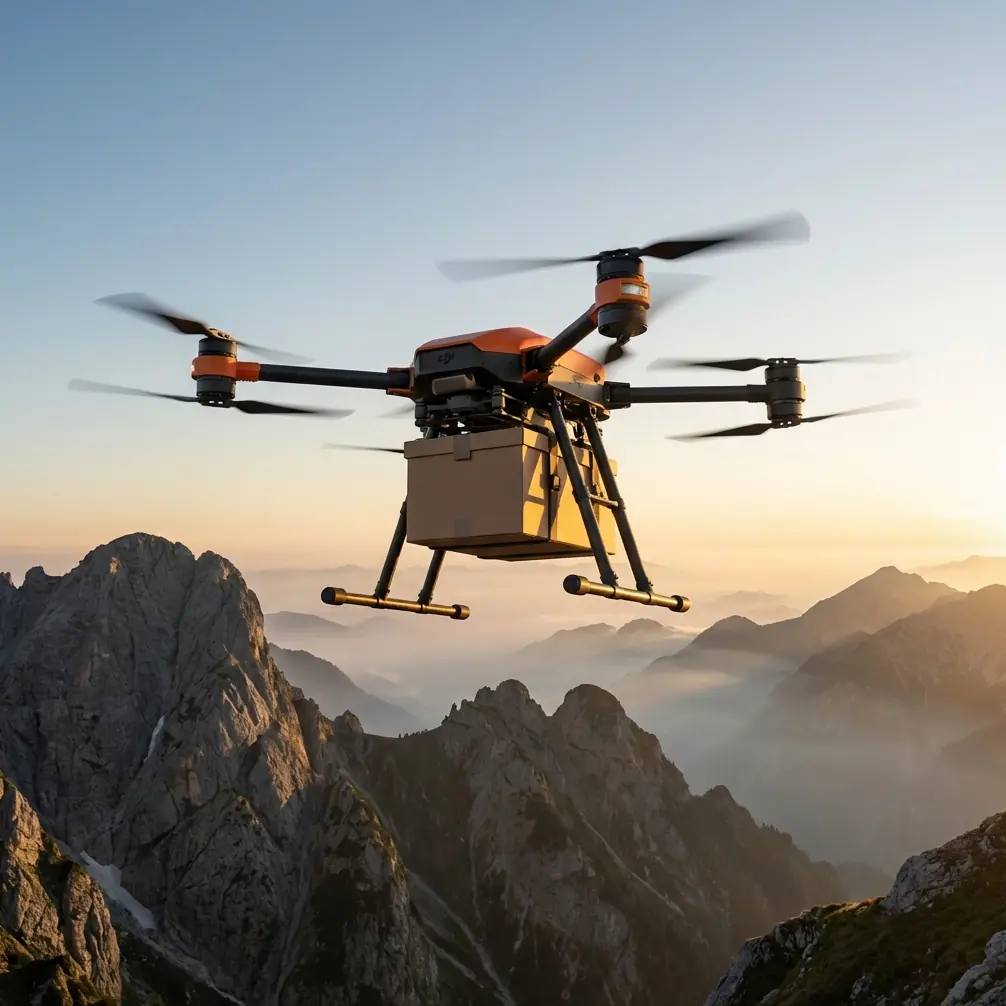
FlyCart 30 for Dusty Venue Monitoring: A Practical Field Guide for Reliable Operations
META: Learn how to use FlyCart 30 in dusty venue monitoring, with practical guidance on payload strategy, winch workflow, route planning, battery resilience, and why battery structural stability matters.
Dust changes everything.
It coats landing zones, creeps into moving parts, reduces visibility, and turns routine flight planning into a reliability exercise. For teams monitoring large venues under dusty conditions—outdoor event grounds, festival perimeters, motorsport sites, temporary industrial compounds, open-air storage yards—the aircraft is only half the story. The other half is endurance under stress.
That is where the FlyCart 30 deserves a closer look.
Most conversations around this platform focus on transport capability, payload ratio, or its winch system. Those are valid topics. But in dusty monitoring work, the deeper question is whether the aircraft can maintain stable, repeatable performance when the environment is actively trying to degrade it. That includes power consistency, route discipline, and how the system behaves over repeated cycles rather than one impressive demonstration.
As someone looking at this through a logistics lead’s lens, I’d frame it this way: venue monitoring is not just about getting airborne and capturing data. It is about finishing the shift with predictable sorties, safe turnarounds, and minimal disruption when conditions are rough. FlyCart 30 has advantages here, especially when its operational design is matched to the realities of dust-heavy sites.
Why dusty venue monitoring is harder than it looks
A clean-site test flight rarely tells you what will happen on a real venue perimeter.
Dust affects takeoff and landing areas first. Rotor wash can lift loose particles into the aircraft’s own working envelope. Ground crews may have limited visibility during loading or battery swaps. If the venue is sprawling, route optimization matters more because unnecessary detours drain power and increase exposure time in the harshest sections of the site.
Monitoring work adds another layer. The aircraft may need to carry sensors, communication tools, or lightweight site-support payloads while moving between observation points. In other words, this is not purely a camera mission and not purely a cargo mission. It sits in the middle. That hybrid role is exactly where FlyCart 30 stands out against more narrowly positioned alternatives.
Many competing platforms are either strong at aerial observation but weak once additional operational payload enters the picture, or they are built for lifting but become cumbersome when asked to perform disciplined, repeated monitoring circuits. FlyCart 30 is attractive because it allows teams to think in terms of mission flexibility rather than single-purpose flights.
Start with the mission profile, not the aircraft spec sheet
For dusty venue monitoring, I recommend building your FlyCart 30 workflow around three layers:
- Observation tasks
- Site-support tasks
- Recovery margin
Observation tasks include perimeter checks, crowd-flow or vehicle-flow viewing in civilian settings, dust-source identification, and infrastructure visibility checks. Site-support tasks might involve delivering small tools, radio batteries, medical support items for civilian event staff, or line-drop support via winch where landing is undesirable. Recovery margin is the buffer you preserve for weather shifts, reroutes, or degraded visibility.
This is where payload ratio becomes meaningful. A good payload ratio is not just about carrying more. It is about carrying enough while preserving a margin for safe and repeatable operations. On a dusty venue, overcommitting payload can turn a stable monitoring mission into a compromised one by shrinking your options if a landing zone becomes unusable or a route segment suddenly becomes less visible.
FlyCart 30’s practical advantage over lighter-duty competitors is that it gives operations teams more room to balance mission equipment and reserve capacity. That flexibility matters far more than headline lift numbers when your real goal is uninterrupted venue coverage.
The winch system is more than a convenience
Dusty sites are often poor landing sites.
That is why the winch system deserves more attention in monitoring scenarios. A lot of people see a winch and think only of cargo delivery. In venue monitoring, it can reduce avoidable landings on contaminated or unstable surfaces. That operational shift has real value.
Instead of touching down near loose soil, temporary staging zones, or crowded support areas, the aircraft can remain above the dust layer and lower essential items to staff. This reduces rotor-driven dust plumes during final approach and helps keep turnaround cleaner. It also limits risk in venues where the ground area may be uneven, cluttered, or simply not worth using.
Compared with aircraft that require full landing for every handoff, FlyCart 30 can keep a monitoring mission moving with fewer interruptions. That is not a cosmetic advantage. It saves time, reduces contamination exposure, and supports more disciplined flight cycles.
For venue managers, that means one aircraft can inspect, observe, and support field teams without repeatedly entering the dirtiest phase of the mission profile.
Route optimization matters more in dust than in calm conditions
A wasteful route is expensive in any operation. In dust, it is also risky.
When visibility fluctuates and airflow near ground level is carrying debris, the cleanest path is not always the shortest one. Route optimization with FlyCart 30 should focus on minimizing unnecessary low-altitude transitions over loose material while preserving line quality to key monitoring points. Even where BVLOS operations are legally and operationally appropriate, the route itself should still be conservative around dust-producing zones.
I advise teams to divide venue routes into three categories:
- Primary monitoring corridors for regular observation
- Support corridors for winch delivery or field-team assistance
- Contingency corridors that avoid the dustiest sectors or congested activity areas
This structure helps the aircraft stay productive even when one part of the venue becomes temporarily unusable. It also makes battery planning far more realistic. You are not just measuring distance; you are measuring mission friction.
That distinction separates mature operations from improvised ones.
Battery resilience is not an abstract engineering topic
One reference point in the source material deserves serious attention: a recent report highlights a new approach to the crack-resistance problem in solid-state lithium metal batteries. Even from the title alone, two things are clear. First, crack resistance remains a key technical challenge in this battery class. Second, the current progress is centered on improving structural stability during use.
Why should a FlyCart 30 operator care?
Because in demanding field environments, battery performance is not just about capacity. Structural stability influences consistency, lifecycle confidence, and how well an energy system tolerates real operating stress. Dusty venue work tends to involve repeated launches, variable loading, heat exposure, and frequent mission interruptions. Those conditions punish weak links.
The significance of anti-crack progress in solid-state lithium metal battery development is not that your current aircraft suddenly changes overnight. The significance is strategic. It points toward a future where high-demand drone operations may benefit from battery systems that are more structurally stable under repeated use. For logistics-heavy UAV platforms like FlyCart 30, that matters a great deal.
A battery that better resists cracking is fundamentally about reliability. In practice, reliability means fewer surprises in endurance behavior, more confidence in repeated sortie planning, and potentially better suitability for harsh operating environments where vibration, temperature swings, and repeated cycling are routine. Dust itself may be external, but the operational strain it creates is very real internally.
That is why battery conversations should sit alongside payload and route planning, not behind them.
How the dual-battery concept supports venue monitoring discipline
FlyCart 30’s dual-battery framing is especially relevant in this context. In field operations, redundancy and continuity are not luxuries. They shape whether a venue team can maintain schedule discipline throughout the day.
For dusty monitoring work, dual-battery logic supports a more controlled approach to sortie turnover. Teams can think in cycles, not isolated flights. That encourages better staging, clearer reserve rules, and more consistent mission timing. Against some competitor platforms that force tighter energy decisions with less operational flexibility, FlyCart 30 is better suited to real commercial tempo.
The key is not to use that flexibility recklessly.
A well-run venue monitoring program should still define hard minimum recovery thresholds, conservative reroute triggers, and explicit no-go criteria for landing areas that become too dusty. The aircraft’s capability should widen your safe operating envelope, not tempt you to spend every bit of it.
Emergency systems are part of monitoring, not just transport
People often associate emergency parachute systems with cargo risk. That is too narrow.
In venue monitoring, especially over expansive civilian sites with moving personnel and vehicles, contingency planning must be built into the mission from the start. An emergency parachute is not there to make a poor plan acceptable. It is there to add another safety layer when an abnormal event occurs despite disciplined preparation.
This matters even more in dusty conditions because abnormal events can be linked to degraded visibility, less-than-ideal landing alternatives, or mission complexity caused by mixed observation and support tasks. Platforms that combine practical payload utility with thoughtful safety architecture have an edge here.
That is another reason FlyCart 30 fits this niche better than aircraft optimized only for clean-site demonstrations.
A practical setup workflow for dusty venue monitoring
Here is the field method I would use.
1. Define the venue in zones, not as one airspace block
Break the site into dust intensity zones, support priority zones, and observation priority zones. This helps match route design to actual conditions rather than drawing one oversized loop.
2. Reserve the winch for surfaces you do not trust
If a support handoff can be completed without landing, choose that option on loose or contaminated ground. Save landings for controlled surfaces with clear crew access.
3. Assign payload by mission layer
Do not load the aircraft the same way for every sortie. Monitoring-only flights should preserve extra margin. Mixed monitoring-and-support flights should carry only what is required for that route set.
4. Plan around battery consistency, not nominal endurance
The recent attention on structural stability in solid-state lithium metal batteries is a useful reminder that battery reliability is multidimensional. For current operations, treat every dusty-day flight as part of a cumulative stress cycle and plan conservatively.
5. Build a reroute library before the event starts
Primary routes are never enough. Prepare alternate corridors for changing visibility, congested ground activity, or zones where dust suddenly intensifies.
6. Review emergency actions with the venue team
That includes parachute-related response awareness, ground exclusion practices, and communication flow when the aircraft shifts from monitoring to support mode.
If your team is building or refining this kind of workflow, a direct planning discussion can save a lot of trial and error. You can share your venue profile here: message our operations desk.
Where FlyCart 30 clearly outperforms narrower alternatives
The strongest case for FlyCart 30 in dusty venue monitoring is not one isolated feature. It is the combination.
A lighter observation drone may be easier to deploy, but it often falls short when the mission adds support tasks, route changes, or repeated field handoffs. A pure heavy-lift machine may move payload well, but can become less elegant for continuous monitoring circuits. FlyCart 30 occupies the useful middle ground with more authority.
That matters in commercial operations because real sites are messy. Missions change mid-shift. One team asks for observation over a perimeter breach in a civilian venue context, another needs a small item delivered without a landing, and weather or dust conditions force a route revision. Aircraft that handle only one of those demands create bottlenecks. FlyCart 30 is better aligned with the multitasking reality of venue operations.
The bigger takeaway from the battery reference
The source material on solid-state lithium metal battery crack resistance may seem separate from FlyCart 30 at first glance, but it actually points to the future of aircraft like this one.
The fact that anti-crack performance is still considered a key problem tells us how central structural durability is in advanced battery systems. The fact that a new solution direction has emerged tells us the industry is pushing toward batteries that can better maintain integrity during use. For commercial UAV operators, that is not academic. It directly affects fleet planning, maintenance assumptions, and how confidently you can deploy aircraft in difficult environments.
For anyone monitoring venues in dusty conditions, this is the right mindset: the aircraft, the route architecture, the payload logic, and the battery system all belong in the same operational conversation.
That is how you get reliable sorties instead of just impressive specs.
Ready for your own FlyCart 30? Contact our team for expert consultation.