
Monitoring Wildlife in Coastal Zones with FlyCart 30
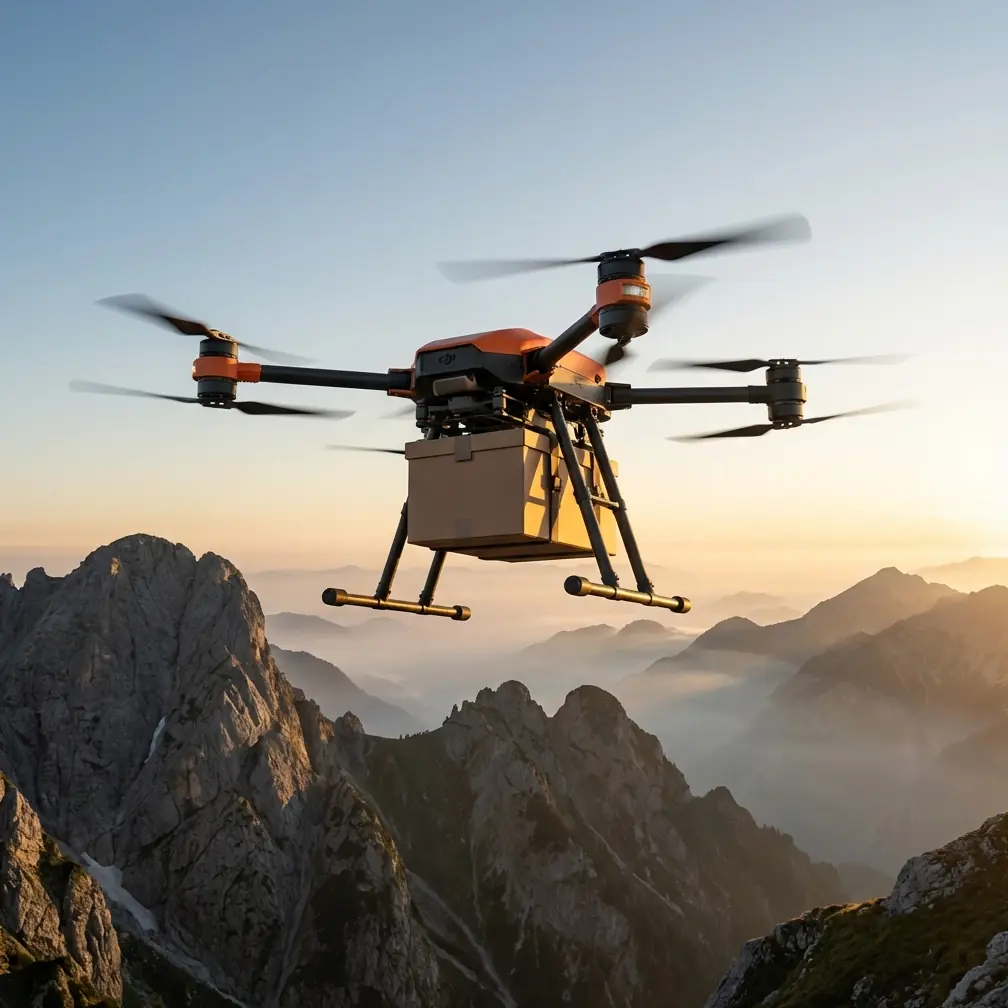
Monitoring Wildlife in Coastal Zones with FlyCart 30: A Practical Field Workflow
META: Learn how to use DJI FlyCart 30 for coastal wildlife monitoring with practical tips on payload planning, route design, battery management, winch deployment, and safe operations in complex shoreline conditions.
Coastal wildlife work has a habit of exposing the weak points in aircraft and planning. Wind shifts fast. Landing options are poor. Salt air gets everywhere. And the most useful observation point is often the one that is hardest to reach without disturbing the animals you are trying to study.
That is where the FlyCart 30 becomes interesting, not because it was built as a wildlife platform first, but because its transport design solves several field problems that coastal teams deal with every week. If your job involves moving sensors, bait-free camera kits, acoustic recorders, sample containers, or lightweight monitoring tools to islands, mudflats, mangroves, dunes, or cliff edges, the FC30 can do more than “carry a load.” It can reduce foot traffic, shorten exposure time in fragile habitats, and let crews work from safer stand-off positions.
I approach this from a logistics angle. In wildlife monitoring, good logistics are not secondary to science. They decide whether the science happens cleanly, repeatedly, and with minimal site impact.
Why a delivery-drone story matters for FlyCart 30 users
A useful benchmark comes from a well-known parcel-drone concept: the idea of delivering a package within 30 minutes to customers located within a 16-kilometer radius of a warehouse. In that model, the aircraft was designed around small packages of about 2.27 kilograms, and that weight band was said to represent 86% of the operator’s parcel volume.
Those numbers matter even outside retail. They show a truth that applies directly to FlyCart 30 mission planning: most successful drone logistics operations are not built around maximum payload. They are built around the most common payload.
For coastal wildlife teams, that changes how you should think about the FC30. Instead of asking, “What is the heaviest item this aircraft can lift?” start with, “What do we move most often, and how far, and how quickly do we need to recover the aircraft if conditions shift?”
That retail case also highlighted why aerial delivery is harder than it looks. Legal constraints, technical reliability, safety, and social acceptance all slowed real-world adoption. The same four factors shape wildlife operations today. A coastal mission can fail even if the aircraft is capable on paper. What matters is whether your workflow respects airspace rules, environmental sensitivity, obstacle risk, and community perception at the same time.
The right role for FlyCart 30 in coastal monitoring
The FlyCart 30 is best used as a field logistics aircraft that supports monitoring rather than replacing observation aircraft entirely. In practical terms, that means a few strong mission types:
- Dropping compact sensor packages into hard-to-access zones
- Lowering equipment by winch where landing would damage habitat
- Moving batteries, replacement cameras, or data drives between shoreline staging points
- Supplying a remote observation team on barrier islands or estuary edges
- Retrieving non-hazardous lightweight gear from sites before tides cut off access
That distinction matters. If you define the FC30 as a monitoring support drone, the operation becomes easier to optimize. Payload ratio improves because you are carrying exactly what the field team needs, not overbuilding every flight. Route optimization becomes cleaner. BVLOS planning, where allowed and approved, can focus on repeatable corridors instead of improvised one-off hops.
A coastal workflow that actually holds up in the field
Below is the workflow I would use for FlyCart 30 wildlife support missions in coastal terrain.
1) Build your mission around the “common load,” not the theoretical load
The 2.27-kilogram parcel figure from the delivery-drone reference is useful because it forces discipline. Many field kits fit into the same rough category: camera traps, compact thermal units, passive acoustic recorders, tagged sample boxes, spare batteries for ground devices, weather mini-stations, and mounting accessories.
For FC30 operators, this is where payload ratio becomes more than a spec-sheet term. If your typical wildlife support package is small relative to the aircraft’s lift capacity, you gain room for safer battery margins, less stressed flights in crosswinds, and more flexibility to abort or reroute.
A practical method is to split cargo into three classes:
- Routine kits: your most common deployment package
- Weather-limited kits: safe only in calmer coastal windows
- Heavy exception kits: rare loads that need separate approval logic
Most teams waste time trying to make one configuration cover all three. Better to standardize the routine kit first. That is where mission volume lives, just as 86% of parcel volume lived in the small-package category in the reference case.
2) Use the winch system to avoid habitat intrusion
In coastal wildlife work, touchdown is often the wrong choice. Nesting areas, marsh edges, shell flats, and dune vegetation are easy to damage. Even when the aircraft can land, it often should not.
This is where the FC30 winch system has real operational value. Lowering equipment from a controlled hover keeps rotor wash and landing gear away from fragile surfaces. It also lets your team deliver to awkward or elevated points such as boardwalk edges, rocky ledges, and small clearings behind vegetation lines.
The key is not simply “use the winch.” It is to define your lowering envelope in advance. Set parameters for hover height, swing tolerance, and no-drop zones. In coastal wind, a suspended load behaves differently over sand, grass, and water. The aircraft may be stable, but the payload can pendulum if the pilot rushes the final descent.
My rule is simple: if the receiving team cannot take the load in one clean motion, stop the descent, stabilize, and reset. The few extra seconds are worth it.
3) Treat route optimization as a wildlife-protection tool
People usually frame route optimization as an efficiency topic. In wildlife missions, it is also a disturbance-control tool.
Avoid straight-line thinking. The shortest route is not always the best route if it crosses bird congregation zones, haul-out areas, or public recreation strips where the aircraft will attract attention. Build corridors that respect both ecology and public visibility.
That old parcel-drone concept targeted customers inside a 16-kilometer radius. For FC30 teams, a radius limit is still a useful planning device even when mission rules differ. Draw your operational rings from the staging point and classify them by risk:
- Inner ring: routine and high-confidence
- Middle ring: weather-sensitive and obstacle-sensitive
- Outer ring: only for strong visibility, healthy battery reserve, and proven route history
This method becomes especially useful in coastal zones because “distance” is not the main challenge. Exposure is. An 8-kilometer route over open beach with fallback sites may be easier than a 4-kilometer route over tidal channels, power lines, and bird roosts.
4) BVLOS only works when your route is boring
There is a temptation to treat BVLOS as a capability badge. In reality, the safest BVLOS routes are the least dramatic ones. Repeatable, obstacle-mapped, low-conflict corridors outperform adventurous pathing every time.
The reference material noted that early delivery drones would need navigation support capable of coordinating with GPS and avoiding buildings, power lines, and other obstacles. That remains directly relevant. Coastal routes add their own hazard set: masts, cranes, sea spray, shifting visibility, reflective water surfaces, and ad hoc structures at ports or research sites.
If you are building a FlyCart 30 BVLOS monitoring support program, choose routes that are dull enough to be trusted. Then refine them relentlessly. The route your team can brief in two minutes is usually better than the one that needs ten caveats.
My field battery tip: don’t match batteries by percentage alone
This is the lesson I wish more teams learned early.
With a dual-battery aircraft, people often look at battery percentages and assume two packs at similar displayed charge are a good pair. In coastal operations, I care much more about behavior under load than matching percentages on the screen.
Salt air, repeated short sorties, windy hover work with the winch, and quick turnarounds can make two packs with similar charge levels perform differently once airborne. One may sag earlier during a climb or while holding station in a crosswind. That imbalance can show up right when you need stable power for a controlled extraction or return leg.
My habit is to pair batteries by field history for the day, not just by current state of charge. If one battery has already done a hard wind-facing sortie and the other came off a lighter run, I do not automatically put them together on the next mission. I rotate packs in matched usage sets and watch temperature recovery before redeployment.
A simple staging routine helps:
- Label battery pairs as working partners for the day
- Record whether the previous flight was transport-heavy, hover-heavy, or transit-heavy
- Let packs cool out of direct sun and away from salt spray before charging or reuse
- Reserve your freshest pair for the longest or most wind-exposed route window
This is not glamorous advice, but it prevents the kind of uneven power behavior that leads to conservative early returns and broken sortie rhythm.
Emergency parachute planning is not optional over mixed terrain
If your coastal route crosses a mix of shoreline, access roads, visitor zones, and habitat areas, emergency planning needs to be specific, not generic. An emergency parachute system changes the conversation, but only if the crew has already thought through what deployment means for the ground below.
The point is not to rely on the parachute. The point is to define preferred transit corridors where an emergency descent creates the least secondary risk. In other words, route planning and emergency systems should be designed together.
This matters for public-facing coastal sites. The reference story on parcel drones stressed that social acceptance is one of the barriers to real deployment. Wildlife work is not immune. A well-run drone operation that respects public space and visibly prioritizes safety earns cooperation. A sloppy one creates complaints and access problems for everyone after it.
Weather and salt: the coastal details that punish lazy teams
Some of the hardest FC30 missions look easy on a map. Flat coastlines create false confidence. Then the sea breeze builds, humidity climbs, and your tidy flight plan starts absorbing friction.
Three field habits make a major difference:
Use earlier launch windows
Morning air is often cleaner and less turbulent. You also reduce heat stress on batteries and electronics.
Keep transition points dry and organized
A muddy tailgate and loose gear near salt spray create small failures that stack up. Winch hooks, connectors, covers, and batteries need disciplined handling.
Define a hard “no-rush” rule for retrieval
If tide, wind, and crew pressure all rise at once, people start compressing checklists. That is when payload attachment errors and battery misreads happen.
A sample coastal mission profile
Let’s say your team needs to deploy two passive acoustic sensors and one compact camera package to separate points along a marsh-fringe island system.
A clean FC30 plan might look like this:
- Stage from a mainland access point with clear takeoff and recovery
- Pre-build three standardized kits rather than packing at the shoreline
- Fly the first routine route with the lightest package to validate conditions
- Use the winch system for each drop rather than landing near vegetation
- Keep return routes offset from public footpaths
- Log battery behavior after each sortie, especially if the aircraft hovered in gusts during lowering
- Reserve one battery pair and one payload slot for contingency retrieval or replacement
Notice what is missing: improvisation. That is the thread connecting cargo drones, wildlife monitoring, and repeatable safety. The more routine the operation becomes, the less site disturbance and crew stress you create.
Where teams usually overcomplicate the FlyCart 30
Most mistakes come from trying to make the aircraft do every job.
For coastal wildlife work, FlyCart 30 does not need to be your primary imaging platform, your survey mapper, and your logistics lifeline all at once. It performs best when it is assigned the work that benefits from lift, stand-off delivery, and stable transport procedures.
That means pairing it with a broader field system:
- Observation team with binocular, thermal, or fixed cameras
- Ground sensors deployed by FC30
- A retrieval plan that does not depend on landing in habitat
- Repeat routes built for safety, not drama
If your team wants help designing a practical FC30 workflow for remote coastal sites, a quick field-use discussion can save a lot of trial and error: message our logistics team here.
The real lesson from early delivery-drone thinking
The old promise of airborne parcel delivery was not wrong. It was just more constrained than it first appeared. Fast delivery inside a 16-kilometer service radius sounded simple until law, safety, obstacle management, and public acceptance entered the picture. Even a payload as modest as 2.27 kilograms became operationally complex once the real world showed up.
That is exactly why FlyCart 30 deserves serious respect in coastal wildlife operations. Not because it makes hard environments easy, but because it gives disciplined teams a better tool for handling those constraints. The aircraft is most effective when you use its transport strengths—payload flexibility, winch-based delivery, route repeatability, dual-battery resilience, and emergency planning—to support monitoring with less habitat intrusion and better crew control.
Done well, the result is not flashy. It is quieter than that. Fewer boots in sensitive areas. Fewer risky shoreline approaches. More consistent deployment of field equipment. Better timing around tides and weather. And a drone program that wildlife managers, researchers, and site partners can keep using without constant operational drama.
Ready for your own FlyCart 30? Contact our team for expert consultation.