
FlyCart 30 for Urban Coastline Scouting: A Field Report
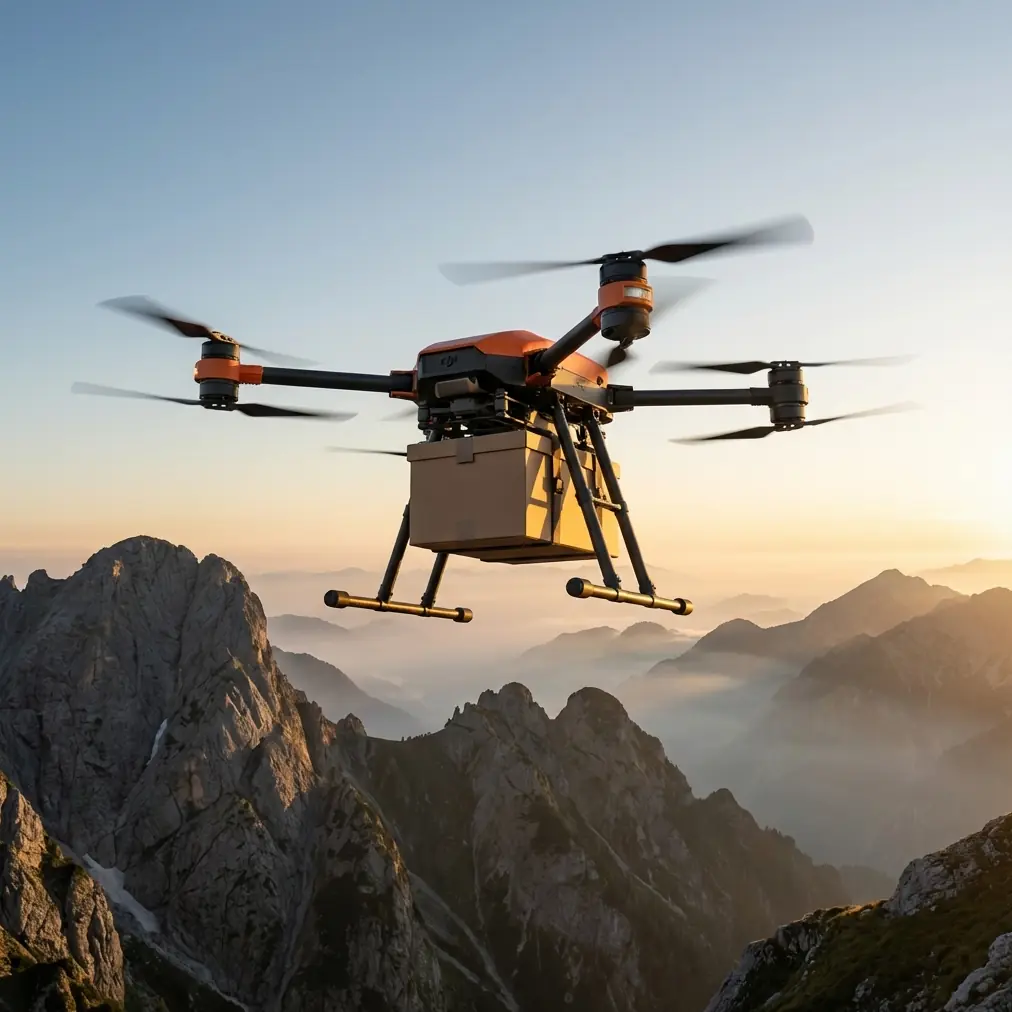
FlyCart 30 for Urban Coastline Scouting: A Field Report from the Logistics Side
META: A field report on using FlyCart 30 for urban coastline scouting, with practical insight on payload ratio, winch use, route planning, dual-battery reliability, and why modern UAVs matter beyond aerial imaging.
I used to hear the same reaction every time drones came up in planning meetings: nice for photos, maybe useful for a short courier demo, but not something you build serious field operations around.
That view does not survive first contact with a difficult coastline.
Urban coastal scouting is messy by default. Sea walls break line of sight. Access roads end where you need them most. Tidal edges change the shape of the workday. Add mixed infrastructure, pedestrian activity, and pressure to document conditions quickly, and the old idea of a drone as a flying camera starts to look far too small. What you actually need is an aerial robot that can move, observe, position, and deliver capability into awkward places with repeatable control.
That distinction matters when talking about the FlyCart 30.
The broader UAV industry has been moving in this direction for a while. Recent discussion in the low-altitude economy has made one point especially clear: drones are no longer defined by aerial photography alone. They are increasingly used in logistics, agriculture, inspection, and emergency response, because the real value is not the aircraft itself. The value is what controlled unmanned flight lets you do when terrain, distance, or risk make conventional access inefficient. In plain terms, a UAV is not just a camera platform. It is an unmanned aircraft operated through radio control and onboard programmed systems, and that combination is reshaping how field tasks get done.
For coastline scouting in an urban setting, that shift is not theoretical. It changes the entire workflow.
The challenge we had before the FC30
My background is logistics, not cinematography. So when I evaluate a drone, I start with a simple question: does it remove friction from the job, or does it add another specialized step for the team to babysit?
On one past coastal survey run, we were checking erosion points, drainage outlets, restricted access sections, and equipment placement zones along a built-up waterfront. The drone we had then was fine for visuals. It could give us broad situational awareness. What it could not do was support the actual operation around the survey.
If a team on the ground needed a sensor kit moved across a fenced edge, that became a manual detour. If a point of interest sat below a steep embankment, someone had to walk around to the nearest legal and safe access path. If we needed repeated drops to fixed observation points, our cycle time expanded fast. We spent too much effort moving people and tools instead of collecting the coastal data that justified the mission.
That is where the FlyCart 30 changed the conversation.
Why FlyCart 30 fits coastline work better than “just a drone”
The name tells part of the story. The FlyCart 30 belongs in the category of aircraft designed to carry work, not just capture images. For urban coastline scouting, that means it can support inspection-style operations in ways that map directly to real site problems.
The operational idea is straightforward: the aircraft becomes a mobile access layer above terrain that is physically accessible but operationally inefficient. That difference is huge. A staircase to the sea wall might exist. A service road might reach the embankment. But if every movement costs twenty minutes, interrupts traffic flow, or increases exposure around slippery infrastructure, then “accessible” is not the same as “practical.”
That is where payload ratio becomes more than a spec-sheet term.
A strong payload ratio matters because coastline scouting rarely stays pure observation for long. Teams end up moving marker lines, compact measuring tools, communication devices, lightweight sampling accessories, or replacement field equipment. If the aircraft lifts very little relative to its own mission profile, you still need the old ground workaround. If it can carry meaningful support payloads without turning the flight into a compromise, the drone stops being a spectator and starts becoming part of the operation.
With the FC30, that distinction is the main story.
The winch system is not a luxury feature
In urban coastal work, the winch system is often the feature that saves the day.
A lot of people imagine cargo operations as simple point-to-point flights ending in a landing. Coastlines rarely cooperate with that model. You may have rocks, barriers, narrow ledges, wet surfaces, or unstable footing. Landing is not always desirable, and sometimes it is exactly what you should avoid.
The operational significance of a winch system is that it decouples delivery from touchdown. That sounds technical, but in practice it means the aircraft can hold a stable overhead position while lowering gear to a precise point. For scouting runs, that can help teams place small tools or retrieve lightweight items from locations where a safe landing zone does not exist. Along sea walls and urban revetments, that changes the mission geometry. You no longer need to find a flat area at the destination. You only need controlled airspace, stable positioning, and a secure lowering procedure.
That has a second benefit many teams underestimate: it reduces the chain of secondary risks. Fewer improvised landings. Less crew movement across uneven surfaces. Less pressure to force the aircraft into a compromised touchdown spot because the task requires physical transfer.
When people talk about drones moving beyond photography, this is what that looks like in the field.
Route optimization matters more near water than most teams expect
On paper, coastline scouting looks linear. You follow the coast. You inspect what you need. You come back.
Reality is more expensive.
Urban coastal routes are full of interruptions: no-fly buffers, construction cranes, reflective surfaces, narrow corridors, and areas where signal behavior can become inconsistent. Add wind coming off the water and the route that looked obvious on a desktop map can become an inefficient battery drain in actual conditions.
That is why route optimization deserves serious attention with the FC30.
For scouting work, route planning is not only about distance. It is about matching flight path, payload state, approach angle, and task sequencing so that each sortie does the maximum useful work with the minimum complexity. If your mission includes visual checks, light payload transfer, and repeated hover points, the route must support all three without creating unnecessary repositioning.
I learned this the hard way before we standardized our planning process. We used to think in terms of destinations. Now we think in terms of task clusters. That means grouping sea-wall observation points, drop locations, and recovery paths into logical segments that account for wind exposure and urban obstacles. The FC30 becomes much more efficient when you treat it as part transport platform, part observation node, and part access tool.
This is also where BVLOS enters the conversation, at least from a planning perspective. In larger coastal corridors, teams naturally want to think beyond short visual envelopes. Any BVLOS operation, of course, depends on local regulations, airspace permissions, and operator capability. But even when flying within tighter limits, planning with BVLOS discipline improves the mission. You think harder about contingencies, communication, recovery, and task order. That mindset reduces wasted movement and supports safer repetition.
Reliability is what turns a promising aircraft into a working asset
Near the coast, reliability is not a marketing talking point. It is the dividing line between an aircraft that helps and an aircraft that creates avoidable operational friction.
Two details stand out here: dual-battery architecture and emergency parachute considerations.
Dual-battery design matters because coastal work is rarely forgiving when power margins tighten. Wind shifts. Hover time stretches during a lowering task. Route changes appear mid-flight. A system built with power redundancy is better aligned with this kind of field reality. It supports more confident mission planning and gives crews a stronger foundation for risk management, especially when the aircraft is carrying useful payload rather than simply orbiting for imagery.
The emergency parachute discussion is equally practical. In dense urban-adjacent coastal zones, you plan for the abnormal even if you never expect to use it. Redundancy and emergency descent measures are part of responsible operation because the environment below the aircraft is often mixed: public space, infrastructure, maintenance lanes, and difficult shoreline surfaces. Safety systems do not make a mission casual. They make a serious mission more manageable.
Those details are easy to skim over online. They become very real when your aircraft is operating above places you cannot easily or quickly reach.
The bigger story: drones as aerial robots, not consumer gadgets
One recent industry framing has stayed with me because it matches what we see on the ground: drones are increasingly being understood as aerial robots rather than one-dimensional consumer electronics.
That sounds like a semantic shift, but it is more than that.
When people assume a drone is basically a flying camera, they evaluate it on image quality and convenience. When they understand it as an aerial robot controlled through radio systems and onboard programmed logic, they start asking better questions. Can it take over repetitive movement? Can it support logistics across awkward terrain? Can it help inspection crews do less climbing, less carrying, and less improvising? Can it serve as a force multiplier in sectors like logistics, agriculture, inspection, and emergency support?
For the FlyCart 30, those are the right questions.
Urban coastline scouting sits at the intersection of several of those sectors. It borrows from inspection because you are examining assets and conditions. It borrows from logistics because tools and equipment still need to move. It can support emergency-adjacent readiness without becoming an emergency-response article in itself. That cross-functionality is why the FC30 makes sense here. The aircraft is not trapped in a single identity.
What changed in our workflow after adopting the FC30 mindset
I say “FC30 mindset” deliberately, because the biggest gains did not come from the airframe alone. They came from redesigning the mission around what the platform could actually do.
We stopped treating flights as isolated events. Instead, each sortie became a linked operational task: observe, position, transfer, verify, continue.
For example, if a scouting team needed to assess a hard-to-reach stretch near an urban drainage outfall, we no longer thought, “Send a drone for footage, then send a crew later.” We built a sequence where the aircraft could support the inspection process directly. Depending on the mission setup, that might mean delivering a lightweight field item to reduce a crew detour, hovering over a precise point using the winch workflow, then continuing to the next observation segment without resetting the entire operation.
That reduced idle time. It reduced unnecessary foot movement. Most importantly, it made the field day more coherent.
This is what many organizations miss when evaluating UAVs for commercial work. The aircraft should not sit outside the workflow. It should remove steps from the workflow.
For teams scouting coastlines, what to evaluate first
If you are assessing whether FlyCart 30 is a fit for urban coastline work, I would start with five practical questions:
- Do your missions involve moving small but operationally important items across awkward access zones?
- Do you regularly encounter locations where landing is less safe or less efficient than aerial lowering?
- Are your current routes draining time because the team has to physically reposition tools or personnel around barriers?
- Do wind, terrain, and infrastructure make power planning and redundancy central to mission confidence?
- Are you still thinking of drones as image tools instead of aerial work platforms?
If the answer to most of those is yes, the FC30 deserves serious attention.
And if your team is still figuring out how to structure that kind of operation, it helps to compare notes with people already building cargo-oriented workflows. For technical discussion on mission fit, coastal route planning, or FC30 deployment scenarios, you can reach the team directly on this WhatsApp line.
Final field takeaway
The most useful thing I can say about the FlyCart 30 is that it solved a problem we used to accept as normal.
We used to assume coastline scouting would always involve a lot of extra walking, awkward hand-carrying, segmented planning, and compromises around access. Once we started using a platform built for more than observation, those assumptions fell apart. The drone stopped being a detached eye in the sky and became part of the work itself.
That aligns with where the UAV industry is clearly heading. The strongest commercial platforms are not winning because they can fly and film. They are winning because they can participate in logistics, inspection, and field operations as true aerial robots.
For urban coastline scouting, that difference is not subtle. It is the whole reason a platform like the FlyCart 30 earns its place.
Ready for your own FlyCart 30? Contact our team for expert consultation.