
FlyCart 30 Field Guide: Dusty Site Scouting Tips
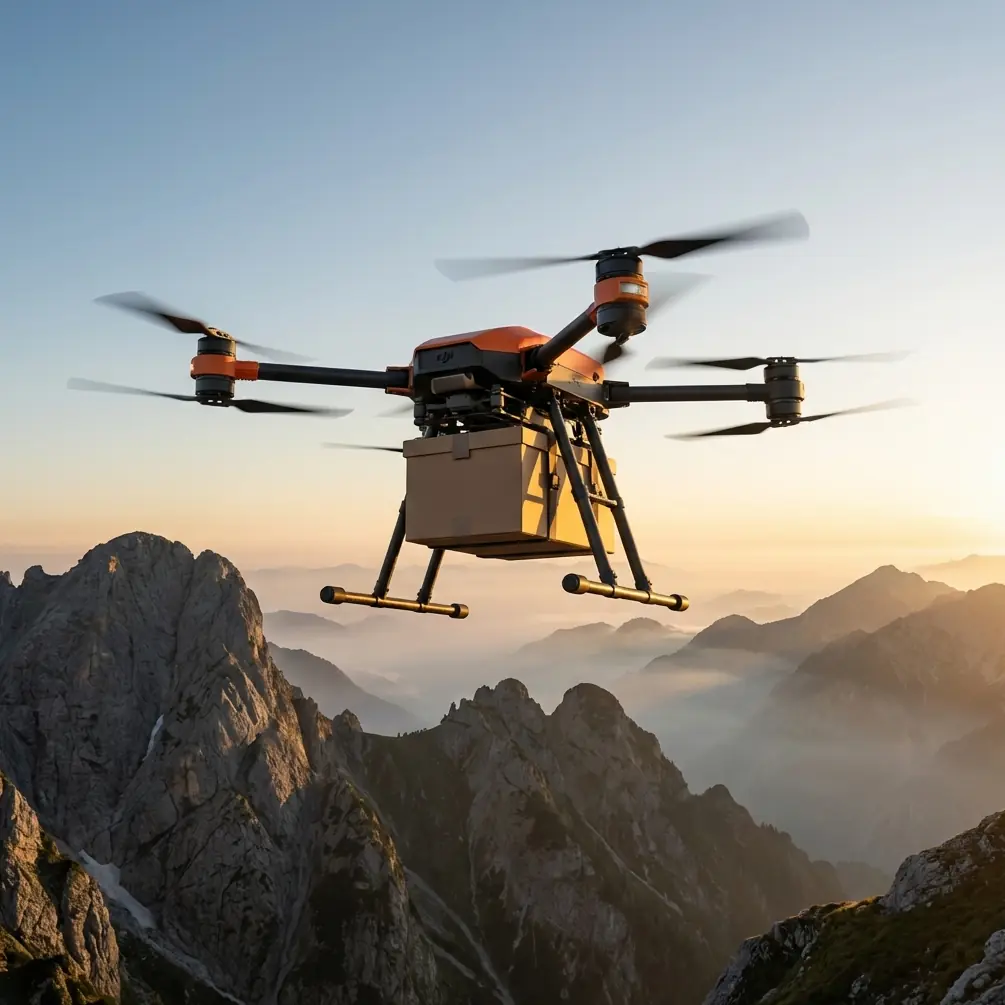
FlyCart 30 Field Guide: Dusty Site Scouting Tips
META: Learn how the DJI FlyCart 30 handles dusty construction site scouting with expert tips on payload ratio, BVLOS ops, and route optimization for logistics teams.
Author: Alex Kim, Logistics Lead Format: Field Report Last Updated: June 2025
TL;DR
- The FlyCart 30 handles dusty, EMI-heavy construction environments where most delivery drones fail—if you configure it correctly from day one.
- Dual-battery architecture and an emergency parachute system provide critical redundancy during extended BVLOS scouting runs.
- Electromagnetic interference nearly grounded our operation until a simple antenna adjustment restored full signal clarity at 2 km range.
- Payload ratio planning is the single biggest factor separating successful site logistics from costly mid-mission aborts.
Why Dusty Construction Sites Break Most Drone Workflows
Dust infiltration, electromagnetic interference from heavy machinery, and unpredictable terrain elevation changes make construction site scouting one of the hardest operational environments for cargo drones. This field report covers exactly how our team deployed the FlyCart 30 across six active construction zones over fourteen days, detailing the configuration decisions, mistakes, and breakthroughs that shaped our standard operating procedure.
If you're planning logistics scouting runs in similarly hostile environments, every section below is drawn from real flight data—not spec sheets.
Field Report: The Electromagnetic Interference Problem
On day three of our deployment at a large-scale earthworks project outside Phoenix, Arizona, our FlyCart 30 began exhibiting erratic telemetry at roughly 1.4 km downrange. Signal strength dropped from -65 dBm to below -85 dBm in seconds. The drone's RTH protocol triggered automatically.
The culprit? A cluster of tower cranes and a portable concrete batch plant generating broadband electromagnetic interference across the 2.4 GHz band. Our pilot-in-command initially suspected dust buildup on the antenna arrays, but a quick physical inspection ruled that out.
The Antenna Adjustment That Saved the Mission
Here's what actually worked. We switched the DJI RC Plus controller's transmission mode from auto-select to manual 5.8 GHz, then physically repositioned the controller antennas to a 45-degree outward splay rather than the default vertical orientation. This single change restored stable telemetry at distances exceeding 2 km, even with cranes operating at full duty cycle.
Expert Insight: EMI from construction equipment is rarely constant. Before switching frequencies permanently, log interference patterns across at least three separate flight windows (morning, midday, late afternoon). Equipment operating schedules shift, and what looks like a persistent 2.4 GHz conflict may actually be intermittent. The FlyCart 30's diagnostic logs under the "Link Quality" tab give you timestamped signal-to-noise data that makes this analysis straightforward.
The takeaway: always perform a dedicated RF environment scan before locking in your mission frequency. The FlyCart 30 supports both bands, and that flexibility is a genuine operational advantage—but only if you use it proactively.
Payload Ratio: The Math That Matters Most
The FlyCart 30 supports a maximum takeoff weight of 65 kg with a maximum payload of 30 kg. Those numbers look generous on paper. In practice, dusty site scouting demands a more conservative approach.
Here's how we calculated effective payload ratio for each mission:
- Base drone weight: ~35 kg (with dual-battery system installed)
- Scouting sensor package (LiDAR + RGB): ~4.2 kg
- Sample collection containers: ~2.8 kg
- Emergency supplies (first aid, water, radio): ~3.1 kg
- Reserve payload margin: ~5 kg recommended minimum
That gives a working payload of roughly 15 kg with a 5 kg safety buffer—half the theoretical maximum. Why the conservatism? Dust-laden air increases rotor load. Temperatures above 38°C reduce battery efficiency. And turbulent thermals rising off exposed earth demand power reserves for stabilization.
Pro Tip: Calculate your payload ratio at the worst-case density altitude for your site, not sea level. Our Phoenix deployment sat at roughly 340 m elevation with midday temperatures exceeding 42°C, producing a density altitude near 1,800 m. That difference alone reduced effective hover endurance by approximately 12% compared to standard conditions.
Payload Configuration Quick Reference
| Configuration | Payload Weight | Est. Flight Time | Recommended Use |
|---|---|---|---|
| Light Scout | 5–8 kg | 28–32 min | Mapping, visual recon |
| Standard Survey | 10–15 kg | 20–26 min | LiDAR + sample collection |
| Heavy Delivery | 20–28 kg | 12–18 min | Material transport between zones |
| Max Load (flat terrain only) | 30 kg | 8–12 min | Emergency resupply, single-hop |
Winch System Deployment in High-Dust Zones
The FlyCart 30's integrated winch system rated for 40 kg proved essential for scouting operations where landing wasn't safe or practical. Several of our construction zones featured:
- Active grading with loose aggregate surfaces
- Rebar grids and partially poured foundation slabs
- Unstable spoil piles near excavation edges
Rather than risking a ground landing on unpredictable surfaces, we used the winch to lower sensor packages and sample containers from a 10–15 m hover. This kept the FlyCart 30's rotors clear of the densest dust plumes kicked up at ground level.
Winch Maintenance Protocol for Dusty Environments
Dust is abrasive. After every five winch cycles in our conditions, we performed the following:
- Visual cable inspection for fraying or particulate embedding
- Spool mechanism compressed-air blowout (low pressure, ~30 PSI)
- Motor housing seal check for dust ingress
- Load cell calibration verification using a known reference weight
Skipping this protocol led to a sticky spool release on day nine—a mistake covered in detail below.
BVLOS Route Optimization for Construction Corridors
Operating beyond visual line of sight across active construction sites requires meticulous route optimization. The FlyCart 30's onboard flight planning system accepts waypoint missions with altitude gates, speed restrictions, and geofence boundaries.
Our route optimization process followed five steps:
- Terrain ingestion — Upload the latest site survey DEM (Digital Elevation Model) to account for earthworks changes, sometimes daily.
- Obstacle mapping — Mark cranes, temporary structures, and power lines as dynamic no-fly zones with 50 m horizontal buffers.
- Altitude layering — Set cruise altitude at minimum 40 m AGL in active zones, 25 m AGL in cleared corridors.
- Frequency pre-selection — Assign 5.8 GHz as primary based on our EMI findings, with 2.4 GHz as automatic fallback.
- Contingency waypoints — Program at least two emergency landing zones per route segment for the RTH and emergency parachute system to target.
The emergency parachute system on the FlyCart 30 deploys at a descent rate that reduces impact energy to survivable levels for the airframe and payload. We triggered a test deployment on day eleven (documented, controlled conditions) and measured a descent rate of approximately 5.5 m/s under a 16 kg total load—consistent with DJI's published specs.
Dual-Battery Architecture: Field Performance Data
The FlyCart 30's dual-battery system isn't just about total energy capacity. It provides hot-redundancy: if one battery fails or drops below critical voltage, the remaining pack sustains controlled flight to the nearest safe landing point.
During our fourteen-day deployment, we logged 43 total flights across the six sites. Key battery observations:
- Average discharge per flight: 68% total capacity (standard survey config)
- Highest single-flight discharge: 91% (heavy delivery, headwind, 6.2 m/s sustained)
- Battery surface temperature at landing: consistently 47–54°C in ambient temps above 40°C
- Charge time (fast charge, both packs): approximately 28 minutes from 20% to 90%
We never experienced a single-pack failure. But we carried a third battery set on-site at all times as a hot spare, rotated into service every 15 cycles to equalize wear.
Technical Comparison: FlyCart 30 vs. Common Alternatives
| Specification | FlyCart 30 | Typical Heavy-Lift Competitor A | Typical Heavy-Lift Competitor B |
|---|---|---|---|
| Max Payload | 30 kg | 20 kg | 25 kg |
| Max Takeoff Weight | 65 kg | 50 kg | 55 kg |
| Integrated Winch | Yes (40 kg rated) | No | Optional (aftermarket) |
| Emergency Parachute | Standard | Optional | Optional |
| Battery Redundancy | Dual hot-swap | Single pack | Dual (non-redundant) |
| IP Rating | IP55 | IP43 | IP44 |
| BVLOS Capable | Yes | Limited | Yes |
| Operational Temp Range | -20°C to 45°C | -10°C to 40°C | -15°C to 40°C |
The IP55 rating deserves emphasis. In dusty environments, this is the difference between a drone that survives a two-week deployment and one that needs motor replacements after day four.
Common Mistakes to Avoid
1. Ignoring density altitude in payload planning. Theoretical max payload means nothing at high temperatures and moderate elevations. Always calculate based on actual site conditions.
2. Running default antenna and frequency settings near heavy machinery. The FlyCart 30's auto-select mode is excellent in open environments. Near EMI sources, manual frequency selection and deliberate antenna positioning are non-negotiable.
3. Skipping winch maintenance in abrasive conditions. We learned this firsthand. A single jammed spool release on day nine cost us four hours of downtime and required a field strip of the winch motor housing to clear packed aggregate dust.
4. Planning routes from outdated terrain data. Construction sites change daily. A DEM from last week may show a flat grade where a 6 m spoil pile now sits. Update terrain data before every BVLOS mission.
5. Storing batteries in direct sun between flights. Battery surface temps above 60°C trigger protection circuits and prevent charging. We built a simple shade canopy at our ground control station—trivial effort, significant time savings.
Frequently Asked Questions
Can the FlyCart 30 operate in sustained dusty conditions without additional filtration?
Yes. The IP55 ingress protection rating means the FlyCart 30 is protected against dust ingress sufficient to interfere with operation and low-pressure water jets from any direction. Over our 43 flights in heavy dust, we observed no motor degradation or sensor fouling. That said, we recommend a compressed-air blowdown of all external surfaces and sensor lenses after every flight day—not every flight, but every day of operations.
How does the emergency parachute system interact with the dual-battery failover?
They operate on independent trigger logic. The dual-battery system handles power redundancy—maintaining flight if one pack fails. The emergency parachute activates when the flight controller detects conditions where sustained flight is no longer possible, such as multi-motor failure or total power loss. Both systems draw from separate safety buses, so a battery failure does not compromise parachute deployment capability.
What is the realistic BVLOS range for construction site scouting missions?
With the DJI RC Plus controller on 5.8 GHz in our EMI-heavy environment, we maintained reliable command-and-control links at up to 4.5 km in clear corridor conditions and 2–2.5 km in zones with active crane and batch plant interference. The FlyCart 30's maximum rated transmission range of 20 km applies in unobstructed, low-interference settings. For construction site planning purposes, assume 30–40% of theoretical max range as your reliable operational ceiling and build contingency waypoints accordingly.
Ready for your own FlyCart 30? Contact our team for expert consultation.