
FlyCart 30 for Construction Sites in Low Light
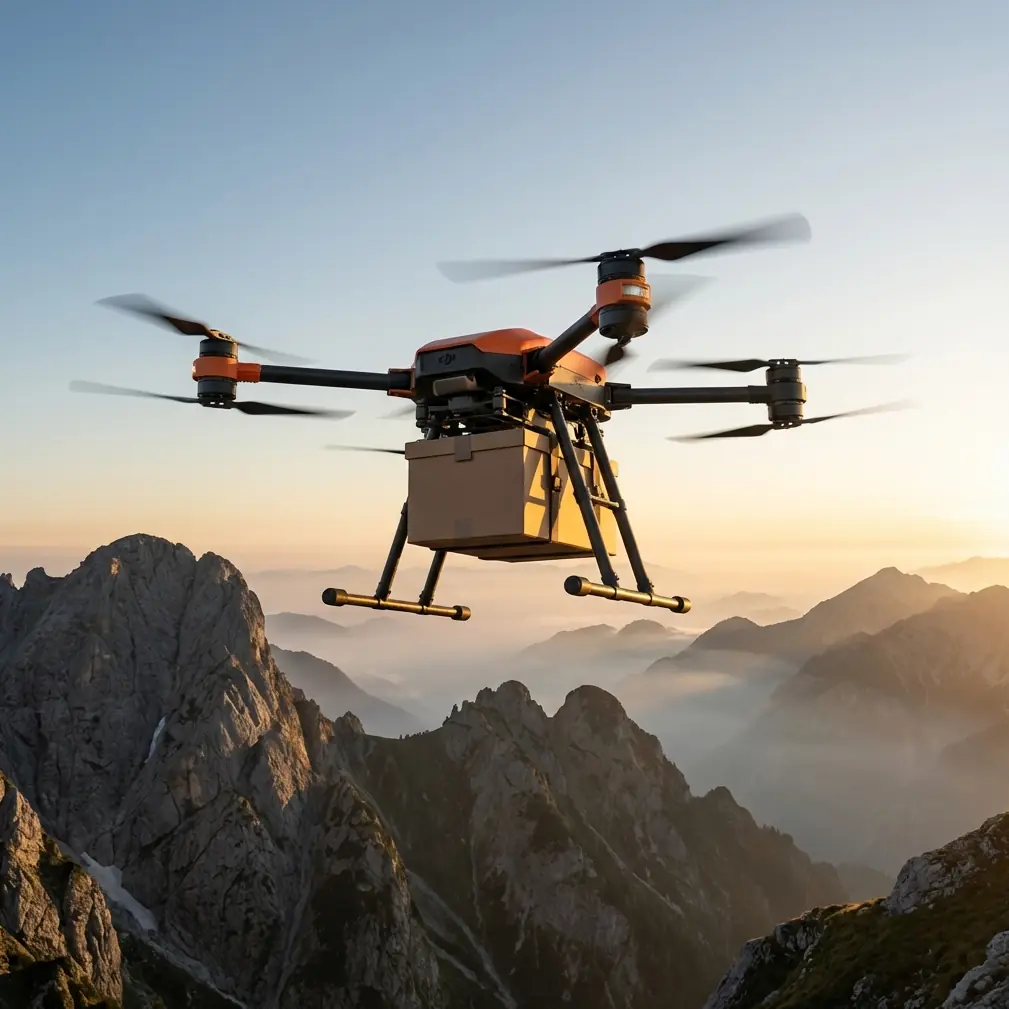
FlyCart 30 for Construction Sites in Low Light: What Actually Matters in the Field
META: A field-informed guide to using the DJI FlyCart 30 on low-light construction sites, with practical insight on payload planning, winch use, battery management, route discipline, and safety systems.
Low-light construction work exposes a problem that people outside site logistics tend to underestimate. The issue is not simply darkness. It is uncertainty layered on top of time pressure. Crews are still moving materials before sunrise, after sunset, or under weather-heavy skies. Ground access may be partially blocked, crane time may already be booked, and the margin for a wrong drop gets smaller when visual cues flatten out.
That is where the FlyCart 30 becomes interesting—not as a flashy aircraft, but as a logistics tool with a very specific advantage. It can move material into awkward parts of a site without asking workers to drag loads across uneven ground, climb half-finished structures, or wait for larger lifting equipment to become available. For teams scouting construction sites in low light, that changes the conversation from “Can a drone carry this?” to “Can this system reduce friction and risk during the hardest part of the day?”
I look at the FlyCart 30 through that lens. Not as a broad UAV platform, but as a machine that can solve a recurring site problem when the work window is narrow and visibility is less forgiving.
The low-light challenge starts with site geometry. Construction environments are full of visual traps: rebar cages that disappear into shadow, temporary fencing, partially completed facades, suspended lines, scaffold edges, and dust that seems minor until it starts catching floodlights. A delivery route that feels obvious at noon can become ambiguous at dawn. That matters because cargo work depends on stable, repeatable paths. When a drone is lifting useful weight, route discipline is not optional.
This is one reason route optimization matters more than many teams expect. On a low-light site, the shortest line on a map is not always the safest or most efficient corridor in practice. A smarter route may be slightly longer but cleaner, with fewer vertical obstructions, less glare interference, and a more controlled delivery zone. If you are planning repeated lifts to the same drop point, consistency usually beats shaving a few seconds from flight time. A predictable corridor helps the pilot, helps the receiving crew, and reduces the chance of improvised decisions near unfinished structures.
The FlyCart 30’s cargo design supports that kind of disciplined operation. Its winch system is especially useful on construction sites because it allows the aircraft to hold position above a target area while lowering material down into a constrained landing zone. That matters operationally in low light. Instead of trying to place the entire aircraft into a visually messy environment, the team can keep the drone clear of obstacles and use the cable drop to bridge the last few meters. On sites where roof edges, scaffolding, or temporary barriers complicate direct placement, the winch is not just a convenience feature. It expands the number of viable handoff points.
For early-morning or dusk operations, that extra separation between aircraft and structure is often the difference between a workable delivery profile and a risky one. I have seen crews assume the hard part is the flight itself. In reality, the last segment of the delivery is usually where complexity spikes. The winch helps manage that complexity.
Payload ratio also deserves more attention than it usually gets in marketing-heavy discussions. Construction teams tend to think in task bundles: a tool case, a coil, a box of fittings, a set of fasteners, a repair part that someone needs right now. The instinct is to maximize every trip. That instinct becomes less helpful in low light. A better method is to think in payload ratio terms—matching the carried load to the route, altitude profile, wind exposure, and recovery margin. In other words, not “How much can it lift?” but “How much should it lift on this route, at this time, under these site conditions?”
That shift sounds subtle, but it changes mission quality. A conservative payload ratio improves handling margin and helps create more repeatable flights, especially when visibility is reduced and the receiving area is busy. The most efficient site teams are rarely the ones pushing every run to the upper edge. They are the ones building a delivery rhythm the crew can trust.
Battery management is where field experience really separates theory from results. The FlyCart 30’s dual-battery architecture is one of its strongest operational advantages because it provides resilience and flexibility for demanding missions. On a construction site, especially in low light, battery discipline should be treated as part of the delivery plan, not a post-flight housekeeping task.
Here is the battery tip I give teams after watching too many avoidable slowdowns: do not evaluate batteries as isolated components; evaluate them as working pairs with a mission profile attached. If one battery pair has already handled aggressive climbs, heavier payloads, or repeated hover-heavy winch drops, I do not like assigning that same pair to the next “easy” mission just because the state of charge looks fine on paper. Low-light flights often involve more hovering and more cautious positioning than teams expect. That extra dwell time changes real endurance.
The practical fix is simple. Build pair-specific rotation habits and label them according to actual use, not just charge status. Keep your freshest matched pair for the route that has the highest hover demand or the most complex delivery zone. Save less demanding flights for pairs that have already done the harder work. This reduces decision-making under pressure and keeps your battery plan aligned with what the aircraft is about to do, not what you wish it could do. It is a small operating habit, but on site it prevents rushed swaps and overconfident dispatching late in the shift.
That same logic becomes even more valuable when the site is stretching toward BVLOS-style thinking, even if the operation remains within applicable local limits and procedures. The reason is simple: once the aircraft becomes part of a structured logistics chain rather than a one-off flight tool, every variable starts compounding. Battery condition, route choice, descent method, receiving crew timing, and diversion planning all need to work together. The FlyCart 30 is strong in these environments because it is built around cargo operations, but cargo operations only scale when discipline scales with them.
Safety systems also carry more weight in construction logistics than they do in casual drone discussions. The emergency parachute is a good example. On paper, it reads like a backup feature. On a real site, it changes risk planning. Construction areas are dynamic. Work crews shift zones, vehicles move unpredictably, and temporary layouts can change between one shift and the next. Having an emergency parachute in the safety architecture matters because it adds a final protective layer when flying over or near complex operational spaces. No professional team should treat that as permission to be careless. The value is the opposite: it supports a stricter safety model by giving the operation one more line of defense if conditions deteriorate unexpectedly.
For low-light scouting specifically, the FlyCart 30 also changes how teams inspect site readiness before a delivery cycle begins. If you are reviewing routes for dawn or dusk cargo work, the aircraft is not just a carrier. It is part of your reconnaissance process. You can evaluate where shadows pool, where light glare interferes with visual reference, how the drop zone looks from different approach angles, and whether the receiving crew has actually cleared the area they claimed was ready. That kind of scouting is not glamorous, but it is what separates smooth morning lifts from preventable aborts.
I would argue that this is where the FlyCart 30 earns its place on construction projects. Not because it replaces every traditional method, and not because every site needs drone cargo. It earns its place when it removes repeated friction from hard-to-access, time-sensitive material movement. Low-light operations amplify every weak point in a logistics chain. If the aircraft, the route, the battery rotation, and the handoff method are all well planned, the drone can compress delays that would otherwise ripple through the crew schedule.
There is also a human factor that deserves attention. Workers receiving a load in low light need clarity. That means consistent approach paths, clear communication, and standard drop procedures. A winch delivery is only efficient if the ground team knows exactly where to stand, when to take the load, and when to clear the zone. The more standardized your process, the less likely it is that darkness, fatigue, or site noise will create confusion at the wrong moment. If your team is mapping out a safer workflow for these conditions, it can help to message a site-ops specialist here and compare procedures against real cargo scenarios.
One mistake I see often is assuming that construction drone logistics is mainly about aircraft capability. It is not. Aircraft capability gets you in the door. Operational fit decides whether the program survives. The FlyCart 30 has the right ingredients for demanding site work: meaningful cargo utility, a winch system that suits constrained delivery zones, dual-battery support that rewards disciplined power management, and an emergency parachute that strengthens the safety case. But the real result depends on how those pieces are used together.
For a team scouting construction sites in low light, the best deployment model is usually narrow and deliberate at first. Start with one or two repeatable routes. Choose payloads that are operationally valuable but not mission-critical on day one. Use the winch where direct placement would crowd the aircraft near structures. Track battery pairs by workload, not just charge percentage. Standardize your receiving-zone procedure. Review every mission for hover time, route deviations, and visibility-related issues. Then scale.
That approach may sound less dramatic than the usual promises surrounding industrial drones, but it is far more useful. Construction sites do not reward hype. They reward systems that save time without creating new uncertainty. In low light, that standard gets even higher.
The FlyCart 30 is at its best when treated as a disciplined aerial logistics asset for difficult site windows. If your challenge is moving tools, parts, or compact materials into areas that are inconvenient, partially obstructed, or operationally messy at dawn and dusk, it offers a practical answer. Not a universal answer. A practical one. And on real projects, that distinction matters.
Ready for your own FlyCart 30? Contact our team for expert consultation.