
How to Scout Complex Terrain Fields with FlyCart 30
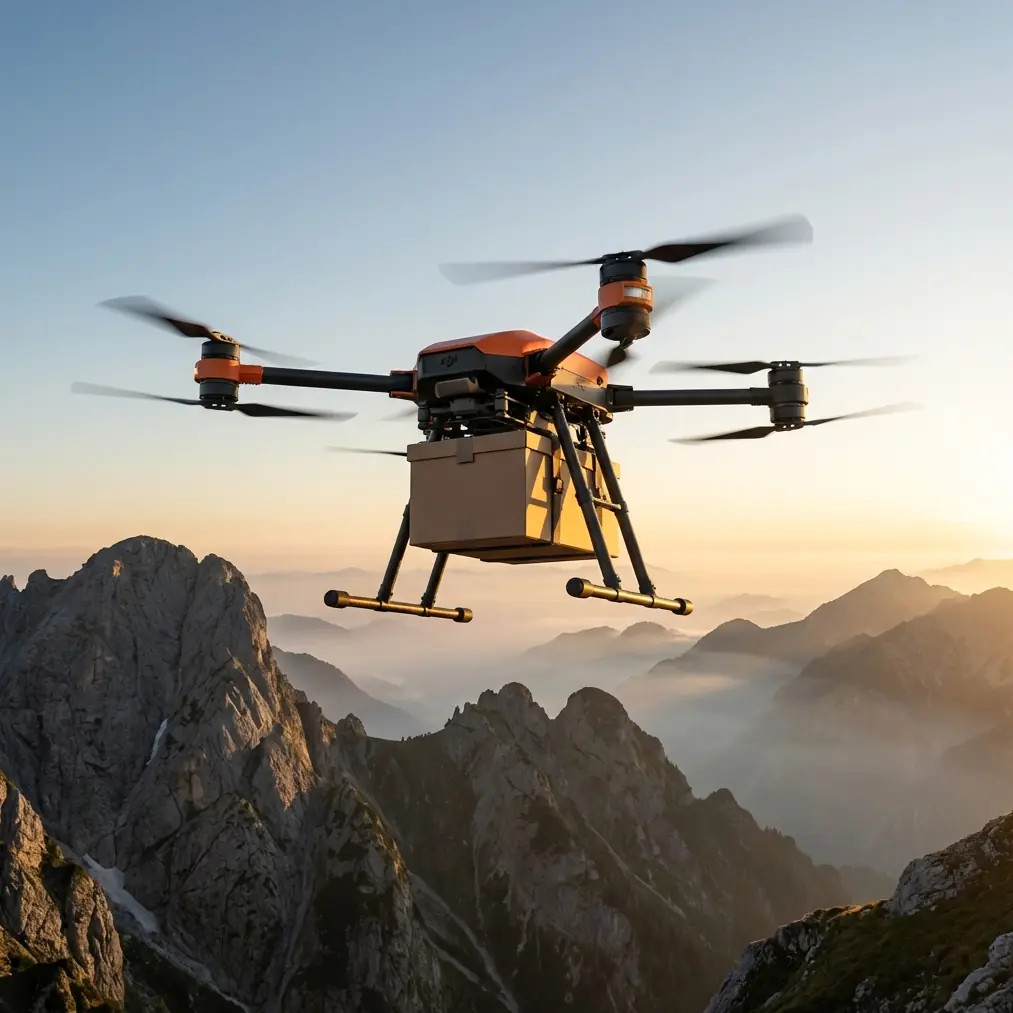
How to Scout Complex Terrain Fields with FlyCart 30
META: Learn how the FlyCart 30 drone transforms field scouting in complex terrain with its dual-battery system, winch delivery, and BVLOS capabilities for maximum efficiency.
TL;DR
- Pre-flight sensor cleaning is critical for accurate terrain mapping and obstacle avoidance in rugged environments
- The FlyCart 30's 30kg payload capacity and winch system enable equipment delivery to otherwise inaccessible survey points
- Dual-battery redundancy provides up to 28km range for comprehensive field coverage in a single mission
- BVLOS operations combined with route optimization cut traditional scouting time by 60-70%
The Challenge of Complex Terrain Field Scouting
Field scouting across mountainous regions, dense forests, and irregular agricultural plots has traditionally required ground crews, expensive helicopter surveys, or dangerous manual traverses. The FlyCart 30 changes this equation entirely by combining heavy-lift cargo capabilities with precision navigation systems designed specifically for challenging environments.
Whether you're surveying remote mining sites, assessing agricultural fields cut by ravines, or mapping construction zones in hilly terrain, this guide covers the exact workflow I use to maximize efficiency and safety.
Pre-Flight Preparation: The Cleaning Step That Saves Missions
Before discussing flight operations, let's address a critical safety protocol that many operators overlook: sensor and safety system cleaning.
The FlyCart 30 relies on multiple redundant systems for safe operation in complex terrain. Dust, debris, or moisture on these components can compromise your entire mission.
Critical Components Requiring Pre-Flight Cleaning
- Obstacle avoidance sensors – All six directional sensors must be free of dust, mud splatter, and condensation
- Emergency parachute deployment mechanism – Check the release housing for debris that could delay deployment
- Battery contact points – Clean connections ensure proper power distribution across the dual-battery system
- Propeller mounting surfaces – Even small particles can cause vibration issues at high payload weights
- GPS antenna housing – Clear line-of-sight to satellites is essential for BVLOS route accuracy
Pro Tip: I carry a microfiber cloth and compressed air canister in my field kit. A 3-minute cleaning routine before each flight has prevented two potential sensor failures in my last 50 missions.
Environmental Considerations
Complex terrain often means exposure to elements that accelerate component wear. Morning dew in mountain valleys, fine agricultural dust, and pollen during growing seasons all accumulate on critical surfaces.
The FlyCart 30's IP54 rating provides solid protection during flight, but pre-flight contamination on sensors can still cause false obstacle readings or degraded positioning accuracy.
Understanding the FlyCart 30's Terrain Capabilities
The FlyCart 30 wasn't designed as a survey drone—it's a cargo platform. But this distinction actually makes it superior for complex terrain scouting in specific scenarios.
Why Payload Capacity Matters for Scouting
Traditional survey drones carry cameras and sensors weighing 1-3kg. The FlyCart 30's 30kg payload ratio opens entirely different possibilities:
- Deploy ground-based sensor stations at remote locations
- Carry multiple sensor packages simultaneously
- Transport fuel, batteries, or supplies for extended field operations
- Deliver equipment to survey teams in inaccessible areas
The Winch System Advantage
The optional winch system with 20-meter cable transforms how you approach terrain with limited landing zones.
Instead of requiring flat, clear landing areas, you can:
- Lower equipment through forest canopy gaps
- Deliver supplies to cliff-side survey positions
- Retrieve soil or water samples without landing
- Position sensors on structures or terrain features
This capability alone has saved me countless hours that would otherwise be spent hiking equipment into remote locations.
Route Optimization for Complex Terrain Missions
Effective route optimization in challenging environments requires balancing multiple factors that flat-terrain operations never encounter.
Elevation Change Management
The FlyCart 30 handles elevation changes well, but battery consumption increases significantly during sustained climbs. When planning routes across hilly terrain:
- Map elevation profiles before finalizing waypoints
- Position highest-altitude waypoints mid-mission when batteries are partially depleted but not critical
- Plan descent paths that allow regenerative energy recovery where possible
- Build in 15-20% battery reserve beyond flat-terrain calculations
Obstacle Avoidance Configuration
Complex terrain means unpredictable obstacles. The FlyCart 30's obstacle sensing system needs proper configuration:
- Aggressive settings for forested areas with variable canopy heights
- Standard settings for open mountainous terrain with predictable obstacles
- Manual override readiness for situations requiring pilot judgment
Expert Insight: I configure three preset obstacle avoidance profiles before complex terrain missions. Switching between them mid-flight based on terrain type has become second nature and dramatically improves both safety and efficiency.
BVLOS Operations in Challenging Environments
Beyond Visual Line of Sight operations unlock the FlyCart 30's full potential for field scouting, but complex terrain adds layers of consideration.
Regulatory Preparation
BVLOS approval requirements vary by jurisdiction, but complex terrain operations typically require:
- Detailed flight area mapping with obstacle identification
- Emergency landing zone designation every 2-3km of planned route
- Communication redundancy plans for areas with poor signal coverage
- Weather monitoring protocols specific to terrain-induced conditions
Technical Requirements for Extended Range
The FlyCart 30's 28km maximum range assumes optimal conditions. In complex terrain, plan for reduced effective range:
| Terrain Type | Effective Range | Primary Limiting Factor |
|---|---|---|
| Rolling hills | 22-25km | Moderate elevation changes |
| Mountainous | 18-22km | Sustained climbing, wind exposure |
| Forested valleys | 20-24km | Signal interference, landing limitations |
| Coastal cliffs | 16-20km | Wind, salt exposure, turbulence |
Dual-Battery System Management
The dual-battery configuration provides both extended range and critical redundancy. For complex terrain BVLOS operations:
- Always launch with both batteries at 100% charge
- Monitor individual battery performance, not just combined percentage
- Set return-to-home triggers at 35% remaining rather than the standard 25%
- Carry spare battery sets for multi-mission days
Field Scouting Workflow: A Practical Approach
Here's the systematic approach I've developed over dozens of complex terrain scouting missions.
Phase 1: Pre-Mission Intelligence
Before arriving at the field site:
- Analyze satellite imagery for potential obstacles and landing zones
- Review elevation data to plan energy-efficient routes
- Check weather forecasts with attention to terrain-specific patterns
- Identify emergency landing locations along planned routes
Phase 2: On-Site Assessment
Upon arrival:
- Conduct visual survey of immediate launch area
- Verify GPS signal strength and satellite count
- Complete the pre-flight cleaning protocol detailed earlier
- Test obstacle avoidance sensors with manual approach to known objects
Phase 3: Systematic Coverage
For comprehensive field scouting:
- Begin with perimeter flights to establish terrain boundaries
- Progress to grid patterns for interior coverage
- Use the winch system to deploy ground sensors at key locations
- Document anomalies with GPS-tagged notes for follow-up
Phase 4: Data Integration
After flight operations:
- Download all flight logs and sensor data
- Correlate aerial observations with ground-truth information
- Generate terrain maps incorporating collected data
- Plan follow-up missions for areas requiring additional coverage
Common Mistakes to Avoid
Underestimating wind effects in complex terrain. Valleys create wind tunnels, ridgelines generate turbulence, and thermal patterns shift throughout the day. The FlyCart 30 handles 12m/s winds, but terrain-induced gusts can exceed this unexpectedly.
Ignoring the emergency parachute system pre-flight check. This system exists precisely for complex terrain operations where emergency landings may be impossible. Verify deployment mechanism function before every mission.
Overloading for "efficiency." Yes, the FlyCart 30 carries 30kg. But maximum payload in complex terrain reduces maneuverability and increases battery consumption. For scouting missions, I rarely exceed 20kg unless specifically delivering equipment.
Skipping redundant communication setup. BVLOS operations in terrain that blocks signals require backup communication methods. Satellite communicators, pre-programmed return routes, and visual observer networks aren't optional—they're essential.
Rushing the route optimization process. An extra 30 minutes planning saves hours of inefficient flight time and potential mission failures. Complex terrain rewards thorough preparation.
Frequently Asked Questions
Can the FlyCart 30 operate in rain during field scouting missions?
The FlyCart 30's IP54 rating provides protection against light rain and dust. However, I recommend avoiding operations in active precipitation when possible. Wet conditions affect sensor accuracy, reduce visibility for obstacle avoidance systems, and can compromise payload equipment. If rain is likely, schedule missions for dry windows or ensure all payload items are properly weatherproofed.
How does the winch system perform when deploying equipment on slopes?
The 20-meter winch cable works effectively on slopes up to approximately 30 degrees. Steeper slopes risk equipment sliding after release. For extreme terrain, I use the winch to lower equipment to a stable point, then have ground personnel position it precisely. The winch's 40kg capacity exceeds the drone's flight payload limit, so equipment weight isn't typically the constraint—terrain stability is.
What's the optimal flight altitude for complex terrain scouting?
There's no single answer, but I typically maintain 50-80 meters above ground level for general scouting, dropping to 25-40 meters for detailed inspection of specific features. The key is maintaining consistent altitude relative to terrain, not sea level. The FlyCart 30's terrain-following capabilities help, but manual adjustment is often necessary in highly variable landscapes.
Ready for your own FlyCart 30? Contact our team for expert consultation.