
FlyCart 30: Scouting Fields in Complex Terrain
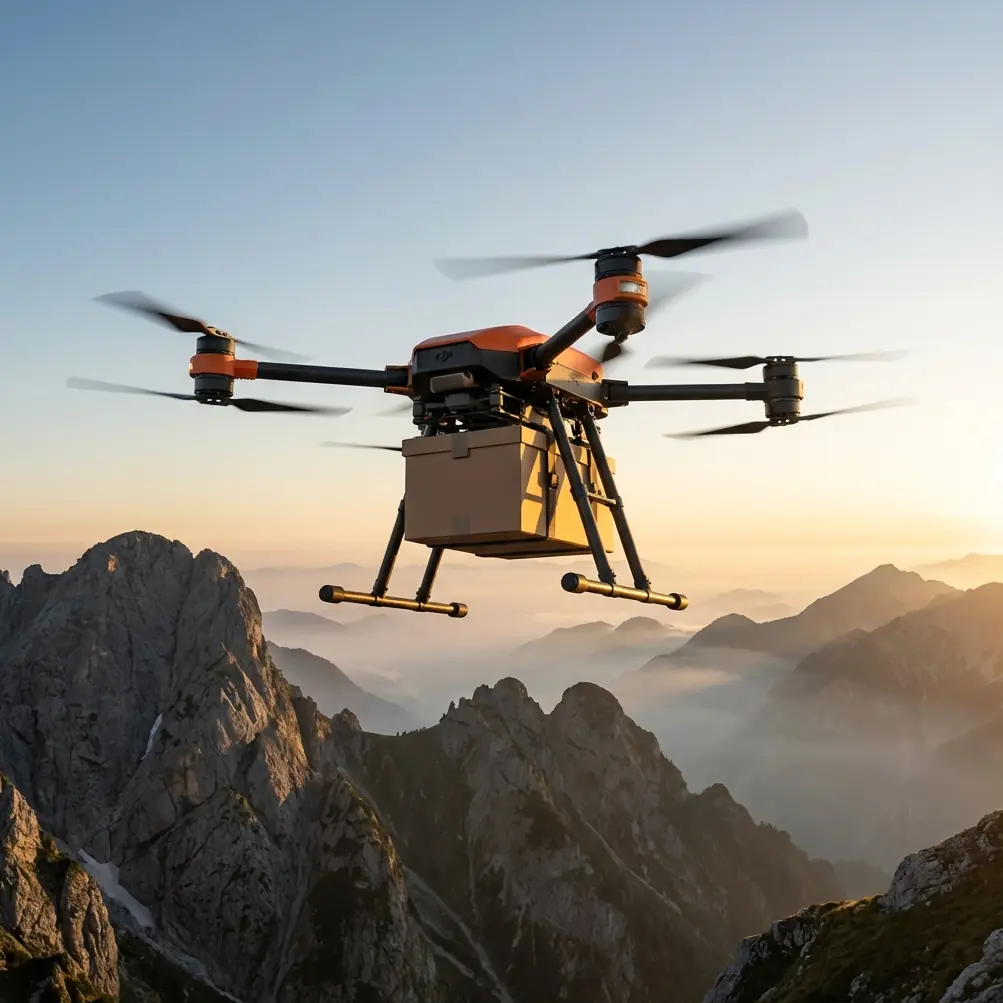
FlyCart 30: Scouting Fields in Complex Terrain
META: Learn how the DJI FlyCart 30 transforms field scouting in complex terrain with its winch system, dual-battery design, and BVLOS capability for logistics teams.
TL;DR
- The FlyCart 30 handles rugged, uneven terrain where ground vehicles and traditional drones fail, making it ideal for agricultural and industrial field scouting operations.
- Its dual-battery system delivers up to 28 km range, ensuring you can cover vast areas without constant return-to-base interruptions.
- A built-in winch system enables precision payload delivery to spots you can't physically reach—cliff edges, flooded zones, and dense canopy areas.
- Emergency parachute and redundant flight systems keep your expensive payloads and the aircraft itself safe when conditions turn unpredictable.
Why Field Scouting in Complex Terrain Demands a New Approach
Ground-based scouting across mountainous farmland, terraced hillsides, or flood-prone valleys wastes days of labor and puts teams at risk. The DJI FlyCart 30 solves this by combining heavy-lift cargo capability with terrain-following intelligence and robust communication systems—this guide walks you through exactly how to deploy it for maximum efficiency across your most challenging sites.
Whether you're surveying remote agricultural plots, delivering sensor packages to inaccessible monitoring stations, or running reconnaissance before a major logistics operation, the FlyCart 30 was engineered for the missions other platforms simply can't handle.
Understanding the FlyCart 30's Core Capabilities for Scouting
Payload Ratio That Changes the Math
The FlyCart 30 carries up to 30 kg in cargo mode and 40 kg using its winch system. That payload ratio—aircraft weight to useful cargo—outperforms nearly every commercial delivery drone on the market.
For scouting operations, this means you can carry:
- Multi-spectral imaging rigs for crop health analysis
- Soil sampling equipment for deployment at remote waypoints
- Weather monitoring sensors for placement on ridgelines
- Emergency supply kits for field teams in hard-to-reach locations
- Communication relay equipment to extend operational range
Dual-Battery Architecture for Extended Missions
The FlyCart 30's dual-battery system isn't just about redundancy—it's about endurance. With two TB65 batteries, the aircraft achieves a maximum range of 28 km and flight times that allow comprehensive coverage of large survey zones in a single sortie.
Critically, the dual-battery design also provides a safety net. If one battery fails or underperforms, the second maintains stable flight, giving you time to execute a controlled return or emergency landing.
Expert Insight — Alex Kim, Logistics Lead: "We run scouting missions over terraced mountain farms where a single battery platform would force us to set up three or four launch points. The FlyCart 30's dual-battery endurance lets us operate from one base, cutting our setup time by 60% and reducing the team size from five people to two."
How to Scout Complex Terrain with the FlyCart 30: Step-by-Step
Step 1: Pre-Mission Route Optimization
Before takeoff, use DJI DeliveryHub to plan your scouting route. This software accounts for:
- Terrain elevation changes across your survey area
- No-fly zones and airspace restrictions
- Wind patterns and weather forecasts
- Battery consumption modeling based on payload weight and distance
- Optimal waypoint sequencing to minimize total flight time
Route optimization is especially critical in complex terrain. A poorly planned route over a mountain valley might force the drone into headwinds on its heaviest-payload leg, slashing effective range by 30-40%.
Step 2: Configure BVLOS Operations
Beyond Visual Line of Sight (BVLOS) capability is what separates the FlyCart 30 from consumer-grade scouting platforms. For complex terrain work, you'll often need the drone operating kilometers from your position, behind ridgelines or across valleys where direct visual contact is impossible.
The FlyCart 30 supports BVLOS through:
- DJI O3 transmission with dual-link redundancy
- 4G LTE network integration for backup communication
- ADS-B receiver for real-time manned aircraft awareness
- Onboard obstacle sensing across multiple directions
Set up your BVLOS parameters in DeliveryHub, define your geofenced operational area, and ensure your 4G backup link is active before launching.
Step 3: Handling Electromagnetic Interference with Antenna Adjustment
Here's where real-world experience separates successful missions from failed ones.
During one of our early deployments scouting agricultural fields in a mountainous region, we lost telemetry at 2.3 km into what should have been a 6 km route. The cause? High-voltage power lines running through the valley were generating electromagnetic interference (EMI) that overwhelmed our control link.
The fix involved a deliberate antenna adjustment protocol that we now run before every complex-terrain mission:
- Identify EMI sources on your route — power lines, communication towers, mining operations, and even certain geological formations with high mineral content.
- Orient the remote controller's antennas perpendicular to the strongest interference source, not pointed at the drone. This maximizes signal rejection from the interference direction.
- Switch to manual frequency selection if automatic frequency hopping is struggling. The FlyCart 30's O3 system operates across 2.4 GHz and 5.8 GHz bands—manually locking to the less congested band in your area can restore a stable link.
- Elevate your ground station position. Even 3-5 meters of additional elevation—a vehicle roof, a portable mast—can dramatically improve line-of-sight signal strength relative to terrain-level interference.
- Use the 4G LTE backup as your primary link in known high-EMI corridors, switching back to direct radio when clear.
Pro Tip: Carry a portable spectrum analyzer on complex-terrain missions. A quick 30-second scan before launch reveals which frequencies are congested at your specific location, letting you configure the FlyCart 30's communication link before you're mid-flight and troubleshooting under pressure.
Step 4: Deploy the Winch System for Precision Scouting
The FlyCart 30's winch system lowers payloads with precision of ±0.5 m from a hover position, using a cable rated for 40 kg. For scouting, this is invaluable when you need to:
- Place ground sensors in locations where landing is impossible
- Retrieve soil or water samples from valley floors
- Lower relay communication equipment onto narrow ridgelines
- Deliver supplies to field teams on steep slopes
The winch operates independently from the flight system, meaning you maintain full aircraft stability while lowering or raising cargo.
Step 5: Activate Emergency Protocols
Complex terrain means complex failure modes. The FlyCart 30's emergency parachute system deploys automatically if the flight controller detects critical failures, reducing descent speed to protect both the airframe and the payload beneath it.
Before each mission, verify:
- Parachute deployment altitude is set correctly for your terrain (account for ground elevation variations)
- Return-to-home altitude clears all obstacles on the return path
- Emergency landing zones are pre-programmed along the route
Technical Comparison: FlyCart 30 vs. Alternative Scouting Platforms
| Feature | FlyCart 30 | Traditional Cargo Drone | Ground Vehicle Scouting |
|---|---|---|---|
| Max Payload | 30 kg (cargo) / 40 kg (winch) | 5–15 kg | 200+ kg |
| Max Range | 28 km | 8–15 km | Unlimited (road-dependent) |
| Terrain Independence | Full aerial bypass | Full aerial bypass | Limited by road access |
| Winch System | Built-in, 40 kg rated | Aftermarket, if available | N/A |
| Emergency Parachute | Integrated, auto-deploy | Rare, usually aftermarket | N/A |
| BVLOS Capability | Native with 4G backup | Limited | N/A |
| Setup Time | ~10 minutes | 15–30 minutes | 1–3 hours (mobilization) |
| Crew Required | 1–2 operators | 2–3 operators | 3–5 personnel |
| Weather Resistance | IP55, operates in 12 m/s wind | Varies, often <8 m/s | Weather-dependent on terrain |
Common Mistakes to Avoid
Ignoring wind acceleration in valleys and passes. Terrain funnels wind. A forecast showing 5 m/s at your launch site can mean 12+ m/s at a mountain pass along your route. Always build wind margins into your route optimization.
Overloading on the outbound leg. Teams often maximize payload for the scouting run, forgetting that the outbound leg typically fights headwinds or climbs elevation. Reduce payload by 10-15% below maximum to maintain safe power reserves.
Skipping the EMI survey. As described above, electromagnetic interference in complex terrain is unpredictable. The five minutes spent scanning your RF environment before launch can save you an aircraft.
Setting a flat return-to-home altitude. If you're operating in terrain with 200 m elevation changes, a single RTH altitude is dangerous. Program terrain-following RTH or set the altitude based on the highest obstacle across the entire operational area, not just near the launch point.
Neglecting firmware updates before deployment. DJI frequently updates the FlyCart 30's flight controller and obstacle avoidance algorithms. Running outdated firmware in complex terrain means missing safety improvements specifically designed for these conditions.
Frequently Asked Questions
Can the FlyCart 30 operate in rain during scouting missions?
Yes. The FlyCart 30 carries an IP55 protection rating, meaning it withstands sustained rain and dusty conditions. It's certified to fly in moderate rain, making it reliable for scouting operations that can't wait for perfect weather windows. However, heavy thunderstorms with lightning should be avoided due to both electrical risk and extreme wind shear.
How does route optimization work for terrain with significant elevation changes?
DJI DeliveryHub ingests digital elevation model (DEM) data and calculates energy-optimized routes that account for climbing and descending. The software factors in payload weight, wind data, and battery state to determine whether a direct route over a ridge or a longer route around it consumes less energy. This automated route optimization regularly saves 15-25% battery life compared to manual straight-line planning.
What happens if communication is lost during a BVLOS scouting mission?
The FlyCart 30 follows a layered failsafe protocol. It first attempts to reconnect via the secondary communication link (4G LTE). If both links remain lost for a configurable duration, the aircraft executes its pre-programmed return-to-home procedure at a safe altitude. If RTH is not possible due to low battery, it identifies the nearest pre-programmed emergency landing zone and descends autonomously. The emergency parachute serves as the final layer of protection if all other systems are compromised.
Ready for your own FlyCart 30? Contact our team for expert consultation.