
FlyCart 30 for Remote Field Scouting: A Practical Setup
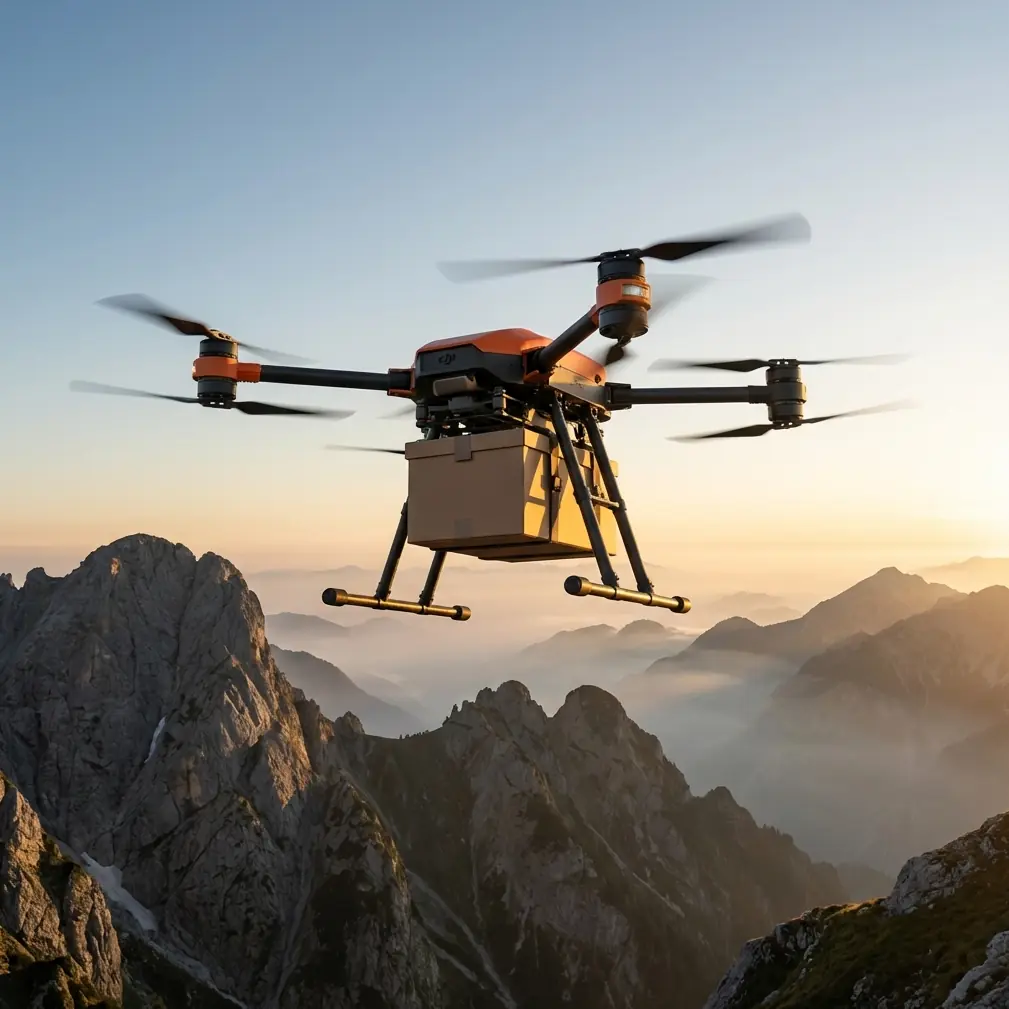
FlyCart 30 for Remote Field Scouting: A Practical Setup Guide from the Logistics Side
META: Learn how to use the DJI FlyCart 30 for remote field scouting with practical tips on payload planning, dual-battery management, winch use, route optimization, and risk control.
Remote field scouting sounds simple until the site reminds you who is in charge. Wind slips across a ridgeline. Ground access disappears into mud. Cell coverage fades. Suddenly, the value of an aircraft like the FlyCart 30 is not just that it can carry gear. It is that it can keep an operation moving when walking the route wastes time, vehicle access is unreliable, and every extra battery cycle matters.
I approach the FlyCart 30 as a logistics platform first and an aircraft second. That mindset changes how you use it in the field. If your job is scouting remote acreage, checking fence lines, dropping radios or sensors to a team, or moving small but mission-critical equipment between inaccessible points, the FlyCart 30 becomes useful when you stop treating it like a flying truck and start treating it like a planned transport system.
This guide is built for that exact scenario: scouting fields in remote areas where you need repeatable sorties, predictable power use, and safer delivery methods than landing on uncertain ground.
Start with the mission, not the aircraft
The most common mistake I see is choosing the load first and worrying about the route later. In remote scouting, the route determines almost everything: energy draw, reserve margin, delivery method, and whether the aircraft returns with enough headroom to stay out of trouble.
Before the first launch, I define four things:
- What must arrive on site
- Whether the item needs a landing delivery or a winch drop
- How far the true flight path is, not the straight-line map distance
- What reserve I want when the aircraft returns
That last point matters more than most teams admit. A remote field mission is rarely a clean out-and-back line. The aircraft may climb over trees, slow in gusts, reposition for a safer drop, or wait briefly while a person clears the delivery area. Every one of those moments costs energy.
The FlyCart 30’s value in field scouting comes from combining useful lift with transport-specific features. Two details matter a lot in real operations: the dual-battery configuration and the winch system. On paper, those sound like feature bullets. In the field, they decide whether your workflow is smooth or stressful.
Why the dual-battery setup changes remote work
A dual-battery aircraft gives you more than extra endurance. It gives you a power architecture that is easier to manage across repeated field tasks, especially when the day includes multiple short to medium runs rather than one dramatic mission.
For scouting teams, that matters because remote work punishes inconsistency. If you launch with batteries that are technically charged but thermally uneven, aged differently, or cycled out of balance, your estimates stop being reliable. Route planning becomes guesswork. And guesswork is expensive even when nothing crashes.
Here is the battery management tip I give every field crew because I learned it the annoying way: do not pair batteries by convenience; pair them by behavior.
In practical terms, I keep FlyCart 30 battery pairs together across the workweek and log how they discharge under similar mission profiles. If one battery pair consistently lands at a different remaining percentage than another on the same route, that pair gets its own performance note and its own mission role. The stronger pair handles longer climbs or heavier outbound loads. The weaker pair gets shorter utility runs.
Why does this matter? Because remote scouting rarely fails all at once. It drifts out of spec. A route that used to end with a comfortable reserve begins landing tighter. The pilot compensates. The weather shifts. The delivery point takes longer to clear. Small energy differences become operational risk.
I also tell crews to avoid topping packs to full and letting them sit in a hot vehicle while the site briefing drags on. If you know the first launch window, charge for the window, not two hours before it. Battery confidence starts before takeoff.
Payload ratio is more important than maximum payload
A lot of people fixate on the biggest number attached to a cargo drone. That is the wrong lens for field scouting. The smarter metric is payload ratio: how much of the aircraft’s lift capacity you are using relative to the route, terrain, and landing conditions.
If your scouting mission only requires a radio relay, compact tool kit, seed sample container, or small field sensor, flying near the limit usually makes no sense. You are trading margin for bragging rights.
I prefer to keep remote scouting loads well below the aircraft’s maximum lift unless the mission genuinely demands otherwise. A lighter payload ratio gives you more options. You can reroute around a stand of trees without sweating every percentage point. You can hold position while the ground team confirms the drop zone. You can absorb a bit of wind without turning the return leg into a tense battery watch.
Operationally, this is the difference between using the FlyCart 30 as a system and using it as a stunt. A system is repeatable. Repeatability is what remote scouting needs.
When the winch system is the better choice
The winch system is one of the most useful tools on the FlyCart 30 for remote field work because many scouting sites are poor landing zones. Tall grass can hide uneven ground. Irrigation lines create snag hazards. Soft soil can shift under landing gear. Livestock, debris, or brush can make a touchdown point look acceptable from above and risky up close.
That is where the winch becomes more than a convenience. It is a risk-control method.
If the receiving point is visually cluttered or physically uncertain, I would rather hold a stable hover and lower the load than commit the aircraft to ground contact. The operational significance is straightforward: you reduce the chance of a bad landing, rotor disturbance near loose material, and delays caused by repositioning for a cleaner touchdown.
This is especially helpful when scouting teams need to place gear precisely near a fence line, gate, pump station, or narrow access point. A controlled lowering action can be cleaner than trying to shoehorn a landing into a spot the map made look bigger than it really is.
The added discipline is that winch drops require their own checklist. Confirm clear vertical space. Confirm the load will not swing into obstacles. Confirm the receiver understands approach direction and stand-off distance. Good winch operations are deliberate, not improvised.
Route optimization is not just about distance
For remote scouting, route optimization is usually misunderstood as “find the shortest line.” The better goal is “find the least costly line.” Those are often not the same route.
A straight path over a ridge may be shorter but require a power-hungry climb and expose the aircraft to stronger crosswinds. A slightly longer line following lower terrain may produce a calmer, more efficient mission. The same logic applies to tree corridors, utility obstacles, and known turbulence pockets near terrain changes.
On the FlyCart 30, route planning should weigh at least these variables:
- Elevation changes across the route
- Typical wind direction at launch and destination
- Whether the payload is more sensitive during outbound or inbound flight
- The safest hover point for winch deployment
- Recovery options if conditions change
For BVLOS-minded operators, this planning discipline becomes even more important. Whether your specific operation is authorized for beyond visual line of sight depends on your local regulations and approvals, but the planning habits are worth adopting regardless. Build routes as if you need them to be legible, defendable, and repeatable. That means documented waypoints, known alternates, and conservative reserve thresholds.
Even if you are flying within visual parameters today, that kind of structure prepares your team for more mature operations later.
The emergency parachute is part of planning, not a footnote
Cargo drones attract a lot of attention because of lifting capacity, but in remote operations, risk mitigation deserves just as much focus. An emergency parachute system should never be mentally filed under “nice to have.” It belongs in the mission architecture.
Why? Because field scouting often places the aircraft over mixed terrain where recovery access is imperfect. Brush, ditches, slopes, and soft ground all complicate abnormal events. An emergency system changes the risk picture, especially when you are transporting payloads over areas where an uncontrolled descent could create secondary hazards.
The operational takeaway is simple: if the aircraft includes an emergency parachute function, crews should train around the scenario logic before they ever need it. What area along the route presents the lowest consequence profile? Where are the no-go zones? If an onboard warning escalates, when do you abort, and what corridor do you choose? Those decisions should not be invented in the air.
A practical remote-field workflow
Here is the workflow I recommend for FlyCart 30 scouting runs in isolated areas.
1. Split cargo into mission classes
Do not treat every item the same. I group cargo into three classes:
- Essential and light: radios, batteries for handhelds, compact sensors, first-line tools
- Useful but delay-tolerant: documentation kits, spare parts, non-urgent consumables
- Heavy or awkward: items that change the aircraft’s energy profile enough to justify their own route and timing
This helps determine whether the sortie should prioritize speed, reserve margin, or winch precision.
2. Build the first route as a calibration route
The first run of the day should tell you something. I use it to validate wind effect, actual time on route, hover stability near the drop point, and battery behavior under current conditions. That single flight becomes the benchmark for the rest of the day.
If the aircraft comes back tighter than expected, I adjust immediately. I do not wait for a “real problem.”
3. Standardize the delivery point
Remote sites tend to become chaotic. People gather where they should not stand. Vehicles park where the aircraft needs clearance. Equipment spreads into approach paths.
Choose a repeat delivery point whenever possible and teach the ground team to set it the same way every time. Consistency cuts risk faster than most technical upgrades.
4. Use communication checkpoints
Before launch, at approach, and after delivery, the ground team should provide brief structured confirmations. Short, boring, and repeatable beats casual chatter every time.
If your team needs a quick field coordination channel, I prefer something simple like message our ops desk here so delivery confirmations and route changes are not buried in unrelated chat.
5. Preserve a hard return margin
Remote work has a way of inventing delays. The recipient is not in position. The wind shifts at the far end. A second lowering attempt is needed. Build your battery policy around that reality.
I would rather tell a team “not on this sortie” than accept a pattern of optimistic returns.
What makes the FlyCart 30 specifically useful here
The FlyCart 30 stands out for remote scouting not because it is merely capable of carrying payloads, but because its transport-oriented configuration fits the real constraints of inaccessible land. The dual-battery setup supports repeat sorties when managed properly. The winch system reduces dependence on clean landing areas. Safety features such as an emergency parachute matter more when the terrain below is inconsistent and recovery paths are limited.
Those are not abstract specifications. They affect how many useful runs you can complete in a day, how often you need to reject marginal landing zones, and how confidently you can plan deliveries to points that a truck or ATV cannot reach without wasting time or damaging the site.
That is the difference between a drone that is interesting and one that becomes part of field operations.
Final advice from the logistics seat
If you are scouting remote fields with a FlyCart 30, your edge does not come from flying aggressively. It comes from disciplined planning that makes the aircraft boring in the best sense of the word. Predictable routes. Predictable battery behavior. Predictable delivery methods. That is what scales.
Keep payloads lighter than your ego wants. Use the winch when the ground looks even slightly questionable. Pair batteries by performance, not by whatever is nearest the charger. Treat route optimization as an energy problem, not a map problem. And never relegate safety systems to the bottom of the checklist.
The crews that get the most value out of a cargo platform are usually the ones that look least dramatic while using it. Out in remote terrain, that is exactly the point.
Ready for your own FlyCart 30? Contact our team for expert consultation.