
FlyCart 30 Scouting Tips for Coastal Fields: Antenna Setup
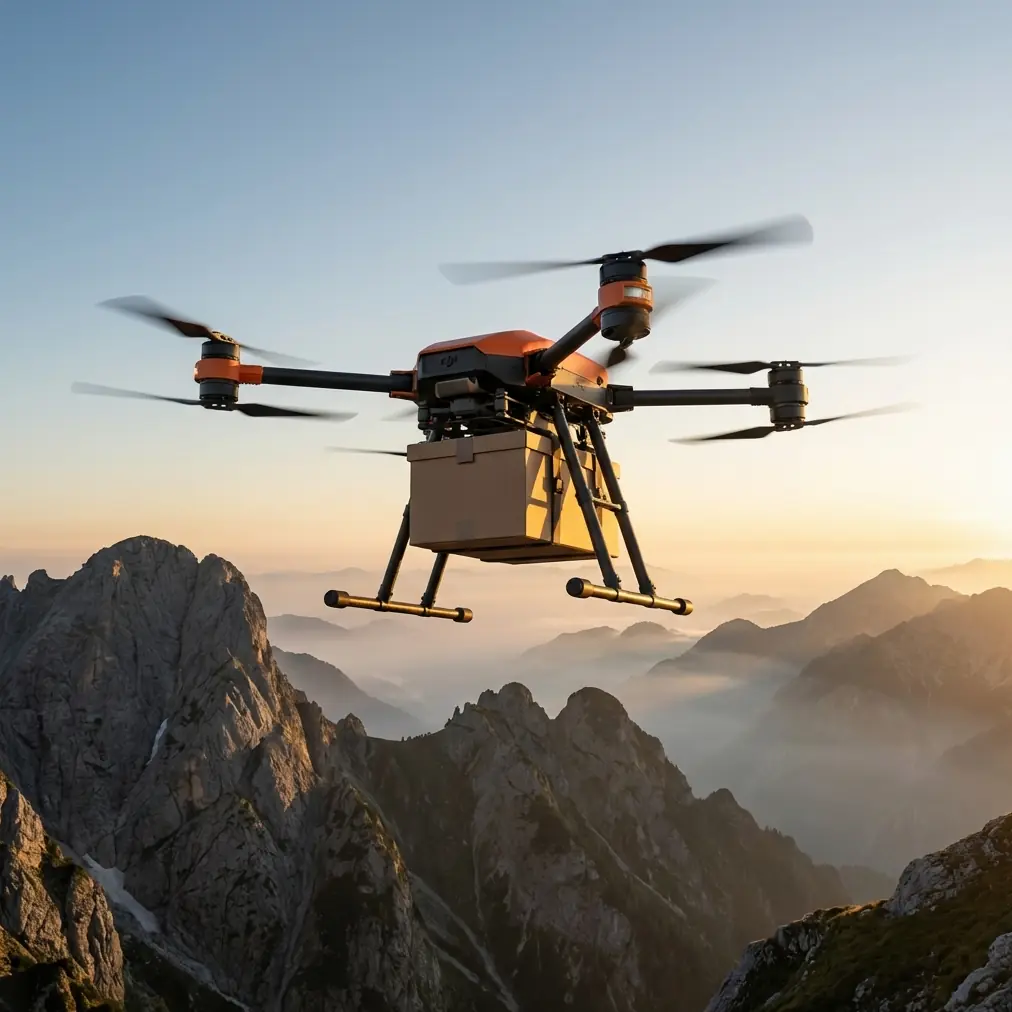
FlyCart 30 Scouting Tips for Coastal Fields: Antenna Setup, Route Discipline, and What a News Drone Team Can Teach Operators
META: Practical FlyCart 30 scouting tips for coastal field operations, including antenna positioning, range discipline, route planning, and how professional drone team structure improves reliability.
Coastal field scouting looks simple on paper. Wide-open ground. Clear sightlines. Plenty of room. Then the wind shifts off the water, signal behavior gets erratic near low structures and tree lines, and what should have been a routine pre-mission check turns into a lesson in discipline.
That is why FlyCart 30 scouting deserves more respect than it usually gets.
I approach this from a logistics mindset. Before a heavy-lift platform moves material, it has to prove the route, the environment, and the communication envelope. In coastal areas especially, the scouting phase is not a box to tick. It is where range confidence, route optimization, and recovery margins are built. If you are evaluating fields for transport runs, line-side delivery, agricultural support, or cross-property movement, the decisions you make before the first payload flight will shape everything that follows.
An interesting reference point comes from outside logistics. Xinhua announced the formation of a dedicated news drone team, described as the first national drone news project of its kind, with the team formally launched at a homepage release event on the 15th. Their first fleet used compact integrated multirotor aircraft designed for aerial imaging across all weather conditions, varied terrain, and full-media coverage. That may sound far from a FlyCart 30 mission, but the operational lesson is directly relevant: serious drone work improves when it moves from ad hoc flying to organized fleet practice.
That shift matters for FlyCart 30 operators in the field.
A coastal scouting mission should be treated less like a casual site visit and more like a repeatable professional workflow. The aircraft may be different from a media platform, and the mission objective may be route validation rather than image gathering, but the same principle applies. If a newsroom can justify a dedicated drone team because consistency matters, a commercial operator using a transport-class UAV definitely should.
Why coastal field scouting is its own category
Not all fields behave the same, and coastal properties have a few recurring problems.
First, wind rarely stays uniform. What feels manageable near the takeoff point can become crosswind pressure at the far edge of a route, especially where the field opens toward water or marsh. Second, moisture-heavy air and reflective surfaces can affect visibility, perception, and sometimes operational confidence, even when the link remains technically stable. Third, coastal field layouts often include drainage features, low berms, service roads, irrigation equipment, scattered structures, and power corridors that create weak points for route design.
That is where the FlyCart 30’s core operating concepts become useful. People often focus on headline capability, but in real scouting the more valuable question is this: how do you build margin? Payload ratio, dual-battery planning, emergency parachute readiness, and route optimization are not isolated checkboxes. They interact.
A heavy-lift aircraft scouting with no load is not “easy mode” if the route itself is flawed. A no-payload reconnaissance pass still needs to identify where a loaded aircraft could lose efficiency, where the winch system would need clear vertical space, and where antenna alignment could become the hidden limiting factor.
Start with the route, not the aircraft
A common mistake is to begin by asking how far the FlyCart 30 can reach from a chosen launch point. The better question is whether the launch point deserves to be your launch point at all.
In coastal fields, range is often won or lost by ground positioning. If you set up beside a metal shed, near parked vehicles, below a raised embankment, or too close to tree cover, you may reduce link quality long before the route itself becomes difficult. That is why I tell teams to scout the controller position with the same seriousness they apply to the air corridor.
Choose a launch and control location that gives you:
- the cleanest possible line toward the longest leg of the route
- minimal reflective clutter nearby
- enough elevation to preserve direct signal geometry
- room to maintain visual awareness of ascent and descent zones
- separation from moving equipment, field traffic, and temporary obstacles
This is where antenna positioning advice becomes practical rather than theoretical.
Antenna positioning advice for maximum range
If your coastal field route is long and low, the antenna setup should support the route shape, not fight it.
The first rule is simple: do not point the antenna tips directly at the aircraft. Most operators know this, but in the field they still drift into bad habits, especially when the aircraft is outbound and shrinking visually. The stronger transmission zone is typically broadside to the antenna face, so your aim should keep the aircraft in that effective radiation pattern rather than at the narrow end.
Second, keep your own body from becoming part of the problem. Turning away, hunching over the controller, or letting a vehicle or utility box sit between you and the aircraft can degrade consistency. In open coastal terrain, small mistakes stand out because there are fewer excuses.
Third, think in terms of route sectors. If your mission includes a long outbound leg to one side and then a turn behind a crop block, irrigation pivot, or tree row, do not wait for weak signal warnings to reposition mentally. Pre-brief the angle changes. Know where your antenna orientation should be during each segment.
Fourth, if you are working from a field edge, do not stand too low if a small rise, trailer deck, or safe elevated pad can improve geometry. A modest increase in operator elevation can help preserve cleaner line-of-sight over crops, fences, and service equipment. This is especially useful in fields with uneven drainage contours.
If you want a second opinion on field layout or controller placement before a route validation day, send your route sketch here: https://wa.me/85255379740
Use scouting to validate payload ratio assumptions
Even when you are only scouting, the mission should anticipate loaded conditions.
FlyCart 30 operations are shaped by payload ratio in a way that many crews underestimate. A route that feels straightforward with no cargo may become inefficient or operationally tight once the aircraft is carrying a meaningful load and compensating for wind. In coastal areas, that difference can be more pronounced than inland because the environmental penalty is not always constant across the route.
So during scouting, log the segments where the aircraft has to:
- climb more than expected to maintain obstacle clearance
- slow down because of crosswind exposure
- make sharper turns than the planned transport corridor should allow
- hover longer over a target drop or pickup point
- descend into turbulent or visually cluttered spaces
Each of those details affects real transport planning. They alter battery consumption, timing, and whether the chosen route still makes sense under payload. Scouting is not just “can it fly there.” It is “can it fly there repeatedly with margin.”
The winch system changes how you evaluate drop zones
For field support work, the winch system can open up practical options where landing is inconvenient or undesirable. But it also forces stricter thinking about vertical access.
A pickup or drop area that looks usable from the ground may fail the moment you consider suspended cargo behavior. Wind near the coast can push a hanging line off center, and nearby poles, trellis structures, cables, irrigation hardware, or uneven vegetation can quickly turn a routine lowering action into a compromised procedure.
During scouting, study each intended winch point from three perspectives:
Vertical clearance
Is there enough clean space above the target area for stable lowering and retrieval?Lateral drift tolerance
If the load swings slightly, what could it contact?Approach and hold stability
Does the aircraft need to hold position in an area where wind funnels between structures or rises from an embankment?
This is one reason the Xinhua drone-team example matters operationally. Their project emphasized all-weather, multi-terrain collection capability. For FlyCart 30 crews, that idea translates into mission standardization across varying ground conditions. You do not want every operator improvising a drop-zone decision differently. You want a shared method for evaluating vertical safety, site suitability, and environmental risk.
BVLOS thinking starts before BVLOS approval
Even if you are flying within current visual and regulatory limits, coastal scouting benefits from BVLOS-style thinking. By that I mean planning the route as a managed corridor rather than a loose out-and-back.
That mindset includes:
- defined checkpoints
- known terrain or infrastructure references
- preplanned altitude profiles
- communication expectations at each segment
- contingency return logic
- alternate abort points
This is not bureaucracy. It is efficiency.
Professional media teams understood this early when they began using drones to gather imagery and video, as seen with the overseas outlets mentioned in the reference data, including AP, CNN, The New York Times, and The Washington Post. Once multiple organizations started testing drones for news acquisition, they were no longer treating each sortie as an isolated experiment. Commercial transport crews should do the same. A FlyCart 30 scouting mission should create a route standard the team can reuse, refine, and document.
Dual-battery discipline is part of scouting, not just transport
Operators often talk about dual-battery logic only in relation to loaded flights. That is too late.
Scouting should tell you how battery reserve is likely to behave on the eventual mission. Watch where the route demands extra climb, repeated hover corrections, or conservative speed reductions. Those segments become the hidden consumers that narrow your margin later. A dual-battery system gives resilience, but resilience works best when the route itself is honest.
This is also why return thresholds should be tested conceptually against the least favorable leg, not the easiest one. If the outbound route is assisted by wind and the return fights it, your confidence can become lopsided very quickly. Coastal operators see this all the time.
Don’t treat the emergency parachute as background hardware
An emergency parachute should influence where you are willing to fly, not merely how you react if something goes wrong.
For field scouting, ask two blunt questions:
- If deployment occurred here, where would the aircraft descend?
- Would that area be clear of workers, vehicles, livestock, infrastructure, and water hazards?
Those answers may push you to revise route alignment by a small distance. Small distance changes are often enough. The point is not to design around failure obsessively. The point is to acknowledge that a transport-class UAV deserves consequence-aware routing from day one.
Build a repeatable coastal scouting checklist
If I were setting a team standard for FlyCart 30 field scouting, I would keep it tight and practical:
1. Pick the controller position before the route
Prioritize signal geometry and clean surroundings.
2. Map route sectors
Break the path into outbound, work zone, and return segments.
3. Pre-plan antenna orientation
Know where the controller should face during each leg.
4. Evaluate loaded-flight realism
Use the scout to identify where payload ratio will matter later.
5. Inspect winch zones vertically
Do not approve a drop point based on ground appearance alone.
6. Note wind behavior by location
The field edge and the far work zone may behave like different sites.
7. Review battery demand by segment
Flag any route portion that adds hidden energy cost.
8. Check parachute consequence areas
Keep vulnerable spaces out of the highest-risk corridor when possible.
9. Document one route, then improve it
Professional operations get stronger through standardization, not memory.
What the Xinhua drone-team story really tells us
The standout detail is not just that a drone team was created. It is that a major news organization formalized the capability and framed it around broad operational utility: all-weather use, multiple terrain types, and full-media collection. That is exactly how mature UAV programs evolve. They move from occasional flights to structured mission systems.
For FlyCart 30 operators scouting coastal fields, that is the real takeaway. Reliability does not come from the aircraft alone. It comes from team habits, route discipline, antenna awareness, and operational consistency.
The aircraft can carry the mission. The crew has to carry the standard.
When coastal scouting is done properly, you learn more than where the field begins and ends. You learn where the signal stays clean, where the wind lies, where the winch can work safely, and where battery margin starts to erode. You also learn whether your team is building a professional operation or just repeating isolated flights with expensive hardware.
That distinction shows up later in every delivery, every resupply run, every field support task, and every decision made under pressure.
Ready for your own FlyCart 30? Contact our team for expert consultation.