
How to Scout Forests in Complex Terrain with FC30
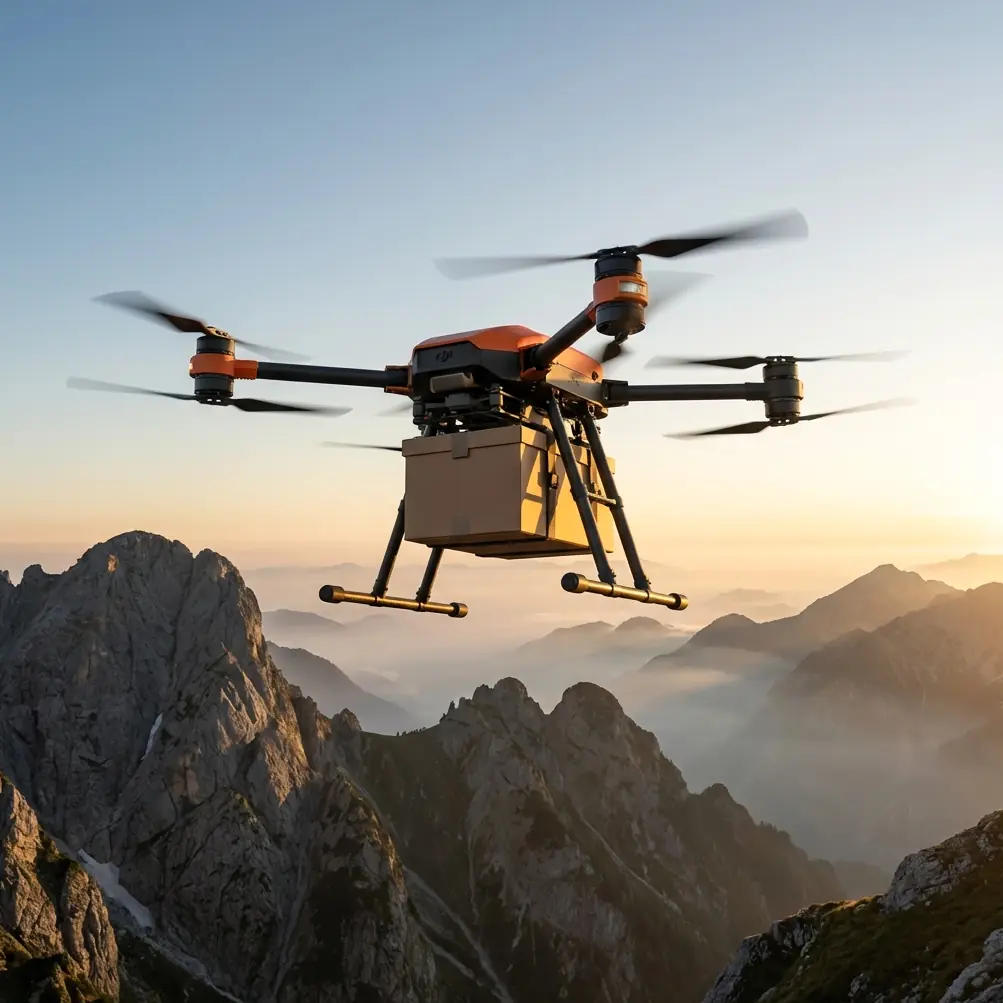
How to Scout Forests in Complex Terrain with FC30
META: Learn how the FlyCart 30 transforms forest scouting missions in rugged terrain. Discover payload strategies, route optimization, and BVLOS techniques for efficient surveys.
TL;DR
- FlyCart 30's 30kg payload capacity enables deployment of multiple sensor packages for comprehensive forest data collection
- Dual-battery redundancy and emergency parachute system ensure mission safety in remote, complex terrain
- Winch system integration allows precise equipment drops in areas inaccessible to ground crews
- BVLOS capabilities extend effective survey range while maintaining regulatory compliance
Forest scouting in mountainous or densely wooded terrain has always been one of the most demanding tasks in environmental management. The FlyCart 30 changes the equation entirely—its 30kg payload ratio and advanced flight systems let you cover ground that would take ground crews weeks to traverse. This guide walks you through exactly how to configure, plan, and execute forest scouting missions using the FC30's full capability set.
Two years ago, my team spent eleven days surveying a 2,400-hectare forest reserve in the Pacific Northwest. Steep ravines, unpredictable weather windows, and limited road access turned what should have been routine reconnaissance into a logistical nightmare. When we deployed the FlyCart 30 on a similar mission last spring, we completed comprehensive coverage in three days. That experience shaped everything I'm about to share.
Understanding the FlyCart 30's Forest Scouting Capabilities
The FC30 wasn't originally designed as a survey platform—it's a delivery drone. But that delivery DNA makes it exceptionally suited for forest work. The engineering priorities that allow it to carry 30kg across 16km translate directly into the stability, power reserves, and payload flexibility that complex terrain demands.
Core Specifications That Matter for Forest Operations
Before planning any mission, you need to understand which FC30 specs directly impact forest scouting performance:
- Maximum takeoff weight: 65kg (aircraft + payload combined)
- Effective payload capacity: Up to 30kg in optimal conditions
- Maximum range: 16km one-way with full payload
- Wind resistance: Stable operations up to 12m/s
- Operating temperature range: -20°C to 45°C
- IP rating: IP55 for dust and water resistance
The dual-battery architecture deserves special attention. Each battery pack operates independently, meaning a single cell failure doesn't ground your mission. In remote forest environments where recovery operations are difficult, this redundancy isn't a luxury—it's essential.
Expert Insight: When calculating payload for forest missions, reserve 15% of your capacity for contingency power. Dense canopy creates unpredictable wind patterns at lower altitudes, and you'll need that buffer for stabilization corrections.
Pre-Mission Planning for Complex Terrain
Successful forest scouting starts days before the drone leaves the ground. The FC30's capabilities only matter if your mission planning accounts for the specific challenges of wooded, uneven terrain.
Terrain Analysis and Route Optimization
Route optimization in forest environments differs fundamentally from open-area planning. You're not just calculating distance—you're mapping a three-dimensional corridor through variable obstacles.
Start with topographic data at 10m resolution minimum. Identify:
- Ridge lines and valley floors (natural flight corridors)
- Canopy height variations (affects safe altitude calculations)
- Potential emergency landing zones every 2km of route
- Communication shadow zones created by terrain features
The FC30's flight controller accepts waypoint missions with altitude profiles, but you'll need to build those profiles manually based on terrain data. I use a simple rule: minimum altitude equals highest canopy point plus 30m within a 100m radius of any waypoint.
Weather Window Identification
Forest microclimates create conditions that don't match regional forecasts. Morning temperature inversions in valleys can produce fog that burns off unpredictably. Afternoon thermals along sun-facing slopes generate turbulence that challenges even the FC30's stabilization systems.
For multi-day survey campaigns, I've found the optimal window is typically two hours after sunrise until three hours before sunset. This avoids the worst thermal activity while maintaining adequate lighting for optical sensors.
Payload Configuration Strategies
The FC30's 30kg payload capacity opens possibilities that smaller survey drones can't match. But maximizing that capacity requires thoughtful configuration.
Sensor Package Options
| Sensor Type | Typical Weight | Data Output | Best Use Case |
|---|---|---|---|
| LiDAR (survey-grade) | 8-12kg | Point cloud, canopy height models | Terrain mapping, biomass estimation |
| Multispectral camera | 2-4kg | NDVI, species classification | Health assessment, species mapping |
| Thermal imager | 1-3kg | Heat signatures | Wildlife surveys, fire risk assessment |
| High-res RGB camera | 1-2kg | Orthomosaics, visual inspection | General reconnaissance, damage assessment |
| Hyperspectral sensor | 5-8kg | Detailed spectral analysis | Disease detection, mineral surveys |
For comprehensive forest scouting, I typically configure a combined payload of LiDAR plus multispectral imaging, coming in around 14-16kg total. This leaves substantial margin for the power reserves complex terrain demands.
Winch System Applications
The FC30's optional winch system transforms what's possible in forest operations. Rather than landing in potentially hazardous clearings, you can:
- Deploy ground sensors to specific locations
- Lower sample collection equipment to forest floor
- Retrieve data loggers from previous installations
- Deliver supplies to ground crews in inaccessible areas
The winch handles loads up to 40kg with 20m of cable. For forest work, I recommend limiting deployments to 15m maximum—longer cable runs increase pendulum effects in wind.
Pro Tip: When using the winch in forested areas, approach the drop point from downwind. This keeps the cable trailing behind the aircraft rather than swinging forward into the rotors during descent.
Executing BVLOS Forest Missions
Beyond Visual Line of Sight operations unlock the FC30's full potential for large-area forest surveys. But BVLOS in complex terrain requires additional preparation and equipment.
Communication Infrastructure
The FC30's standard control link operates reliably to approximately 8km in open conditions. Forest canopy and terrain obstruction can reduce this dramatically. For true BVLOS capability, you'll need:
- Repeater stations positioned on high points along the route
- Cellular backup using LTE modules (where coverage exists)
- Automated return-to-home triggers set conservatively
I configure RTH to activate at 70% signal strength degradation rather than waiting for link loss. In forest environments, signal quality can collapse rapidly once it starts declining.
Regulatory Compliance
BVLOS operations require specific authorizations in most jurisdictions. For forest scouting, you'll typically need:
- Waiver or exemption from visual observer requirements
- Demonstrated detect-and-avoid capability
- Coordination with local air traffic control
- Emergency procedures documentation
- Insurance coverage for extended operations
The FC30's emergency parachute system significantly strengthens waiver applications. Regulators recognize that controlled descent capability reduces risk to acceptable levels for remote area operations.
Safety Systems and Emergency Procedures
Operating in remote forest terrain means help is far away if something goes wrong. The FC30's safety systems provide multiple layers of protection, but you need to understand how to use them.
Emergency Parachute Deployment
The integrated parachute system activates automatically under specific conditions:
- Loss of two or more motors
- Attitude deviation exceeding recovery parameters
- Manual trigger by operator
- Complete power system failure
Deployment altitude minimum is 30m AGL. In forest environments, this means the parachute protects the payload and prevents uncontrolled descent—but the aircraft will likely end up in the canopy regardless. Plan recovery operations accordingly.
Dual-Battery Failure Modes
The dual-battery system operates in several modes depending on conditions:
| Condition | System Response | Operator Action |
|---|---|---|
| Single battery warning | Automatic load balancing | Continue mission with monitoring |
| Single battery critical | Power draw from healthy battery only | Initiate return immediately |
| Dual battery warning | Reduced power mode | Land at nearest safe point |
| Dual battery critical | Emergency landing sequence | Prepare for recovery operation |
Common Mistakes to Avoid
After dozens of forest scouting missions with the FC30, I've seen the same errors repeatedly—often made them myself early on.
Underestimating canopy effects on GPS: Dense forest canopy degrades GPS accuracy significantly. The FC30 handles this better than most platforms, but you should still expect 3-5m horizontal drift under heavy cover. Don't plan waypoints that require precision positioning near obstacles.
Ignoring weight distribution: A 30kg payload capacity doesn't mean you can strap 30kg anywhere on the airframe. The FC30's center of gravity tolerances are specific. Unbalanced loads create control authority problems that compound in turbulent conditions.
Skipping pre-flight in remote locations: The temptation to maximize flight time when you've hiked two hours to a launch site is real. Resist it. Full pre-flight checks matter more in remote locations, not less. A problem caught on the ground is inconvenient; the same problem at altitude is a recovery expedition.
Planning maximum-range missions: The FC30 can fly 16km with full payload. That doesn't mean you should plan 16km missions. Build in 25% range reserve minimum. Forest operations consistently demand more power than flat-terrain equivalents.
Neglecting recovery planning: Before every mission, know exactly how you'll retrieve the aircraft if it goes down. In complex terrain, this might mean coordinating with ground crews, arranging helicopter access, or accepting that some areas simply aren't worth the risk.
Frequently Asked Questions
Can the FlyCart 30 operate effectively under dense forest canopy?
The FC30 is designed for operations above canopy level, not beneath it. Its size and rotor configuration make sub-canopy flight impractical in most forest environments. For data collection requiring penetration below the canopy, use the winch system to lower sensors while the aircraft maintains position above the treeline. LiDAR systems can capture ground-level data through canopy gaps without requiring the aircraft to descend.
How does the FC30 handle sudden weather changes during forest missions?
The aircraft's IP55 rating provides protection against light rain and dust, allowing continued operation in deteriorating conditions that would ground lesser platforms. The flight controller continuously monitors wind speed and will alert operators when conditions approach the 12m/s operational limit. For forest missions, I recommend setting weather abort thresholds at 8m/s sustained wind due to the additional turbulence created by terrain and canopy interactions.
What's the realistic survey coverage rate for forest scouting missions?
Coverage rates depend heavily on sensor configuration and data resolution requirements. With a standard LiDAR/multispectral payload flying at 80m AGL with 60% overlap, expect to cover approximately 120-150 hectares per flight hour. The FC30's endurance allows 35-45 minutes of survey time per sortie with appropriate reserves. For a typical day with four sorties, realistic coverage is 500-600 hectares of comprehensive multi-sensor data.
The FlyCart 30 represents a genuine capability shift for forest scouting operations. Its combination of payload capacity, safety systems, and operational flexibility addresses challenges that have constrained aerial survey work for years. The techniques outlined here come from real field experience—adapt them to your specific terrain and mission requirements, and you'll find the FC30 delivers results that justify the investment in learning its capabilities.
Ready for your own FlyCart 30? Contact our team for expert consultation.