
FlyCart 30 Case Study: What Pizza Delivery Taught Us About
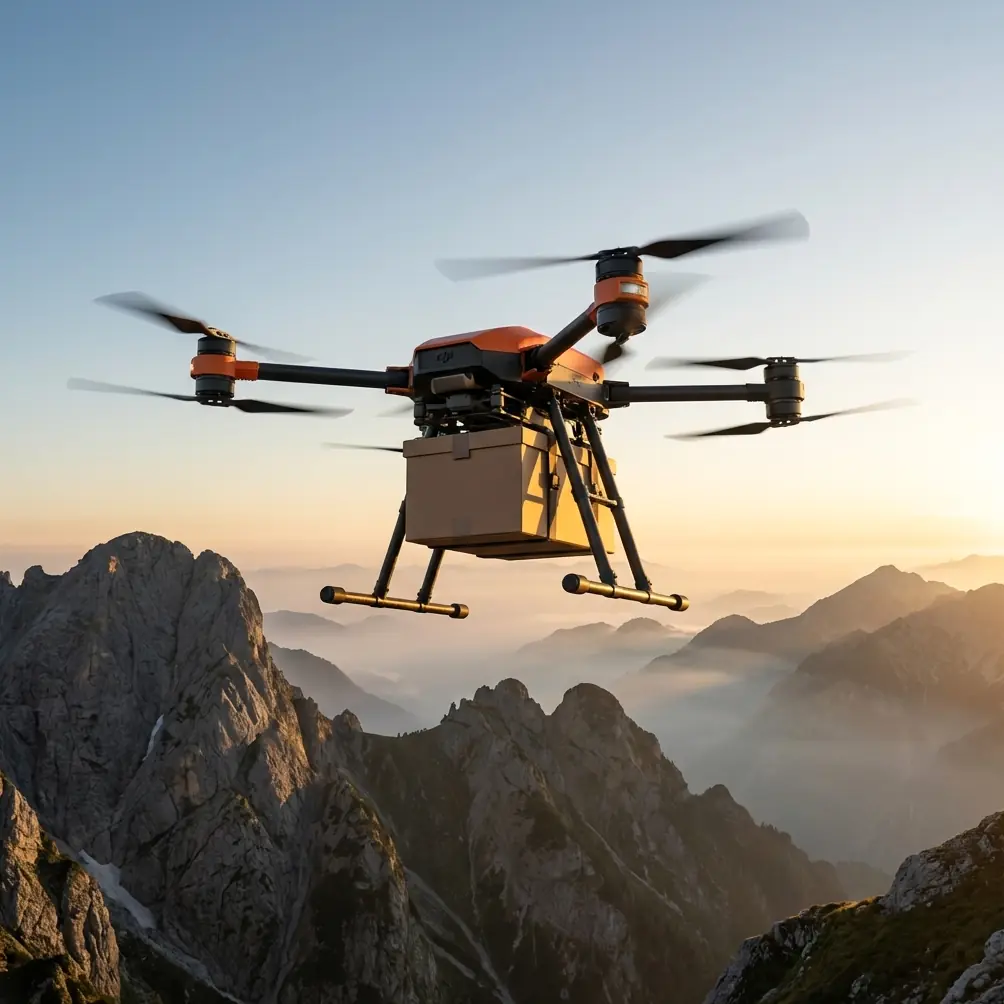
FlyCart 30 Case Study: What Pizza Delivery Taught Us About High-Altitude Highway Scouting
META: A field-driven FlyCart 30 case study for high-altitude highway scouting, covering payload planning, BVLOS workflow, winch use, weather shifts, route optimization, and why lessons from drone pizza delivery matter.
Most people would not connect pizza delivery in Dallas/Fort Worth with highway scouting in thin mountain air. They should.
A recent rollout from Flytrex and Little Caesars in the DFW area put a spotlight on something the drone industry had quietly struggled with for years: pizza is easy to order, hard to deliver well by drone. The service was described as a first-of-its-kind initiative, and that matters for a reason beyond novelty. Residents in that region were already comfortable receiving food and small items by air. Yet pizza had remained the missing category.
Why? Because the last mile is rarely about distance alone. It is about cargo shape, thermal sensitivity, time tolerance, handling quality, and what happens when conditions change halfway through the route.
Those are the same pressures that show up in highway scouting with the FlyCart 30, especially at altitude.
This is not a story about carrying pizzas with a heavy-lift platform. It is a case study in operational thinking. As a logistics lead, I look at the Flytrex-Little Caesars milestone as proof that drone programs mature when they solve awkward, real-world payload problems rather than easy demos. For teams evaluating FlyCart 30 for high-altitude highway scouting, that mindset is more useful than any spec sheet headline.
Why the pizza milestone actually matters to FlyCart 30 operators
The drone delivery market in DFW had already normalized airborne drop-offs for food and small packages. Even so, pizza lagged behind. That tells us something fundamental: once a market gets past public acceptance, the next barrier is usually operational precision.
In scouting work, the equivalent “pizza problem” is not whether a FlyCart 30 can fly a route. It is whether it can do useful work when the mission is messy.
High-altitude highway scouting is messy by default. Terrain interferes with line planning. Wind changes across ridgelines. Access points may be narrow or unsafe for vehicle teams. Communications can fluctuate. Payloads are often not heavy in absolute terms, but they are mission-critical: sensors, repair kits, marked sample bags, temporary comms gear, visual markers, or field support equipment for survey crews stationed far from road access.
The lesson from DFW is simple. The drone sector advances when it solves the difficult, common mission—not the flashy one. Pizza became meaningful because it was ordinary and stubbornly hard. Highway scouting with FlyCart 30 sits in the same category. The value is not theoretical. It shows up when the aircraft handles awkward conditions consistently enough to become part of regular operations.
The mission profile: high-altitude highway scouting with FlyCart 30
Our scenario involved scouting a highway segment crossing elevated terrain where vehicle access was slow and sometimes blocked by unstable shoulders. The task was not just visual inspection. We needed to move light field gear to a spotter team, confirm route conditions beyond the next blind section, and maintain tempo without exposing staff to unnecessary foot movement along steep embankments.
This is where FlyCart 30 earns attention.
For scouting, its role is broader than “cargo drone.” It can act as a logistics bridge between separated work cells. One team remains near the staging area. Another team advances to observation points. The aircraft closes that gap with planned payload movement, controlled delivery, and repeatable route execution.
That is where payload ratio becomes more than a technical phrase. In highway scouting, every added kilogram competes against range margin, weather margin, and altitude performance. Teams that overload the concept of the mission usually end up underperforming in the field. The better practice is to treat payload ratio as an operational discipline: carry only what moves the decision-making process forward.
On our run, that meant prioritizing compact but high-impact items: a lightweight field sensor package, spare batteries for handheld devices, high-visibility lane markers, and a sealed documentation pouch. None of that sounds dramatic. All of it mattered.
Why the winch system changes the job
The most practical feature in this kind of terrain is often the winch system.
Highways in elevated regions create awkward landing geometry. A road shoulder may exist, but rotor wash, debris, traffic adjacency, and slope angle can turn a nominal landing point into a poor choice. With a winch, the aircraft does not have to commit to touchdown in every delivery zone. It can hold position and lower equipment into a tighter, safer receiving area.
That changes the risk picture immediately.
Instead of forcing teams to clear a broad landing zone near a road cut, we used a hover point offset from the unstable edge and lowered the payload to a safer patch identified by the ground spotter. Operationally, this did three things:
- It reduced the need for people to approach the edge of the corridor.
- It preserved flexibility when terrain did not match pre-mission assumptions.
- It kept the aircraft out of the most chaotic near-ground air layer where gusts and dust are often worst.
The significance is easy to miss if you only read features in isolation. In practice, the winch system is not just a delivery accessory. It is a terrain adaptation tool.
When weather changed mid-flight
The mission became more interesting on the return leg.
Conditions at launch were stable enough for the planned route, but mountain weather rarely stays polite. Mid-flight, wind picked up as the aircraft crossed a more exposed section above the highway. Nothing extreme, but enough to force a real-time adjustment. We also saw a modest shift in visibility as cloud cover moved in, flattening contrast on the slopes and making terrain perception harder for the human team monitoring the route.
This is where route optimization and energy management stop being office terms.
The dual-battery setup matters in exactly these moments. Not because it makes operators reckless, but because it gives a more resilient energy buffer when the aircraft has to hold, divert slightly, or alter its speed profile to stay efficient in changing wind. At altitude, reserve thinking should be conservative from the start. You do not want a mission plan that only works in perfect air.
We trimmed the return path to avoid the rougher airflow near one ridge shoulder, accepted a slightly longer line through calmer air, and prioritized stable transit over directness. That decision cost a little time and saved a lot of uncertainty. The aircraft remained composed, the delivery sequence had already been completed via winch, and the team on the ground did not need to relocate.
This is one of the most overlooked truths in commercial drone work: the best route is rarely the shortest one. The best route is the one that keeps enough margin for the weather you did not get in the briefing.
BVLOS thinking without treating BVLOS as a buzzword
High-altitude highway scouting often pushes operators toward BVLOS planning logic, even before a fully scaled program is in place. Long corridors, terrain breaks, and distributed teams all reward route structures that are systematic, documented, and repeatable.
Too many conversations about BVLOS stay abstract. In the field, BVLOS discipline starts with simple habits:
- segmenting routes by terrain behavior rather than just mileage
- identifying fallback delivery points before launch
- assigning decision thresholds for wind and visibility changes
- defining when a payload delivery should be aborted, delayed, or shifted to a secondary drop zone
The Flytrex pizza example in DFW is useful here because it reflects a mature service environment. Residents there had already become accustomed to drone deliveries. That kind of public normalization only happens when operations become consistent enough to feel ordinary. Consistency is exactly what highway scouting teams need from FlyCart 30 deployments. Not spectacle. Predictability.
For corridor work, that means every route should be built around what the aircraft can repeat under imperfect conditions, not what it can accomplish on its best day.
Payload ratio: the quiet metric that decides whether the mission feels professional
A lot of teams talk about payload capacity. Fewer talk honestly about payload ratio.
The difference is important. Payload capacity asks, “What can the drone lift?” Payload ratio asks, “What share of our airborne effort is actually useful mission value?”
In highway scouting, poor payload ratio usually comes from carrying too much contingency gear “just in case.” That inflates weight, shrinks margin, and turns a responsive aircraft into a stressed one. Better payload ratio comes from dividing the mission into modules.
For example:
- first sortie: sensors and markers
- second sortie: support items requested after visual confirmation
- third sortie only if route condition changes justify it
That modular approach mirrors the lesson hidden inside pizza delivery. A pizza is not hard because it is heavy. It is hard because the package has handling requirements that punish sloppy operations. In the same way, a highway scouting payload may be modest in weight but demanding in sequencing. If the right item arrives late, or the wrong item arrives first, the mission slows anyway.
The most effective FlyCart 30 programs treat payload planning as workflow design, not just load balancing.
Emergency parachute planning is really continuity planning
When teams mention an emergency parachute, the conversation sometimes gets reduced to compliance language. That misses the operational point.
For highway scouting, especially near active infrastructure and variable terrain, any safety layer that supports managed outcomes under abnormal conditions contributes to continuity. The parachute is part of a wider planning mindset: assume that not every flight will be routine, and build your operation so an interruption does not cascade into field disorder.
That means your emergency planning should account for more than the aircraft. It should include:
- alternate ground team positioning
- protected handoff points for sensitive equipment
- vehicle-based backup movement for critical payloads
- communication steps when a route is paused
The aircraft safety system matters most when it is integrated into team behavior. Otherwise it becomes a checkbox, not a capability.
What operators can borrow from a drone pizza rollout
A first-of-its-kind pizza delivery service sounds consumer-facing, but the deeper lesson is industrial.
Flytrex and Little Caesars succeeded in a category that had remained notably absent from prior drone delivery operations, even in a region already comfortable with drone drop-offs. That progression—from public novelty to category-specific problem solving—is exactly how serious commercial drone operations mature.
For FlyCart 30 users scouting highways at altitude, the takeaway is not “copy food delivery.” It is this:
Solve the awkward mission first.
If your corridor workflow can handle shifting weather, terrain-constrained delivery points, lean payload design, and route adaptation under pressure, then scaling becomes realistic. If it cannot, adding more flights just multiplies friction.
That is why I prefer case-study thinking over broad best-practice lists. Real field performance emerges from linked decisions:
- choosing a route with margin
- using the winch instead of forcing a landing
- respecting payload ratio
- treating the dual-battery setup as reserve protection, not free aggression
- building BVLOS logic around terrain and repeatability
- planning for safety systems as part of continuity
If your team is refining that kind of workflow and wants to compare notes on corridor deployment choices, this direct project chat is the most practical place to start.
The real benchmark for FlyCart 30 in scouting work
The benchmark is not whether the drone can complete a single dramatic mission.
The benchmark is whether field teams begin to depend on it.
That shift happens when the aircraft repeatedly saves time, reduces exposure to difficult terrain, and delivers the exact item needed without forcing a bigger workaround. It happens when weather changes mid-flight and the operation absorbs the change without losing control. It happens when ground crews stop treating the drone as an add-on and start writing it into the day’s plan.
The DFW pizza story is useful because it marks a point where drone delivery addressed a stubbornly practical challenge in a market already familiar with the technology. For FlyCart 30 in high-altitude highway scouting, that is the standard worth chasing. Not novelty. Operational credibility.
And credibility, in this line of work, is built one well-managed sortie at a time.
Ready for your own FlyCart 30? Contact our team for expert consultation.