
FlyCart 30 in Mountain Power-Line Scouting
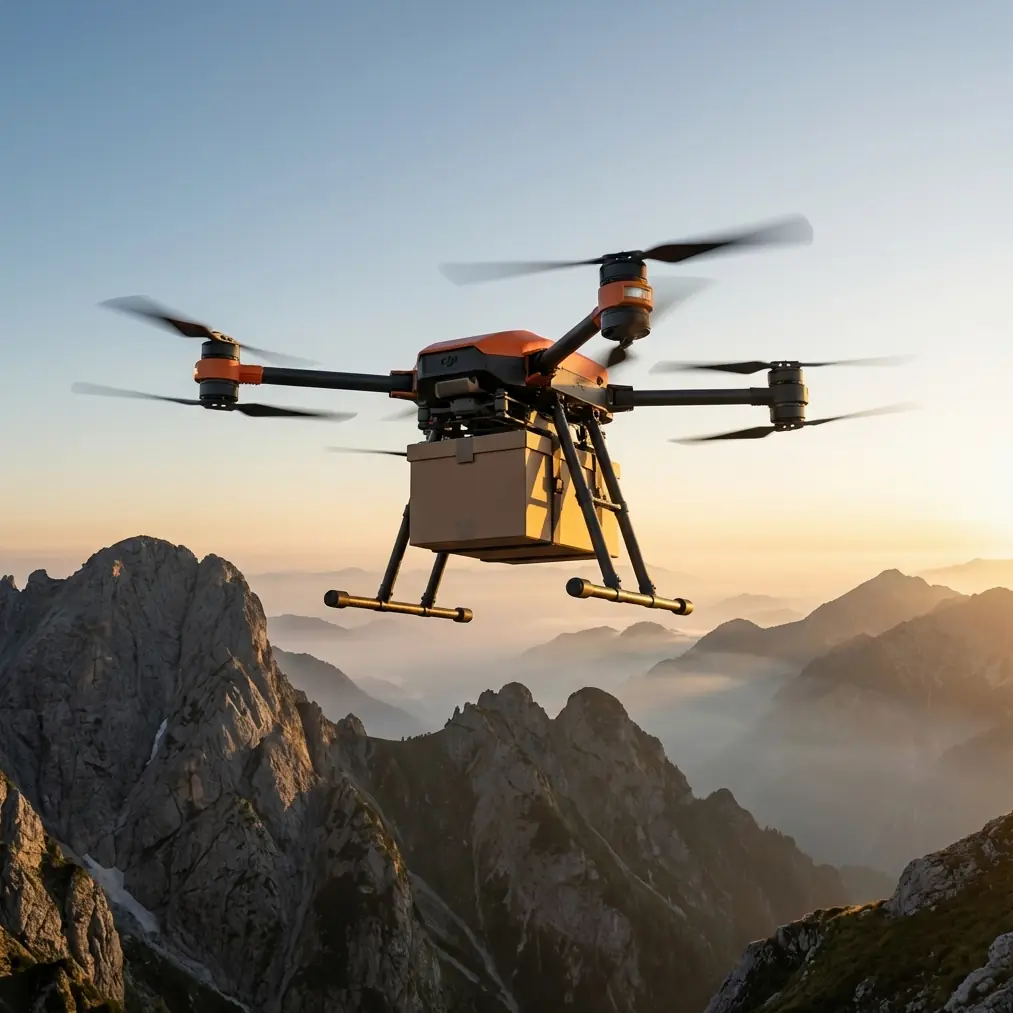
FlyCart 30 in Mountain Power-Line Scouting: A Field Report on Altitude, Imaging, and What Actually Matters
META: A field report for FlyCart 30 mountain power-line scouting, covering practical flight altitude decisions, route logic, imaging workflow, dual-battery considerations, winch utility, and how post-processing curves improve inspection clarity.
Mountain power-line scouting exposes every weak assumption in a drone plan.
On paper, the mission sounds straightforward: follow a transmission corridor, document poles and spans, note vegetation encroachment, flag access issues, and return with imagery that engineers can trust. In the field, the equation changes fast. Ridge lift, valley turbulence, uneven signal conditions, changing sun angle, and the sheer geometry of lines crossing steep terrain all put pressure on aircraft choice and workflow discipline.
That is where the FlyCart 30 becomes interesting.
Most people associate this platform with cargo movement. Fair enough. But in mountain utility scouting, the same attributes that make it useful for transport also create advantages for line inspection support and corridor reconnaissance. Payload flexibility matters even when you are not carrying heavy material. Stable power delivery matters when you need predictable flight behavior along long, uneven routes. A winch system matters not just for delivery, but for lowering small tools or site markers into awkward terrain without forcing a team to hike down a loose slope. And if your operation is structured for BVLOS-style corridor planning, route optimization stops being a buzzword and becomes the difference between a clean survey day and wasted battery cycles.
I’ve been looking at FlyCart 30 through that lens: not as a generic “big drone,” but as a mountain operations platform.
The real altitude question in mountain scouting
The most useful altitude insight for this scenario is simple: stop thinking in terms of one fixed mission height.
In mountain power-line scouting, the right altitude is not “high” or “low.” It is relative to the line, the terrain, and the imaging objective. If you lock the aircraft to a single height above takeoff point, one of two things usually happens. Either the aircraft climbs too far from the line as the ground drops away, reducing defect visibility, or it gets uncomfortably close to terrain as the corridor rises toward a ridge.
The practical target is to maintain a consistent observational relationship to the conductor corridor and structures, not a rigid number divorced from topography. For broad route awareness, I favor a buffer that keeps the aircraft high enough to absorb terrain variation and gust response while still preserving visual detail on insulators, crossarms, and vegetation edges. Then, for tower-specific passes, I compress that separation and slow down.
The FlyCart 30’s operational value here is not just endurance or lift. It is composure. In mountains, altitude control is only useful if the aircraft can hold stable position and remain predictable in changing air. A heavy-lift platform with a dual-battery architecture tends to feel less fragile in these transitions. You are not chasing perfect stillness; you are trying to reduce the number of corrections the pilot or route automation must make during a corridor leg.
That matters because every correction affects image quality.
Why image workflow deserves as much attention as route planning
Power-line scouting is often judged by the aircraft, but the deliverable is visual evidence. If the imagery comes back flat, hazy, or tonally muddy, the mission can still fail even if the flight was flawless.
One detail from the reference material deserves more attention in utility inspection than it usually gets: the curve tool works from the histogram, and from left to right that tonal map corresponds to dark areas, midtones, highlights, and whites. That sounds like a photography lesson. In practice, it is an inspection lesson.
Mountain line imagery often suffers from low local contrast. You get backlit towers, shadow-heavy forests, bright sky windows, and a general gray veil created by atmospheric haze and high-angle light. When reviewers say an image “doesn’t show enough,” the issue is often tonal separation, not raw resolution.
The referenced guidance on curves is dead practical here. Pulling the curve upward brightens the image; pulling it downward darkens it. More importantly, when a photo looks washed out, placing points in the darker and brighter tonal zones, then lifting the bright portion while lowering the dark portion, restores separation. Operationally, this helps line hardware stand apart from background terrain. It can also make vegetation intrusion easier to judge where tree lines blend into shaded slopes.
In plain language: if a mountain scouting image looks gray and indecisive, a targeted curve adjustment can make the difference between “possible branch risk near lower phase” and a clearly reviewable encroachment record.
Why an S-curve is useful for FlyCart 30 inspection teams
The source article mentions using an S-curve to increase contrast. That is not just an aesthetic trick. It is one of the most reliable post-processing moves for utility documentation.
An S-curve increases contrast by gently deepening darker tones and lifting brighter ones. In a mountain power-line context, that can reveal conductor edges, hardware contours, and structural separation against rock, timber, or sky. If your corridor images are coming back a bit lifeless around noon or in thin haze, a restrained S-curve often restores enough shape to support engineering review without making the image look manipulated.
This matters because utility teams do not need “beautiful” photos. They need legible photos.
I would go a step further: build a field imaging protocol around this. After each mountain mission, review a small sample set on-site. If the corridor images appear flat, create a standard post-process preset using moderate curve adjustments rather than relying on random edits later at the office. Consistency is what allows maintenance teams to compare one corridor segment to another without tonal interpretation becoming subjective.
The reference also points out that red, green, and blue curves can be adjusted individually for stylistic results. For utility work, I am less interested in style and more interested in controlled color separation. Slight channel tuning can help when foliage, rusty steel, and shadow all compress into similar visual weight. Used carefully, that can improve readability. Used aggressively, it just decorates the data. Inspection teams should stay disciplined.
Night and low-light relevance in mountain infrastructure work
Another concrete reference detail was the suggestion to push down the dark end of the curve in night scenes to intensify contrast and give city lights more texture. Translate that into power-line scouting and it becomes surprisingly relevant for dawn, dusk, or overcast valley operations.
You are not trying to create cinematic images. You are trying to preserve point-source detail and keep bright hardware-adjacent areas from feeling blown out against dead shadows. Compressing the lower tones slightly can add structure where valley haze and low ambient light make everything feel soft. If a line segment crosses near roads, service yards, or substations with mixed lighting, this can help define context around bright fixtures.
Again, the point is not visual flair. The point is signal extraction.
FlyCart 30 beyond transport: route optimization and corridor discipline
A lot of mountain drone failures begin before takeoff. The route is too ambitious for the terrain, battery reserves are planned as if the aircraft were flying over flat ground, or turnaround logic ignores that headwinds can intensify dramatically near saddles and ridgelines.
The FlyCart 30 invites long-range thinking because it is physically capable. That can be a trap unless route optimization is done with terrain logic.
For mountain power-line scouting, route optimization should divide the mission into corridor segments based on elevation profile, known wind exposure, and emergency landing logic. Do not segment solely by linear distance. A 3-kilometer valley leg and a 3-kilometer ridge transition are not the same workload. With a dual-battery aircraft, the operational advantage is resilience and continuity, but that should be treated as margin, not permission to overextend.
This is also where BVLOS planning discipline starts to earn its keep. Even when regulations and company procedures vary, the conceptual value of BVLOS-grade planning is universal: defined checkpoints, terrain-aware communication expectations, weather gates, and pre-briefed diversion options. In mountain utility work, those habits improve safety and efficiency even when the actual flight profile is conservative.
The winch system has a scouting role most teams overlook
People see “winch” and think delivery. In mountain line scouting, I see a support tool.
There are situations where crews need to drop a lightweight marker, relay item, or compact field kit to a slope below the safe landing zone. Hiking a technician down a loose, brushy incline just to place or retrieve a small object is slow and often riskier than people admit. A winch system can reduce that exposure when used under proper procedure. It can also support small logistics tasks between a road edge and a tower approach path during survey prep.
That does not replace manned fieldwork. It reduces friction around it.
And because the FlyCart 30 is built around this kind of vertical handling capability, the system has utility beyond image capture. For infrastructure operators working in mountains, that versatility matters. One aircraft can scout the route, document conditions, and solve minor field-support problems on the same deployment day.
Emergency systems are not just a compliance talking point
I also want to address the emergency parachute angle. In mountain operations, contingency systems should be discussed in real operational terms, not as brochure filler.
A parachute does not make a bad mission safe. It does, however, change the risk profile when flying near steep terrain, sparse access roads, and areas where recovery can be complicated. In a power-line corridor, emergency planning is part of route design. If an aircraft issue occurs above a ravine or forested slope, your recovery burden can multiply instantly. A platform-level emergency mitigation feature is not permission to fly carelessly. It is one more layer in a mission stack where retrieval, downtime, and site access can become costly very quickly.
A practical field workflow for FlyCart 30 mountain scouting
If I were structuring a FlyCart 30 day around mountain power-line scouting, the workflow would look like this:
Start with terrain segmentation, not just a line map. Mark ridge transitions, valley compression zones, and likely turbulence pockets. Build route legs around those features.
Choose flight altitude by relationship to the infrastructure corridor and ground relief, not a single flat number. Keep enough vertical margin for terrain and wind response, then tighten for structure-focused passes.
Use route optimization to preserve reserve where terrain penalty is highest, especially on return legs likely to encounter headwind.
Treat dual-battery capacity as operational resilience. It is there to stabilize planning, not to justify mission creep.
If the team needs to place or retrieve lightweight field items near difficult access points, evaluate whether the winch system can save a risky approach on foot.
After each segment, review a sample of imagery immediately. If the images look washed out, apply the reference-backed curve logic: identify dark and bright tonal regions from the histogram structure, lift the bright point slightly, lower the dark point slightly, and restore contrast. If needed, use a mild S-curve to improve hardware separation.
For teams building a repeatable utility workflow around the platform, it can help to compare mission planning notes with image review standards before scaling the program. If you need to talk through that kind of field setup, this mountain corridor planning channel is a practical starting point.
What stands out after looking at the references closely
The surprising thing about the source material is that it is about image curves, not drones. Yet it lands directly on a problem many utility drone teams ignore: aircraft capability and image usefulness are not the same thing.
The FlyCart 30 can be a serious mountain scouting platform because of its stable heavy-duty architecture, dual-battery operational confidence, route-planning suitability, and support capabilities like a winch system. But if the image workflow remains amateur, the mission still underdelivers.
That is why the tonal details from the reference matter so much. Knowing that the curve is tied to the histogram from shadows through whites gives teams a reliable editing logic. Knowing that lifting highlights and lowering shadows can fix gray, low-contrast frames gives them a repeatable correction method. Knowing that an S-curve increases contrast gives them a field-ready way to make corridor evidence clearer. And knowing that darker curve adjustments can strengthen low-light scenes helps preserve utility in dawn or late-day flights when mountain conditions are less forgiving.
For mountain power-line scouting, that blend of aircraft discipline and visual discipline is what separates usable operations from expensive noise.
FlyCart 30 is not just about getting into the air. It is about returning with material that a utility team can act on.
Ready for your own FlyCart 30? Contact our team for expert consultation.