
FlyCart 30 in Windy Power-Line Corridors
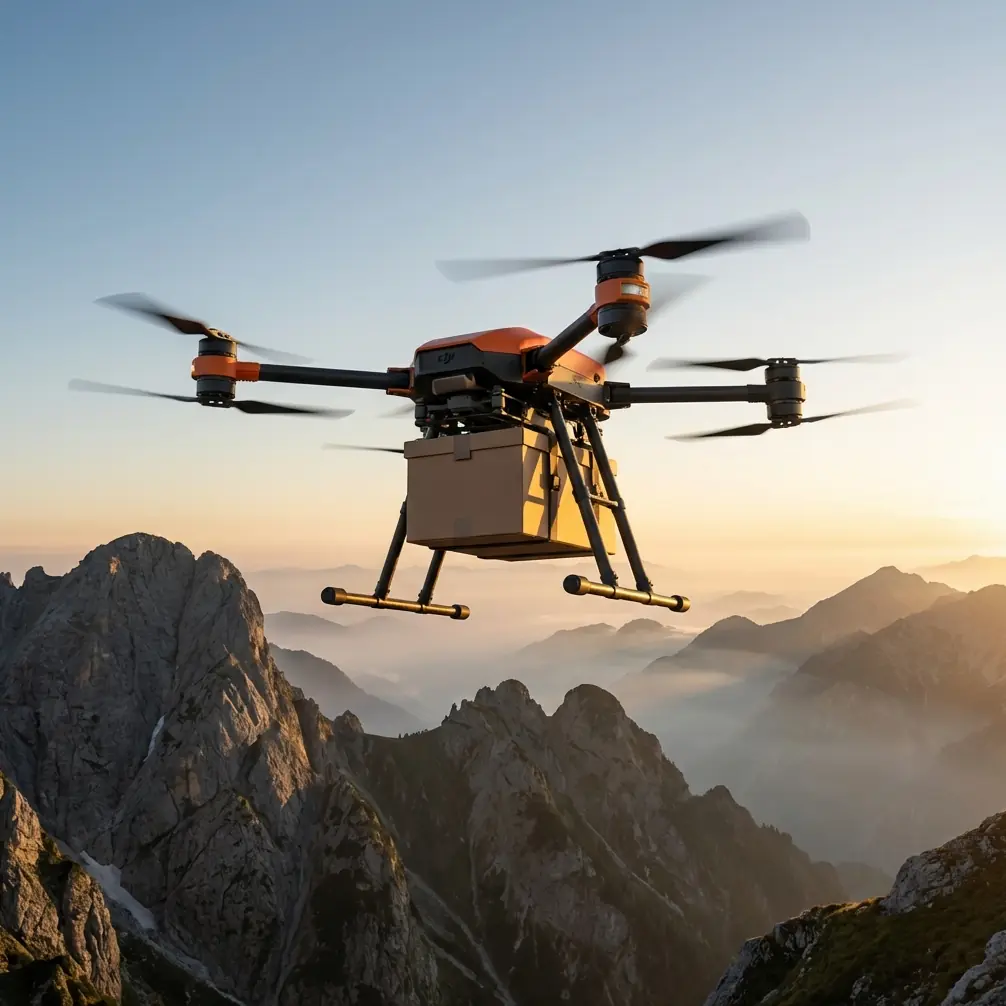
FlyCart 30 in Windy Power-Line Corridors: A Field Report on Skill, Interference, and Operational Discipline
META: A field report on using FlyCart 30 for windy power-line scouting, with practical insight on payload ratio, winch use, electromagnetic interference, route planning, dual-battery management, and safer BVLOS-style workflows.
Power-line scouting looks simple from a distance. Put a drone in the air, follow the corridor, capture imagery, come home. On paper, that sounds tidy. In the field, especially in wind and around energized infrastructure, tidy disappears fast.
I’ve spent enough time in logistics and utility support operations to know that the aircraft is only one part of the story. The harder part is the maturity of the team using it. That’s why an old photography idea kept coming back to me during a recent FlyCart 30 scouting exercise: people don’t become experts in a day. They move through stages. First, they record what’s in front of them without thinking much about technique. Then they hit a wall. The automatic way stops delivering the result they want, so they begin learning the fundamentals.
That framework fits drone work almost perfectly.
A lot of crews approach aerial scouting the way beginners approach photography. They launch, point, collect, and hope the system smooths out the rough edges. That may work for casual documentation. It does not hold up when you are scouting power lines in gusty conditions, dealing with terrain shifts, magnetic and electromagnetic disturbance, and trying to maintain reliable situational awareness over a long linear route.
The FlyCart 30 rewards a more advanced mindset. Not because it is difficult for the sake of being difficult, but because the platform opens up capability that only pays off when the operator moves beyond “auto mode thinking.”
Why the photography analogy matters here
The source material behind that seven-stage photography concept makes one point very clearly: technical skill alone is not enough. Real mastery also depends on artistic knowledge, flexible judgment, and a deeper understanding of the craft itself. Translate that into commercial UAV operations and the lesson is obvious. Flying skill matters, but so do interpretation, planning discipline, environmental reading, and mission judgment.
For power-line scouting, that distinction is operationally significant.
A novice drone crew often treats the mission as a flight problem. An experienced crew treats it as a systems problem. Wind profile, route shape, battery behavior, payload ratio, signal environment, recovery options, and data usefulness all interact. If one part is ignored, the whole mission quality drops.
That was the central lesson from our latest FlyCart 30 field deployment.
The mission profile: windy corridor, uneven signal environment
The job was a scouting pass along a power-line section exposed to crosswinds and intermittent electromagnetic interference. Not a payload delivery run in the classic sense, but a route-validation and inspection-support mission where stability, endurance planning, and controlled positioning mattered more than speed.
This is where people sometimes misunderstand the FlyCart 30. Because the platform is associated with cargo, some assume its value starts and ends with lifting. In utility work, the bigger story is control under operational load. Even when the mission is not centered on transporting material, the aircraft’s architecture, especially its payload handling logic, dual-battery design, and winch-enabled workflow options, changes how a team can scout and stage work around infrastructure.
For windy power-line corridors, payload ratio becomes a real planning variable. Every added component, whether that is a sensor package, line-drop accessory, or mission-specific rigging, changes the aircraft’s behavior in gusts and affects reserve margins. Strong crews do not just ask, “Can it carry this?” They ask, “What does this do to route efficiency, loiter time, and return confidence if the headwind builds by another few meters per second?”
That is the difference between operating and simply flying.
The transition from casual use to intentional control
The photography reference describes an early stage where someone simply takes pictures of daily life without worrying about aperture, shutter speed, exposure, or composition. In drone terms, that is the phase where operators trust default settings and broad safety buffers without understanding why those settings work until they don’t.
The next stage in that same source begins when the person wants better results than automatic shooting can provide, and starts learning basic techniques. That is exactly the threshold many FlyCart 30 teams eventually cross.
Power-line scouting forces that transition early.
Wind around transmission structures is rarely uniform. It wraps, spills, accelerates through gaps, and can shift abruptly near ridgelines or road cuts. Add electromagnetic influence from nearby infrastructure, and default assumptions become unreliable. A crew that has only ever operated in open, forgiving environments may still complete the mission, but the data will often be messy, the battery margins thinner than expected, and the stress level much higher than it needs to be.
The FlyCart 30 does not eliminate that complexity. What it does is give the team enough capability to manage it properly, provided they have grown past the beginner mindset.
Antenna adjustment under electromagnetic interference
One of the most useful field lessons from this mission had nothing to do with maximum lift or headline specifications. It was about antenna discipline.
Near energized lines, we encountered intermittent interference behavior that did not justify aborting the entire operation but did demand immediate adaptation. The solution was not dramatic. It was procedural. We adjusted antenna orientation to maintain a cleaner link geometry along the corridor and reduced unnecessary angle changes during critical track segments.
That sounds minor until you see the effect.
In a windy power-line environment, electromagnetic interference can stack with aircraft attitude changes. If the drone is already correcting for gusts, and the ground side is presenting a poor antenna angle relative to the aircraft’s movement path, you end up creating your own communication problem on top of the environmental one. Small degradation becomes recurring instability in workflow. The team gets busier, not smarter.
Antenna adjustment matters because it reduces avoidable noise in the control chain. In BVLOS-style planning, or in any extended linear mission that resembles BVLOS discipline even when flown within the applicable local visual framework, communication quality is not a secondary concern. It is mission structure. You can compensate for many things in the field, but you cannot compensate well for weak signal habits layered onto interference-prone terrain.
This is one reason I tell newer operators not to over-romanticize automation. A mature crew watches the environment and makes small corrections early.
Route optimization is where utility economics actually live
There is a lot of talk in the drone industry about aircraft performance. Less attention goes to route design, which is where field efficiency usually gets won or lost.
With the FlyCart 30, route optimization in a power-line scouting context is not just about shortest distance. It is about minimizing exposure to crosswind zones, avoiding unnecessary climbs, preserving safer battery reserves, and structuring observation points so the team can get useful scouting data without repeatedly fighting the same disturbed airspace.
That matters more with a larger, work-oriented platform than many people realize.
The dual-battery setup is especially relevant here. Operationally, dual-battery architecture is not just a convenience feature. It supports mission continuity and risk management by giving the crew a more robust energy framework for extended tasks. In practical terms, it helps planners think in segments rather than gambling on a single long push. For corridor work, that creates cleaner decision points: continue, hold, reposition, or recover.
When wind is unstable, those decision points are gold.
Instead of forcing the aircraft through the entire line segment in one aggressive pass, we structured the route around logical checkpoints tied to terrain and interference patterns. The result was better than a brute-force flight. We had more consistent aircraft behavior, cleaner observation windows, and better confidence on battery reserve during return legs.
The winch system changes how scouting supports downstream work
The FlyCart 30’s winch system often gets discussed in delivery scenarios, but it deserves more attention in utility support planning.
For scouting teams, a winch is not only about lowering cargo. It expands how the aircraft can interact with difficult ground access zones without needing full touchdown operations in every location. That becomes useful when a scouting mission transitions into light placement, sample drop, or support tasks for crews preparing line work in rough terrain.
Even if a mission begins as pure reconnaissance, the ability to shift into a controlled winch-based support action can remove a second mobilization later. That saves time, and in remote or weather-sensitive utility corridors, time is often the most fragile resource on site.
The real significance is workflow compression. One platform can scout, validate access constraints, and support selective downstream action without requiring the team to reconfigure the whole operation around ground reach limitations.
Emergency systems are not a footnote
If you work around power infrastructure long enough, you stop treating backup systems as brochure material. They are planning tools.
An emergency parachute, for example, should never be framed as permission to take marginal decisions. Its value is in consequence reduction when multiple layers fail despite good planning. In a corridor with wind and infrastructure below, that matters. The mere presence of an emergency recovery layer changes how a professional team evaluates residual risk and how they define acceptable exposure during route design.
The same goes for disciplined battery management. Dual-battery capability, emergency systems, and careful route segmentation all belong to the same philosophy: avoid single-point thinking.
That is another connection to the photography source. Technical capability by itself does not create mastery. Judgment does.
FlyCart 30 is best used by teams who have moved past the beginner stage
The source article on photography says there are seven stages and that the later stages become harder and lonelier. I like that line because it reflects commercial drone reality too. Early enthusiasm is common. Deep operational competence is not.
A team ready to use FlyCart 30 well for power-line scouting in wind is usually a team that has already learned a few humbling lessons:
- automatic settings are not the same as operational understanding
- route success is often decided before takeoff
- payload ratio affects more than lift figures
- interference management can hinge on basic antenna choices
- reserve margins feel generous until the wind shifts
- data quality depends on aircraft behavior, not just camera presence
Those are not abstract ideas. They shape whether a mission produces useful scouting intelligence or just airborne activity.
A practical standard for crews planning similar work
If I were briefing a new utility-support team preparing to scout windy power lines with FlyCart 30, I would keep the standard simple.
First, plan the route around the corridor’s worst sections, not its easiest ones. Second, define payload ratio honestly and include every mission accessory, not just the obvious payload item. Third, treat antenna positioning as part of the mission, especially near electromagnetic sources. Fourth, use the dual-battery framework to create decision gates instead of chasing maximum possible range. Fifth, if the mission may evolve into a support task, build the winch workflow into your pre-brief rather than improvising it on site.
That approach is less flashy than talking about top-line specs. It is also how you get repeatable results.
If your team is still in the stage of simply launching and expecting the aircraft to solve the mission on its own, the FlyCart 30 will expose that quickly. If your team has crossed into the stage where technique, judgment, and field awareness start working together, the platform becomes much more than a transport drone. It becomes a serious utility operations tool.
For operators comparing notes on corridor scouting setups or interference handling methods, I usually suggest starting the conversation with mission details rather than brochure questions. If you want to exchange field observations directly, you can reach out here: https://wa.me/85255379740
The strongest FlyCart 30 operations I’ve seen all share one trait. They are run by people who stopped thinking like casual users. They learned the fundamentals, respected the environment, and built procedures that match the real demands of the job. That progression may not be glamorous, but it is where dependable performance comes from.
Ready for your own FlyCart 30? Contact our team for expert consultation.