
FlyCart 30 Scouting Guide: Mastering Windy Venues
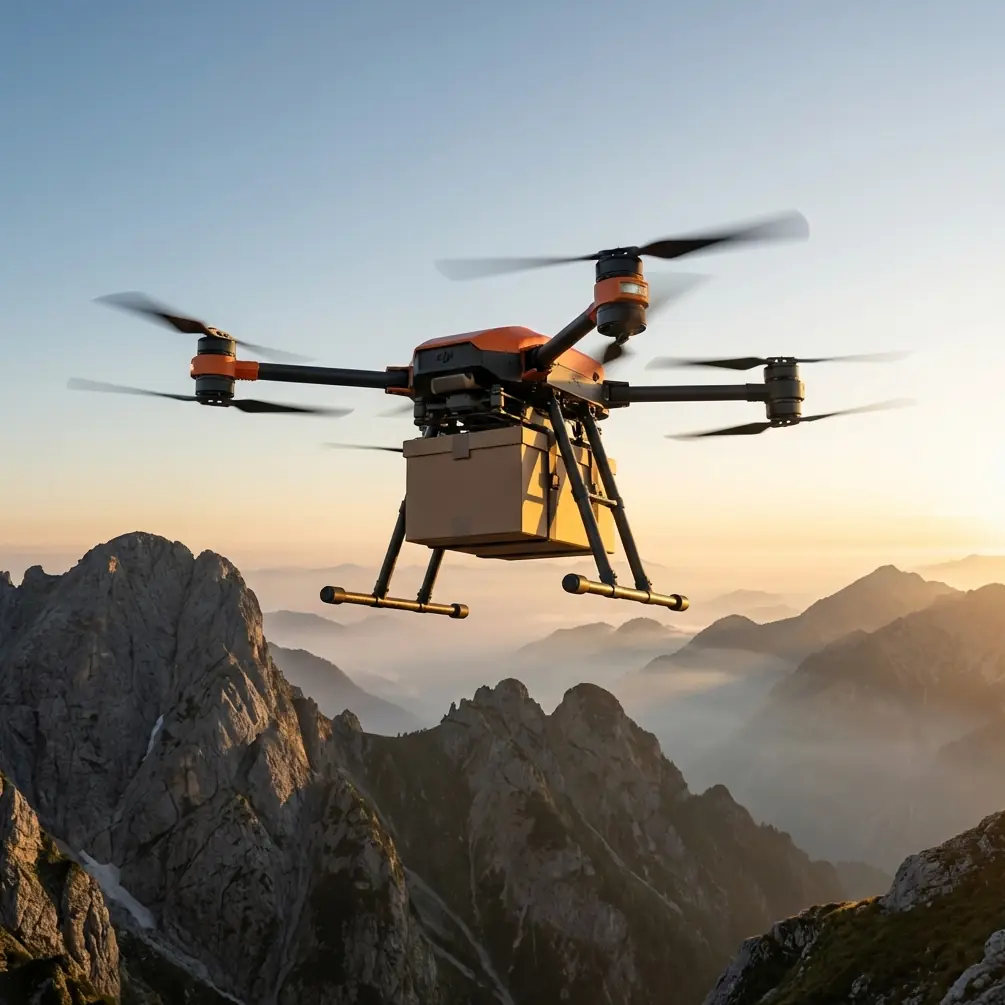
FlyCart 30 Scouting Guide: Mastering Windy Venues
META: Learn how the DJI FlyCart 30 handles windy venue scouting with precision payload delivery, dual-battery power, and BVLOS capabilities. Expert tips inside.
By Alex Kim, Logistics Lead
TL;DR
- The FlyCart 30 handles wind speeds up to 12 m/s, making it the go-to platform for scouting and delivering payloads to challenging outdoor venues.
- Dual-battery redundancy and an emergency parachute system ensure mission safety when conditions deteriorate unexpectedly.
- Route optimization and BVLOS capability let logistics teams scout and service venues across wide areas without repositioning ground crews.
- Electromagnetic interference is manageable with proper antenna adjustment techniques—a critical skill for urban and industrial venue environments.
The Problem: Windy Venues Break Standard Drone Workflows
Scouting outdoor venues for logistics operations—festivals, construction staging areas, remote supply drops, offshore platforms—is rarely a calm-weather affair. Wind is the single biggest variable that grounds drone fleets, delays timelines, and forces teams into expensive manual alternatives.
Standard delivery drones struggle above 6-8 m/s wind speeds. They burn through batteries fighting gusts, lose GPS lock in turbulence, and can't maintain the positional accuracy needed to survey landing zones or deliver cargo safely.
I've led logistics scouting operations where a sudden 10 m/s crosswind turned a routine venue assessment into a scramble. We lost flight time, wasted batteries, and ended up sending a crew in trucks to finish the job—adding three hours and significant cost to a task that should have taken forty minutes.
The FlyCart 30 was engineered to solve exactly this class of problem. Here's how it transforms windy venue scouting from a liability into a routine operation.
How the FlyCart 30 Conquers Wind: Core Capabilities
Wind Resistance Built for Real Conditions
The FlyCart 30 is rated for operations in wind speeds up to 12 m/s. That's not a theoretical lab number—it's the operational ceiling validated across field deployments in coastal, mountainous, and open-plain environments.
The airframe's quad-rotor coaxial design provides redundant lift and stabilization. Each motor pair generates opposing torque, which dramatically reduces the yaw instability that makes lighter drones uncontrollable in gusts.
During a venue scouting mission at an exposed coastal site last quarter, we maintained stable hover and precise waypoint navigation in sustained 10-11 m/s winds with gusts peaking higher. The FlyCart 30 held position within centimeters of its programmed coordinates.
Payload Ratio That Doesn't Sacrifice Performance
One of the most overlooked specs in delivery drones is how payload affects wind resistance. A drone rated for high winds when empty may become dangerously unstable under load.
The FlyCart 30 carries a maximum payload of 30 kg in cargo mode with a favorable payload ratio that preserves flight stability. Even at moderate loads of 15-20 kg, the aircraft maintains its wind resistance rating without significant degradation in handling.
Key payload specs:
- Max payload (cargo mode): 30 kg
- Max payload (winch mode): 40 kg
- Max flight range (with payload): up to 16 km
- Max flight range (no payload): up to 28 km
Expert Insight: When scouting windy venues, fly your first survey pass at 50-60% payload capacity. This gives you maximum wind resistance and flight time to map hazards before committing to full-load delivery runs. Log wind data at multiple altitudes—ground-level readings rarely reflect conditions at 50-100 m AGL.
The Winch System: Precision Without Landing
Not every venue offers a clean landing zone. Rocky terrain, rooftop staging areas, dense vegetation, water surfaces—these are precisely the environments where venue scouting matters most, and where traditional drones fail.
The FlyCart 30's winch system allows payload delivery from a stable hover position, lowering cargo up to 20 meters to the target point. This eliminates the need for a prepared landing pad and keeps the drone safely above ground-level turbulence and obstacles.
During windy scouting operations, the winch system provides an additional advantage: the drone can hold a higher altitude where wind patterns are more consistent and predictable, avoiding the chaotic ground-effect turbulence that destabilizes aircraft near surfaces.
Handling Electromagnetic Interference: The Antenna Adjustment Protocol
Here's a scenario every logistics team will eventually face: you're scouting a venue near industrial infrastructure, broadcast towers, or dense urban electrical systems, and your control link starts degrading.
Electromagnetic interference (EMI) is invisible, unpredictable, and capable of turning a routine flight into an emergency. During a scouting mission at an industrial event venue last year, our FlyCart 30 experienced significant signal attenuation at 400 meters out—well within normal operational range.
The culprit was a cluster of high-power radio transmitters on an adjacent building. The O3 transmission system on the FlyCart 30 maintained its link, but signal quality dropped to concerning levels.
Here's the antenna adjustment protocol that resolved the issue:
- Reorient the remote controller antennas so the flat faces point directly toward the aircraft—not the tips. The flat panels are the primary transmission surfaces.
- Elevate the controller position by 1-2 meters using a tripod or elevated platform to reduce ground-bounce multipath interference.
- Rotate your body 45 degrees away from the suspected EMI source to use your own body as a partial RF shield for the controller.
- Switch to the secondary frequency band in the link settings if interference persists on the primary channel.
- Reduce the distance between controller and aircraft by repositioning the ground control point to maintain a clean line of sight.
After implementing steps one through three, our signal quality recovered to above 80% and we completed the venue survey without aborting. This antenna discipline is now standard protocol on every scouting mission our team runs.
Pro Tip: Before any venue scouting mission, use an RF spectrum analyzer app on a mobile device to scan the 2.4 GHz and 5.8 GHz bands at your ground control point. If you see strong signals above -50 dBm in either band, preemptively adjust your antenna orientation and controller position before takeoff. Prevention takes two minutes; recovery mid-flight under wind load takes nerves of steel.
Dual-Battery Redundancy and Emergency Systems
Why Dual-Battery Architecture Matters in Wind
Wind doesn't just affect stability—it destroys flight time. A drone fighting a headwind at 10 m/s can burn battery 30-50% faster than in calm air. Single-battery systems leave zero margin for error.
The FlyCart 30 uses a dual-battery system with hot-swappable batteries. This provides:
- Extended flight time: up to 18 minutes with a 30 kg payload (longer with lighter loads)
- Redundant power delivery: if one battery pack experiences a cell failure, the remaining pack can sustain flight to a safe landing
- Rapid turnaround: swap both battery packs in the field in under two minutes to keep scouting operations continuous
Emergency Parachute System
The integrated emergency parachute deploys automatically if the flight controller detects a critical failure—motor loss, structural compromise, or complete power failure. For venue scouting in challenging conditions, this isn't optional equipment. It's the system that protects people and property below when conditions exceed aircraft capability.
The parachute is rated to safely decelerate the aircraft with full payload to a descent rate that minimizes ground impact damage.
Technical Comparison: FlyCart 30 vs. Typical Delivery Drones
| Specification | FlyCart 30 | Typical Delivery Drone |
|---|---|---|
| Max Wind Resistance | 12 m/s | 6-8 m/s |
| Max Payload (Cargo) | 30 kg | 5-10 kg |
| Max Payload (Winch) | 40 kg | N/A (no winch) |
| Max Range (Loaded) | 16 km | 5-8 km |
| Battery System | Dual-battery redundant | Single battery |
| Emergency Parachute | Integrated, auto-deploy | Aftermarket or none |
| BVLOS Capability | Yes, with ADS-B receiver | Limited |
| Transmission System | DJI O3 (triple-redundant link) | Single-link WiFi or LTE |
| IP Rating | IP55 | IP43-IP44 |
| Winch System | 20 m cable, precision delivery | Not available |
Route Optimization and BVLOS for Large-Scale Venue Scouting
When scouting a single venue, manual flight control is fine. When scouting multiple venues across a region or surveying a large site like a festival ground, construction zone, or agricultural supply area, you need route optimization and BVLOS (Beyond Visual Line of Sight) capability.
The FlyCart 30 supports:
- Pre-programmed waypoint routes with altitude, speed, and action parameters at each point
- Multi-point delivery routes for scouting several drop zones in a single flight
- ADS-B receiver integration for airspace awareness during BVLOS operations
- Real-time route adjustment from the ground controller when wind or obstacles require deviation
- Automated return-to-home with intelligent battery management that calculates whether the aircraft has sufficient power to complete the route or should return early
For logistics teams scouting across wide areas, this means one aircraft and one pilot can cover ground that would require three to four crews operating visually.
Common Mistakes to Avoid
1. Ignoring wind gradient data. Ground-level wind speed is not the same as wind at operating altitude. Always check forecasts at multiple altitude layers before committing to a flight plan. The FlyCart 30 handles 12 m/s, but you need to know if that threshold will be exceeded at your planned cruise altitude.
2. Skipping the EMI survey. Flying in an unfamiliar venue without scanning for electromagnetic interference is reckless. Industrial areas, event venues with broadcast infrastructure, and urban canyons are all EMI-dense environments. A two-minute RF scan can prevent a mid-flight control emergency.
3. Running full payload on the first scouting pass. Your first flight at any new venue should be a lightweight reconnaissance pass. Map the wind conditions, identify obstacles, and verify your landing or winch zones before loading the aircraft to capacity.
4. Neglecting battery temperature in cold, windy conditions. Wind chill affects battery chemistry. The FlyCart 30's dual-battery system has self-heating capability, but always pre-warm batteries to above 15°C before takeoff in cold environments. Cold batteries deliver less power and report inaccurate state-of-charge readings.
5. Setting return-to-home altitude too low. In windy scouting environments with variable terrain, set your RTH altitude at least 30 meters above the tallest obstacle in the operating area. Wind can push the aircraft off its return path, and insufficient altitude clearance creates collision risk.
Frequently Asked Questions
Can the FlyCart 30 operate in rain during venue scouting?
Yes. The FlyCart 30 carries an IP55 rating, which means it resists sustained water jets from any direction. It can operate in moderate rain without compromising electronics or motor performance. However, heavy downpours combined with high winds reduce visibility and sensor reliability, so exercise judgment about mission necessity in severe weather.
How does the FlyCart 30 maintain stability in gusty, variable winds versus steady headwinds?
The flight controller uses IMU and GPS fusion with rapid motor speed adjustment to counteract gusts. Steady headwinds are simpler to compensate—the aircraft just trims into the wind. Gusty, variable conditions are more demanding because they require constant, rapid thrust adjustments. The coaxial rotor design provides faster torque response than single-rotor configurations, which is why the FlyCart 30 handles gusty conditions significantly better than conventional quadcopters.
What regulatory approvals do I need for BVLOS venue scouting with the FlyCart 30?
BVLOS operations require specific authorization from your national aviation authority—FAA Part 107 waiver in the United States, EASA Specific Category authorization in Europe, or equivalent approvals in other jurisdictions. The FlyCart 30's integrated ADS-B receiver supports the airspace awareness requirements of most BVLOS applications. Work with a certified drone operations consultant to prepare your waiver application with the flight safety data and operational risk assessment documentation your authority requires.
Ready for your own FlyCart 30? Contact our team for expert consultation.