
FlyCart 30 Guide for Urban Venue Scouting
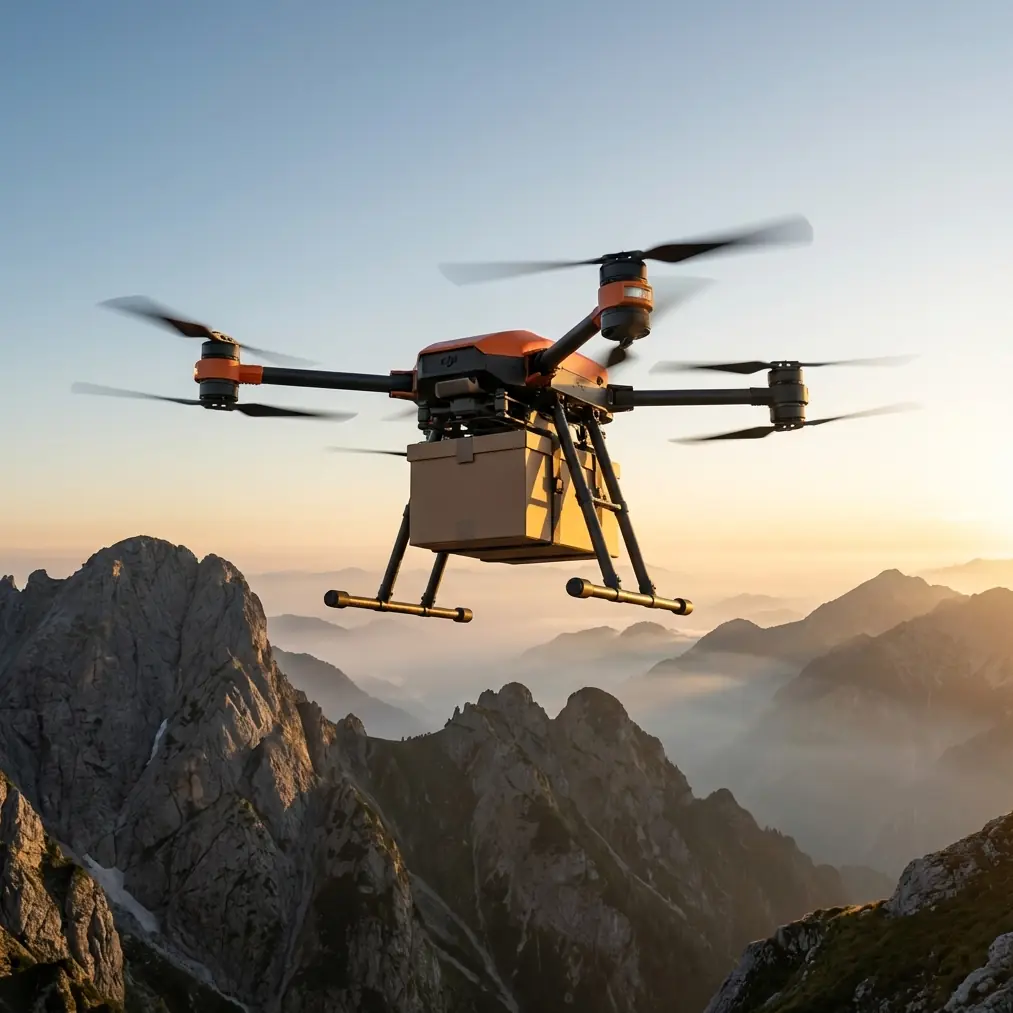
FlyCart 30 Guide for Urban Venue Scouting: What Actually Matters Before You Plan the Lift
META: A practical FlyCart 30 tutorial for urban venue scouting, covering route planning, payload thinking, winch workflows, dual-battery resilience, emergency parachute considerations, and real-world sensor awareness.
When people hear “venue scouting,” they usually picture a camera drone floating over a rooftop or event site, collecting pretty establishing shots. That’s only part of the job. In dense urban environments, scouting often means moving small but time-sensitive gear, checking access constraints, verifying rooftop staging points, and building a realistic picture of whether a site can support a temporary activation or recurring logistics workflow.
That is where the FlyCart 30 becomes more interesting than a standard imaging platform.
I approach this from a logistics angle, not a spec-sheet obsession. If you’re scouting venues in a city, the core question is simple: can the aircraft help you gather decision-grade information while reducing the friction of moving equipment into hard-to-reach spaces? With the FlyCart 30, the answer depends less on headline capability and more on how you structure the mission.
There’s also a useful lesson hiding in an unlikely place. A recent smartphone photography tutorial argued that beginners can produce a clean starburst lighting effect with a regular phone by changing only a few settings. No extra lens. No intimidating technical theory. Just a small number of choices that materially affect the result. That idea translates well to FlyCart 30 operations. Urban scouting does not improve because the aircraft is advanced on paper. It improves when the operator knows which few settings, systems, and mission decisions matter most.
This guide is built around that principle.
Start with the mission, not the aircraft
Urban venue scouting tends to collapse into one of three mission types:
Visual access verification
You need to inspect roofs, terraces, courtyards, loading points, or elevated event zones.Light logistics rehearsal
You need to move compact items such as radios, test payloads, line markers, measurement kits, or temporary communications equipment to see whether an air-supported workflow is viable.Operational mapping for event setup
You need a working understanding of approach paths, obstructions, pedestrian conflict zones, and safe drop or winch positions.
The FlyCart 30 can contribute to all three, but not in the same way. That distinction matters. Too many teams treat venue scouting as a generic drone flight. In reality, scouting with a logistics platform should answer operational questions: how much can be lifted, where can it be lowered safely, what route avoids interference, and what contingencies exist if the environment changes mid-mission?
That’s why payload ratio is one of the first concepts to get right.
Why payload ratio matters more than raw lift
Urban scouting rarely requires maximum carrying capacity. What it requires is margin.
A payload ratio mindset means comparing the actual scouting load to what the aircraft can safely manage in the route, weather, and altitude conditions you expect. If your test package is light, that doesn’t just mean the mission is easier. It can improve flexibility in route optimization, reduce stress on the power system, and give you more room for decision-making if the aircraft needs to reposition.
For venue work, this changes behavior on the ground. Instead of asking, “Can the FlyCart 30 carry this?” ask:
- How much reserve do I want if wind channels between buildings intensify?
- Can I split the load so the aircraft remains more agile around urban obstacles?
- Am I evaluating the site with the same package weight I’ll actually use later?
Those are practical questions. They directly affect whether your scouting result can be trusted.
The winch system is often the real star of the workflow
In urban environments, touchdown is frequently the least elegant part of any logistics mission. Roofs may be cluttered. Courtyards may be too tight. Temporary event structures may leave no comfortable landing zone at all.
This is where the winch system changes the conversation.
For venue scouting, a winch lets you test delivery or retrieval without committing the aircraft to a full landing. That matters operationally because it reduces the number of variables you introduce into the site. You can hold a safer hover position and lower a compact test payload to the exact handoff point. You also get a better sense of line-of-sight challenges, downdraft effects near facades, and whether personnel on the ground can manage the transfer cleanly.
The difference is huge. A rooftop that looks usable from above may still be a poor landing environment because of antennas, HVAC units, banners, temporary truss, or foot traffic. A controlled lowering operation can reveal that faster than a conventional arrival.
If your venue scouting objective includes setup feasibility, the winch system should not be treated as a nice extra. It may be the central feature that tells you whether the site is genuinely workable.
Route optimization in a city is not just about distance
A short route can be the wrong route.
Urban route optimization with the FlyCart 30 is really about minimizing conflict. The best path is often the one that avoids reflective glass corridors, turbulent air around towers, congested pedestrian zones, and cluttered RF conditions. If you’re scouting venues, build your route around stability and predictability, not speed alone.
This is where logistics teams benefit from a disciplined preflight structure. I use a simple framework:
- Entry corridor: where the aircraft first gains a clean, stable line into the site
- Observation hold: where it can pause for site review without creating unnecessary risk
- Transfer zone: where winch or payload activity happens
- Exit route: where the aircraft leaves without crossing back through the most constrained part of the environment
That sounds basic, but basic is good. The smartphone article I mentioned earlier made a useful point: beginners don’t need a hundred complicated settings if a few memorable adjustments create the desired result. Urban scouting is similar. You don’t need a baroque mission design. You need a route that is easy to brief, easy to repeat, and easy to modify when conditions shift.
Dual-battery thinking is about continuity, not convenience
The phrase “dual-battery” gets thrown around as if redundancy is just a comfort feature. In urban scouting, it’s closer to an operational stabilizer.
Venue missions often involve stops, holds, repositioning, and hover-based assessment. That is different from a simple out-and-back flight. You may pause to inspect sightlines for stage rigging. You may reposition after finding that the intended handoff area is too close to rooftop equipment. You may have to wait for a temporary pedestrian opening in a courtyard below.
All of that eats into energy planning.
A dual-battery setup matters because it supports resilience in a mission profile where interruptions are normal. It does not remove the need for conservative planning, but it gives operators a more robust framework for handling the fact that venue scouting is full of small, unscripted changes.
That is especially true in cities where one mission can involve multiple hover checks around a single block.
BVLOS discussions need discipline in urban scouting
BVLOS is one of those terms that attracts attention immediately, but in venue scouting it should be approached with maturity. The significance is not that the aircraft can theoretically support longer operational concepts. The significance is that route architecture and communications discipline become more important as the mission footprint expands beyond a simple visual orbit over one site.
For most urban venue assessments, the practical value is not “fly farther.” It is “build a route and observation strategy that remains coherent if the site is part of a wider logistical chain.” Maybe the venue is one stop in a multi-point readiness review. Maybe you’re assessing several rooftops that could serve as alternating transfer points. Maybe you’re testing whether an event campus can support recurring aerial deliveries between support zones.
That is where BVLOS planning concepts become relevant, even if your immediate operation remains tightly controlled. It pushes you to think in terms of route integrity, communication continuity, and fallback procedures rather than one-off flights.
Emergency parachute planning is not a box-tick exercise
When people discuss an emergency parachute, they often stop at compliance language. That’s not enough for urban work.
For venue scouting, the operational significance is this: your risk model changes when flying near structures, temporary gatherings, staging crews, or active city infrastructure. An emergency parachute belongs in your planning logic because it affects where you are willing to hold, what altitudes make sense for specific phases, and how you define safe corridors over and around the site.
You should be asking:
- Which portions of the route are least tolerant of an in-flight anomaly?
- Where are the cleaner buffers?
- Does the planned observation hold give enough separation from the site’s densest activity?
- Is the transfer point chosen for convenience or for total mission safety?
Those questions are more valuable than casually mentioning that a safety system exists.
A real sensor lesson: the day a kite almost ruined the rehearsal
You asked for specifics, so here’s one that stuck with me.
On a scouting rehearsal near an urban waterfront venue, we had mapped a clean approach over a service lane and planned a hover for line-lowering onto a roof terrace. Conditions were stable. Then a black kite drifted into the corridor, circling on uplift coming off the nearby buildings. Not a dramatic near miss. Just enough to force a pause and lateral reposition.
What mattered wasn’t the bird itself. It was what the event revealed about the operation.
The aircraft’s sensing and situational awareness gave us time to stop pressing the original route. More importantly, it exposed a flaw in our assumptions. We had built the plan around static obstacles, but the urban edge ecosystem added a moving one. The revised route shifted the observation hold farther from the thermal pocket near the facade, and the rest of the rehearsal went smoothly.
That’s a small example, but it carries weight. Urban venue scouting is not only about architecture and access. It is also about dynamic variables: birds, crane movement, rooftop maintenance teams, reflective light transitions at dusk, and sudden pedestrian pattern changes below. Sensor capability only matters if the crew is ready to act on what the aircraft reveals.
Borrow a beginner’s mindset, even if your team is experienced
One reason the smartphone tutorial resonated with me is that it stripped away gear mystique. It said, essentially, that a beginner can get an impressive result by remembering a simple set of tips. No extra accessories. No need to master every parameter before trying.
That is a useful corrective for FlyCart 30 venue scouting.
A lot of teams overcomplicate the first pass. They bring too much equipment, overdesign the route, and chase perfect data before they’ve confirmed the fundamentals. In practice, the strongest early scouting missions often come from a restrained workflow:
- carry only the test payload needed to answer the site question
- use the winch to validate handoff feasibility before attempting more involved patterns
- design one primary route and one realistic alternate
- reserve hover time for specific decisions, not vague observation
- document rooftop constraints immediately while they are visible and contextual
That kind of discipline is what converts a drone flight into a usable site report.
A practical urban scouting sequence for FlyCart 30 teams
If you want a repeatable approach, this is the sequence I recommend.
1. Define the single decision the mission must answer
Don’t launch until you can finish this sentence: “By the end of this flight, we need to know whether this venue can support ___.”
2. Build the payload around that decision
Use the lightest realistic test package. This is where payload ratio becomes meaningful rather than theoretical.
3. Choose a no-landing-first workflow
If the site is urban and unfamiliar, begin by assuming the aircraft should not land there. Let the winch system prove whether direct touchdown is even necessary.
4. Plan for holds, not just movement
Venue scouting includes pauses. Account for them in battery strategy and route logic.
5. Identify the least forgiving segment
This is where emergency parachute thinking and route separation matter most.
6. Watch for dynamic obstacles
Bird activity, rooftop contractors, changing traffic flows, and gust patterns can all invalidate a pretty route drawing.
7. Turn observations into venue decisions immediately
After landing, don’t settle for “mission successful.” Record whether the site is suitable, conditionally suitable, or unsuitable for the intended logistics task.
If your team wants to compare mission ideas or sanity-check a scouting workflow before going on site, send the route concept here: message our operations desk.
The bigger point
The FlyCart 30 is most useful in urban venue scouting when it is treated as a logistics instrument with aerial access advantages, not just a large drone with carrying power. The operational wins come from smart payload choices, intelligent use of the winch system, conservative battery planning, route optimization built around conflict reduction, and safety logic that actually shapes the mission.
And yes, there’s a parallel with that smartphone photography piece. The source claimed a beginner could create a dramatic starburst image with a normal phone by adjusting just a few settings, without buying extra lenses or learning complex parameters. That’s not a drone tutorial, but the lesson holds. Results improve when teams focus on the handful of decisions that materially change the outcome.
For FlyCart 30 venue scouting, those decisions are not glamorous. They are practical. How much are you lifting relative to mission margin? Will you lower rather than land? Where will you hold? What is the alternate route? What happens if the environment behaves differently than the map suggested?
Get those right, and the aircraft becomes more than a platform. It becomes a reliable way to turn a difficult urban site into a clear operational answer.
Ready for your own FlyCart 30? Contact our team for expert consultation.