
FlyCart 30 Field Report: What Actually Matters When You’re
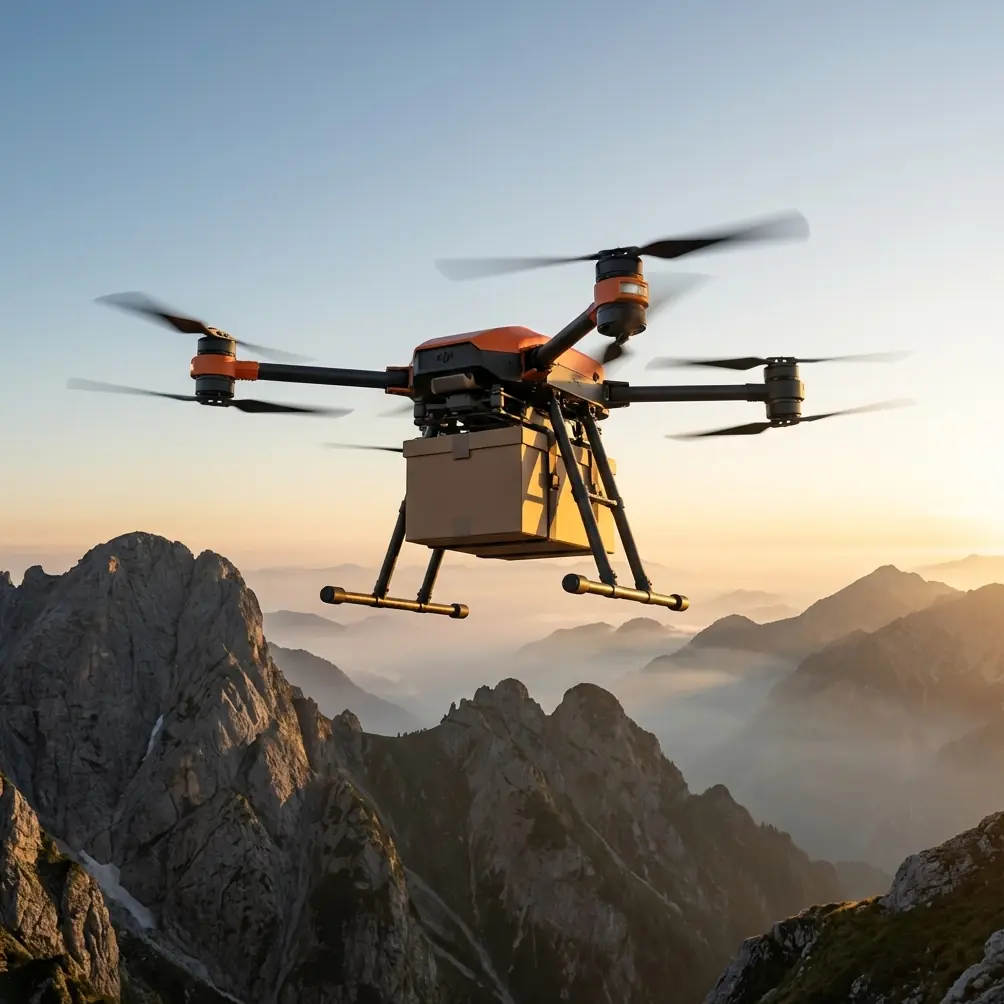
FlyCart 30 Field Report: What Actually Matters When You’re Scouting Wildlife in Remote Terrain
META: A field-tested FlyCart 30 scouting report for remote wildlife operations, covering payload ratio, winch use, BVLOS planning, dual-battery strategy, and emergency safety systems.
Most people look at the DJI FlyCart 30 and see a cargo drone. In the field, that is only half the story.
I’ve used heavy-lift platforms around remote operations long enough to know that aircraft get defined by the mission set around them, not by the category printed on a spec sheet. The FlyCart 30 sits in an interesting place because it was built for transport, yet many of the same features that make it effective for delivery work also make it unusually useful for wildlife scouting in places where roads disappear, foot access is slow, and every extra kilogram has to justify its presence.
This report is written from the perspective of logistics, because that is where remote wildlife work usually succeeds or fails. Not at takeoff. Not in the lab. In the handoff between planning, transport, observation, recovery, and getting everyone out safely before weather or terrain closes the window.
When teams ask whether the FlyCart 30 makes sense for wildlife scouting, they are often asking the wrong question. The real question is this: can a cargo-first aircraft reduce field friction while carrying the right sensor package, maintaining safe stand-off distance from animals, and returning with enough margin to absorb the surprises that remote environments always produce?
In the right scenario, yes.
Why the FlyCart 30 deserves a second look for wildlife scouting
The FlyCart 30 is not a conventional small observation drone. That distinction matters immediately. Its whole operating logic is built around moving meaningful loads over distance, and that changes what a field team can bring into a mission. The operational advantage is not only the maximum payload in isolation. It is the payload ratio: how much useful equipment the aircraft can lift relative to the total field system you are trying to deploy.
For remote wildlife scouting, that opens a different mission design. Instead of launching a lightweight camera drone and hoping its onboard package is enough, teams can think in modules: optical payloads, thermal observation gear, compact relay hardware, emergency medical items for personnel, tagged sample containers, or bait-free monitoring equipment for habitat assessment. The aircraft’s value grows when it absorbs multiple support roles in one sortie cycle.
That changes staffing decisions too. In rough country, every extra hike to reposition batteries, replace sensors, or retrieve dropped equipment compounds fatigue. A platform with meaningful lift capacity can reduce those rotations.
The FlyCart 30’s dual-battery configuration is one of the details that matters more in the wild than it does in marketing copy. Redundancy is never a luxury when you are operating over ravines, tree lines, wet ground, or animal corridors where an unscheduled landing could create a conservation problem as well as an equipment loss. A dual-battery system does not eliminate risk, but it gives the operation a better resilience profile. For wildlife teams working well beyond vehicle access, that can be the difference between a controlled recovery and a long, disruptive retrieval effort.
A real field scenario: reading the animal before the map
On one remote scouting run, the aircraft was tasked with supporting a dawn survey along broken scrubland that opened into a narrow watercourse. The original route was clean on paper: launch from elevated ground, push the aircraft to an observation hold point, lower a compact monitoring package by winch near a preselected vantage area, then back out without pressing the animals.
The complication was not terrain. It was movement.
A stag had pushed through the brush line earlier than expected, and a second cluster of animals was trailing from the east, closer to the descent zone than the map-based plan suggested. This is where a platform like the FlyCart 30 becomes more than a transport machine. The mission had to pivot from fixed drop logic to adaptive stand-off control. Rather than bringing the aircraft lower into the corridor and risking noise concentration where the animals were already alert, the team held offset, adjusted the route, and used the winch system to place gear from a safer lateral position.
That single decision preserved the survey window.
The winch system is one of the FlyCart 30’s most operationally significant features for wildlife work because it lets you separate aircraft position from equipment placement. In remote scouting, those are not always the same thing. You may want the payload at a creek edge, ridge break, or blind approach zone, but you may not want the aircraft directly overhead. The winch gives you that vertical buffer. It reduces rotor wash issues around fragile vegetation, lowers the need to land on uncertain ground, and helps teams avoid putting a large aircraft exactly where animal sensitivity is highest.
That is not a minor convenience. It can shape whether an observation mission remains observational or becomes disruptive.
Route optimization means more than saving time
A lot of drone operators hear “route optimization” and think only in terms of efficiency. In wildlife scouting, optimization has a more serious meaning. It is about reducing disturbance, preserving battery margin, and planning around terrain-driven radio behavior.
The FlyCart 30 becomes especially interesting in BVLOS-style planning discussions, even if your specific operation must follow tighter local visual rules. The reason is simple: remote wildlife work often happens where line-of-sight is broken by ridges, forest structure, or elevation changes that do not look severe until you are on site. Planning a route for this aircraft should never be treated as a straight-line exercise between two coordinates.
You need terrain-aware legs. You need buffer zones around likely animal congregation points. You need alternate hold locations where the aircraft can pause outside a disturbance envelope if the survey target shifts. You also need return paths that assume the first plan may not survive contact with the field.
This is where larger aircraft can punish sloppy thinking. A heavy-lift platform gives you more capability, but it also raises the cost of route errors. If you misjudge wind channels near rock faces, or let the aircraft drift into a descent path over a nesting area, you are carrying more acoustic and mechanical presence into the wrong place.
Used well, the FlyCart 30 lets a team pre-stage observation tools deeper into remote ground and then maintain smarter spacing from the actual wildlife target. Used poorly, it is simply too much aircraft in too little planning.
The safety systems are not background features
Remote wildlife missions tend to have an odd risk profile. They are often quieter than industrial jobs, but less forgiving. You may be far from infrastructure, operating with a small team, and trying not to leave a trace beyond the data you came to collect.
That is why the emergency parachute deserves real attention. On paper, it is a safety system. In the field, it is also a land-use control measure. If an aircraft suffers a critical issue over inaccessible ground, a managed descent profile can reduce the radius of the incident and improve recovery predictability. That matters for crew safety, but it also matters for the landscape itself. A bad crash in a sensitive habitat can trigger a cascade of problems: fuel exposure, shattered components in vegetation, noise, retrieval damage, and unplanned human intrusion into an area you were trying to monitor lightly.
The same logic applies to the dual-battery architecture. Redundant power is not just an engineering comfort blanket. It supports cleaner decision-making. Teams with better resilience tend to make fewer rushed choices near the end of a sortie, and end-of-sortie pressure is where many field mistakes begin.
In wildlife work, the safest flight is often the one that ends earlier than the aircraft technically could have managed. More margin. Less drama.
What the FlyCart 30 does better than smaller scouting drones
A smaller observation drone still makes sense for many wildlife tasks. If you need quick visual confirmation, tight deployment, and minimal load, that class is often ideal. But the FlyCart 30 outperforms that category when the mission is not just seeing animals, but sustaining a remote field operation around them.
That distinction is easy to underestimate.
The aircraft can support forward positioning of trail sensors, remote observation kits, medical supplies for the team, communications gear, and retrieval tools without requiring repeated human entry into the same habitat corridor. When the terrain is steep or marshy, or when the animals themselves make foot access undesirable, reducing personnel movement is a major operational win.
That payload ratio point comes back here. A drone that can lift enough useful field equipment to replace several manual trips changes the ecological footprint of the mission. Fewer footsteps. Less vehicle creep. Less repeated disturbance along the same approach lines.
For teams working on multi-day projects, it also changes camp logic. Instead of building the day around what the lightest aircraft can manage, you can build it around what equipment actually improves observation quality and crew safety.
Limits you should respect before sending it into the bush
The FlyCart 30 is not automatically the right answer. Its advantages become liabilities if the mission is too delicate, too close-quarters, or too sensor-light to justify the aircraft’s presence.
If the wildlife target is highly noise-sensitive and the observation area offers no practical stand-off geometry, then the platform may be excessive. If your team does not have disciplined route planning, emergency procedures, and payload management habits, a heavy-lift aircraft will expose those weaknesses fast. And if the site depends on quick hand launches from constantly shifting positions, this is the wrong class of tool.
Another point that matters: remote scouting missions are often framed as drone jobs, but they are really logistics jobs with a data objective. If the launch zone, battery rotation, landing recovery, and animal buffer management are not thought through before arrival, no aircraft can fix the concept.
The FlyCart 30 rewards structured teams. It is less forgiving of improvisation than a small visual drone, but it gives more back when the operation is planned properly.
A practical workflow for wildlife teams
If I were building a FlyCart 30 scouting plan for remote wildlife operations today, I would keep it simple.
First, define the disturbance threshold before defining the route. That means identifying where the aircraft must not loiter, descend, or cross, even if those paths are shorter.
Second, separate payload placement from aircraft exposure. If the mission allows it, use the winch system to keep the airframe offset from the target area rather than insisting on direct overhead delivery.
Third, plan power with reserve discipline. A dual-battery setup is a strength, not an excuse to squeeze the envelope.
Fourth, write alternate routes before launch. Remote terrain is full of small surprises that become large problems when battery, altitude, and animal movement collide.
Fifth, assign one person to own recovery logic, not just flight logic. Wildlife missions often become messy after the primary objective is achieved. The aircraft is still in the field, the terrain is still difficult, and the team is usually tired.
If you are mapping out that workflow and want a second set of eyes, I’d suggest using this quick field contact option: message our operations desk.
The bottom line from the field
The FlyCart 30 is at its best in wildlife scouting when the mission is bigger than observation alone. It shines when your operation needs transport, remote placement, route discipline, and safety redundancy in one aircraft.
Two details make that especially clear. The winch system allows teams to deliver equipment without pushing the aircraft directly into the most sensitive part of the environment. The dual-battery and emergency parachute systems strengthen the safety margin in places where a simple recovery is rarely simple. Add smart route optimization and BVLOS-style planning discipline, and the aircraft becomes a serious tool for remote field work rather than a brute-force lifter.
That does not make it subtle. It makes it useful.
And in remote wildlife operations, useful beats fashionable every time.
Ready for your own FlyCart 30? Contact our team for expert consultation.