
Expert Scouting With FlyCart 30 in Remote Wildlife Operation
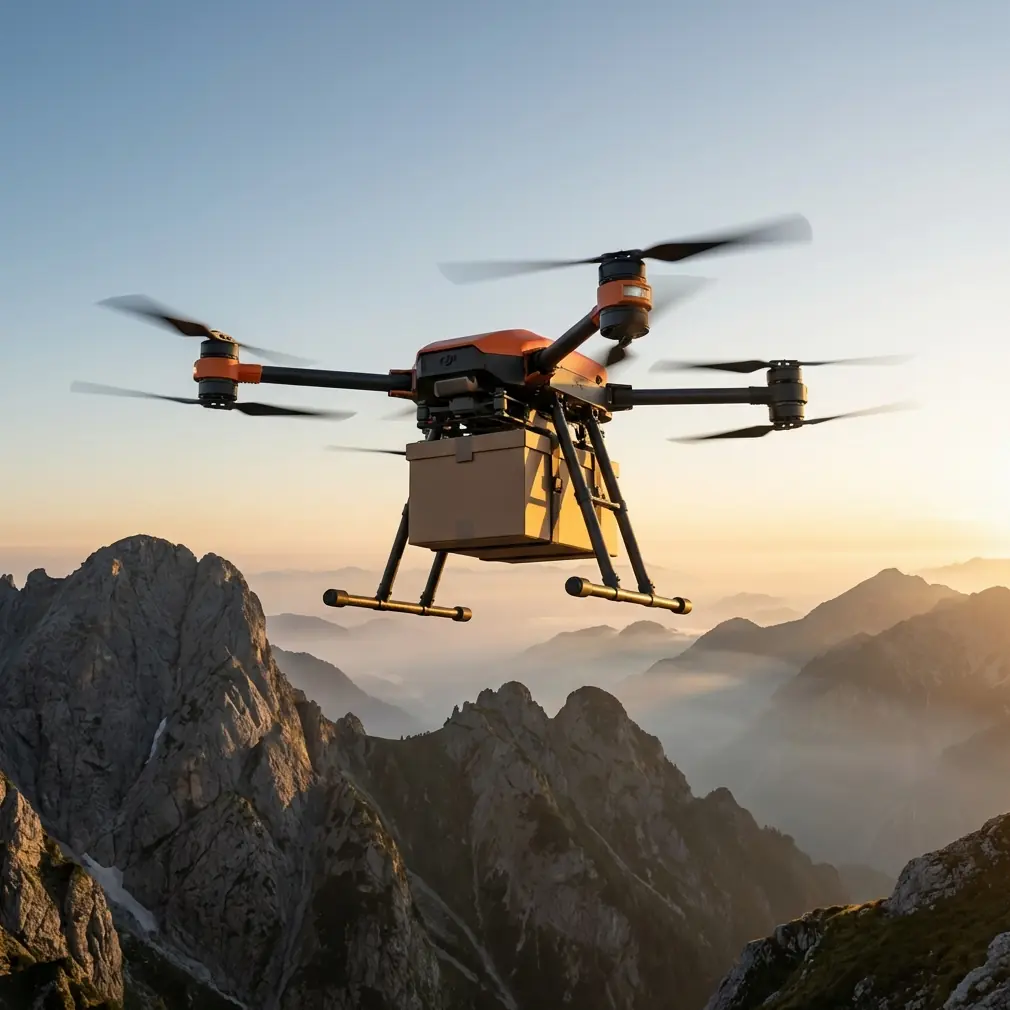
Expert Scouting With FlyCart 30 in Remote Wildlife Operations
META: A field-focused guide to using DJI FlyCart 30 for remote wildlife scouting, with practical insight on payload ratio, winch workflows, route planning, BVLOS considerations, and sensor-led operations in rough terrain.
Remote wildlife scouting has a logistics problem disguised as a data problem.
People often focus on cameras, thermal feeds, or the quality of the imagery coming back from the field. Those matter. But in remote habitats, the real constraint is usually access: steep terrain, fragile ground, long walking times, changing weather, and the need to move small but critical loads without disturbing the site. That is where the FlyCart 30 becomes interesting—not as a generic drone platform, but as a field logistics tool that can support better scouting decisions.
I approach this from a logistics lead perspective. If your team is monitoring animal movement, checking nesting areas, verifying water sources, or staging sensors in remote zones, the question is not simply “Can a drone fly there?” The better question is: can the aircraft support a repeatable workflow across varied terrain, in changing conditions, with enough safety margin to protect equipment and avoid disrupting wildlife?
That framing matters because the most useful clue comes from an unexpected place: news gathering.
A notable newsroom deployment described the creation of a formal drone fleet built around compact integrated multirotor aircraft. The operational promise was clear: all-weather, multi-terrain, multimedia aerial collection. It was framed as the first nationwide drone news project of its kind, and it arrived at a moment when more than ten major overseas media organizations—including the Associated Press, CNN, The New York Times, and The Washington Post—were already testing drones for image and video acquisition.
That history is relevant to FlyCart 30 users in wildlife scouting for one reason: when organizations need dependable aerial collection over many locations, they stop treating drones like gadgets and start treating them like systems. News teams needed speed, terrain flexibility, and consistency. Wildlife teams need the same discipline, but with a different end goal: not breaking a story, but building situational awareness in places where ground access is costly, slow, or ecologically sensitive.
Why a cargo drone belongs in a scouting workflow
At first glance, FlyCart 30 seems built for transport rather than observation. That is exactly why it can be valuable in remote wildlife work.
Scouting in remote regions rarely happens with only one aircraft and one pilot. There are batteries to move, observation kits to deploy, field radios to stage, environmental sensors to place, and sometimes feed or veterinary support items to deliver to legal, approved civilian conservation operations. If your observation drone can see the site but your team still needs a long hike to install monitoring equipment, you have solved only half the problem.
FlyCart 30 closes that gap.
Its payload ratio becomes operationally significant because remote scouting missions are often constrained by the tradeoff between what you need on site and what your team can carry in by hand. A platform that can move a practical load into a difficult area lets you separate transport from observation. That means your dedicated imaging drone can remain optimized for sensing, while FlyCart 30 handles the support layer: transport boxes, sensor packages, replacement batteries, trail cameras, relay equipment, and field supplies.
This is not just convenience. It reduces time spent moving personnel through sensitive habitat.
Start with the route, not the aircraft
The most common planning mistake is designing a mission around the drone’s capability sheet instead of the terrain.
For remote wildlife scouting, route optimization should begin with three maps layered together:
- habitat sensitivity zones
- topographic constraints
- communication reliability across the corridor
Only after those layers are understood should you assign FlyCart 30 to a route.
The newsroom reference to all-weather and multi-terrain use is useful here. In practical field terms, “multi-terrain” means your route design cannot assume a clean, flat logistics corridor. You may be crossing ravines, scrubland, rock faces, tree gaps, or river edges. A cargo route that looks short on a map may produce poor line quality, unstable approach angles, or unnecessary noise over an animal concentration area.
A better pattern is to route around the animals, not directly to the destination.
If you are scouting a watering basin used at dawn, for example, you do not want your transport drone crossing over the basin simply because that is the shortest path. You want a route that approaches from a lower-disturbance edge, ideally with a drop or handoff point offset from the observation target. That preserves the integrity of the scouting event.
Where the winch system changes field behavior
For wildlife teams, the winch system is often the most underrated feature in this class of aircraft.
Landing is not always desirable. In muddy flats, dense brush, uneven rock, or habitats where ground contact would damage vegetation, a suspended delivery is cleaner than touchdown. The winch lets you place equipment at a controlled point while keeping the aircraft above obstacles and away from unstable surfaces.
Operationally, this changes how teams stage work.
Instead of forcing a landing zone near the exact observation area, you can identify a safe aerial hover point and lower the payload into a narrow receiving zone. That can be a sensor pod, a small camera trap kit, a battery case, or a communications relay unit. For remote scouting teams, this means fewer compromises between “where the drone can land” and “where the equipment actually needs to be.”
I have seen this matter in a canyon-edge survey where a thermal-equipped observation unit had identified movement near a scrub corridor shortly after sunrise. The transport task was not to fly directly into that movement area, but to place a passive acoustic recorder and a replacement power pack on a rock shelf outside the corridor. A conventional landing would have been risky due to loose stone and brush. The winch workflow allowed the kit to be lowered precisely, with the aircraft holding clear of the surface.
On another mission, the aircraft’s sensors had to adjust around a large stag moving unexpectedly along a ridgeline below the planned line of travel. That kind of wildlife encounter is exactly why fixed plans need flexible execution. The route remained valid, but the final approach changed, and a controlled suspended placement avoided pushing the animal deeper into the survey area.
Dual-battery strategy is about resilience, not brochure value
Remote work punishes optimistic planning.
Dual-battery architecture matters because wildlife scouting often involves long repositioning legs, reserve margins for weather changes, and contingency holds while the receiving team confirms a drop zone is clear. In those conditions, battery strategy is not just a flight-time issue. It is a mission reliability issue.
A dual-battery setup supports safer rotation and more predictable turnaround planning. It also helps logistics teams create cleaner swap cycles when multiple sorties are needed across the same sector.
Here is the practical benefit: if your day includes three remote sensor drops and one urgent resupply for a field observation team, your planning confidence improves when battery management is standardized and redundant. That reduces rushed launches, which are a major source of operational errors in conservation and research settings.
This echoes what early drone news operations learned. Once aerial collection expands across many locations, consistency beats improvisation. The first national-scale newsroom drone program was not notable merely because it used aircraft. It was notable because it formalized them into a fleet. Wildlife operators should think the same way. A FlyCart 30 mission should fit into a managed system of batteries, route logs, contingency actions, and field handoff protocols.
BVLOS can expand reach, but only if your process is mature
Remote wildlife corridors are where beyond visual line of sight operations can become strategically useful. They are also where weak planning gets exposed fast.
BVLOS is attractive because scouting sites are often far beyond practical foot access or normal visual range. But range alone does not create value. The value comes from linking BVLOS capability to a mission profile that genuinely benefits from remote transport: moving field kits, supporting observation outposts, or resupplying sensor stations in areas where repeated ground entry would be disruptive.
For FlyCart 30, BVLOS should be considered only after four things are stable:
- route reliability
- comms redundancy
- emergency procedures
- receiving-point discipline
If one of those is weak, the mission becomes fragile.
The emergency parachute discussion belongs here as well. In remote wildlife operations, safety systems are not abstract. They are part of environmental risk control. A robust emergency recovery approach helps reduce the chance that an aircraft incident turns into habitat damage, equipment loss in inaccessible terrain, or unnecessary personnel exposure during retrieval. The parachute is not permission to fly loosely. It is a last layer in a stack that should already include conservative routing and disciplined launch criteria.
How to build a FlyCart 30 scouting workflow that actually works
1. Define the scouting objective before the cargo objective
Do not start by asking what the drone can carry. Start by asking what the field team needs to learn. Are you confirming migration timing, checking nest occupancy, replacing edge sensors, or staging a temporary observation point? The transport profile should serve the data objective.
2. Split observation and support into separate roles
Use your sensing platform for sensing. Use FlyCart 30 for support. This preserves payload efficiency and simplifies field planning. It also gives you more freedom in selecting the safest transport route.
3. Use payload ratio to standardize kits
Build repeatable field modules: acoustic recorder kit, trail camera kit, battery refresh kit, weather node kit. Standardized loadouts make every sortie faster to prepare and easier to audit.
4. Prefer winch placement in ecologically sensitive zones
If touchdown would crush vegetation, create rotor wash issues near loose substrate, or demand an overly exposed landing point, use suspended delivery instead.
5. Create animal-aware route buffers
Avoid direct overflight of high-value habitat features such as water points, nesting edges, or predictable game trails. This is where route optimization becomes a conservation tool, not just a logistics tool.
6. Rehearse failed-receipt procedures
What happens if the receiving team cannot secure the drop? What if wildlife moves into the receiving area? What if wind shifts at the hover point? Build those decisions before flight day.
7. Log every sortie like a fleet operation
The newsroom example matters because it treated aerial gathering as an organized capability, not a one-off experiment. Do the same. Record route performance, swap intervals, delivery accuracy, and disturbance observations.
Why this matters more now
The significance of those early media drone programs was not the novelty of unmanned aircraft. It was the recognition that aerial collection could be scaled across locations and conditions. A fleet using compact multirotor platforms for all-weather, multi-terrain content capture proved that distributed field operations could be made systematic.
Wildlife scouting teams are now in a similar phase.
The challenge is no longer whether drones can help. The challenge is deciding which aircraft belongs in which part of the workflow. FlyCart 30 earns its place when the scouting mission depends on sustained field presence, remote equipment placement, and reduced terrain burden on human teams.
If you are evaluating mission design, payload staging, or route logic for remote conservation work, you can share your field scenario here: message a FlyCart workflow specialist.
Used well, FlyCart 30 is not simply a transport platform. It is the link between seeing a remote habitat and actually supporting the teams and tools needed to understand it.
That distinction is what turns drone capability into field capability.
Ready for your own FlyCart 30? Contact our team for expert consultation.