
FlyCart 30 in Windy Wildlife Fieldwork: A Logistics Lead’s
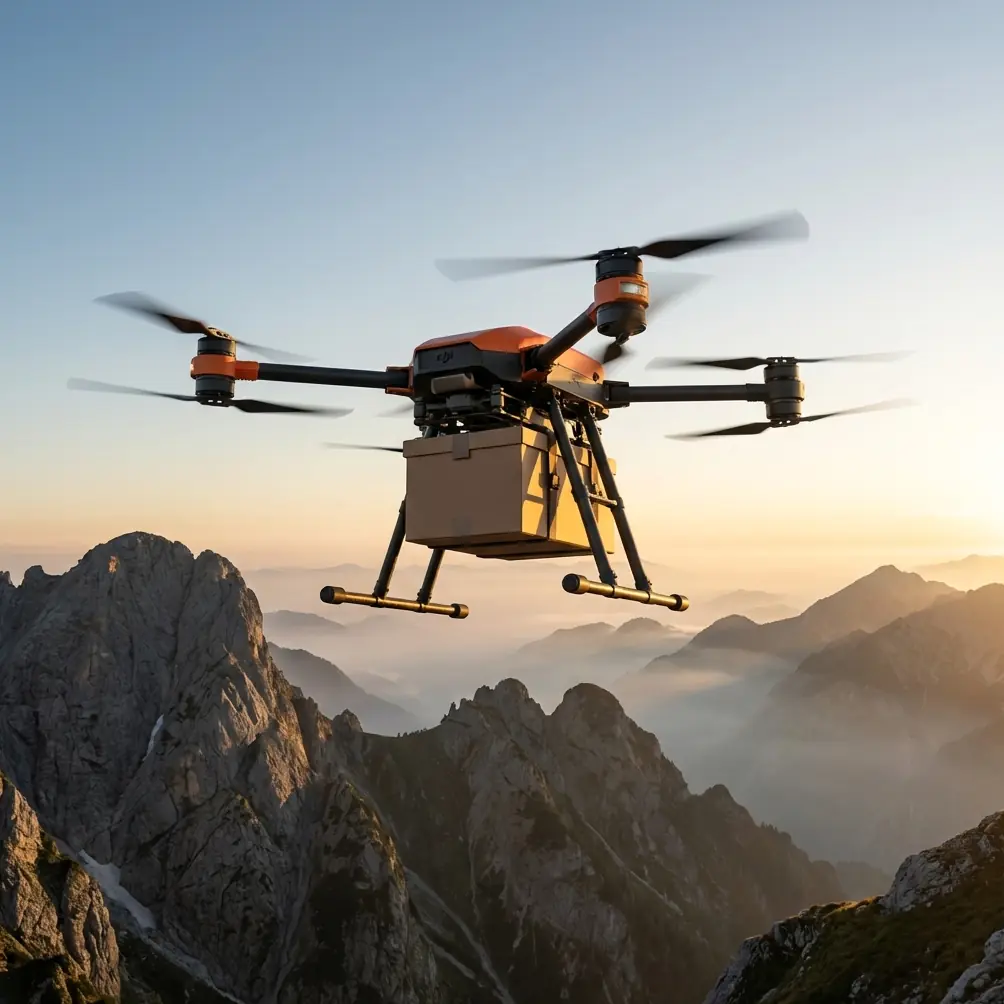
FlyCart 30 in Windy Wildlife Fieldwork: A Logistics Lead’s Report on What Actually Matters
META: A field-based expert analysis of DJI FlyCart 30 for windy wildlife operations, connecting modern cargo drone capability to the kind of access and relief challenges highlighted by Guizhou 2008.
When a headline says that disaster relief in Guizhou in 2008 would have been far easier if today’s drones had existed, it does more than stir emotion. It points to a practical truth that people working in remote terrain already understand: access is often the real bottleneck.
That observation matters well beyond emergency response. In wildlife fieldwork, especially in windy mountain or highland environments, teams run into the same basic problem. The issue is rarely whether supplies exist. The issue is whether you can move them where they are needed, when they are needed, without exhausting crews, delaying surveys, or exposing people to unnecessary risk on bad ground.
This is where the FlyCart 30 becomes interesting.
I’m looking at it here not as a brochure item, but through the lens of logistics. The scenario is civilian and specific: scouting wildlife in windy conditions, with teams operating from rough staging points, moving monitoring gear, batteries, medical kits, camera traps, feed samples, weather sensors, and camp essentials into areas that are difficult to reach on foot or by vehicle. In that context, the FlyCart 30 is not just a “bigger drone.” Its value comes from how it changes the movement equation.
The Guizhou 2008 Lesson Is Really About Terrain, Delay, and Human Strain
The source reference is brief, but its meaning is clear. Relief work in Guizhou during 2008 was hard, and the title argues that modern drones would have eased that burden. That detail matters because it highlights three operational realities that still define remote missions today.
First, terrain can neutralize conventional transport. Roads fail. Trails narrow. Slopes and ravines turn short distances into long delays.
Second, time compounds every problem. A delayed load is not just a late load. It can stall a survey team, shorten a safe weather window, or force a camp resupply after daylight.
Third, every manual carry has a human cost. If staff spend hours moving equipment up difficult routes, that is time and energy not spent on observation, species tracking, habitat assessment, or safe camp operations.
For wildlife work in windy regions, those same pressures show up constantly. You may not be responding to a disaster, but you are still dealing with the same core challenge: terrain makes ordinary logistics fragile.
The FlyCart 30 answers that challenge in a way many smaller drones do not.
Why the FlyCart 30 Fits Windy Wildlife Operations Better Than Typical Enterprise UAVs
A lot of enterprise drones can inspect, map, or film. Fewer can materially improve field logistics. That distinction is crucial.
For wildlife scouting, the drone has to do more than fly. It has to transport useful weight, hold operational stability in less-than-ideal conditions, and deliver cargo precisely where a team can actually use it. This is where payload ratio starts to matter more than headline specs.
A strong payload ratio is what separates a practical cargo platform from a drone that can only carry token loads. In wildlife operations, token loads don’t solve much. A few lightweight supplies are helpful, but not transformative. A platform like FlyCart 30 stands out because it is built around the idea that lifting meaningful field cargo is the mission, not a side feature.
Compared with many competitor aircraft that are adapted from inspection or imaging roles, the FlyCart 30 is purpose-built for moving loads. That design intent shows up operationally. You are not improvising with external mounts or treating cargo as an afterthought. You are using a platform engineered for transport workflows.
That difference changes planning. It means a wildlife logistics lead can think in terms of resupply cycles, route optimization, and repeated delivery windows, rather than one-off experimental flights.
The Winch System Is More Than a Convenience
For remote wildlife teams, the winch system may be one of the most significant features on the aircraft.
On paper, a winch sounds like a delivery accessory. In the field, it is access insurance.
Why? Because many wildlife drop points are not proper landing zones. They are clearings with brush, uneven rock, wet ground, tree edges, or unstable surfaces. In windy conditions, trying to bring a large aircraft down to a marginal landing area introduces unnecessary complexity and risk.
A winch system lets the aircraft remain in a more controlled hover while lowering cargo to the ground. Operationally, that does three things.
It reduces the need to identify or prepare a landing spot. That alone can save major time in mountainous or vegetated areas.
It improves safety around delicate habitat. Teams can avoid setting the aircraft down in ecologically sensitive patches or on terrain where rotor wash and physical contact would be undesirable.
It supports more precise handoff in gusty field conditions. If the aircraft can stay in a stable position rather than commit to a landing in a compromised area, the cargo transfer becomes more manageable.
Competitor cargo drones without a refined delivery system often force an awkward choice: land where you should not land, or skip the drop entirely. The FlyCart 30’s winch system closes that gap. For wildlife work, that is not a minor feature. It is often the difference between a usable route and an unusable one.
Wind Changes Everything, So Redundancy Matters
The reader scenario here is scouting wildlife in windy conditions, and that instantly changes how you evaluate any heavy-lift UAV.
In calm weather, plenty of aircraft can appear capable. In wind, the hidden weaknesses emerge. Stability margins shrink. Energy use climbs. Route planning gets tighter. Return reserves matter more.
That is why the FlyCart 30’s dual-battery architecture deserves attention. In a windy operating environment, dual-battery design is not just a technical checkbox. It contributes directly to mission resilience.
From a field perspective, battery redundancy helps in two ways. One is operational continuity. Teams can standardize charging, swap cycles, and sortie planning around a system designed for sustained logistics work. The other is risk management. When you are flying over uneven terrain with changing wind and carrying useful cargo, system resilience is not optional.
Wildlife missions often happen far from maintenance benches and paved recovery areas. A dual-battery setup fits that reality better than lighter-duty systems because the logistics chain around the drone becomes more dependable. You can schedule payload runs with fewer compromises and a clearer reserve strategy.
That reliability becomes even more valuable on repeated shuttle tasks, which are common in field camps. One run brings optics. Another brings batteries. Another sends sample containers back down. Another lifts weather gear in. Wind punishes weak planning. Robust power architecture helps absorb that punishment.
BVLOS Thinking Changes the Scale of Field Logistics
Even when operations must remain within local regulatory limits, BVLOS-style planning is useful because it forces teams to think in corridors, checkpoints, fallback options, and communication discipline. If permitted and legally structured in a given region, BVLOS operations can expand the practical reach of a cargo platform dramatically.
That matters in wildlife work because line-of-sight logistics are often inefficient. A team on a ridge or in a valley may be operationally close but visually obscured. Terrain breaks continuity. Trees interfere. Human runners or vehicle relays become the workaround.
With the FlyCart 30, route optimization becomes a real planning discipline rather than a theoretical exercise. Instead of accepting the path that a person can walk, the team can model the path that a cargo aircraft can safely fly. Those are not the same thing.
This is one of the clearest lessons hidden in the Guizhou 2008 reference. The problem was not only the absence of airborne tools. It was the absence of an aerial logistics option that could bypass ground friction. In modern wildlife operations, the same principle applies. The shortest operational route is often in the air, not on the map used by the field crew on foot.
If your team is evaluating corridor planning or wants to compare route logic for camp resupply, staging, and retrieval, a direct field discussion is usually more useful than generic spec sheets; one practical starting point is this WhatsApp logistics contact.
Emergency Parachute: Why It Matters in Civilian Habitat Work
A cargo UAV working in windy terrain should be judged not only by what happens when everything goes right, but by how it is designed for the rare moments when something goes wrong.
The emergency parachute is a good example of a feature whose significance is often underestimated by people outside operations.
For wildlife teams, risk is not abstract. Flights may occur near steep terrain, forest edges, field camps, equipment caches, or sensitive habitat. A safety mechanism that helps manage descent during a severe contingency supports more responsible mission planning.
This matters in two separate ways.
First, it supports people. Field teams need confidence that a transport platform has layered protections, especially when they may be receiving loads in difficult terrain.
Second, it supports habitat stewardship. Civilian conservation work has a duty to minimize disturbance and avoid preventable incidents in ecologically sensitive areas. Safety systems contribute to that obligation.
Not every competitor in the broader heavy-lift UAV space integrates safety in a way that aligns cleanly with routine field logistics. Some aircraft are impressive on lift capacity but weaker in how they support day-to-day risk governance. The FlyCart 30 earns its place by balancing transport utility with operational safeguards that matter in real deployments.
What the FlyCart 30 Actually Changes for a Wildlife Team
The easiest way to understand the aircraft is to stop thinking about “drone flights” and start thinking about labor hours.
Suppose a wildlife team is based near a rough mountain edge, with scouts moving between observation points and temporary sensor locations. Without a cargo UAV, every item that cannot be left behind becomes a carry problem. Food, power, optics, first-aid supplies, replacement sensors, camera trap batteries, field notebooks, weather instruments, specimen containers, antenna parts—none of it is individually dramatic. Together, it dictates the pace of the mission.
The FlyCart 30 changes that by converting physical hauling into scheduled aerial movement.
That has downstream effects:
- Scouts arrive less fatigued.
- Observation windows open sooner.
- Battery-heavy equipment becomes less of a burden.
- Camp placement can be chosen for mission value, not just for vehicle access.
- Retrieval of collected data or samples becomes faster.
- Weather windows can be used more intelligently.
In a windy environment, this is especially meaningful. Wind already taxes human movement and compresses safe work time. If the drone can absorb the transport role, the team can preserve human energy for the tasks only humans should do: identify, record, assess, adapt.
A Better Comparison Standard: Not “Can It Fly?” but “Can It Replace a Carry Team?”
That is the benchmark I would use.
Many UAVs can technically support wildlife projects. They can map habitats, count animals, or inspect tree lines. Useful, yes. But the FlyCart 30 belongs in a narrower and more consequential category. It is one of the few platforms that can realistically substitute for repeated manual resupply over difficult ground.
That is why the Guizhou 2008 comparison resonates. The title implies that if modern drones had existed then, the work would have been easier. The hidden word there is not “faster.” It is “easier” in the operational sense: less physically punishing, less route-dependent, less constrained by damaged or inadequate access.
For wildlife scouting in windy regions, those same advantages carry over almost directly.
A drone that merely collects visuals adds information. A drone that moves cargo changes the whole mission architecture.
Final Field Assessment
If I were assessing the FlyCart 30 for a civilian wildlife program operating in windy terrain, I would focus on five practical strengths.
One, its payload-oriented design means the aircraft is solving a real logistics problem rather than pretending to.
Two, the winch system expands the number of usable drop sites and reduces pressure to land in poor conditions.
Three, dual-battery architecture supports repeatable field operations where wind, distance, and redundancy all matter.
Four, route optimization and BVLOS-style planning unlock more efficient supply corridors than ground movement can provide.
Five, the emergency parachute reflects the kind of safety thinking that responsible field programs should require.
The article reference about Guizhou in 2008 gives us a simple but durable lens: hard terrain punishes every gap in access. Today, a platform like the FlyCart 30 offers a practical answer to that old problem. For disaster relief, that answer could mean faster aid. For wildlife scouting, it means something equally important in its own domain: less wasted effort, better protected staff, and a field operation that spends more time studying ecosystems than wrestling with transport.
Ready for your own FlyCart 30? Contact our team for expert consultation.