
FlyCart 30 Field Report: Working Windy Construction Sites
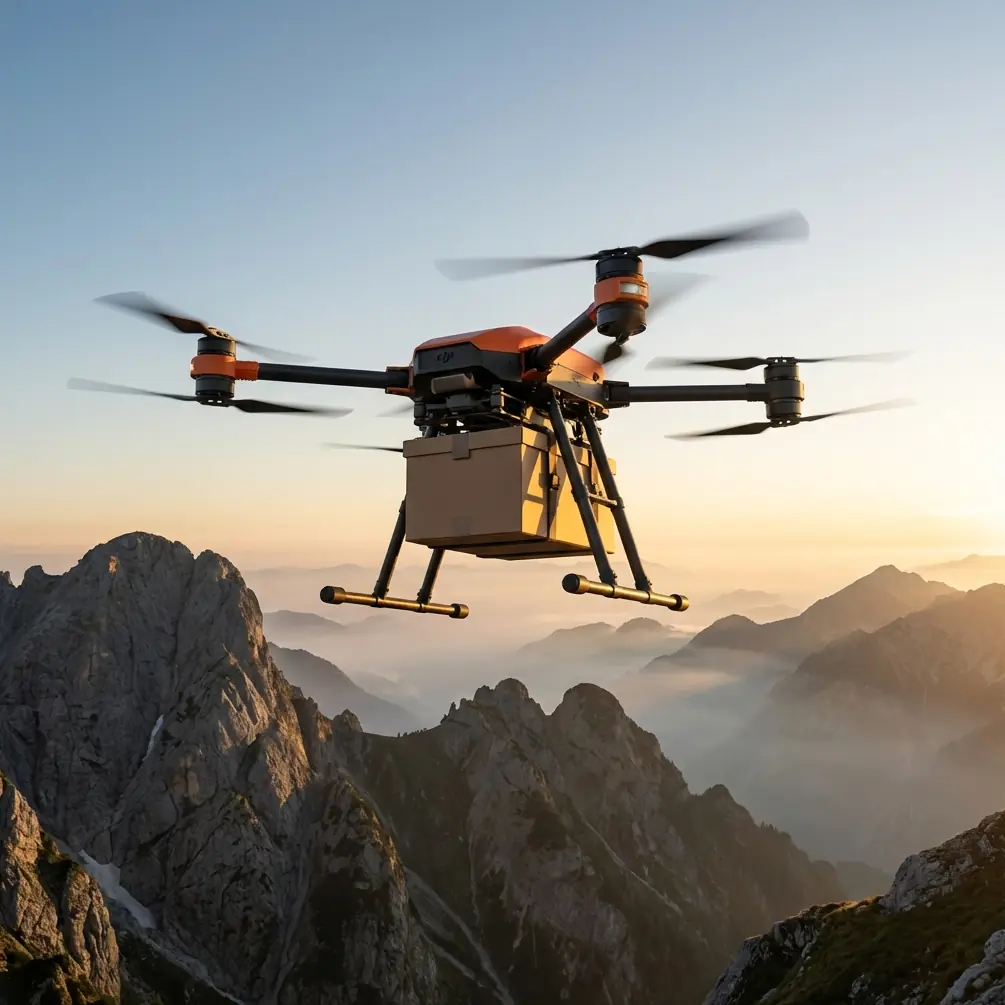
FlyCart 30 Field Report: Working Windy Construction Sites With Stable Delivery Logic
META: A field report on using the DJI FlyCart 30 around windy construction sites, covering payload ratio, winch use, route planning, antenna adjustment, BVLOS considerations, and emergency safety systems.
Wind changes everything on a construction site.
It shifts dust, pushes loose sheeting, moves cranes through wider arcs than expected, and turns ordinary UAV tasks into a coordination problem. When the aircraft in question is the FlyCart 30, that problem gets even more interesting, because this platform is not just flying a camera or a small sensor. It is moving meaningful weight, often into spaces crowded by steel, temporary power systems, concrete pumps, rebar stacks, and the kind of electromagnetic clutter that can quietly ruin an otherwise well-planned flight.
I have seen crews approach the FlyCart 30 as if it were simply a bigger multirotor. That is usually the first mistake.
For spraying work around exposed construction zones in windy conditions, the FC30 demands the mindset of a logistics aircraft, not a hobby platform and not a generic crop drone. Payload ratio, route design, battery management, antenna alignment, and emergency procedures are tied together. If one of those pieces is weak, the aircraft may still get airborne, but the operation starts losing efficiency and margin very quickly.
From a logistics lead’s perspective, the FlyCart 30 stands out because it was built around transport reliability. That becomes highly relevant on construction sites where the objective is not just to fly out and back, but to deliver material or liquid precisely, repeatedly, and with predictable timing even when the environment refuses to cooperate.
Why the FlyCart 30 Fits This Kind of Job
The core reason the FlyCart 30 matters here is its transport-first design. On a windy site, usefulness is not defined by maximum brochure performance. It is defined by whether the aircraft can still complete repeatable runs when gusts increase, access points shift, and workers below need a safe, controlled drop or placement method.
Two hardware characteristics immediately shape that reality.
First, the FlyCart 30 uses a dual-battery architecture. Operationally, that matters because wind penalties are real. Headwinds extend outbound segments, hover corrections draw more power, and repeated repositioning over narrow drop zones can eat reserve faster than many teams expect. A dual-battery setup does not remove those penalties, but it gives the platform a more robust energy foundation for missions where site geometry and weather create uneven power demand.
Second, the aircraft includes an emergency parachute system. On a construction site, this is not a marketing extra. It is a risk-control feature with direct operational significance. Flights often occur near scaffolding, temporary structures, perimeter fencing, and active crews. If the aircraft experiences a severe fault, a controlled descent option can be the difference between an incident that is contained and one that escalates into a site-wide shutdown.
Those two details alone change how professionals assess mission suitability. One supports endurance discipline under load and wind. The other supports consequence management when the unexpected happens.
Spraying on a Construction Site Is Not Farm Work in Disguise
A lot of people hear “spraying” and instinctively think agriculture. That comparison can lead teams in the wrong direction.
Construction-site spraying in windy conditions is usually about treatment precision in a far less forgiving environment. You may be applying dust suppression, surface treatments, or targeted liquid coverage around incomplete structures. Unlike an open field, the site is full of turbulence generators. Wind wraps around building frames, accelerates through partially enclosed corridors, rebounds off facades, and creates localized pockets where aircraft handling changes in seconds.
That is why the FlyCart 30’s payload ratio deserves close attention before the first sortie.
A higher payload is tempting because it reduces turnaround frequency. But on a windy site, payload ratio is not just about how much you can carry. It is about how much control authority and reserve you preserve while carrying it. An overloaded or near-limit setup can still look acceptable during takeoff, yet become inefficient or unstable during lateral correction and precision positioning near structures.
The better approach is to build the mission backward from the ugliest segment of the route. If the aircraft must cross an exposed rooftop edge, descend beside steel framing, and hold a stable position long enough to complete a controlled spray segment, that is the segment that should determine payload planning. Not the easy outbound leg from the staging area.
This is where experienced operators separate useful productivity from false productivity. Fewer trips only help if each trip is still smooth, accurate, and comfortably within battery and handling margins.
The Winch System Changes Site Access
One of the FlyCart 30’s most practical advantages on construction work is the winch system.
On windy sites, the worst place for a heavy-lift aircraft is often the exact spot where the payload needs to end up. Tight clearances, obstructions, and turbulent air near structures can make a direct touchdown or close-in hover inefficient and risky. A winch allows the aircraft to remain in a cleaner pocket of air while lowering payload or application equipment to the desired position.
That changes the mission profile in a meaningful way.
Instead of forcing the aircraft deep into a cluttered zone, the crew can hold altitude and separation, then use the winch for final placement. This reduces rotor wash interaction with nearby surfaces and can lower the need for constant close-range corrections. On a windy construction site, every reduction in unnecessary hover adjustment preserves battery and improves consistency.
For spraying-related tasks, that same logic applies when positioning equipment or delivering materials that support the treatment work. The FC30 becomes less of a brute-force lifter and more of a controlled site-access tool.
That distinction matters because the best UAV logistics operations are rarely the ones pushing the aircraft hardest. They are the ones using the aircraft’s systems to avoid putting it in bad situations at all.
Electromagnetic Interference Is the Quiet Problem
Wind gets everyone’s attention. Electromagnetic interference often does not, at least not until the control link starts behaving strangely near generators, temporary substations, tower cranes, or dense steel assemblies.
This is a real issue on construction sites, and teams that ignore it are usually the ones chasing intermittent link quality problems they cannot explain.
One practical habit I recommend with the FlyCart 30 is antenna adjustment before the mission and again after the first low-risk test pass. Not random adjustment. Intentional adjustment based on where the aircraft will actually operate relative to the pilot position, structures, and known interference sources.
If the route places the aircraft beside steel framing or behind partially completed concrete cores, antenna orientation can have a direct effect on link stability. The goal is simple: keep the strongest possible control and data path through the most difficult segment of the mission, not merely at takeoff.
On one type of site layout, a crew may find the outbound leg is clean but the return path cuts behind a high-interference zone near power equipment. In that case, small antenna changes combined with a revised pilot station location can improve consistency far more than repeated troubleshooting in the air.
This is where route optimization and antenna strategy should be treated as a single planning exercise.
You are not just drawing the shortest path. You are drawing the path with the best communication resilience, the safest wind exposure, and the lowest workload during the heaviest mission phase.
Route Optimization for Wind, Not Just Distance
The shortest route is often the wrong route.
With the FlyCart 30, route optimization on windy construction sites should account for three things at minimum: gust exposure, interference zones, and recovery options. If a direct line takes the aircraft through a venturi effect between structures or across a crane swing area, the apparent time savings can disappear instantly in added corrections and safety pauses.
A better route may be slightly longer but operationally cleaner. For example, approaching a spray zone from the leeward side can reduce the amount of position correction needed during the final work segment. That saves energy and improves application consistency. It also makes pilot workload more predictable, which matters when the aircraft is carrying a useful load rather than cruising light.
BVLOS planning enters the conversation here as well.
Even when a specific operation is not conducted beyond visual line of sight, BVLOS discipline improves site work. Thinking in BVLOS terms forces the crew to formalize route checkpoints, link-quality expectations, lost-link actions, emergency descent zones, and return logic. The FlyCart 30 benefits from that level of operational structure because it is designed for professional logistics work, not casual ad hoc flying.
That structure is especially valuable when the site evolves week by week. A route that was safe on Monday can become awkward by Thursday because new steel has gone up, material stacks have moved, or a crane now occupies a different sector. High-performing crews review route logic as a living operational system, not a one-time setup.
If your team is building out those site procedures and wants a practical operations discussion, this direct FlyCart planning line is a sensible place to start.
Battery Discipline Is Where Good Missions Stay Good
The FlyCart 30’s dual-battery setup helps, but it should never encourage lazy reserve planning.
On windy sites, battery use is uneven. The aircraft may look efficient on one leg and then consume reserve rapidly while holding position near a structure or compensating for crosswind drift during a precision segment. The right habit is to budget energy around the most demanding combination of payload, wind, and hover time, then maintain enough margin for a conservative return.
This becomes even more critical when crews are tempted to add “just one more pass” during a spraying task.
That extra pass is often performed at the exact moment when fatigue, changing wind, and reduced reserve all meet. Professional flight management means ending the sortie while options are still plentiful, not when the aircraft has already entered a narrow decision window.
The FC30 rewards that discipline. It is a capable aircraft, but capability should widen safety margin, not justify using all of it.
What the FlyCart 30 Does Well on Windy Sites
The biggest advantage of the FlyCart 30 in this environment is that it lets you build an operation around controlled transport logic instead of improvisation.
Its payload-focused design supports meaningful site work. The winch system expands access without forcing the aircraft into the worst air. The dual-battery configuration gives better endurance resilience when wind and hover corrections start taxing the mission. The emergency parachute adds an important final layer for operations around people, structures, and active work zones. And when crews pair route optimization with smart antenna adjustment, the aircraft handles electromagnetic complexity far better than teams who only think about wind.
That combination is why the FC30 deserves serious consideration for spraying-related construction missions, especially where the site is exposed and conditions are variable.
Not because it makes the work easy. It does not.
Because it gives experienced crews the tools to keep the work controlled.
That is the difference that matters on a live construction site. Stable work beats dramatic performance every time. The aircraft that finishes the mission predictably, without chewing through margin or creating chaos for the ground team, is the aircraft that earns its place in the workflow.
For operators planning FlyCart 30 deployments in windy construction environments, my advice is straightforward: treat the aircraft like a logistics platform from the start. Build payload around control margin. Use the winch to avoid bad air. Adjust antennas with interference in mind. Optimize routes for resilience, not just speed. Respect the battery reserve even with a dual-battery system. And never relegate the emergency parachute to a checkbox item when flying over an active job site.
Those are not small details.
They are the operating logic that turns a capable aircraft into a dependable one.
Ready for your own FlyCart 30? Contact our team for expert consultation.