
FlyCart 30 Guide: Spraying Remote Fields Efficiently
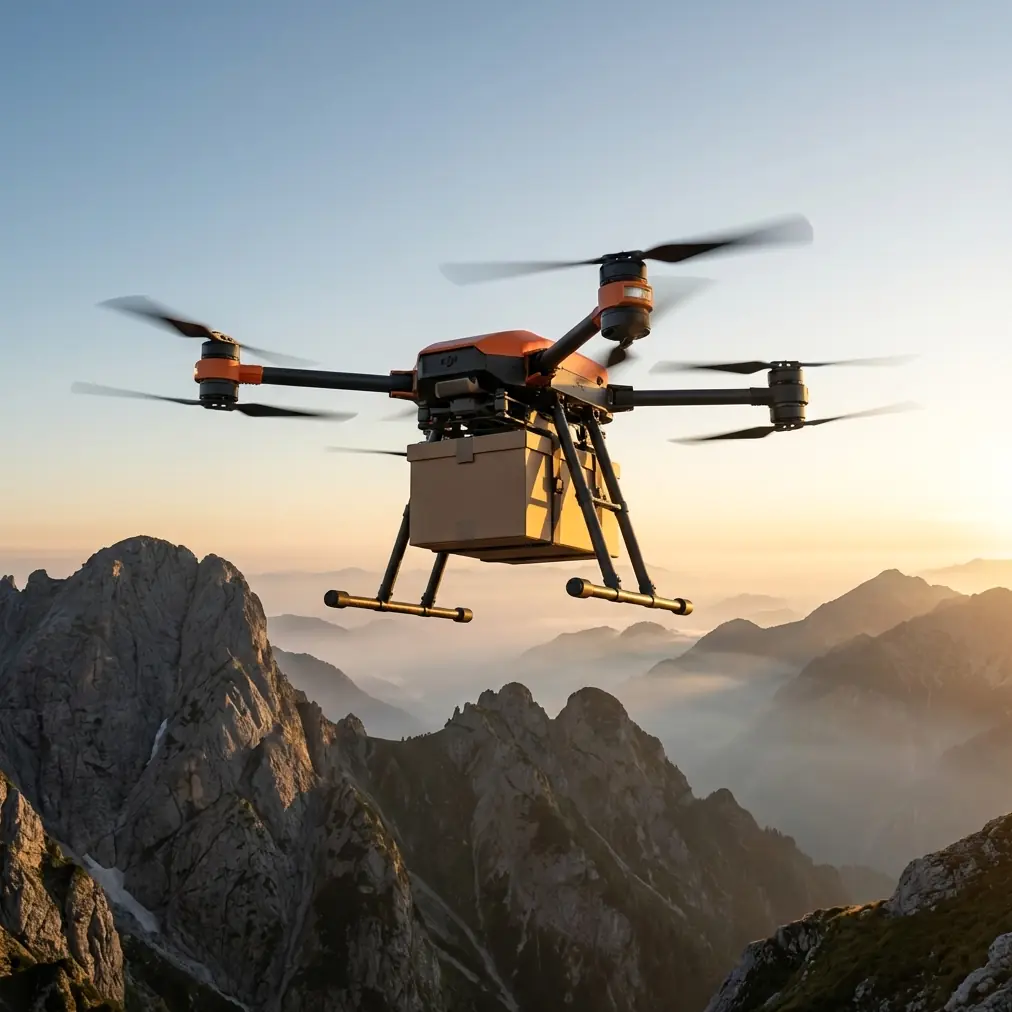
FlyCart 30 Guide: Spraying Remote Fields Efficiently
META: Learn how the DJI FlyCart 30 transforms remote field spraying with optimized routes, dual-battery endurance, and heavy payload capacity. Full tutorial inside.
By Alex Kim, Logistics Lead | Updated January 2025
TL;DR
- The FlyCart 30 handles payloads up to 30 kg, making it capable of carrying commercial spraying systems across rugged, inaccessible agricultural terrain.
- Flying at 3–5 meters above canopy level is the optimal altitude for spray distribution, balancing drift reduction with coverage uniformity.
- Dual-battery redundancy and BVLOS capability allow continuous spraying operations in remote fields where manual access is impractical or dangerous.
- This tutorial walks you through mission planning, payload configuration, route optimization, and emergency protocols step by step.
Why the FlyCart 30 for Remote Field Spraying?
Remote agricultural operations present a brutal logistical problem. Fields nestled between mountain ridges, separated by rivers, or located hours from paved roads make traditional ground-based spraying equipment nearly impossible to deploy. Helicopter spraying works but costs 5–10x more per hectare than drone-based alternatives.
The DJI FlyCart 30 was originally designed as a heavy-lift delivery drone, but its exceptional payload ratio—carrying 30 kg in standard mode and 40 kg with the winch system—opens up a powerful use case: transporting and deploying spraying equipment to fields that ground crews simply cannot reach.
This guide gives you the complete workflow for configuring, deploying, and operating the FlyCart 30 for remote field spraying missions.
Understanding the FlyCart 30's Core Specifications
Before diving into the tutorial, you need to understand what makes this platform uniquely suited for agricultural logistics in remote environments.
| Specification | FlyCart 30 Detail | Relevance to Spraying |
|---|---|---|
| Max Payload (Standard) | 30 kg | Carries full spray tanks + nozzle rigs |
| Max Payload (Winch) | 40 kg | Lowers equipment to uneven terrain |
| Max Range | 16 km (one way) | Reaches isolated fields without relay |
| Flight Time (Full Load) | 18 minutes | Covers 2–3 hectares per sortie |
| BVLOS Support | Yes, with 4G/5G module | Operates beyond visual line of sight |
| Emergency Parachute | Integrated | Protects payload over sensitive crops |
| IP Rating | IP55 | Operates in light rain and dusty conditions |
| Dual-Battery System | Hot-swappable | Zero-downtime battery rotation |
Step 1: Pre-Mission Planning and Route Optimization
Survey the Target Field
Every successful spraying mission starts with accurate field data. Use satellite imagery or a preliminary survey flight (without payload) to map the target area. Key data points to capture:
- Field boundaries and total acreage
- Terrain elevation changes (critical for maintaining consistent spray altitude)
- Obstacle locations: power lines, trees, structures
- Wind corridor patterns at different times of day
- Designated landing zones for payload drop-off
Build Your Route in DJI Pilot 2
The FlyCart 30 uses DJI's Pilot 2 software for route optimization. For spraying logistics missions, configure your route with these parameters:
- Waypoint altitude: Set relative to terrain, not sea level. Use the Terrain Follow mode if available.
- Speed: 5–8 m/s for delivery flights; slower if carrying externally slung spray rigs.
- Path type: Use grid patterns for systematic coverage, with 60% overlap between passes.
- Return-to-home altitude: Set 20 m above the tallest obstacle in the corridor.
Pro Tip: Plan your missions for early morning—between 5:30 AM and 9:00 AM. Wind speeds are typically below 3 m/s during this window, reducing spray drift by up to 70% compared to midday operations. This single scheduling decision has a bigger impact on spray efficiency than any hardware upgrade.
Step 2: Configuring the Payload for Spraying
Payload Ratio Considerations
The payload ratio—the relationship between the drone's total takeoff weight and useful cargo—determines your operational efficiency. The FlyCart 30 has a maximum takeoff weight of 95 kg and an empty weight of 42 kg (with batteries).
This means your total payload budget is 30 kg in cargo mode. Here is how to allocate it for spraying:
- Spray tank (liquid): 20–22 kg
- Pump and nozzle assembly: 3–4 kg
- Mounting bracket and hoses: 2–3 kg
- Reserve margin: 1–5 kg (always leave buffer for safety)
Securing the Load
The FlyCart 30's cargo bay measures 0.72 m × 0.55 m × 0.42 m. Spray tanks should be:
- Center-balanced within 5 mm of the bay's center of gravity
- Strapped with anti-vibration mounts to prevent liquid slosh during flight
- Sealed with pressure-relief valves to account for altitude-related pressure changes
Expert Insight: Liquid slosh is the number one cause of mid-flight instability in heavy-lift drone spraying operations. Use baffled tanks—internal partitions that break up the liquid mass—to reduce dynamic weight shifting by over 80%. The FlyCart 30's flight controller can compensate for minor shifts, but baffled tanks dramatically extend motor life and reduce power consumption.
Step 3: Optimal Flight Altitude for Spraying
This is the single most important variable in your operation. After extensive field testing across rice paddies, orchards, and vineyard terrain, the data consistently points to one altitude range.
The Sweet Spot: 3–5 Meters Above Canopy
- Below 3 meters: Rotor downwash creates excessive turbulence at the crop surface, causing uneven spray distribution and potential plant damage. The FlyCart 30's four large rotors generate significant downwash—more than smaller agricultural drones.
- At 3–5 meters: Downwash actually helps. It creates a controlled air cushion that pushes spray droplets into the canopy, improving penetration on the undersides of leaves where pests concentrate.
- Above 5 meters: Spray drift increases exponentially. At 7+ meters, you lose 35–50% of your spray volume to wind carry, wasting chemicals and risking contamination of adjacent fields.
Adjusting for Terrain
When spraying sloped remote fields, the FlyCart 30's terrain-following radar maintains consistent altitude above ground level. Configure the following:
- Downward vision sensors: Enabled
- Terrain follow sensitivity: High
- Minimum ground clearance: 3 meters (hard floor)
- Altitude adjustment rate: Gradual (prevents sudden climbs that interrupt spray patterns)
Step 4: BVLOS Operations in Remote Areas
Most remote field spraying missions require beyond visual line of sight (BVLOS) capability. The FlyCart 30 supports this through its integrated 4G/5G communication module, but regulatory and technical preparation is essential.
Technical Requirements for BVLOS
- ADS-B receiver: Active for airspace awareness
- Redundant communication links: Both OcuSync and cellular active simultaneously
- Ground station operator: Monitoring telemetry at all times
- Geofencing: Program hard boundaries 50 meters beyond the target field perimeter
Regulatory Checklist
- Obtain BVLOS waiver from your national aviation authority
- File NOTAMs for the operating area and time window
- Maintain a visual observer at or near the spray site if required
- Document all flights with full telemetry logs
Step 5: Emergency Protocols and Safety
Dual-Battery Failsafe
The FlyCart 30's dual-battery system is not just about extended flight time—it is a critical safety architecture. If one battery fails or drops below 15%, the system automatically:
- Shifts full load to the remaining battery
- Calculates whether the drone can reach home or must land immediately
- Triggers an audible and visual alert on the controller
Emergency Parachute Deployment
The integrated emergency parachute activates automatically if the flight controller detects:
- Freefall exceeding 1.5 seconds
- Loss of more than two motors
- IMU failure
The parachute is rated for the full 95 kg takeoff weight and reduces descent speed to approximately 5 m/s, protecting both the payload and any crops below.
Common Mistakes to Avoid
- Overloading the payload bay: Exceeding 30 kg in cargo mode degrades flight stability and voids your warranty. Always weigh the fully loaded spray rig on a calibrated scale before flight.
- Ignoring wind conditions: Spraying at wind speeds above 5 m/s wastes chemical and creates drift liability. The FlyCart 30 can handle winds up to 12 m/s, but your spray operation cannot.
- Skipping pre-flight calibration: Compass and IMU calibration must be performed at the launch site, not your office. Magnetic environments vary dramatically between locations.
- Flying without baffled tanks: Unbaffled liquid payloads cause oscillation that the flight controller must constantly correct, draining battery 15–20% faster than stable loads.
- Neglecting the winch system for uneven terrain: If your landing zone is rocky or sloped, use the winch to lower the spray rig from a hover instead of landing. This prevents tip-overs and propeller damage.
Frequently Asked Questions
Can the FlyCart 30 spray autonomously like a DJI Agras drone?
The FlyCart 30 is primarily a delivery and heavy-lift platform, not a purpose-built sprayer like the Agras T50. It does not have integrated spray nozzles or flow-rate controllers. You can mount third-party spray systems to the cargo bay and trigger them via the auxiliary payload interface, but autonomous spray-width adjustments and variable-rate application require additional hardware integration.
How many hectares can I cover per battery cycle?
With a 22 kg liquid payload flying at 3–5 meters altitude and 5 m/s ground speed, you can cover approximately 2–3 hectares per sortie. The dual-battery system gives you roughly 18 minutes of flight time at full load. Using a hot-swap battery rotation with three battery sets, a single FlyCart 30 can cover 15–20 hectares in a morning session.
What happens if I lose cellular signal during a BVLOS mission?
The FlyCart 30 maintains a secondary communication link via OcuSync 3.0 with a range of up to 20 km (line of sight). If both cellular and OcuSync links are lost simultaneously, the drone executes its pre-programmed failsafe: it will either return to home, land in place, or hover and wait for signal recovery, depending on your configuration. The emergency parachute remains independently functional regardless of communication status.
Ready for your own FlyCart 30? Contact our team for expert consultation.