
Spraying Remote Fields With the FlyCart 30
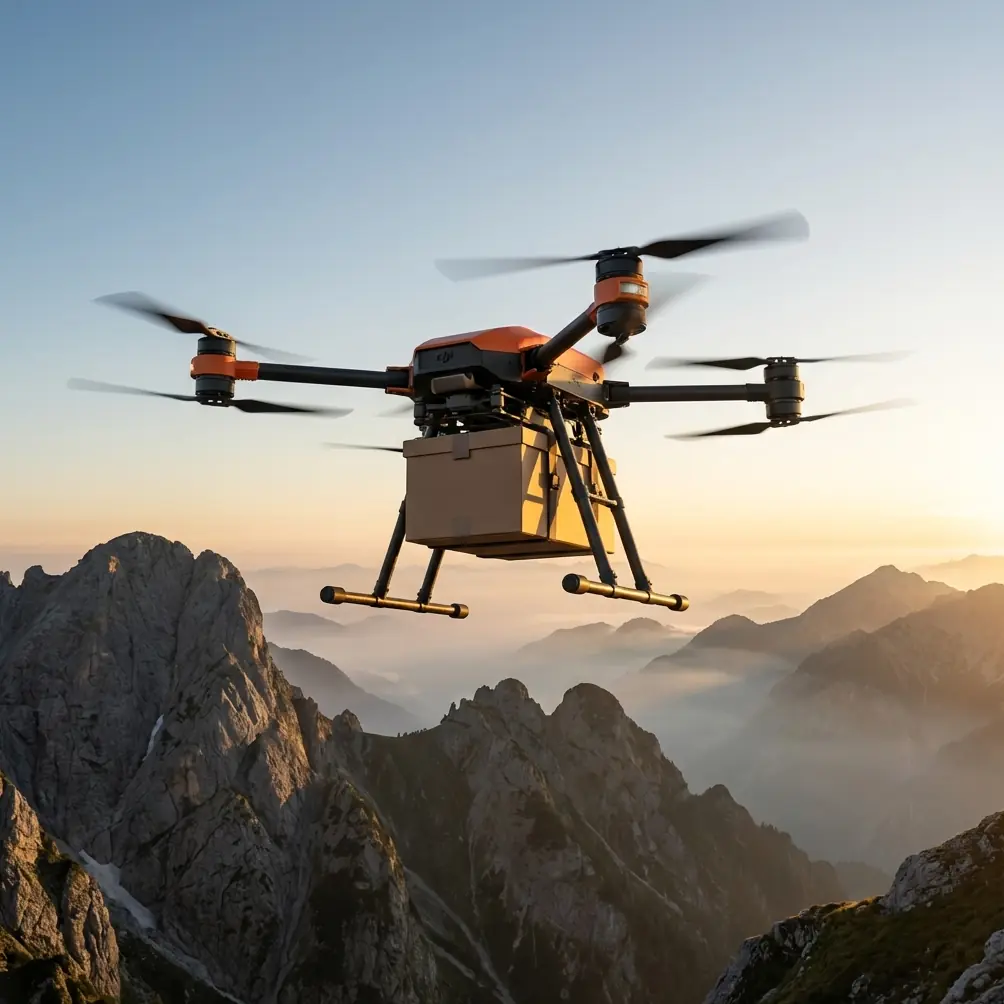
Spraying Remote Fields With the FlyCart 30: What Actually Matters in the Field
META: Practical FlyCart 30 insights for remote field spraying operations, with battery management tips, route planning considerations, payload tradeoffs, and safety setup lessons from real-world logistics thinking.
Remote spraying sounds straightforward on paper. Load the aircraft, fly the route, cover the field, head home. The reality is less tidy, especially when the field is far from roads, wind shifts across uneven terrain, and every battery cycle has to count.
That is where the FlyCart 30 becomes interesting.
Most people look at the platform and focus on lift. Fair enough. Payload gets attention because payload is visible. You can measure it, advertise it, and compare it. But in remote spraying work, payload alone does not decide whether the day goes smoothly. The aircraft’s real value shows up in how it handles distance from support vehicles, repeated turnaround cycles, battery swaps under pressure, and the small operational decisions that either protect productivity or quietly destroy it.
I come at this from a logistics angle. When a platform is used far from infrastructure, the problem is rarely just “Can it carry enough?” The harder question is: can the whole system sustain a reliable rhythm across a long workday without turning the crew into firefighters?
The real problem in remote spraying
Remote fields create three linked constraints.
First, access is poor. You may not have a vehicle parked close to the treatment area. Walking batteries, liquid, and tools back and forth burns time fast. Second, the route itself is less forgiving. Slopes, tree lines, and patchy signal conditions force you to think carefully about route optimization and communication margins. Third, every interruption costs more than it would on a field beside a service road. A simple battery delay can ripple into missed weather windows, incomplete blocks, or extra repositioning flights.
That is why the FlyCart 30 should not be viewed only as a transport drone adapted to work around farms. In remote agricultural scenarios, it is better understood as an aerial logistics system with agricultural utility. That distinction matters.
A platform built for meaningful lift, supported by a dual-battery architecture and safety systems such as an emergency parachute, addresses the core pain of remote operations: continuity. Not perfection. Continuity.
Why payload ratio matters more than the headline payload
There is a phrase that gets tossed around a lot in fleet planning: payload ratio. It deserves more attention in agriculture than it usually gets.
For remote spraying, payload ratio is not just about how much liquid or equipment the aircraft can carry relative to its own mass. It affects route design, battery consumption, reserve margins, and the number of crew actions per hectare. A poor payload ratio forces more cycles. More cycles mean more takeoffs, more landings, more battery handling, and more opportunities for mistakes.
With the FlyCart 30, operators should think in terms of mission efficiency rather than single-leg capacity. If carrying a heavier load trims too much range or leaves too little reserve for a stable return in shifting conditions, the “bigger load” becomes the slower and riskier choice. On remote fields, the best operating point often sits below the maximum carrying capability.
That is not a conservative slogan. It is a practical one.
If your route requires crossing uneven terrain or reaching sections where wind behaves differently from the launch point, leaving room in the energy budget is smarter than chasing the heaviest possible outbound run. A balanced payload ratio lets the aircraft maintain a more predictable cycle time, which usually delivers better daily throughput than trying to force maximum loading into every trip.
The dual-battery advantage is operational, not just technical
Dual-battery design gets discussed as a specification. In the field, it is a workflow tool.
When you are spraying remote plots, battery management becomes the hidden engine of the entire job. A dual-battery setup can support smoother swap routines, better redundancy thinking, and less chaotic turnaround planning. But only if the crew treats the batteries as a managed fleet rather than a stack of power packs.
One of the simplest battery management tips I give teams is this: stop thinking only in percentages and start tracking battery behavior by pair history.
In other words, do not just grab the two batteries that look the fullest. Keep stable pairs together when possible, and log how each pair behaves under similar loads and similar ambient conditions. Over time, you will notice patterns. Some pairs recover heat faster. Some show stronger voltage stability when the aircraft departs heavy. Some are fine in short shuttle work but less convincing on longer legs.
That matters in remote spraying because the first few minutes of a loaded outbound flight are where your assumptions get tested. If a pair has a habit of sagging earlier under load, that is not the pair to send toward the farthest block on a windy afternoon.
The practical version of this system is simple:
- label batteries clearly
- track pairings in a field log
- note temperature, mission distance, payload class, and landing reserve
- reserve your strongest pairs for the longest or least forgiving sorties
It sounds basic. It is basic. And it saves days.
Teams that ignore pair behavior often end up with avoidable inconsistencies: one route feels easy in the morning and marginal in the afternoon, even though the field did not change much. Usually, the batteries did.
Route optimization is where remote efficiency is won
When operators hear “route optimization,” many think software first. Software matters, but field logic matters more.
A remote spraying mission should be arranged to reduce deadhead time, minimize altitude changes, and preserve an energy reserve for the least predictable segment of the route, not the easiest one. That usually means planning from the far edge backward or grouping treatment blocks by wind exposure rather than by simple geometric proximity.
The FlyCart 30’s usefulness here comes from its logistics-oriented character. It is built to move meaningful loads, and that encourages teams to plan in larger, more deliberate cycles. That is a good habit. Instead of improvising block by block, you build a route strategy that respects battery reality, terrain, and refill timing.
A strong remote spraying plan usually answers these questions before launch:
- Which leg has the highest energy risk?
- Where is the most likely point for a wind penalty?
- How much reserve is needed if the aircraft has to hold briefly or divert?
- Which battery pair is assigned to that specific risk profile?
If those questions are not settled, then route optimization has not happened. You have only drawn lines on a map.
The winch system changes more than transport options
The winch system is often framed as a delivery feature, but in remote field work it can influence how support tasks are handled around awkward terrain.
Think about properties with drainage cuts, steep embankments, or sections where landing access is limited. A winch-equipped workflow can reduce the need to force the aircraft into poor landing zones just to move materials or tools into position. Even when the day’s primary objective is spraying support rather than classic cargo delivery, that flexibility can simplify staging.
Operational significance comes down to reducing unnecessary contact with bad ground. Every time you avoid landing in a marginal spot, you lower the chances of tip-over damage, contamination, or rushed crew movements. That is especially useful on remote agricultural sites where the “good enough” landing patch is often less good than it looked from 20 meters away.
BVLOS thinking starts before regulation does
BVLOS is one of those terms that gets reduced to compliance talk. In practice, remote agriculture benefits from BVLOS thinking even when the operation itself is conducted within current visual or procedural limits.
By that I mean this: build your mission with BVLOS discipline. Assume communication resilience matters. Assume route segmentation matters. Assume contingency paths matter. Assume that the aircraft should be able to complete or safely abort a task without last-second improvisation.
That mindset becomes more relevant as the broader drone market moves toward scaling domestic capability and industrial maturity. One recent drone industry development made that trend impossible to miss: the UK Ministry of Defence announced what was described as its largest-ever drone initiative, tied not only to support for Kyiv but also to strengthening the UK’s domestic drone manufacturing base. The bigger takeaway for civilian operators is not the defense context. It is the industrial signal. As international competition in drone production increases and countries push for stronger sovereign drone capability, platforms and supply chains that prove dependable at scale will shape the next phase of the sector.
Why does that matter to someone spraying remote fields with a FlyCart 30?
Because industrial scale changes expectations. Reliability, component support, battery availability, training quality, and operational standardization stop being niche concerns. They become table stakes. If a platform is going to earn trust across logistics, agriculture, and industrial work, it has to perform as part of a repeatable system, not as a one-off machine flown by hero pilots.
Remote spraying is actually one of the clearest tests of that maturity.
Safety systems matter most when the field is least convenient
The emergency parachute is easy to file under “nice to have” until you are working over terrain that gives you few forgiving options.
In remote areas, emergency planning cannot depend on ideal recovery conditions. If there is a malfunction, the goal is not simply to protect the aircraft. It is to control consequences in a place where crew access may be slow and safe landing alternatives may be limited. The operational significance of an emergency parachute is not abstract. It adds a layer of controlled risk reduction in exactly the kind of environment where uncertainty multiplies.
That does not remove the need for disciplined preflight checks, route design, or battery caution. It does change the risk profile of the mission. On remote agricultural jobs, that difference can be meaningful enough to affect whether a site is workable at all.
A field workflow that fits the FlyCart 30
If I were setting up a FlyCart 30 workflow for spraying support in remote terrain, I would not chase complexity. I would chase repeatability.
Start with a staging point that favors battery discipline over convenience. If the nearest flat spot exposes batteries to direct heat or blowing dust, move the staging area even if it adds a bit of walking. Battery health is worth more than a slightly shorter ground path.
Then build mission blocks around realistic turnaround times, not optimistic ones. Add a buffer for inspections after every few cycles. Remote operations punish rushed assumptions.
Next, match battery pairs to mission classes. Short near-field shuttles. Medium support runs. Long or exposed legs. Once you have enough field notes, assign batteries with intent rather than by guesswork.
Finally, use the aircraft’s lift capability and route planning together. A heavier run is only productive if it shortens total task time without creating battery stress, reserve anxiety, or awkward recovery patterns. The best crews do not ask, “How much can we carry?” They ask, “What load gives us the cleanest day?”
That shift in thinking is where efficiency appears.
What operators usually learn too late
The hard lesson in remote field spraying is that most delays are self-inflicted. Not because the crew is careless, but because early planning overvalues aircraft capability and undervalues system behavior.
The FlyCart 30 can be a strong answer for this environment, especially when payload ratio, route optimization, dual-battery management, and safety planning are treated as one operating picture rather than four separate topics.
If you are still refining your setup, it helps to compare notes with teams that have already worked through these details in real conditions. For practical discussion around FC30 deployment and field workflow, you can message an operator-focused team here.
Remote spraying is not won by brute force. It is won by rhythm, margins, and disciplined repetition. The FlyCart 30 fits that reality well when crews use it as a system, not just a machine.
Ready for your own FlyCart 30? Contact our team for expert consultation.