
FlyCart 30 for Mountain Highway Spraying
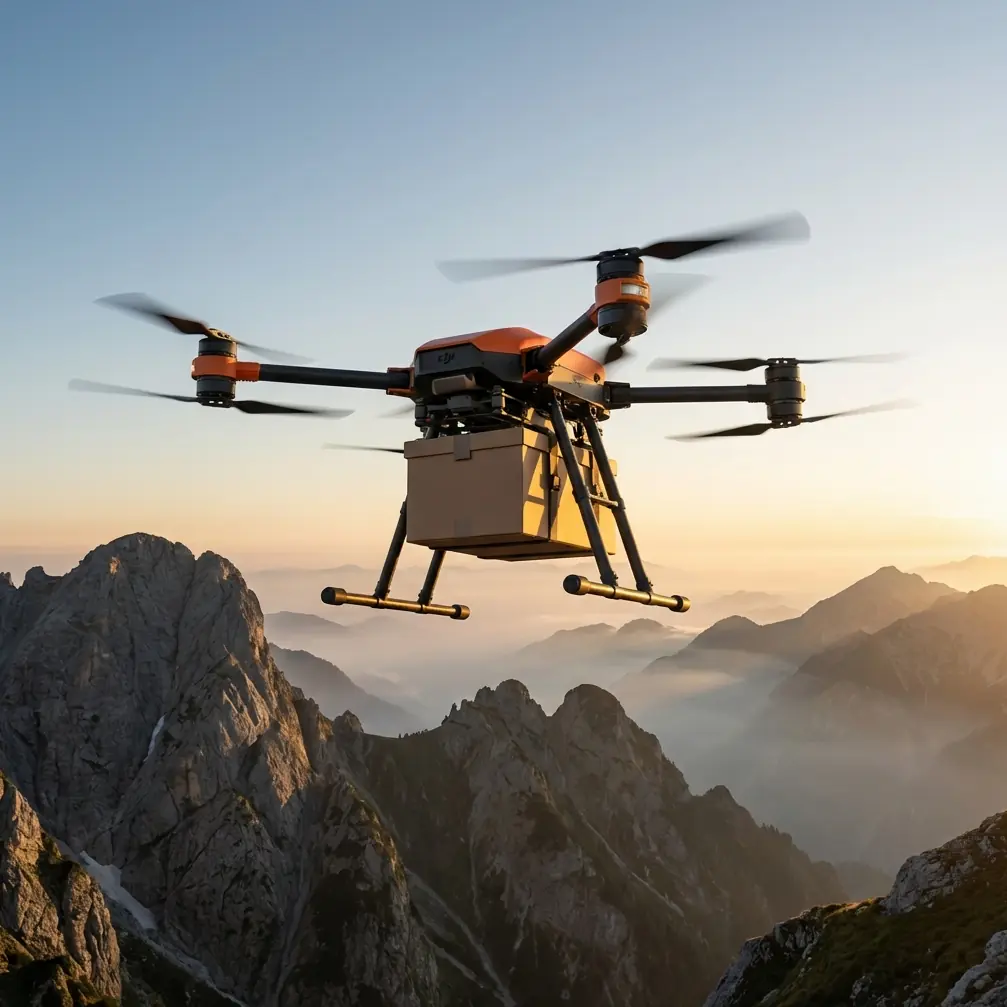
FlyCart 30 for Mountain Highway Spraying: What Actually Matters When the Airspace Gets Tight
META: A technical review of using DJI FlyCart 30 for mountain highway spraying, covering route planning, winch and payload tradeoffs, weather response, safety systems, and why stricter railway anti-black-flight enforcement changes how serious operators should work.
Mountain highway spraying sounds simple until you are standing on a narrow shoulder, staring at a broken line of guardrails, cut slopes, tunnels, blind bends, and wind that cannot decide where it wants to go.
That is the setting where the FlyCart 30 becomes interesting.
Most people look at the FC30 and think transport first. Fair enough. It was built to move material. But from an operations perspective, especially in mountain corridors, the more useful question is not whether the aircraft was originally marketed for logistics. The real question is whether its architecture solves the exact field problems that make roadside spraying difficult: access, altitude changes, payload efficiency, unpredictable weather, and the need to keep crews away from hazardous edges.
I have been reviewing the FlyCart 30 through that lens, with a specific scenario in mind: spraying long highway sections cut into mountainous terrain, often near transport infrastructure where airspace discipline is no longer optional.
That last point matters more now than many operators admit.
Recent enforcement activity reported by huanqiu_uav shows railway police in multiple regions working with local public security and market supervision authorities to crack down on illegal drone flights and even kite incursions near railway lines. The action did not stop at catching people in the act. Investigators went directly to drone sales companies and training bases along railway corridors to examine sales scope, buyer groups, and primary use cases. They also coordinated with local photography associations and train-spotting communities to identify flight activity that could affect rail safety.
That is a strong signal. Civil drone operations near critical transport corridors are being watched upstream, not just at the launch site.
For anyone considering the FlyCart 30 for mountain highway spraying, that changes the standard of professionalism. The aircraft’s hardware matters, but so does the operational package around it: route authorization, mission logging, training traceability, and disciplined flight planning around rail and road infrastructure.
Why the FlyCart 30 fits the mountain corridor problem
The FC30 is not a small multirotor you toss in the back of a car and improvise with. That is exactly why it makes sense for this job.
Mountain highway spraying usually breaks down into two mission profiles. The first is direct application along slopes, shoulders, barriers, and drainage edges where ground vehicles cannot safely stop or where manual crews would be exposed to traffic and fall risk. The second is supply support: moving liquid, tools, line equipment, or replacement components to crews positioned below grade or beyond easy road access.
The FlyCart 30’s value sits in the overlap between those two profiles.
Its payload ratio is one of the first technical issues to examine. In mountain operations, payload is never just about lifting capacity. Payload determines how many interruptions the crew will face. Every refill, swap, or landing forces the team back into a constrained roadside environment. On a straight, flat agricultural parcel, that is an inconvenience. On a mountain highway shoulder, it can become the dominant safety problem. Better payload efficiency means fewer road-edge stops, fewer resets, and less time parked in areas with limited visibility.
That is where the FC30’s larger-aircraft logic starts to work in your favor. Even if you are adapting the platform for spraying-adjacent utility work rather than pure cargo, the basic operational advantage remains the same: carry more useful mass per sortie, reduce handling cycles, and preserve crew focus for route execution.
The winch system is more than a cargo feature
Many readers overlook the winch system because they treat it as a logistics accessory. In mountain highway work, that is a mistake.
The winch changes how the aircraft interacts with terrain. You do not always want the drone descending into rotor wash turbulence near a cut slope or dropping into a narrow shoulder zone crowded by signs, cable barriers, and maintenance crews. A winch allows the aircraft to hold a more stable hover position while lowering material or equipment to a safer handoff point.
Operationally, that matters for three reasons.
First, it reduces the need to land on compromised surfaces. Mountain roads often leave very little clean staging area. Gravel, drainage channels, uneven asphalt patches, and roadside vegetation all increase landing risk.
Second, it shortens exposure time near the edge. A crew member receiving a load can remain in a more controlled position rather than trying to guide a full aircraft into a tiny landing box.
Third, it creates options when weather changes. I have seen this happen mid-flight: a mission launches in manageable conditions, then valley wind starts curling up a slope and pushing across the road deck. In those moments, the safest decision is often not “continue exactly as planned” or “land immediately at the nearest point.” Sometimes the right move is to maintain a conservative hover, use the winch to complete or partially complete the transfer, and then send the aircraft back on the shortest safe route.
That flexibility is one of the FC30’s strongest practical advantages in mountain infrastructure work.
Mid-flight weather is where aircraft design gets exposed
The romantic version of drone work assumes careful planning solves everything. It does not. In mountain corridors, weather shifts inside the mission window.
One afternoon review flight made that obvious. We had a route hugging a highway segment with a steep drop on one side and a cut face on the other. Conditions at launch were stable enough. Then the temperature gradient changed. Air began rolling over the ridge and shearing across the corridor in pulses. Not enough to create panic. Enough to punish a lightly managed operation.
This is where dual-battery architecture earns respect.
In practical field terms, dual-battery systems are not just about endurance. They are about margin. Margin to abandon an inefficient route. Margin to climb to cleaner air. Margin to take the longer return path if the direct corridor has become turbulent. Margin to avoid forcing the pilot into a rushed landing near traffic.
For highway spraying support missions, that reserve is operationally significant because road corridors do not always provide immediate recovery space. If wind forces a change, you may need to reposition rather than simply descend. A dual-battery setup supports that decision-making discipline.
The emergency parachute system belongs in the same category of “not exciting until it matters.” Around mountain highways, the consequence of propulsion or control failure is rarely isolated to the aircraft itself. You may be above a travel lane, drainage culvert, slope, or work crew. A parachute does not erase risk, but it adds a final protective layer in an environment where a conventional forced descent could create much wider hazards.
That is not a marketing bullet. It is infrastructure-adjacent risk management.
BVLOS and route optimization need to be handled like infrastructure work, not hobby flight
The reader scenario here naturally raises BVLOS questions. On mountain highways, line of sight can disappear quickly behind curves, retaining walls, and elevation breaks. The temptation is to think of BVLOS as purely a technical capability problem. It is not. It is a workflow and compliance problem first.
The recent railway enforcement story is a reminder that authorities are not only concerned with what flies, but who bought it, where it is trained, and what purpose it serves. The reported inspections of drone vendors and training bases, and the effort to identify typical buyer groups and intended uses, suggest a much more data-aware regulatory posture. If your FC30 operation sits anywhere near rail-adjacent transport corridors, casual documentation is no longer enough.
That means route optimization should be treated as both a performance exercise and a compliance exercise.
Performance side:
- Minimize hover time in crosswind zones.
- Avoid unnecessary altitude changes.
- Build return paths that preserve battery margin.
- Stage transfer points where crews are protected from traffic and slope hazards.
Compliance side:
- Establish the mission purpose clearly.
- Document infrastructure proximity.
- Verify no overlap with protected railway approaches or other sensitive zones.
- Ensure pilot and training records are defensible.
- Keep logs that show the mission was planned for a legitimate commercial maintenance purpose.
The FC30 is capable enough to support disciplined corridor operations. But a capable aircraft in an undisciplined program is exactly the pattern that enforcement campaigns are designed to catch.
How the FlyCart 30 changes crew design on a highway spraying job
One of the least discussed benefits of a heavy-duty platform is that it can improve crew structure, not just lift performance.
A smaller drone operation often compensates for limited aircraft capability by adding field improvisation. More roadside handling. More manual movement of supplies. More frequent landings. More walking on unstable shoulders. More rushed decisions because the aircraft cannot hold enough reserve or complete the task efficiently.
The FC30 can move the operation in the opposite direction.
A well-run team can use the aircraft to separate roles more cleanly:
- One person manages flight execution and airspace awareness.
- One manages ground receiving and material handling.
- One monitors traffic interface, weather shifts, and corridor hazards.
That sounds procedural, but it has direct impact. In mountain roads, accidents often begin when one person tries to do all three jobs at once.
The payload ratio matters here again. More useful load per cycle means the aircraft does more of the hard movement, and the crew spends less time making exposed roadside transfers. The winch system supports the same outcome. So does route optimization. They are not isolated features. They are part of a safer labor design.
The railway enforcement angle is not separate from highway spraying
Some readers may wonder why railway anti-black-flight enforcement belongs in a FlyCart 30 review about highway spraying. The answer is simple: transport infrastructure airspace is converging into one operational reality.
The huanqiu_uav report described a coordinated crackdown involving railway police, local police, and market regulators. It specifically highlighted investigations into drone sales companies and training bases near railway lines, plus outreach to photography groups and train enthusiasts to identify risky flying behavior. That tells us two things.
First, authorities understand that risky flights are often enabled before takeoff, through weak screening, poor training, and vague purpose claims.
Second, informal or recreational habits around transport corridors are under pressure.
For a commercial FC30 operator, this creates an opening. The operators who will last are the ones who behave like infrastructure contractors, not hobbyists with better equipment. They plan routes with corridor sensitivity. They train crews around airspace discipline. They can explain the mission, the payload, the route, and the risk controls without improvising.
If you are deploying around mountain highways that run parallel to rail lines or intersect transport hubs, this is not optional maturity. It is the cost of being taken seriously.
So, is the FlyCart 30 the right machine?
For mountain highway spraying support, the FlyCart 30 is compelling when the operation demands reach, safer transfer methods, and resilience under changing conditions.
Its practical strengths are not abstract:
- The payload ratio can reduce the number of exposed roadside handling cycles.
- The winch system can keep the aircraft out of awkward landing zones and allow safer vertical delivery in constrained terrain.
- Dual-battery design gives the mission more recovery margin when weather turns mid-flight.
- An emergency parachute adds a critical final safeguard when working above roads, slopes, and crews.
- BVLOS potential only becomes useful when paired with rigorous route planning and compliance discipline.
That last point is where the aircraft’s real value gets decided. The machine is strong. The environment is unforgiving. And recent enforcement around illegal drone flying near rail corridors shows exactly where the industry is headed: less tolerance for vague operations, more scrutiny of buyer intent, training quality, and operational purpose.
If you are serious about using the FC30 in mountain highway work, build the whole program around that reality.
A good aircraft can handle the load. A good operation can handle the corridor.
If you want to compare route layouts, payload handling concepts, or mountain corridor workflow details with someone who looks at FC30 deployment from an infrastructure angle, this WhatsApp line is a practical place to start.
Ready for your own FlyCart 30? Contact our team for expert consultation.