
FlyCart 30 for Urban Power-Line Spraying: A Field
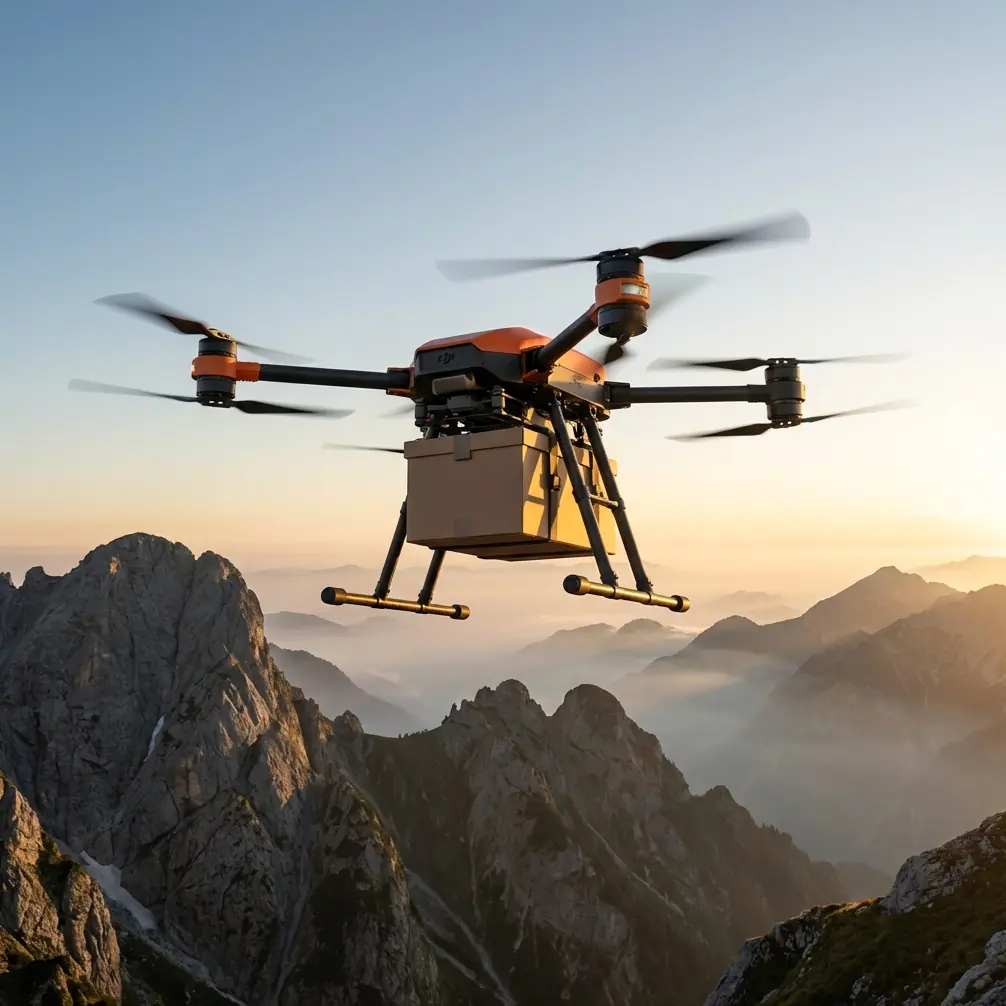
FlyCart 30 for Urban Power-Line Spraying: A Field-Style Case Study on Range, Rigging, and Risk Control
META: Expert case-study style guidance on using the DJI FlyCart 30 around urban power lines, covering antenna positioning, payload ratio, BVLOS planning, winch setup, dual-battery strategy, and emergency safety systems.
Urban power-line work exposes every weak assumption in a drone operation. RF reflections get ugly fast. Takeoff zones are cramped. Wind moves differently between buildings than it does in open corridors. And if the mission involves spraying or precision liquid placement near energized infrastructure, the margin for error narrows even further.
That is exactly why the FlyCart 30 deserves a more practical discussion than the usual payload headline. On paper, it is known as a heavy-lift logistics platform. In the field, especially in urban utility scenarios, what matters is how its systems interact: payload ratio, dual-battery endurance logic, winch behavior, emergency parachute deployment logic, and the quality of the link you maintain when concrete, steel, and electrical infrastructure start working against your signal.
I’ll frame this as a case-style operational walkthrough from the perspective of a logistics lead. Not because every urban spraying task should be done the same way, but because the FlyCart 30 rewards disciplined setup far more than improvisation.
The scenario: urban power-line spraying is not a standard delivery mission
Assume a utility contractor needs targeted spraying along segments of urban power distribution infrastructure. The aim might be vegetation suppression around hard-to-access attachment points, treatment on structures where manual access is slow, or localized application in areas where bucket trucks create traffic and safety complications. This is not broad-acre agriculture, and it is not a simple box-drop route.
The FlyCart 30 enters the conversation because it combines lift capacity with a winch system and a platform architecture built for structured operations, including BVLOS-capable planning environments where regulations and local approvals allow. That matters because urban line work often forces the aircraft to approach from awkward standoff positions rather than from a clean line-of-sight launch pad directly below the work area.
The mistake I see most often is treating payload capacity as the first planning variable. In this kind of mission, link quality and aircraft geometry come first. If those are wrong, the rest of the mission never really stabilizes.
Why payload ratio matters more than the payload headline
A heavy-lift UAV attracts attention because of maximum capacity figures, but the operational question is not “How much can it carry?” The right question is “What payload ratio keeps the aircraft predictable in an RF-hostile, obstacle-dense environment?”
For urban spraying near power lines, carrying less than the platform’s theoretical limit is usually the smarter move. A conservative payload ratio improves three things immediately:
- It preserves maneuvering authority when wind shear forms around corners and rooftops.
- It reduces climb sluggishness during obstacle avoidance.
- It gives the dual-battery system more room to protect return margins instead of merely sustaining the outbound task.
That third point is the quiet one operators often underestimate. Dual-battery architecture is not just about staying airborne longer. In city utility work, it is a resilience tool. Battery redundancy and power balancing help the aircraft absorb the stop-start nature of precision positioning, repeated altitude adjustments, and occasional hover holds while the team verifies line clearances or application accuracy.
If you load the aircraft like you’re trying to win a lifting contest, you trade away flexibility exactly where urban infrastructure punishes inflexibility.
The antenna problem nobody should ignore
If your mission objective is “spraying power lines in urban,” antenna positioning is not a side note. It is one of the main determinants of whether the operation feels controlled or tense.
Here is the simplest useful rule: do not position your control setup based only on where you can stand comfortably. Position it based on the cleanest RF corridor to the aircraft’s expected working envelope.
In dense urban utility environments, the best ground location is often not the closest one. A spot with more direct visibility to the intended lateral movement corridor usually outperforms a nearer position boxed in by facades, parked service vehicles, chain-link fencing, transformers, or overhanging steel structures. Concrete walls and glass-heavy buildings can create multipath interference that makes the signal look fine until the aircraft rotates or shifts behind a structural edge.
My advice for maximum range and control stability with the FlyCart 30 is practical:
First, elevate the control position whenever possible. Even a modest increase in antenna height can clean up the Fresnel zone enough to reduce dropouts and jitter. On urban utility jobs, that may mean operating from a secure rooftop staging point, an elevated lot edge, or a controlled platform with a clearer sightline into the work area.
Second, orient your antennas to support the actual route geometry, not just the launch phase. Too many crews optimize the first 30 seconds of flight and then accept weaker link performance once the aircraft transitions parallel to a street canyon or behind utility structures.
Third, keep metallic clutter away from the ground station. Parking the control setup beside a large truck body, temporary steel barriers, or dense electrical cabinets is asking for unnecessary signal distortion.
Fourth, test the route before carrying treatment load. Fly the path clean. Watch signal behavior where the aircraft yaws, descends, or crosses behind poles and building corners. Those are your real weak spots, not the broad open section near launch.
If you want a quick field checklist for antenna placement and route planning, I usually point teams to this utility-UAV operations contact when they need to troubleshoot urban RF layout before deployment.
The winch system changes how you should think about access
Most discussions of the FlyCart 30 focus on transport, but the winch system deserves attention in urban infrastructure work because it changes access geometry.
Even if the aircraft is not being used in a pure delivery role, a winch-enabled workflow can reduce how aggressively you need to position the airframe near wires, poles, or facades. Instead of forcing the aircraft body into the tightest part of the work zone, the operator can often use the suspended system to create better standoff distance and safer alignment.
Operationally, that matters in two ways.
One, it limits the number of moments where the aircraft itself has to occupy the highest-risk pocket of airspace. Near energized assets and urban obstacles, reducing close-body exposure is a major safety gain.
Two, it improves route optimization because the aircraft can remain in a more favorable corridor while the suspended tool or payload handles the final vertical offset. The mission becomes less about threading the entire drone through clutter and more about controlling the terminal task zone intelligently.
That is not a blanket recommendation to use the winch for every spraying setup. It is a reminder that the FlyCart 30 is more versatile than a simple cargo carrier. In constrained city operations, that versatility can be the difference between a clean repeatable process and a mission plan that looks good only on paper.
BVLOS planning is useful, but only when the route logic is disciplined
BVLOS gets treated as a technology badge. In reality, for utility work, it is a route-planning discipline.
Where local regulations, approvals, and operational controls support BVLOS, the FlyCart 30 becomes more valuable because urban power-line work rarely unfolds in a straight visible corridor. Structures interrupt line of sight. The crew may need to stage in a legally secure but offset location. Ground access might be blocked by traffic control requirements or restricted easements.
The operational significance is this: BVLOS-capable planning expands where you can place your crew and still cover the task area safely. But that advantage disappears if your route is not optimized around comms reliability, obstacle buffers, and emergency landing logic.
A good route for urban power-line spraying is usually broken into short, deliberate segments rather than one sweeping mission. Each segment should have:
- a verified communication profile,
- a defined abort direction,
- a battery reserve threshold that is stricter than open-field norms,
- and a landing or recovery decision point that does not rely on last-minute creativity.
In an urban environment, route optimization is not about shaving seconds. It is about reducing complexity at each transition point. If a mission plan saves two minutes but introduces one blind corner behind a reflective building face, it is not optimized. It is fragile.
Emergency parachute: not just a spec-sheet comfort item
The emergency parachute system on a platform like the FlyCart 30 should be viewed as part of the operational risk model, not as a reassuring extra.
In city utility work, there are people, vehicles, property, and energized assets below or beside the mission area. That changes the importance of controlled failure modes. An emergency parachute cannot erase a bad flight plan, but it can materially improve outcomes if the aircraft experiences a severe fault in a constrained environment.
What matters is how the crew plans around it.
You need to define where parachute deployment would still represent an acceptable emergency outcome and where it would not. That affects your route geometry. Flying over a narrow corridor with no acceptable descent footprint is fundamentally different from working adjacent to a controlled exclusion zone or managed right-of-way.
This is why I tell teams not to treat the emergency system as permission to fly bolder routes. It should encourage stricter route discipline, because you now have another recovery variable to integrate intelligently.
A realistic urban workflow for the FlyCart 30
If I were structuring a FlyCart 30 urban power-line spraying operation, the sequence would look something like this:
Start with RF mapping and staging analysis, not payload loading. Identify the cleanest control position. Confirm where buildings, utility structures, and vehicles will interfere with the control link. If the best antenna position is 40 meters farther away but far cleaner in line of sight, choose the cleaner position.
Next, define payload ratio according to mission behavior, not capacity ceiling. If the task requires frequent micro-adjustments, hover checks, and vertical repositioning, bias toward lighter payloading for better handling and better battery reserve logic.
Then choose whether the winch system gives you a safer working geometry. In some urban setups, suspended deployment or offset handling can reduce the need to bring the full aircraft body deep into a hazard pocket.
After that, segment the route. Do not build a monolithic path. Build manageable blocks with clear go/no-go criteria. This is where BVLOS thinking helps, even in missions that remain within direct observation for parts of the route. You are planning for continuity, not just visibility.
Finally, establish emergency logic before launch. Battery threshold, link-loss behavior, parachute considerations, fallback landing locations, and traffic-control coordination all need to be locked before the first ascent.
This is not excessive caution. It is what makes a heavy-lift utility platform actually useful in an urban setting.
What makes the FlyCart 30 especially relevant here
The FlyCart 30 stands out for this kind of discussion because its value is tied to system combination, not a single feature. The dual-battery design supports resilience. The winch system opens alternative access strategies. BVLOS-oriented planning expands where and how a crew can legally and practically stage the mission. The emergency parachute improves the risk envelope when things go wrong. And payload capability gives the aircraft room to support specialized tools or liquid handling without immediately collapsing mission feasibility.
Those are not isolated talking points. Together, they form a platform logic that fits urban utility work better than many people realize.
But the key is restraint. Use the lift margin wisely. Protect the control link aggressively. Segment the route. Respect the environment. A drone like this does not reward bravado. It rewards clean planning and conservative execution.
The bottom line for urban utility teams
If your operation involves spraying around power-line infrastructure in a city, the FlyCart 30 should not be evaluated as a “big drone.” That framing is too shallow. It should be evaluated as a systems platform for constrained-access utility operations.
The most important field lesson is surprisingly ordinary: antenna positioning can do more for mission success than another few kilograms of carried load. Put the ground station where the RF path is clean. Use the payload ratio to preserve control authority rather than chase limits. Let the dual-battery architecture protect your return margin. Use the winch system when it improves standoff and access geometry. And treat the emergency parachute as part of route design, not a comforting afterthought.
That is how the FlyCart 30 moves from impressive hardware to operational asset in urban power-line spraying.
Ready for your own FlyCart 30? Contact our team for expert consultation.