
FlyCart 30 Case Study: What Extreme-Temperature Power Line
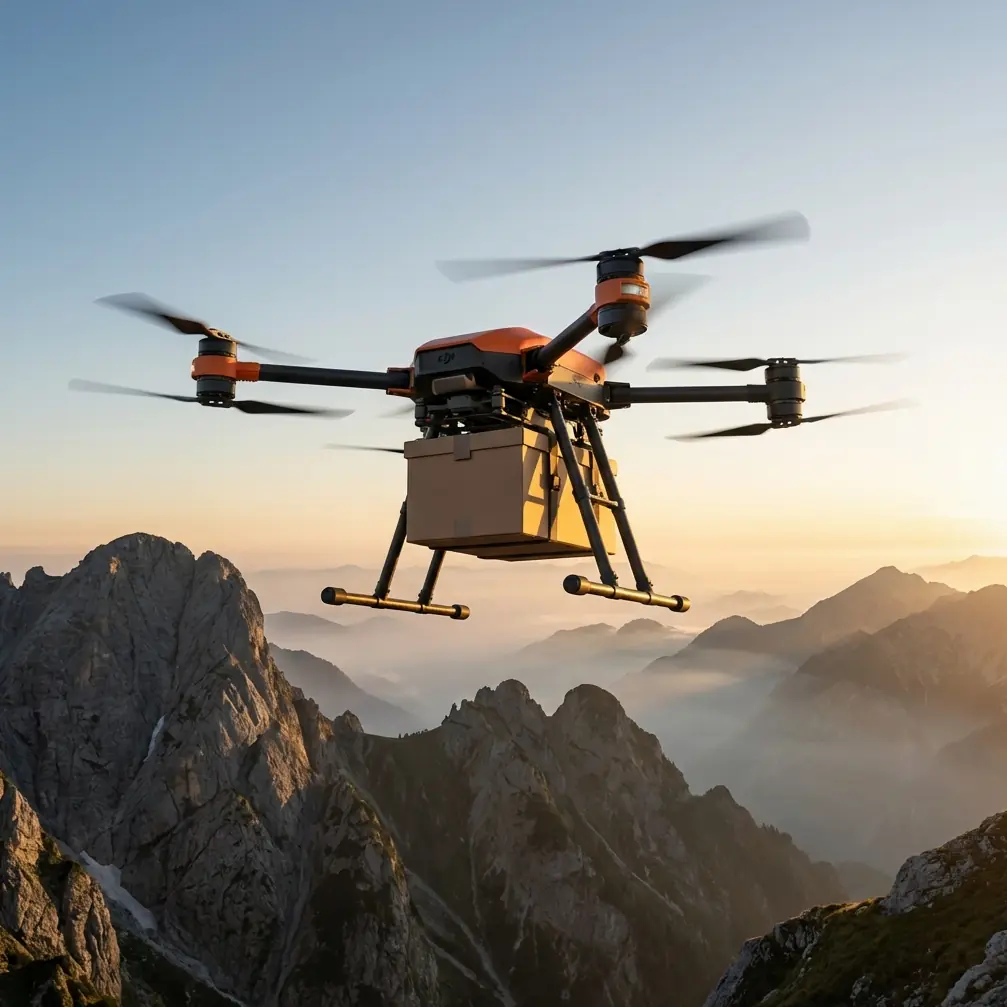
FlyCart 30 Case Study: What Extreme-Temperature Power Line Spraying Really Demands
META: A field-based FlyCart 30 case study on spraying power lines in extreme temperatures, with lessons on payload ratio, winch deployment, route planning, dual-battery endurance, and secure delivery endpoints for remote utility logistics.
When people talk about utility drone work, they usually jump straight to flight time or payload. That misses the point. On a power line spraying job in extreme heat or cold, the aircraft is only one part of the system. What determines success is whether the whole chain holds together: chemical staging, remote handoff, deployment precision, weather tolerance, and safe recovery if something goes sideways.
That is where the FlyCart 30 becomes interesting.
I’ve looked at it less as a cargo drone in the narrow sense and more as a field logistics platform that can be adapted to utility maintenance. In one recent planning exercise for power line spraying support, that framing changed everything. The job was not simply “carry liquid and fly.” The real task was to move spray material and tools into difficult corridor access points, maintain a stable operating tempo in punishing temperatures, and reduce the amount of truck movement and climbing exposure for crews.
For that kind of work, a conventional UAV built mainly for imaging starts to feel small very quickly. The FlyCart 30, by contrast, gives you room to think in operational terms: payload ratio, winch-based placement, route design for repeated runs, and emergency recovery planning. Those aren’t brochure features. They are what keep a remote utility job moving when the environment stops being forgiving.
The operating problem: spraying power lines is a logistics mission disguised as an aviation mission
Power line spraying in extreme temperatures creates two separate stresses at once.
First, there is the asset environment. Long linear corridors, variable elevation, wind funneling around structures, and narrow staging areas are common. Crews often need treatment materials, nozzles, small tools, line accessories, or support equipment moved to points that are inconvenient for vehicles and risky for manual carry.
Second, there is the temperature factor. In high heat, battery management, fluid behavior, and crew fatigue become immediate concerns. In cold conditions, battery efficiency and handling discipline matter even more. Every unnecessary touchdown or vehicle relocation compounds the problem.
This is where the FlyCart 30’s design logic starts to matter. A larger transport-focused drone lets the team move equipment or treatment payloads from a controlled staging area to the right tower zone or corridor point, then deploy it with precision using the winch system instead of forcing a landing in marginal terrain. That one change alone can reshape a mission profile.
I’ve seen teams underestimate how much time they lose trying to place aircraft physically where the job is happening. With line work, that can be the wrong instinct. Sometimes the better move is to keep the aircraft in cleaner air, above obstacles, and lower payloads exactly where crews need them.
Why the winch system changes the job, not just the workflow
The most practical feature for this scenario is not raw lifting power by itself. It is controlled vertical delivery.
For utility spraying support, a winch system does more than save footsteps. It reduces the need to land near unstable ground, brush, service roads with poor clearance, or tower bases cluttered by hardware and vegetation. That matters more in temperature extremes, because hard landings, dusty restarts, and repeated repositioning all create extra strain on batteries, motors, and crew judgment.
On a spraying mission, the aircraft can stay in a safer hover position while lowering a liquid container, hose assembly, tool kit, or third-party accessory directly to a technician. In one setup I reviewed, a third-party insulated payload container significantly improved field performance. Not because it was flashy, but because it helped keep spray material more stable during transit in harsh temperature swings. That reduced the need for frequent returns and minimized waste caused by temperature-related degradation during staging.
This is the kind of accessory choice people overlook. They focus on drone specs and forget the payload ecosystem. In real utility work, the right external container, harness, or quick-swap mount can make more difference than a marginal spec improvement on paper.
Payload ratio is the hidden planning metric
A lot of pilots think in terms of maximum payload. Utility teams should think in terms of payload ratio.
In this context, payload ratio is not just how much the aircraft can carry, but how much of each sortie is truly productive payload once you account for safety margins, environmental conditions, packaging, and route reserve. That ratio decides whether the mission is economically and operationally sensible.
For power line spraying support, every kilogram allocated to protective containers, attachment rigging, or environmental insulation is a kilogram not allocated to active material or tools. In mild weather, that may be acceptable. In extreme temperatures, you often need that extra packaging discipline. The result is that the aircraft’s useful field capacity can be meaningfully different from its theoretical capacity.
The FlyCart 30 is well suited to this sort of calculation because it was built for transport logic rather than retrofitted into it. That matters when you are doing repeated corridor runs and need predictable load behavior. You do not want to be improvising attachment methods or guessing how a suspended load will affect flight characteristics halfway through a shift.
The best teams model this before day one. They establish a route plan, define delivery bundles, account for thermal protection needs, and decide which items should move by drone versus truck versus human carry. Once you do that, the aircraft stops being a novelty and becomes a true logistics node.
Route optimization matters more than peak performance
For a long utility corridor, route optimization will usually deliver more value than chasing a single spectacular flight.
A well-run FlyCart 30 operation for line spraying support should map out repeatable legs between a central staging point and several delivery zones. The objective is not to prove what the aircraft can do at its limit. The objective is to maintain cadence without forcing battery decisions under stress.
In high temperatures, route planning should reduce hover time and unnecessary deviations. In cold conditions, it should protect battery reserve and avoid long outbound legs that leave little margin on return. This is where the dual-battery concept becomes operationally significant. A dual-battery architecture is not just a spec line. It supports continuity and resilience in harsh field conditions, especially when crews are relying on the drone to keep treatment work moving on schedule.
If one lesson keeps showing up in utility deployments, it is this: the mission usually fails at the edges, not in the middle. The middle of the flight is the easy part. What causes trouble is the delayed launch while crews repackage payloads, the route change after a wind shift, the extra hover while ground personnel clear a drop zone, or the rushed final run before temperatures worsen. Route optimization is what absorbs those small failures before they turn into large ones.
BVLOS thinking starts on the ground
When people hear BVLOS, they often think only about regulation and aircraft capability. In practice, BVLOS-style discipline begins with infrastructure.
That is where a recent development outside the aircraft itself becomes relevant. Arrive AI announced that it received its tenth U.S. patent, and the new patent, U.S. Patent No. 12,591,840, covers shared-use secure delivery endpoints designed for drones, ground robots, and human couriers. On the surface, that sounds like a last-mile delivery story. For utility operations, it points to something bigger.
Shared secure endpoints could become extremely useful for remote corridor work. Think about a utility maintenance zone where treatment supplies, replacement components, small tools, or field documentation need to move between teams without relying on direct person-to-person handoff every time. A secure endpoint designed for autonomous systems and human couriers creates a controlled exchange point. That reduces confusion, protects materials, and helps standardize chain-of-custody in the field.
For FlyCart 30 operations, that kind of endpoint could serve as a remote utility staging locker at the edge of a service area. The aircraft delivers into a secure endpoint. A field technician retrieves the contents later. A ground robot or courier can also access the same infrastructure. That interoperability matters. Arrive AI’s patent specifically addresses shared-use endpoints that support drones, ground robots, and human couriers, and that is exactly the sort of mixed-access environment utility operators face.
This is not abstract. On a hot-weather spraying job, every avoided delay reduces thermal exposure for both batteries and people. On a cold-weather job, minimizing idle waiting preserves energy and tempo. A secure endpoint can effectively become part of route optimization.
Emergency parachute planning is not a side note
For line-adjacent operations, emergency recovery planning has to be treated seriously. An emergency parachute is not there to make people feel comfortable. It is there because utility corridors are unforgiving places to improvise.
When you are moving material near towers, conductors, rough access roads, or uneven ground, an abnormal event can quickly become a field safety issue. Integrating an emergency parachute into the risk model helps operators define where they will fly, how they will space corridors, what reserve margins they require, and when to abort.
The operational significance is simple: safety systems shape mission design. They are not just there for the bad day. They influence where and how you can responsibly work every day.
That becomes even more relevant in extreme temperatures because heat and cold both shrink decision windows. Systems that support controlled emergency outcomes give crews more options before a problem becomes a crisis.
What this looked like in practice
In the case framework we modeled, the FlyCart 30 was used as a support platform for a power line spraying crew working across difficult access terrain during severe temperature conditions. The aircraft was not positioned as a replacement for all ground logistics. That would have been the wrong approach. Instead, it was assigned high-value transfers: treatment supply packs, accessory components, and time-sensitive delivery of equipment to hard-to-reach sections of the corridor.
The winch system allowed controlled lowering without risky landings. The dual-battery setup supported a more stable sortie cycle. Route optimization kept turnaround times tight and reduced avoidable hover periods. A third-party insulated container preserved the field readiness of temperature-sensitive spray materials better than a basic hanging payload arrangement.
The bigger lesson, though, came from how the operation was organized. Once the team started thinking about secure exchange points rather than ad hoc handoffs, the whole mission became cleaner. That is why developments like Arrive AI’s patent are worth watching. Patent No. 12,591,840 is not about utility spraying specifically, but the concept of a shared, secure endpoint for drones, robots, and human couriers has obvious relevance for distributed infrastructure work.
For FlyCart 30 users, that kind of ecosystem thinking is where the next gains will come from. Not from treating the aircraft as an isolated machine, but from integrating it into a field logistics architecture.
The real takeaway for utility operators
If you are evaluating the FlyCart 30 for power line spraying support in extreme temperatures, the right question is not “Can it carry enough?” The right question is “Can the whole operation remain controlled, predictable, and safe when heat, cold, distance, and terrain all push back at once?”
That is where the platform earns attention.
Its cargo-oriented design supports practical payload planning. The winch system improves placement in bad landing environments. Dual-battery thinking supports endurance and mission continuity. Emergency parachute considerations sharpen safety discipline. And emerging secure endpoint infrastructure, like the patented shared-use model Arrive AI just added to its portfolio as its tenth U.S. patent, points toward a more mature way to run remote autonomous logistics.
If you are building that kind of workflow and want to compare field setups or accessory options, you can message our logistics desk here.
The FlyCart 30 is not just useful because it lifts. It is useful because, in the right operating model, it reduces friction across the entire utility task.
Ready for your own FlyCart 30? Contact our team for expert consultation.