
FlyCart 30 for Mountain Power-Line Spraying: Range
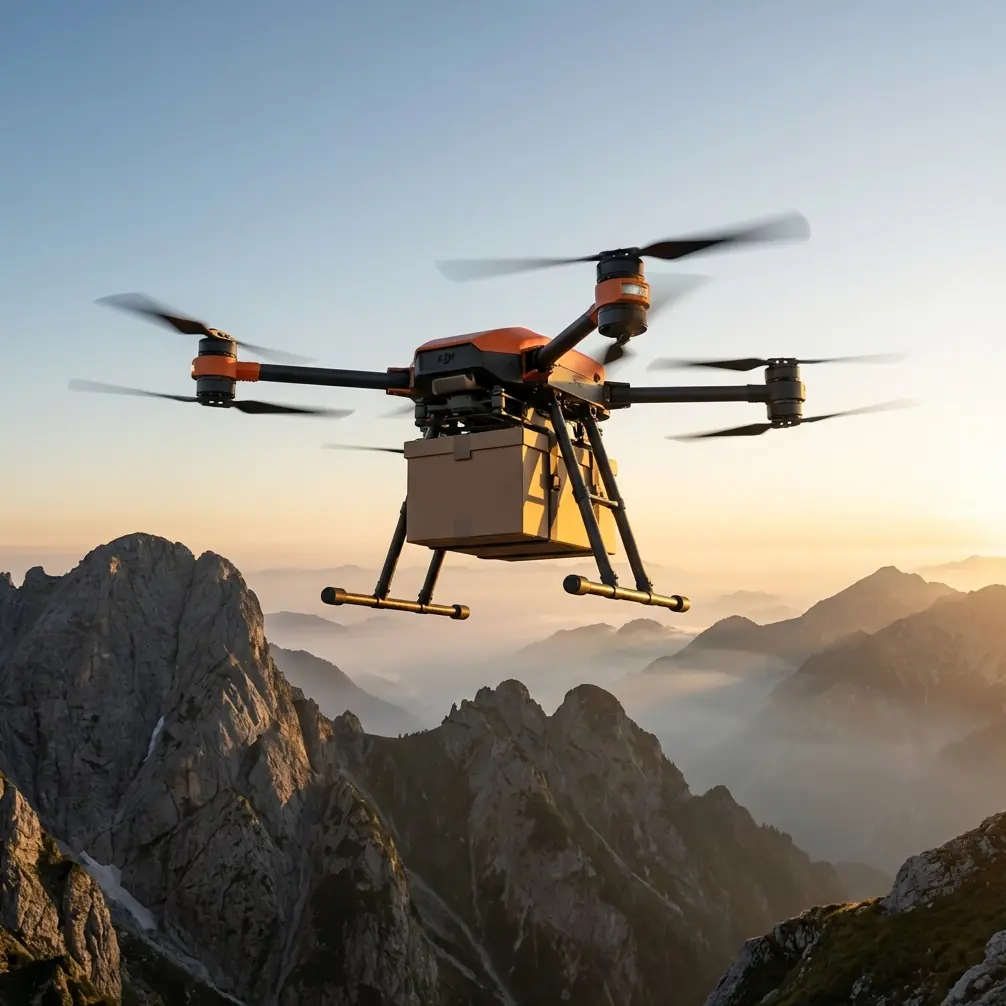
FlyCart 30 for Mountain Power-Line Spraying: Range, Licensing, and Antenna Setup That Actually Matter
META: A practical FlyCart 30 tutorial for mountain power-line spraying, covering antenna positioning, BVLOS planning, dual-battery operations, winch use, payload tradeoffs, emergency parachute considerations, and why new drone license exam pilots in Northeast China matter for operators.
Mountain power-line spraying looks straightforward on paper. In the field, it rarely is.
Elevation shifts distort signal paths. Towers and ridgelines block line of sight at exactly the wrong moments. Wind funnels through valleys, then drops off near the structure you need to treat. And unlike flatland utility work, every decision on payload, route design, and battery use has a direct effect on whether the job stays efficient or becomes an exercise in repositioning crews all day.
That is where the FlyCart 30 deserves a more serious discussion than the usual headline specs. For this kind of mission, the aircraft is not just a transport platform. It becomes a system for solving access, precision, and endurance constraints in terrain that punishes sloppy planning.
I approach this as a logistics lead would. The airframe matters, yes. But the outcome depends just as much on operator qualification, staging discipline, antenna positioning, and a realistic understanding of payload ratio in mountain conditions.
There is also a timely regulatory angle. China’s CAAC Northeast Regional Administration recently announced three pilot units for independent small- and medium-sized UAV license examinations. That sounds like a narrow administrative update. It is not. For commercial operators trying to scale demanding utility work, more structured and localized license testing capacity can reduce friction in training, standardization, and crew readiness. When a region expands examination access for small and medium UAV licensing, it tends to strengthen the local operating ecosystem around higher-skill missions, including corridor inspection, logistics, and specialized line servicing.
For anyone considering the FlyCart 30 in mountain power-line spraying support, that development matters because the aircraft’s value is tied to the quality of the team behind it.
Why mountain line work pushes the FlyCart 30 into a different category
The reader scenario here is specific: spraying power lines in mountainous terrain. That is not the same as open-field agricultural spraying, and it is not the same as simple cargo delivery. In practice, these missions often involve moving treatment materials, tools, or line-maintenance support loads to awkward positions, then operating near long linear assets where access from the ground is inefficient.
This is where a high payload ratio becomes operationally significant.
A payload ratio is not just a spec-sheet bragging point. In the mountains, it determines how often your team has to shuttle supplies uphill, reposition vehicles, or break the task into smaller segments. Every extra cycle costs time. More importantly, every extra takeoff and landing introduces another opportunity for signal interruption, weather drift, or site congestion.
With the FlyCart 30, the useful question is not “How much can it carry?” The better question is: how much useful work does each battery cycle produce once you account for altitude, slope, wind exposure, and the need for safe stand-off from energized infrastructure?
That is why the aircraft’s dual-battery architecture is worth discussing in practical terms. Dual-battery setups matter in mountain operations because they support continuity and redundancy in an environment where retrieval is harder. On a utility corridor crossing ridges, a lost cycle is not just a delay. It can mean a ground team hiking into a poor access zone, or an entire work window shrinking below usable limits due to changing mountain weather.
The hidden bottleneck is often not the drone. It is crew qualification.
The recent Northeast China licensing news is easy to overlook, but I would not. The CAAC Northeast bureau publicly identified three pilot organizations as independent exam-site trial units for small and medium UAV licenses. That signals more than bureaucracy. It signals that the regulator is actively shaping how operators are tested and managed.
For FlyCart 30 users, especially those moving into utility support workflows, this has two real-world implications.
First, it can improve the path from training to deployment. Specialized operations in mountains require more than basic stick skills. Crews need competence in route review, terrain-induced radio challenges, emergency handling, and load-behavior awareness. If more independent examination points become viable, operators may be able to train and qualify in a more regionally responsive way.
Second, it raises the standard for commercial legitimacy. Utility clients do not only care whether the drone can fly. They care whether the operator can document competence under a recognized licensing structure. When examination capacity expands under the civil aviation authority, it becomes easier for serious commercial teams to distinguish themselves from casual operators.
That matters for FlyCart 30 work because this aircraft often enters jobs where reliability and procedure carry more weight than novelty.
Payload ratio: what it changes on a mountain spraying job
Let’s make this concrete.
In a ridge-to-ridge power-line spraying operation, payload ratio influences four things immediately:
- Number of sorties per tower segment
- Battery turnover frequency
- Ground crew walking distance
- Exposure time in unstable weather windows
A heavier useful load can reduce the number of repeat flights required to support the same line section. That sounds obvious, but in steep terrain the effect compounds. If each resupply requires a launch from a safer but more distant position, even small reductions in flight count improve the whole day’s productivity.
The tradeoff, of course, is range and energy use. This is where inexperienced operators make bad assumptions. They look at catalog payload and forget that mountains punish optimistic route planning. A more disciplined approach is to work backward from terrain, not forward from maximum load.
I usually suggest planning payload bands rather than a single target load:
- a conservative load for ridge crossings and uncertain wind
- a mid-range load for stable, repeatable corridor legs
- a heavier load only for short, verified paths with clean signal geometry
That approach keeps the payload ratio tied to route reality rather than ego.
The winch system is more useful here than many teams expect
If you are supporting line spraying or line-adjacent maintenance, a winch system can be one of the most valuable pieces of the setup.
Why? Because mountain utility work often suffers from poor landing options. There may be brush, slope, loose rock, conductor clearances, or tower geometry that make precision landing inefficient or unsafe. A winch allows the aircraft to remain in a cleaner hover position while lowering materials or tools into a controlled access point.
Operationally, that changes the mission profile in three ways:
- It reduces the need to force the aircraft into marginal touchdown zones.
- It lets crews keep stand-off distance from obstacles and uneven terrain.
- It can shorten handoff time near towers or line-side work areas.
For spraying support scenarios, that may mean moving treatment supplies, nozzles, replacement components, or rope-and-tool kits without committing the aircraft to a risky landing cycle. That is not a small benefit. In mountain jobs, fewer forced landings usually translate into fewer delays.
BVLOS thinking starts long before the aircraft leaves the ground
Many utility corridors naturally lead operators toward BVLOS-style planning, even where a mission remains within procedural visual frameworks. The reason is simple: linear infrastructure stretches through terrain that erodes direct line of sight quickly.
For FlyCart 30 missions in mountains, BVLOS discipline is useful even if the regulatory framework of your specific job still requires visual constraints. The mindset improves safety and efficiency.
That means:
- pre-mapping signal shadows behind ridges
- identifying relay-friendly crew positions
- selecting launch points with maximum corridor visibility
- defining fallback loiter zones before takeoff
- setting abort thresholds for crosswind, downdraft, and link degradation
The aircraft’s range is only part of the equation. What really determines usable range is whether your control link remains clean through the terrain profile.
Which brings us to the most overlooked field skill in this category.
Antenna positioning advice for maximum range
If you want better real-world control performance in mountain corridors, stop focusing only on the aircraft and start treating the ground antenna as part of the route plan.
Here is the field rule I give crews: place the control position for geometry, not convenience.
That usually means avoiding the temptation to stand right beside the vehicle if the truck is parked in a hollow, under tree cover, or directly below the ridgeline crest. Instead, choose a slightly elevated, open point where the antenna has the clearest possible view into the next corridor segment. In mountains, even a small lateral move can clean up a blocked Fresnel path enough to improve link stability.
A few practical habits help:
1. Keep the antenna above local clutter
Do not let nearby shrubs, parked equipment, metal racks, or the vehicle roof sit in the immediate signal path. Mountain work already introduces terrain masking. You do not need self-inflicted interference.
2. Face the corridor, not the launch pad
The critical signal path is often not the first 50 meters after takeoff. It is the section where the route bends behind a slope or around a tower line. Orient the antenna toward the main travel direction of the aircraft’s working leg.
3. Avoid ridgeline shadow traps
Standing just behind a crest can feel elevated, but if the first part of the route drops sharply away, the ridge itself may become the blocker. Step far enough forward to maintain a cleaner angle while still keeping safe footing and operational clearance.
4. Reposition early, not after warnings begin
If your route optimization plan includes multiple corridor legs, build in a ground reposition point before signal quality degrades. In mountain work, “one more tower” is where avoidable interruptions happen.
5. Use a dedicated observer who understands terrain, not just aviation
A good observer in this environment is tracking ridge masking, aircraft attitude, and likely blind sectors. They are not only watching the sky. They are reading the land.
If you want to compare notes on corridor-specific antenna setups, I usually recommend sending your route profile and site photos through this WhatsApp utility-flight planning channel before the job. A few minutes of signal-path review can save a full day of trial and error in the field.
Route optimization in mountain utility work is really energy optimization
The phrase route optimization gets used loosely, but on a FlyCart 30 mountain job it should mean one thing: preserving energy margin while protecting link quality.
The shortest path is often not the best path.
A direct line across a saddle may look efficient on a map, yet produce more headwind exposure and worse signal geometry than a slightly longer contour route. Similarly, a route that hugs a slope may reduce crosswind but increase masking risk behind protruding terrain.
When planning utility spraying support legs, I look at four layers together:
- topography
- prevailing wind direction
- tower spacing and line geometry
- crew reposition options on the ground
This is also where the dual-battery design earns its keep. A stronger energy reserve gives you more flexibility to reject a marginal route and choose the smarter one rather than the shortest one. In the mountains, smart usually wins.
Emergency parachute thinking: not a box to check
If your FlyCart 30 configuration or local operating ecosystem includes an emergency parachute concept, treat it as part of site planning, not just emergency paperwork.
Parachute deployment in mountain utility environments has specific implications. Slopes, trees, conductor proximity, and rocky drop zones all influence what happens after the descent begins. The key value is risk reduction to people and property, but the operational implication is broader: you need to define where an emergency descent would be most acceptable before the mission starts.
That means identifying sectors where a failure would be less likely to create secondary hazards. It also means not flying loads over avoidable ground concentrations when a cleaner corridor is available.
Again, this is where trained, licensed crews make the difference. A serious team does not merely know that a safety feature exists. They understand how terrain affects its real outcome.
A practical workflow for FlyCart 30 mountain power-line spraying support
Here is the field sequence I would use:
Pre-mission
- Confirm crew licensing and role assignments.
- Review topographic map, tower alignment, and likely signal shadows.
- Set payload bands based on route difficulty, not maximum capacity.
- Identify at least one alternate launch/recovery point.
- Define emergency descent sectors and no-go approach angles.
Site setup
- Place the control station where antenna geometry is strongest, not where unloading is easiest.
- Verify clean sky view toward the main route leg.
- Stage batteries for fast, orderly changeout.
- Brief the observer on terrain masking points and expected communication calls.
Flight execution
- Start with the conservative payload profile on the first corridor leg.
- Watch link quality at known terrain transitions.
- Use the winch system when landing options are poor or tower access is awkward.
- Reposition the ground team before the route pushes into a shadow zone.
Mid-mission review
- Compare planned versus actual battery draw.
- Adjust payload ratio if wind or elevation effects exceed expectations.
- Tighten route legs based on observed link performance rather than assumptions.
End of day
- Log signal dead spots, battery behavior, and best antenna positions for the site.
- Convert those notes into a repeatable corridor playbook.
That last step is where commercial teams gain margin over time. They stop treating each mountain job as a standalone event.
Why this licensing news and this aircraft belong in the same conversation
The announcement from the CAAC Northeast Regional Administration about three independent exam-site pilot units for small and medium UAV licenses may seem far removed from mountain power-line spraying. I see the opposite.
Aircraft like the FlyCart 30 only reach their full commercial value when the operator base matures around them. Better access to licensing exams supports more structured crew development. More structured crew development supports safer and more repeatable utility workflows. And repeatable workflows are what make mountain operations commercially viable instead of merely possible.
That is the thread connecting the regulatory news to the field reality.
The FlyCart 30 is a capable platform. But in mountain power-line work, capability is not one thing. It is the combination of payload discipline, route optimization, signal-aware ground positioning, dual-battery planning, winch use, and crew qualification under a credible licensing framework.
Get those pieces aligned, and the aircraft stops being a flying machine with a load hook. It becomes a dependable part of a utility operations system.
Ready for your own FlyCart 30? Contact our team for expert consultation.