
FlyCart 30 for Low-Light Solar Farm Spraying: Altitude
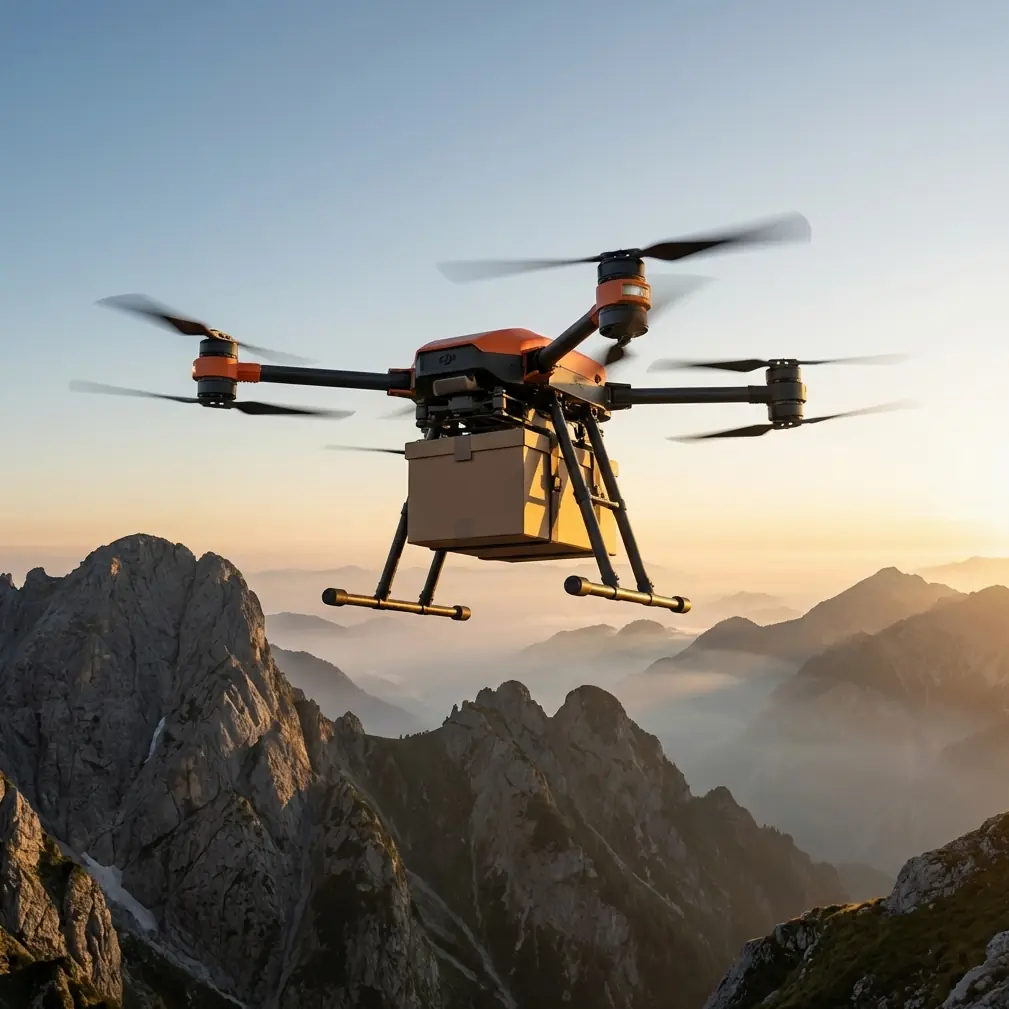
FlyCart 30 for Low-Light Solar Farm Spraying: Altitude, Safety, and Mission Planning That Actually Work
META: Expert guidance on using the FlyCart 30 for low-light solar farm spraying, including optimal flight altitude, payload tradeoffs, winch use, BVLOS planning, and safety systems.
Low-light operations around solar farms punish sloppy planning. Panels flatten contrast, service roads disappear into shadow, and even experienced crews can misjudge spacing once the sun drops. If the aircraft is carrying liquid and working close to valuable infrastructure, small mistakes stop being small.
That is why the FlyCart 30 deserves a more practical discussion than the usual spec-sheet chatter. For this kind of mission, the aircraft is not just a heavy-lift platform. It becomes a logistics tool that has to balance payload ratio, route efficiency, battery strategy, and safety redundancy while flying a site that looks deceptively simple from above.
I approach this as a logistics problem first. When a crew says they need to spray a solar farm in low light, what they usually mean is this: they need to cover long, repetitive corridors, avoid panel damage, maintain stable application quality, and finish before visibility drops below a comfortable threshold. The aircraft choice matters, but the operating method matters more.
The FlyCart 30 is compelling here because its design pushes mission planners to think in systems. Its dual-battery architecture supports continuity and redundancy in a way that matters on large energy sites, and its emergency parachute changes the safety conversation when you are operating over infrastructure that cannot tolerate an uncontrolled descent. Those are not abstract features. They directly affect whether a low-light spraying mission can be structured conservatively instead of being improvised in the field.
The first operational question is altitude. For low-light solar farm spraying, my preferred starting point is to fly roughly 3 to 5 meters above the target work corridor, then adjust only after confirming drift behavior, rotor wash effect, and obstacle clearance on that specific site. Lower than that, and you increase the chance of unstable spray interaction around rows, fencing, cable trays, and elevation changes. Higher than that, and your application consistency usually suffers, especially when evening air begins to shift laterally across open arrays.
That 3-to-5-meter band is not a magic number. It is a working range that solves several competing problems at once. It helps preserve enough visual and sensor-based reference to hold the line between panel rows. It reduces overspray risk compared with a looser, higher pass. It also gives the aircraft enough buffer to deal with minor terrain undulations or unexpected edge hardware without forcing abrupt control inputs. On solar sites, smoothness is everything. You want the aircraft to look almost boring in the air.
Low light changes the usual assumptions about route planning too. During bright daylight, pilots can often rely on high-contrast visual cues to confirm corridor alignment and identify transition points. As illumination falls, that confidence erodes. The rows still exist, of course, but the pilot’s ability to interpret depth and spacing drops faster than most teams admit. With the FlyCart 30, this is where route optimization stops being a convenience and becomes a safety layer.
A disciplined route should minimize needless cross-row turns and avoid late-mission repositioning when ambient light is worst. I prefer breaking large sites into compact, repeatable sectors that can be completed with clean ingress and egress paths. That reduces cognitive load on the crew and prevents the classic low-light mistake: finishing one block, then trying to cut diagonally to another section because it looks faster. It rarely is. On a solar farm, the efficient route is usually the one with the fewest surprises, not the shortest geometric path.
Payload ratio has to be treated honestly in this scenario. A heavy spray load promises more coverage per sortie, but it also affects handling, braking distance in the air, energy consumption, and how decisively the aircraft can recover from a disturbed approach between rows. The FlyCart 30’s heavy-lift profile is an advantage only when the operator resists the urge to fill every mission to the maximum practical limit. Low light is not the time to chase theoretical productivity. It is the time to preserve margin.
This is where the aircraft’s broader logistics role becomes useful. Instead of viewing each sortie as a single pass that must carry as much as possible, think in terms of cycle efficiency. A slightly reduced liquid load paired with cleaner routing and quicker turnaround often outperforms a heavier, less stable mission profile once battery swaps, alignment checks, and cautious low-light flying are factored in. In other words, a better payload ratio is not always the highest load. It is the load that produces the most predictable coverage per unit of risk.
The dual-battery setup deserves attention for the same reason. On a solar farm at dusk or dawn, mission interruptions cost more than time. They disrupt rhythm. Crews lose situational flow, pilots re-evaluate landmarks, and the temptation to “just finish this section” grows. Dual-battery architecture helps support more stable mission planning because energy management becomes less brittle than it would on a simpler platform. That does not eliminate the need for conservative return thresholds, but it does give the operation a stronger base for repeatable sortie planning.
Safety planning around the FlyCart 30 should also include a serious look at the emergency parachute system. Many teams mention parachutes as if they are merely compliance-friendly hardware. On solar sites, the practical significance is sharper. If you are flying over long fields of panels, junction hardware, inverters, access lanes, and maintenance assets, the difference between a controlled emergency response and an uncontrolled drop can be measured in damaged infrastructure, site downtime, and post-incident investigations. In low light, where visual recovery time is compressed, that backup layer matters more, not less.
BVLOS is another topic that should be handled with precision rather than bravado. Large solar farms tempt operators to stretch line-of-sight practices because the terrain often appears open and uniform. That appearance is misleading. Uniform landscapes are exactly where distance judgment degrades and spatial complacency sets in. If a FlyCart 30 mission is being structured for BVLOS or BVLOS-like scale, the planning standard has to rise accordingly. Sector boundaries, handoff procedures, communications discipline, and emergency landing logic all need to be resolved before the aircraft leaves the ground. Low-light conditions magnify every weakness in that chain.
There is also a less discussed advantage to the FlyCart 30 in this environment: its winch system can support smarter field logistics, even if the spraying task itself is not being conducted by suspended load. On large energy sites, crews often waste time moving support materials, replacement parts, measuring tools, or site-specific accessories across uneven access patterns. A winch-equipped aircraft creates options for controlled delivery into awkward positions without forcing ground teams to make long detours around fenced or restricted sections. That matters because every minute saved on non-spray logistics expands the safe operating window for the core mission.
In practice, the best low-light solar farm workflow with the FlyCart 30 looks something like this. The crew surveys the block in full daylight if possible, marks obstacle anomalies rather than assuming row uniformity, and builds sectors based on battery-and-load reality rather than acreage optimism. Spray sorties are then flown at that initial 3-to-5-meter altitude band, with adjustments driven by observed spray pattern stability and row clearance, not by pilot preference alone. Loads are sized to preserve maneuver margin. Return points are set earlier than daytime habits would suggest. And the final sorties are reserved for the easiest sectors, not the hardest ones.
That last point is worth stressing. Too many teams leave the awkward corners, partial rows, or narrow transition corridors for the end of the session. On a low-light mission, that sequencing is backwards. Difficult sectors should be completed while visual confidence is strongest. By the time the light softens and shadows start blending panel edges together, the remaining work should be the most straightforward and the least mentally taxing.
If I were advising a crew lead named Alex Kim on this exact scenario, I would frame it simply: do not ask the FlyCart 30 to rescue a weak plan. Use it to execute a disciplined one. Its payload capacity is useful, but only when balanced against aircraft responsiveness. Its dual-battery design supports continuity, but only if mission thresholds remain conservative. Its emergency parachute improves the risk picture, but only if the team has already thought through where and how an emergency would unfold. And its winch system can quietly improve overall site efficiency when integrated into the broader operating concept.
For readers trying to turn this into an actual field method, here is the shortest version that still holds up. Start lower than your daylight instinct, but not so low that row hardware and wake interaction become your next problem. On most solar spraying tasks in low light, that means beginning around 3 to 5 meters above the work corridor. Segment the site aggressively. Keep payloads honest. Prioritize route simplicity over theoretical maximum coverage. Protect battery margin earlier than usual. Treat the parachute as part of the operational design, not an afterthought. And if the site footprint pushes toward BVLOS-style planning, raise your procedural discipline to match the scale.
There is a reason these details matter on the FlyCart 30 specifically. It is powerful enough to tempt overreach. That is true of many capable aircraft. The professionals who get the best results are usually the ones who use that capability to create margin, not to consume it. If you want a practical discussion about configuring routes or mission flow for your site, you can message the operations desk here.
The real measure of a successful low-light solar farm spraying mission is not whether the aircraft finished the block. It is whether it finished with stable application quality, intact safety margins, and no surprises for the client or the crew. The FlyCart 30 can absolutely fit that mission. It just works best when flown like a logistics platform with discipline, not like a brute-force solution.
Ready for your own FlyCart 30? Contact our team for expert consultation.