
FlyCart 30 for High-Altitude Solar Farm Spraying
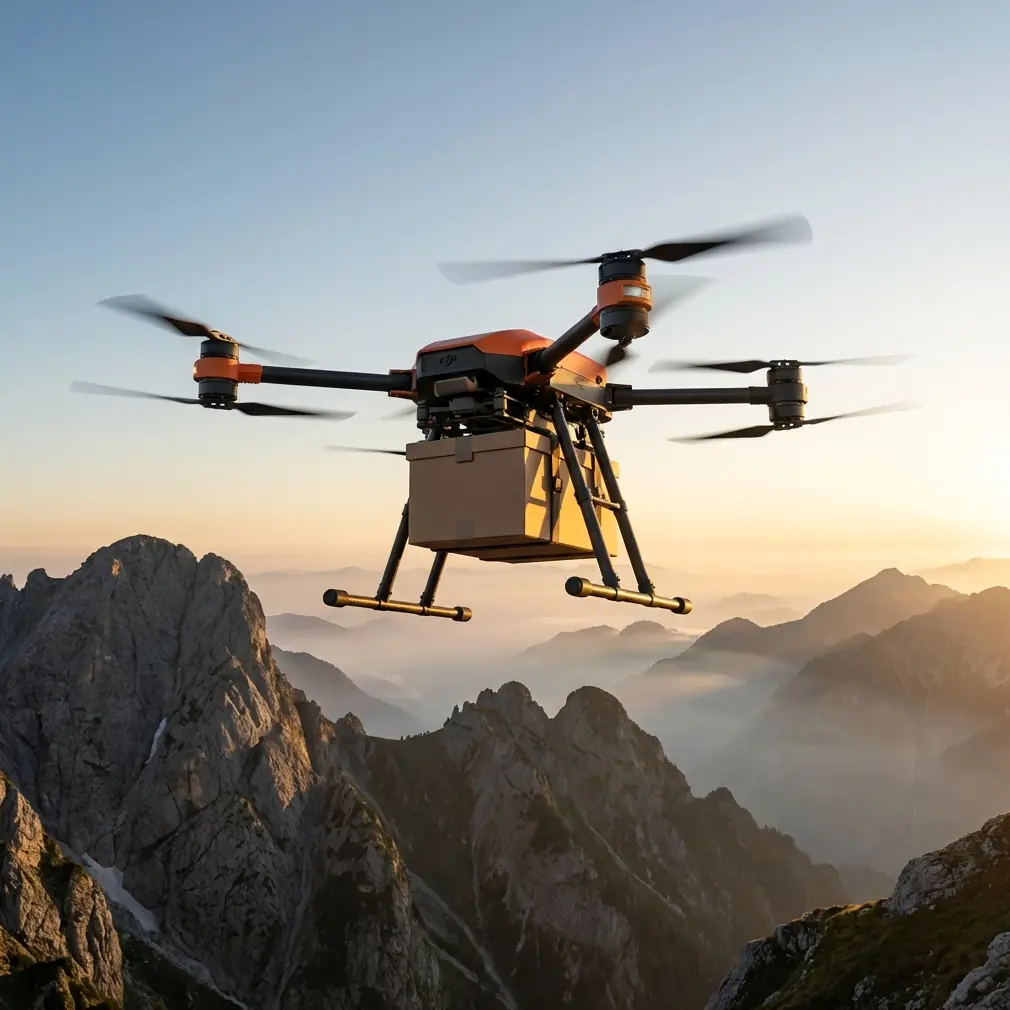
FlyCart 30 for High-Altitude Solar Farm Spraying: Antenna Setup, Route Logic, and Safer Payload Workflows
META: Practical tutorial for using the FlyCart 30 around high-altitude solar farms, with antenna positioning advice, payload strategy, route planning, winch use, and safety considerations.
High-altitude solar farms create a strange kind of flying environment. The site is usually open, but not simple. You may have long rows, reflective surfaces, gusty afternoon winds, elevation-related performance loss, and a constant need to keep aircraft movement predictable near infrastructure. When the job involves spraying support operations across that terrain, the DJI FlyCart 30 deserves a more disciplined setup than many teams give it.
I’m writing this from the perspective of a logistics lead, not someone chasing specs for their own sake. The FlyCart 30 is interesting because it sits at the intersection of cargo handling, route discipline, and field safety. For teams working around solar installations at altitude, those three factors matter more than brochure-level talking points. The aircraft’s payload ratio, winch system, dual-battery architecture, emergency parachute, and suitability for structured route work are what actually shape the operation.
This tutorial focuses on one question: how do you configure and fly the FlyCart 30 for reliable support work around high-altitude solar farms, while preserving range, signal quality, and operational margin?
Start with the mission, not the aircraft
A lot of solar-site flight problems begin before the motors spin. Crews treat the mission as if it were a flat agricultural block. A mountain or plateau solar farm is different.
You’re often dealing with:
- Long, narrow service corridors between arrays
- Sharp microclimate shifts caused by slope and heat
- Ground vehicles, fencing, inverter stations, and cable runs
- Signal reflections and intermittent visual masking
- Reduced performance margins that come with thinner air
That means your spray-support workflow has to be built around transport efficiency and predictable staging. The FlyCart 30 is not a substitute for mission planning. It is a force multiplier when the site layout, drop logic, and communications setup have already been thought through.
If your team is moving liquid payloads, nozzles, hoses, replacement components, or service kits to reduce ground transit time, you should define three zones before anything else:
- Primary launch and recovery area
- Intermediate transfer or drop points
- Protected no-fly buffers around sensitive equipment
That sounds basic, but it changes everything. Once those zones are fixed, route optimization becomes practical instead of theoretical.
Understand what the payload ratio changes in the field
The FlyCart 30 attracts attention because of its lifting capability, but payload capacity only matters when matched to the route length, altitude, and reserve requirements. At high-altitude solar sites, the payload ratio becomes a planning tool, not a bragging point.
Here’s the operational reality: every extra kilogram reduces your ability to absorb wind changes, hold stable position near rows, and preserve usable reserve for return flight. On a site with elevation and thermal shifts, that margin can disappear faster than pilots expect.
The smarter approach is to classify loads into three categories:
- Full-efficiency loads that preserve handling margin
- Reduced-efficiency loads that are still acceptable in calm windows
- No-go loads for that specific site elevation and route length
This is where experienced crews separate themselves. They don’t ask whether the FlyCart 30 can lift an item. They ask whether it can lift it, fly the intended path, maintain stable control authority, and return with safe energy reserve under actual site conditions.
For solar farm spraying support, lighter and more frequent shuttle runs are often better than pushing the upper limit. That is especially true when flying across long panel corridors where a minor correction can become a larger track deviation due to gusts channeling between structures.
Dual-battery discipline matters more at altitude
The FlyCart 30’s dual-battery setup is not just a convenience. For demanding industrial sites, it’s central to continuity and risk management.
A dual-battery architecture helps in two practical ways. First, it supports mission turnover, which matters when your spray operation depends on timing between teams and work zones. Second, it adds resilience to the power system, which is particularly relevant when flying in remote solar installations where delays are expensive and recovery paths may be awkward.
But crews often misuse the advantage. They see dual batteries and assume they can run deeper into the reserve. That is the wrong lesson.
At altitude, use the battery system to preserve conservative thresholds, not stretch them. Build your sortie profile so the aircraft lands with enough buffer to handle:
- Headwind on the return leg
- Hover delay over a drop point
- Rerouting around maintenance crews or vehicles
- Small positioning corrections near infrastructure
If you consistently need to consume too much reserve to complete a task, the route or payload plan is wrong. Don’t ask the battery system to fix a planning issue.
The winch system is the real solar-site advantage
For this use case, the FlyCart 30’s winch system is arguably more important than raw carrying power. Solar farms can be awkward environments for direct touchdown operations. You may have uneven ground, limited safe landing spots, mud after storms, dense equipment placement, or active technician movement.
A winch lets you keep the aircraft clear of obstacles while placing materials exactly where the ground team needs them. That has three operational advantages:
- It reduces the need to land close to sensitive infrastructure
- It shortens delivery handoff time
- It limits rotor wash interaction near loose debris and equipment housings
If your support mission includes moving spray supplies or tools to remote service areas, winch deployment can make the difference between a controlled aerial handoff and an unnecessary touchdown in a compromised spot.
The key is not just using the winch, but standardizing how it is used. Establish a fixed hover height for each type of drop. Use a clear verbal protocol with the receiving crew. Mark approved lowering zones so the pilot is not improvising over reflective surfaces or tight gaps. The biggest mistakes happen when teams treat the winch as an ad hoc convenience rather than a procedure-driven delivery method.
Antenna positioning advice for maximum range
This is the point most crews underestimate, especially on solar farms built across ridges or uneven plateaus.
If you want maximum practical range and cleaner signal behavior with the FlyCart 30, antenna positioning must be planned around line-of-sight geometry, not whatever is convenient at the launch point.
Here’s the field rule: place your control position where the aircraft spends most of its route in front of the antenna face, not off the shoulder of it and not dropping behind terrain breaks.
For high-altitude solar sites, that usually means:
- Set up on the highest practical point with a clean view of the longest corridor
- Avoid standing directly beside metal structures, vehicles, or inverter cabinets
- Keep the antenna face oriented toward the center of the route network, not the first waypoint only
- Reposition the ground station if the mission shifts to a different block
- Maintain vertical and horizontal separation from obstructions that can shadow the signal path
One mistake I see often is crews placing themselves too low because it is easier for vehicle access. That can shorten effective control quality even when the route distance looks moderate on paper. Another is launching from a spot where the first leg is visible but the mid-route segment drops behind a slight rise. On mountain solar projects, a “small rise” can be enough to degrade confidence and reduce operational flexibility.
Reflective panel fields can also create a false sense of openness. Yes, the site looks clear. No, that does not guarantee clean radio geometry. Your main enemy is not the panels themselves so much as terrain masking and poor alignment.
If you are operating multiple repeating runs, do a short validation flight first. Fly the far corridor with a test load, pause at the likely communication weak points, and evaluate control stability before starting the main work cycle. That five-minute check can save a full afternoon of interruptions.
For teams coordinating complex routes or site-specific communications layouts, I’d suggest sharing your planned corridor map with a technical reviewer before deployment through this quick WhatsApp channel: https://wa.me/example
BVLOS thinking starts with route simplicity
Many operators throw around the term BVLOS as if it automatically means sophisticated operations. In practice, BVLOS discipline starts with simplification.
On a large solar farm, the best FlyCart 30 route is usually not the shortest possible line. It is the most repeatable line with the fewest conflict points.
That means you should:
- Favor route legs that parallel service roads or maintenance lanes
- Keep turn points away from congested work zones
- Avoid unnecessary diagonal crossings over panel blocks
- Use consistent altitude profiles for similar route segments
- Build return paths that remain viable if the primary drop zone is temporarily blocked
This is where route optimization pays off. A route that saves a minute but adds three extra turning points may be worse than a slightly longer path with stable geometry and fewer signal complications. Solar farm operations reward predictability.
If you’re supporting spraying activity, timing matters too. Try to align deliveries with the work rhythm of the ground crew. Delivering early can be nearly as inefficient as delivering late if it forces material to sit exposed or requires technicians to wait at a handoff zone.
Use the emergency parachute as part of your risk model, not your excuse
The FlyCart 30’s emergency parachute is one of those features that gets mentioned quickly and understood poorly. It is there to reduce the severity of certain failures, not to justify aggressive decision-making.
Around solar infrastructure, the parachute’s operational significance is straightforward: it adds a layer of contingency when flying valuable equipment, liquid supplies, or tools over areas where an uncontrolled descent could create equipment damage or personnel risk.
But the right mindset is this: if your flight profile repeatedly puts you in situations where the parachute feels like the main safety answer, your mission design needs to be reworked.
Use it as one component in a broader protection stack:
- Conservative payload selection
- Clear route corridors
- Stable communications geometry
- Defined emergency landing logic
- Crew coordination at every transfer point
That is especially true at altitude, where environmental margins can tighten more quickly than crews expect.
A practical workflow for solar farm spray-support runs
If I were setting up a FlyCart 30 operation for this exact scenario, I’d run it in this order:
First, survey the site and identify the highest-value logistics bottlenecks. Don’t start with aviation. Start with ground delay. Where are crews losing time? Which spray teams are forced into long repositioning walks or vehicle loops? That tells you where the aircraft creates value.
Second, build a limited route network. Not ten routes. Two or three. One primary corridor, one alternate, one return-biased fallback if wind builds.
Third, set the antenna position based on the farthest useful route segment, not the launch convenience. If necessary, move the control setup between work blocks rather than forcing one poor-positioned station to serve the whole site.
Fourth, classify payloads into standard mission sets. For example: light consumables, tool bundle, liquid support load, replacement hardware set. Each should have a known handling profile.
Fifth, standardize winch drops. The receiving team should know exactly where to stand, when to approach, and how the handoff is confirmed.
Sixth, use shorter sorties during the most thermally unstable part of the day. A route that feels comfortable in the morning may feel very different after the site heats up.
Seventh, log your weak-signal locations, wind channels, and hover-problem areas after each operation. By the third day on the same site, your route planning should be materially better than day one.
What makes the FlyCart 30 useful here
The FlyCart 30 fits this environment not because it does one dramatic thing, but because several mission-critical features work together. The payload ratio influences whether the route remains practical at elevation. The dual-battery system supports disciplined turnaround and reserve management. The winch system allows delivery without forcing unnecessary landings near equipment. The emergency parachute strengthens contingency planning. And if you are building toward BVLOS-style operational maturity, route optimization and antenna placement become the bridge between capability and reliability.
That combination is why the aircraft can be effective in solar farm spray-support roles where simpler multirotors become awkward, inefficient, or too dependent on ideal conditions.
The lesson is not “fly farther” or “carry more.” The lesson is to build a cleaner system. When you do that, the FlyCart 30 stops being just a heavy-lift drone and becomes a practical logistics node for hard-to-run sites.
Ready for your own FlyCart 30? Contact our team for expert consultation.