
FlyCart 30 for Windy Solar Farms: A Practical Operating
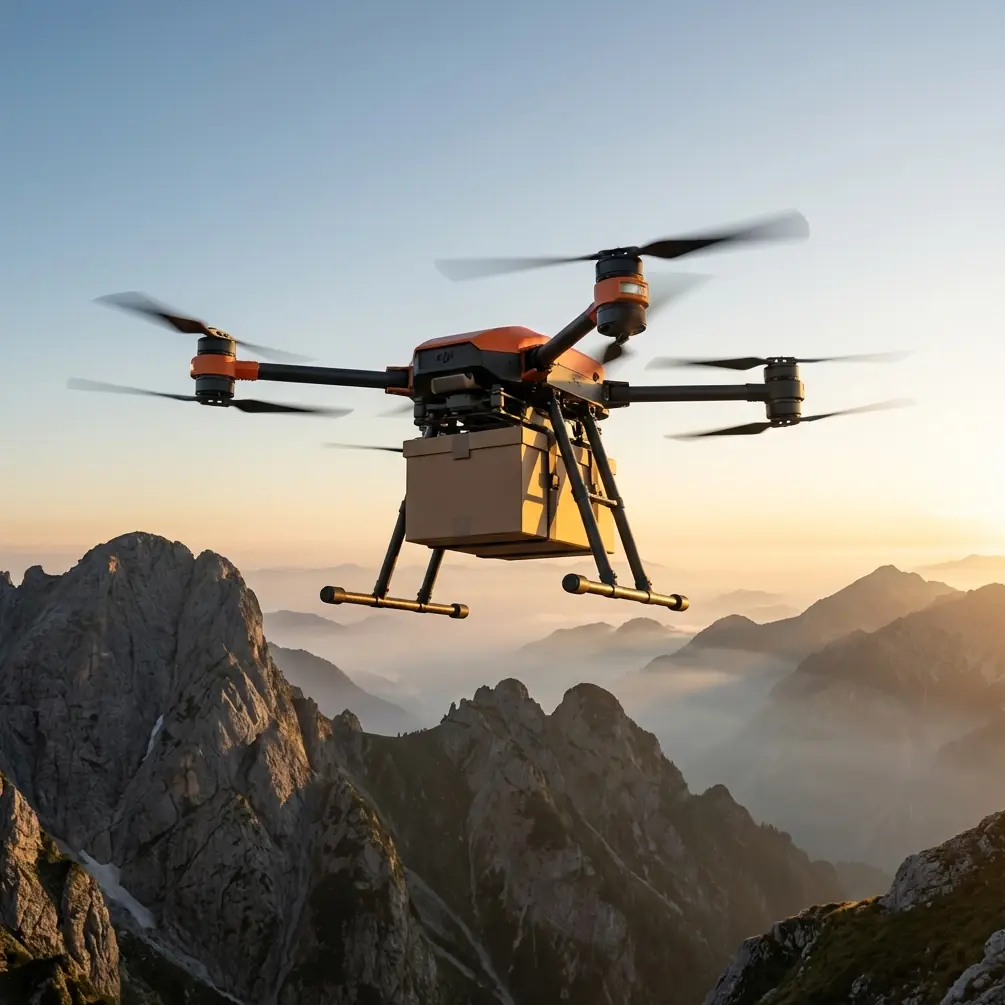
FlyCart 30 for Windy Solar Farms: A Practical Operating Guide Built Around Low-Altitude Avoidance
META: Expert guide to using the FlyCart 30 on windy solar farms, with a focus on low-altitude avoidance, route planning, payload strategy, and safer autonomous operations at scale.
Running a drone over a solar farm sounds straightforward until the wind starts pushing spray off line, panel rows create repeating visual patterns, and wildlife moves through the site without warning. That is where the conversation shifts from simple aircraft performance to something more serious: how well the system handles risk in low-altitude operations when the environment stops being tidy.
For FlyCart 30 operators working around large photovoltaic sites, especially in windy conditions, the most useful recent development is not a marketing claim or a spec-sheet headline. It is the completion of a flight test in Tianjin focused on improving autonomous avoidance for low-altitude aircraft. The test also validated a method that combined a real aircraft with a simulated intruder. That detail matters more than it may seem at first glance. It points toward a practical path for making dense, repetitive, low-level drone work safer at scale.
I work from the logistics side, so my interest in the FlyCart 30 is never abstract. On a solar farm, every sortie has a job attached to it: move liquid, support targeted spraying, reposition equipment, service isolated sections, or help crews maintain output across sprawling arrays. In wind, the aircraft’s payload ratio and delivery method matter. But the next layer up is what keeps the operation usable over time: route discipline, obstacle response, and controlled recovery when conditions shift faster than the plan.
This guide is about using the FlyCart 30 intelligently in that setting.
Why the Tianjin test matters to FlyCart 30 operators
The recent Tianjin test was aimed at one central problem: boosting the autonomous risk-avoidance ability of low-altitude aircraft. According to the published summary, the test verified a “real aircraft plus simulated intruder” method. That is an operationally significant step because low-altitude drone work on large sites rarely fails in textbook ways.
A solar farm is not an empty field. It is a maze of panel corridors, inverter pads, service roads, fencing, maintenance vehicles, changing wind lanes, and occasional wildlife. When an aircraft is carrying a useful load and flying repeated legs close to the ground, you need a system that can deal with conflict conditions before they become emergencies. Testing with a simulated intruder layered onto a real aircraft scenario is valuable because it helps expose how avoidance logic behaves in conditions that are hard to stage consistently with multiple real aircraft.
For FlyCart 30 missions, that translates into a more credible future for BVLOS-style workflows and route optimization on industrial sites. Not because autonomy removes the need for human judgment, but because it offers a technical path for solving one of the biggest constraints in scaled low-altitude operations: keeping aircraft separated from hazards in a dynamic environment.
The Tianjin result also speaks directly to a second issue. The report says the outcome provides a new technical route for addressing safety challenges in large-scale low-altitude operations. That phrase is highly relevant to solar farm work. A single experimental flight tells you little. A validated testing method that supports scaled operations tells you much more. It suggests we are moving from isolated capability demonstrations toward repeatable safety frameworks.
Start with the mission, not the aircraft
The biggest mistake I see on solar farm jobs is treating the FlyCart 30 as the center of the plan. It is not. The site is.
If your objective is spraying around solar infrastructure in wind, define the task in operational pieces:
- What exactly is being applied, transported, or repositioned?
- Which rows are exposed to crosswind funnels?
- Where are the no-fly buffer areas around substations, cable crossings, or active ground crews?
- Which sections attract wildlife at certain hours?
That last point is not theoretical. On one site review, the drone’s sensing system had to navigate around a pheasant that burst out from vegetation between panel rows during a low pass. It was not a dramatic incident, but it was a perfect reminder that low-altitude industrial work shares airspace with very ordinary surprises. The right response is not bravado. It is sensing, margin, and route design.
A FlyCart 30 used on solar farms should be assigned corridors, altitude bands, and fallback zones before the first battery is installed. Windy sites punish improvisation.
How the FlyCart 30 fits this environment
The FlyCart 30 earns attention on solar sites because it addresses a practical transport problem. Large facilities stretch over terrain that is easy to cross on a map and frustrating to cover on foot or by vehicle. The aircraft’s payload-oriented design changes that equation, especially where crews need to move materials, support treatment workflows, or reach sections cut off by layout or ground conditions.
Payload ratio matters here because windy operations make every extra kilogram meaningful. A platform that can carry useful load efficiently is not just about volume. It is about sortie economics, stability margins, and how often you need to cycle back. On a solar farm, shorter turnaround loops can be the difference between completing a treatment window and losing it to gusts by mid-afternoon.
The winch system is also more than a convenience. In areas where you do not want the aircraft descending deep into panel corridors or near delicate hardware, controlled line delivery reduces exposure. That can help when dropping tools, consumables, or support materials to a crew without forcing a tight landing profile in a cluttered area.
Then there is the dual-battery architecture. For logistics leads, that is less about brochure language and more about continuity. Windy sites raise power demand and reduce tolerance for weak planning. Dual-battery setups improve mission resilience, especially when flights must be broken into short, predictable segments rather than stretched toward the edge of reserve.
An emergency parachute belongs in the same conversation. It is not there to justify aggressive flying. It exists to reduce consequences when multiple layers fail. On sites with expensive infrastructure spread over a wide footprint, consequence reduction matters almost as much as prevention.
How to plan routes over panel fields in wind
Solar farms create a visual trap for pilots and autonomy alike. Repeating rows look orderly from above, but they can hide subtle hazards: thermal shimmer, service poles, bird activity, uneven ground, and airflow channels that push the aircraft sideways between arrays.
Here is the route logic I recommend for FlyCart 30 operations in this setting.
1. Build corridors, not direct lines
The shortest line is rarely the best one. Establish approved transit corridors along service roads or wider access lanes. Give the aircraft room to correct for gusts without drifting over hardware you would rather avoid.
This is where the Tianjin testing concept becomes relevant in a very practical way. If the industry is validating methods that combine real aircraft with simulated intruders, operators should think beyond static maps. Route planning should assume that conflicts can appear mid-mission, whether that is another aircraft, a maintenance vehicle crane, or wildlife movement. Corridors give your avoidance logic and your remote team more options.
2. Split the site into wind behavior zones
Not all sections of a solar farm behave the same. Fence lines, embankments, drainage cuts, and panel orientation can create local wind effects. Map these as separate operating zones and assign conservative payload limits to the worst areas.
A heavy payload in a calm section may be fine. The same payload near an exposed ridge line may turn a stable leg into a constant correction exercise.
3. Use staged handoff points
Do not run everything from a single launch spot if the farm is large. Set up handoff or replenishment points that let the FlyCart 30 complete repeatable loops. This improves route optimization and reduces pressure to extend legs just to save setup time.
4. Keep altitude discipline tight
Low-altitude work can become sloppy when crews get comfortable. Set hard bands for transit, delivery, and return. Consistency is one of the easiest ways to support autonomous conflict detection and operator awareness.
Spraying support on solar farms: what changes when it is windy
Strictly speaking, many spraying missions may use platforms specialized for application rather than cargo. But the FlyCart 30 still enters the picture as a support aircraft: moving liquid to remote crews, delivering hoses or treatment materials, carrying replacement components, and helping maintain workflow across a large site.
In wind, support efficiency becomes operational leverage. If the application team is waiting on supplies, the weather window shrinks. If the FlyCart 30 can keep replenishment close to the work front, the site gets more done before gusts exceed tolerance.
A few field rules matter:
- Prioritize upwind staging so transport legs work with, not against, the site’s dominant airflow.
- Use the winch where descent into narrow panel lanes would create unnecessary risk.
- Reduce payload when turbulence is eating into positional stability.
- Reserve the last part of battery capacity for orderly recovery, not optimistic final deliveries.
This is where route optimization stops being a software buzzword. On a solar farm, it is the discipline of matching payload, wind, battery state, and corridor choice so the aircraft never has to improvise in the hardest part of the job.
What BVLOS really means on large energy sites
People often talk about BVLOS as if it were simply a permission issue. On industrial sites, it is a systems issue. You need predictable aircraft behavior, tested avoidance logic, site-specific route architecture, and clear contingency procedures. The Tianjin test is notable because it addresses one of those building blocks: low-altitude autonomous avoidance, validated through a combined real-and-simulated encounter method.
That matters for FlyCart 30 deployments because the platform is most valuable when the site is too large for constant close visual management of every leg. Large solar installations are exactly the kind of environment where scalable low-altitude safety becomes the difference between a pilot project and a durable operation.
If you are building that capability, your documentation should include:
- predefined route families
- intruder response logic
- weather-trigger thresholds
- wildlife encounter procedures
- alternate drop or abort zones
- battery swap timing by zone, not by guesswork
If your team is refining that workflow for the FlyCart 30, a quick message through this operations planning contact can help compare route structures and site handling approaches.
A practical workflow for FlyCart 30 solar farm teams
Here is the simplest version of a repeatable setup.
Before flight
Survey wind by zone, not by the site entrance alone. Check maintenance vehicle locations. Identify wildlife-active sections. Confirm payload weight against the worst expected gust area, not the average area.
During launch
Use conservative ascent and establish the aircraft on a known corridor early. Do not drift into the work area while still sorting out telemetry or tasking.
En route
Watch for patterns that indicate local turbulence near panel edges or terrain breaks. If the aircraft is making repeated corrective movements, cut payload on the next cycle rather than trying to “push through.”
During delivery or support action
If the task can be completed with the winch, keep the aircraft clear of tight spaces. If descent is necessary, do it only in pre-cleared zones with escape routes.
On anomaly
A bird flush, ground crew movement, or unexpected obstacle should trigger immediate simplification: climb if appropriate, return to corridor, and reassess. The pheasant example I mentioned earlier is exactly the kind of event that proves whether your operating discipline is real or just written down.
Recovery
Use reserve margins seriously. Wind often peaks when teams are trying to squeeze in one last run.
The bigger picture
The FlyCart 30 is useful on solar farms because it solves a transport and support problem that ground teams feel every day. But the more interesting story is what happens when aircraft like this are paired with improving low-altitude safety methods. The Tianjin test did not just produce a headline about avoidance. It validated a test structure using a real aircraft and a simulated intruder, and that points toward a more mature safety path for scaled drone operations.
For solar farm operators, that is the real signal. Windy, repetitive, infrastructure-dense environments are exactly where autonomous assistance must prove itself. Not in ideal airspace. In the messy middle, where route optimization, payload decisions, dual-battery endurance, winch deployment, and emergency recovery all intersect.
That is the standard FlyCart 30 teams should be building toward: not just lifting useful loads, but doing it with procedures that can survive scale.
Ready for your own FlyCart 30? Contact our team for expert consultation.