
How the FlyCart 30 Fits Windy Venue Spraying Workflows Bette
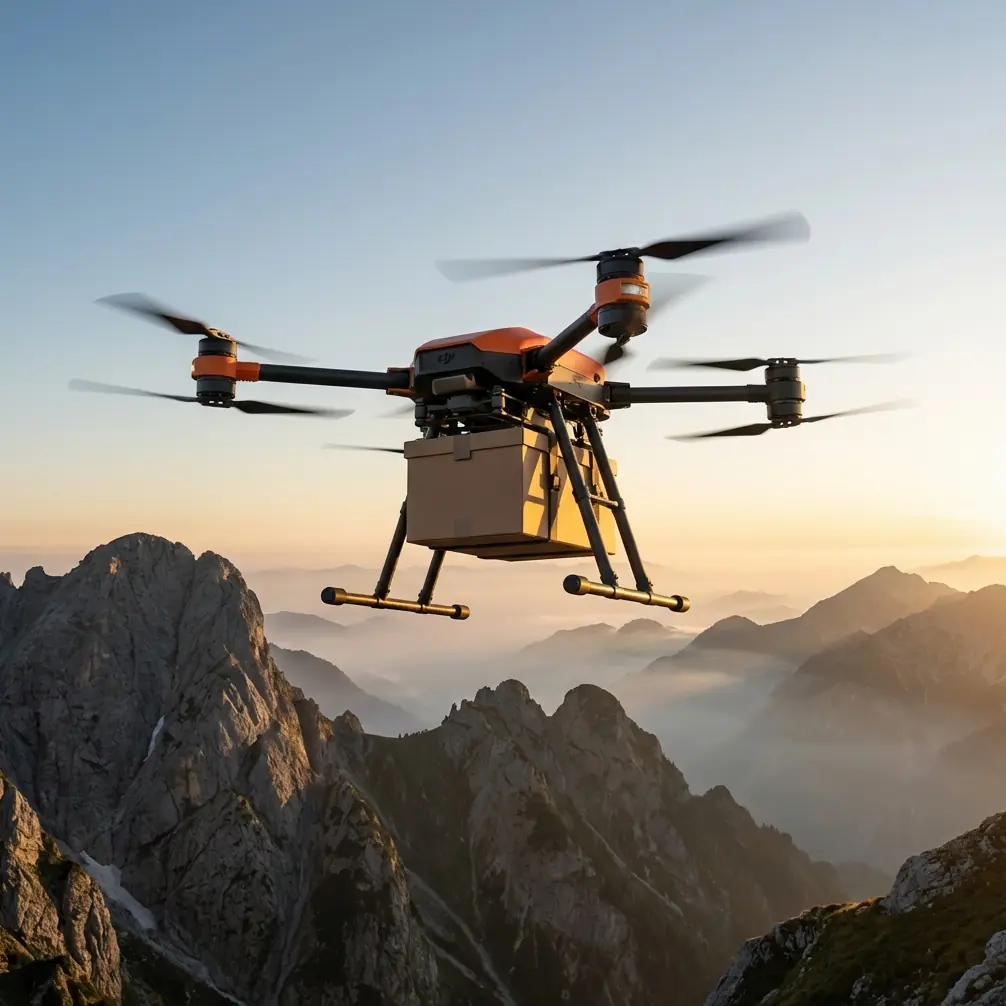
How the FlyCart 30 Fits Windy Venue Spraying Workflows Better Than Most Teams Expect
META: A field-focused look at using the DJI FlyCart 30 for windy venue spraying operations, with practical insight on payload ratio, winch workflows, route planning, dual-battery resilience, and why XPONENTIAL 2026 matters.
Wind changes everything in venue spraying.
On paper, a site can look simple: broad open areas, perimeter landscaping, access roads, decorative green belts, maybe a golf-adjacent hospitality zone or a fairground with service corridors. Then the local conditions show up. Wind tunnels between structures. Gusts rolling off grandstands. Rotor wash interacting with fencing, tents, signage, and trees. Suddenly the real challenge is not whether a drone can lift a payload. It is whether the aircraft, the spraying setup, and the workflow are stable enough to deliver consistent coverage without turning every mission into a compromise.
That is where the FlyCart 30 enters the conversation in a more interesting way than many buyers first assume.
Most people look at the FC30 and see a cargo platform. That is fair. It was built around transport logic. But for operators handling spraying work at venues, especially in windy environments, some of the same design choices that matter in logistics also matter in application work: payload ratio, route efficiency, redundancy, stable suspended operations, and the ability to adapt with accessories that extend capability instead of forcing a one-size-fits-all setup.
I lead logistics programs, and when I look at the FlyCart 30 for this kind of assignment, I do not start with marketing categories. I start with operational friction. Windy venue spraying creates four recurring problems.
First, access is awkward.
Second, refill cycles steal more time than most schedules can tolerate.
Third, gusts punish aircraft that are technically capable but not workflow-efficient.
Fourth, safety margins matter more because these jobs happen near infrastructure, staff teams, and temporary event assets.
The FC30 is not magically exempt from physics. No aircraft is. But it gives experienced operators a more workable platform for solving those four problems if they build the mission correctly.
The venue spraying problem is really a logistics problem
That may sound strange until you break down the day.
A venue spraying mission is rarely just about dispensing material. It is about staging, battery rotation, tank management, route sequencing, site access, exclusion zones, weather windows, and keeping ground personnel coordinated without wasting their time. When wind is present, every inefficiency gets amplified. Longer exposure in the air means more drift risk. More landings mean more dead time. Poor route design means extra crosswind legs and battery waste.
This is why the FC30’s logistics DNA matters.
A platform designed around carrying useful load efficiently can be adapted into a more resilient spraying workflow, particularly where the site itself is difficult to work around. The relevant idea here is payload ratio. In simple terms, the more of the aircraft’s mission profile that is devoted to productive work rather than constant repositioning and support overhead, the more controllable the operation becomes. On windy venue sites, that matters just as much as raw spray capacity.
For a crew trying to cover perimeter vegetation, embankments, access routes, landscaped buffers, or hard-to-reach exterior zones around event infrastructure, that payload efficiency translates into fewer interruptions and more predictable flight planning.
Windy sites expose weak workflow design fast
When operators talk about wind, they often focus only on whether the aircraft can “handle” it. That is too narrow.
The better question is this: can the entire operation stay efficient when wind reduces your margin for error?
With the FC30, one of the practical strengths is that its architecture supports route optimization strategies that are useful well beyond cargo delivery. You can structure missions to minimize inefficient repositioning, reduce hover time in exposed areas, and shorten the interval between productive passes. That does not eliminate wind, but it keeps the aircraft from spending unnecessary time fighting it.
On venues, this becomes especially important around segmented treatment zones. Think landscaped medians separated by pedestrian paths, or green strips behind service buildings where access by ground equipment is clumsy. In those cases, route optimization is not just about battery economy. It is about choosing flight paths that avoid the worst crosswind exposure and sequence the site in a way that keeps spray quality more consistent.
That is the sort of systems thinking likely to show up at AUVSI XPONENTIAL 2026 in Detroit, scheduled for May 11-14. The event is bringing together the global autonomous systems industry at a moment when uncrewed systems, AI, advanced manufacturing, and resilient supply chains are all drawing serious attention. For FC30 operators, that matters because windy spraying work is no longer just a flight-control issue. It is part of a broader shift toward smarter, more adaptable field operations where hardware, accessories, planning software, and support ecosystems need to work together.
The supply-chain angle is especially relevant. If your venue spraying setup depends on fragile sourcing or one-off modifications that are difficult to maintain, the mission suffers. Resilient supply chains are not abstract conference language. They are what determine whether an operator can keep aircraft, batteries, pumps, plumbing components, and specialized accessories available when the season is busy.
The dual-battery advantage is operational, not just technical
One of the more underrated points in FC30-style mission planning is how much reliability changes crew behavior.
A dual-battery system does more than provide power redundancy. It supports a more confident operating rhythm. In windy conditions, crews often become conservative in unproductive ways. They cut routes short. They overbuild buffer time. They land early because they do not trust the energy profile once gusts increase. Some caution is wise. But too much caution turns a day of work into a chain of partial sorties.
With dual-battery architecture, the aircraft is better positioned for stable mission continuity. For venue spraying, that means crews can design routes around realistic productivity targets instead of planning every flight as if they are one gust away from aborting. That has direct consequences for site throughput.
It also supports tighter staging at larger properties. If your refill point is not immediately adjacent to every treatment area, battery confidence influences how aggressively you can sequence zones. In practice, that often means fewer fragmented routes and less deadheading between work areas.
Again, this is not about pushing limits. It is about reducing wasted motion.
Why the winch system is more useful here than it seems
At first glance, a winch system sounds more relevant to delivery than spraying. But on venue sites, especially temporary event sites or properties with limited equipment access, it can become surprisingly useful in support tasks.
The operational value is not necessarily spraying through the winch itself. It is using the winch-equipped platform to move supporting materials into awkward or elevated positions without bringing in more ground equipment than the venue can tolerate. Hose assemblies, lightweight refill components, inspection tools, temporary markers, or accessory kits can be positioned faster in constrained areas. For crews working under tight setup windows, that helps.
In windy conditions, reducing unnecessary ground congestion is a safety improvement too. Fewer vehicle movements and fewer rushed manual carry operations around structures make for a cleaner work zone.
This is where a third-party accessory can genuinely enhance the FC30’s usefulness. I have seen teams get better results when they pair the aircraft with a custom third-party spray integration kit that improves tank mounting stability, hose routing, and nozzle control compared with improvised field modifications. Not all accessory packages are equal, and operators should validate compatibility carefully, but this kind of add-on is exactly what moves the FC30 from “interesting idea” to “workable platform” in a venue spraying context.
That accessory layer is part of the reason the FC30 remains worth watching. The base aircraft matters, but the surrounding ecosystem often determines whether a platform can handle niche commercial jobs well.
Emergency parachute planning is about venue risk, not optics
Spraying near venues means managing public-facing risk, even when the work happens during closed hours.
Decorative structures, seating areas, parked service equipment, lighting rigs, fencing, and maintenance personnel all raise the consequence of an unexpected incident. That is why the emergency parachute conversation deserves more attention in FC30-based spraying setups.
An emergency parachute is not a substitute for sound operation. It is part of layered risk management. In a windy venue environment, where obstacles and assets can complicate emergency response options, that extra safety layer can make the mission design more defensible. It can also influence where and when the crew chooses to operate certain segments of the property.
For professional operators, the significance is simple: when the aircraft’s failure-mitigation stack improves, the mission envelope becomes easier to manage responsibly. That matters for internal approvals, client confidence, and the crew’s own decision-making.
BVLOS is not the headline here, but it shapes the future of large-site treatment
For most venue spraying today, crews are still working inside practical visual constraints. But BVLOS thinking is already changing how serious operators design their processes.
Why? Because large properties are increasingly managed like distributed infrastructure rather than isolated treatment zones. A venue might include parking expanses, landscaped perimeter roads, retention areas, and adjoining service corridors that stretch beyond tidy line-of-sight assumptions. Even when current operations remain visual, route planning, communication procedures, and site data capture are being built with wider-area autonomy in mind.
That is another reason XPONENTIAL 2026 matters. A conference centered on global autonomous systems, with attention on AI and resilient supply chains, signals where commercial drone operations are heading. For FC30 users, the question is not only whether the aircraft can do a job today. It is whether the platform and support ecosystem align with the next phase of regulated, data-driven operations.
Windy venue spraying is a good example of why that future matters. The more complex the site, the more value there is in aircraft that fit into structured workflows rather than isolated flights.
What good FC30 deployment looks like on a windy venue job
A strong operation usually has a few common traits.
The crew breaks the property into wind-aware segments rather than treating the whole venue as one continuous mission. Refill and battery staging are placed to reduce transit distance, not just for convenience. Routes are optimized to cut down on long crosswind legs. Spraying windows are matched to the venue’s local turbulence patterns, not only the day’s average forecast. The aircraft carries a properly integrated accessory package instead of a loosely adapted setup. And safety planning includes emergency response logic that fits a public-facing site.
This is where the FC30 can make sense. Its value is not that it was born as a spraying aircraft. Its value is that it offers a robust base for teams that understand how transport-oriented design can support demanding field operations.
If you are evaluating whether the platform fits your venue work, the right conversation is not “Can it spray?” The better conversation is “Can this aircraft support a repeatable workflow under wind, access, and safety pressure?”
That is a more serious question. It leads to better answers.
The bigger takeaway
The FlyCart 30 sits at an interesting intersection in the commercial UAV market. It reflects a period when cargo systems, autonomy, accessories, and site logistics are beginning to overlap more than many categories suggest. That is exactly the kind of shift being highlighted as the autonomous systems industry gathers in Detroit from May 11-14 for XPONENTIAL 2026.
For operators responsible for spraying venues in windy conditions, that overlap is not theoretical. It shows up every time a mission plan has to balance payload ratio, route efficiency, battery resilience, site access, and safety controls in one coherent workflow.
Done poorly, a venue spraying job becomes a chain of interruptions.
Done well, with the right FC30 configuration and the right accessory support, it becomes a disciplined logistics operation that happens to include spraying.
If you are working through a windy-site use case and want to compare setup options, mission logic, or accessory compatibility, you can message our operations desk here and have a practical conversation about the workflow rather than just the aircraft.
Ready for your own FlyCart 30? Contact our team for expert consultation.