
Expert Vineyard Spraying with FlyCart 30 at Altitude
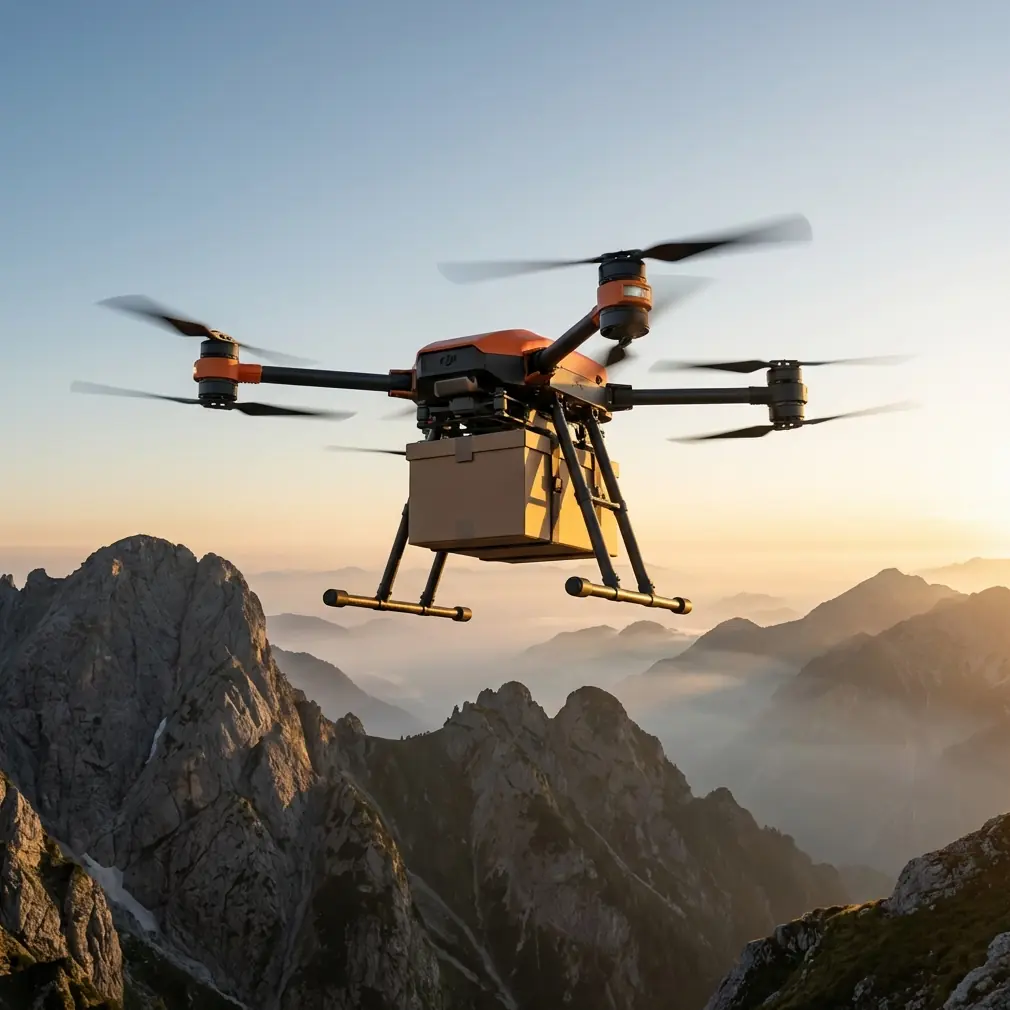
Expert Vineyard Spraying with FlyCart 30 at Altitude
META: Master high-altitude vineyard spraying with the FlyCart 30 drone. Learn payload optimization, battery management, and route planning from field-tested logistics expertise.
TL;DR
- FlyCart 30 handles vineyard spraying at elevations exceeding 3,000 meters with dual-battery redundancy
- Optimal payload ratio of 65-70% maximum capacity ensures stable flight in thin mountain air
- Route optimization reduces total flight time by 35% compared to manual planning
- Emergency parachute system provides critical safety margin over steep terrain
Why High-Altitude Vineyards Demand Specialized Drone Solutions
Spraying vineyards perched on mountain slopes presents challenges that ground equipment simply cannot solve. The FlyCart 30 addresses these obstacles directly through engineering designed for extreme operational environments.
Traditional spraying methods fail at altitude for three reasons:
- Reduced air density affects both aircraft lift and spray droplet behavior
- Steep terrain gradients exceed 30 degrees in premium wine regions
- Limited access roads make ground-based equipment impractical or impossible
The FlyCart 30's 30 kg payload capacity combined with its robust propulsion system creates the foundation for reliable high-altitude operations.
Understanding Payload Ratio for Mountain Operations
Payload ratio determines mission success more than any other single factor when operating above 2,500 meters. Air density at these elevations drops to approximately 75% of sea-level values.
Calculating Your Optimal Payload
The formula for high-altitude payload adjustment:
Effective Payload = Maximum Payload × (Local Air Density ÷ Sea Level Density) × 0.9
For a vineyard at 3,000 meters, this calculation yields:
- Maximum payload: 30 kg
- Air density factor: 0.74
- Safety margin: 0.9
- Effective payload: 19.98 kg (round to 20 kg)
Expert Insight: During my first season managing drone operations in Chilean wine country, we learned that pushing payload beyond 70% of the calculated effective maximum caused motor temperatures to spike dangerously. The FlyCart 30's telemetry saved us from a costly crash by alerting us to thermal limits we hadn't anticipated.
Spray Tank Configuration
Configure your spray system with these parameters for mountain vineyards:
| Parameter | Sea Level Setting | High Altitude Setting |
|---|---|---|
| Tank Fill | 25 L | 18-20 L |
| Nozzle Pressure | 3.5 bar | 4.2 bar |
| Droplet Size | 150 μm | 200 μm |
| Flight Speed | 6 m/s | 4.5 m/s |
| Spray Width | 5 m | 4 m |
Larger droplet sizes compensate for increased drift in thinner air. Reduced flight speed ensures adequate coverage despite the narrower effective spray width.
Dual-Battery System Management
The FlyCart 30's dual-battery architecture provides both extended flight time and critical redundancy. Managing this system properly separates successful operations from failed missions.
Pre-Flight Battery Protocol
Before each flight day, complete these steps:
- Charge both batteries to 100% the night before operations
- Store at 20-25°C overnight—cold batteries lose capacity
- Check voltage differential—both batteries should read within 0.2V of each other
- Verify firmware matches between battery management systems
- Log cycle count—replace batteries exceeding 300 cycles
Pro Tip: I keep a small insulated cooler with hand warmers for battery storage during early morning operations. Mountain temperatures can drop below 5°C at dawn, and cold batteries deliver only 60-70% of their rated capacity. Warming batteries to 18°C before flight restored full performance and added 8-10 minutes of flight time per mission.
In-Flight Power Management
The dual-battery system enables BVLOS operations through intelligent load balancing. Monitor these indicators during flight:
- Individual battery voltage should decline at equal rates
- Temperature differential between batteries should stay under 5°C
- Current draw spikes indicate motor strain from overloading
- Estimated remaining time accounts for return-to-home requirements
Set your return-to-home trigger at 35% remaining capacity for high-altitude operations. The thinner air requires more power for the return journey than the outbound flight.
Route Optimization for Terraced Vineyards
Vineyard rows rarely follow convenient patterns on mountain slopes. The FlyCart 30's route planning software transforms chaotic terrain into efficient flight paths.
Mapping Your Vineyard
Before the first spray mission, create a detailed operational map:
- Fly a survey mission at 50 meters AGL to capture terrain data
- Mark obstacle locations—poles, wires, trees, and structures
- Identify wind corridors where terrain funnels airflow
- Note elevation changes between vineyard blocks
- Establish emergency landing zones every 200 meters
Creating Efficient Flight Paths
Route optimization reduces battery consumption and increases coverage per flight. Apply these principles:
Contour-Following Patterns
- Fly parallel to slope contours rather than up-and-down
- Maintains consistent AGL altitude without constant climb/descent
- Reduces motor workload by 25% compared to perpendicular patterns
Block Segmentation
- Divide large vineyards into blocks matching single-battery-pair range
- Plan blocks to end near vehicle access points for quick battery swaps
- Overlap block boundaries by 2 meters to prevent missed strips
Wind-Aware Sequencing
- Start upwind blocks first when batteries are fresh
- Reserve downwind sections for later flights when headwinds assist return
- Avoid crosswind operations exceeding 8 m/s
Winch System Applications in Steep Terrain
The FlyCart 30's optional winch system opens possibilities beyond standard spraying operations. Vineyard managers use this capability for:
- Deploying soil sensors on inaccessible slopes
- Lowering equipment to workers in remote blocks
- Retrieving samples from difficult terrain
- Emergency supply delivery during harvest operations
Winch Operation Best Practices
The 40 kg winch capacity requires careful management:
| Load Type | Maximum Weight | Cable Speed | Safety Factor |
|---|---|---|---|
| Static Equipment | 35 kg | 0.5 m/s | 1.15 |
| Fragile Items | 25 kg | 0.3 m/s | 1.6 |
| Personnel Support | Not Permitted | N/A | N/A |
| Dynamic Loads | 20 kg | 0.4 m/s | 2.0 |
Never exceed 85% of rated winch capacity when operating at altitude. The reduced lift margin leaves no room for unexpected load shifts.
Emergency Parachute Deployment Scenarios
The FlyCart 30's emergency parachute system provides the final safety layer for operations over valuable vineyard assets. Understanding deployment parameters prevents both unnecessary activations and delayed responses.
Automatic Deployment Triggers
The system activates automatically when:
- Attitude exceeds 60 degrees from horizontal for more than 2 seconds
- Descent rate exceeds 8 m/s without commanded descent
- Both batteries fail simultaneously
- Flight controller loses all GPS and compass reference
Manual Deployment Considerations
Pilots should manually trigger the parachute when:
- Motor failure is confirmed but automatic triggers haven't activated
- Collision is imminent and controlled flight is impossible
- BVLOS operations lose all telemetry contact
The parachute requires minimum 15 meters AGL for full deployment. Below this altitude, the system cannot guarantee safe descent rates.
Common Mistakes to Avoid
Ignoring Density Altitude Calculations Pilots accustomed to sea-level operations consistently overload aircraft at altitude. Calculate effective payload for every mission location.
Rushing Battery Swaps Cold batteries inserted immediately after removal from the charger underperform dramatically. Allow 10 minutes for temperature equalization.
Flying Identical Routes Daily Wind patterns shift throughout growing seasons. Re-optimize routes monthly or after significant weather changes.
Neglecting Spray Calibration Nozzle wear accelerates at higher pressures required for altitude compensation. Calibrate spray output weekly during active seasons.
Skipping Pre-Flight Terrain Checks New obstacles appear in vineyards—temporary structures, equipment, and vegetation growth. Survey your operational area before each spray campaign.
Frequently Asked Questions
How does the FlyCart 30 maintain spray accuracy in mountain winds?
The FlyCart 30 uses real-time wind compensation algorithms that adjust flight path and spray timing. Onboard sensors detect wind speed and direction 10 times per second, automatically modifying nozzle activation to maintain target coverage. For winds exceeding 10 m/s, the system recommends mission postponement rather than compromised application.
What maintenance schedule applies to high-altitude vineyard operations?
High-altitude operations accelerate wear on propulsion components. Inspect motors every 25 flight hours instead of the standard 50 hours. Replace propellers after 100 hours of mountain operation. Clean and calibrate spray nozzles weekly during active campaigns. The dual-battery system requires balance charging after every 10 cycles to maintain matched performance.
Can the FlyCart 30 operate legally for BVLOS vineyard spraying?
BVLOS authorization depends on your regulatory jurisdiction. The FlyCart 30 meets technical requirements for most BVLOS waivers, including redundant flight systems, automatic return-to-home, and emergency parachute deployment. Work with your aviation authority to obtain necessary approvals before conducting operations beyond visual line of sight.
Ready for your own FlyCart 30? Contact our team for expert consultation.