
FlyCart 30 Vineyard Spraying in Windy Conditions
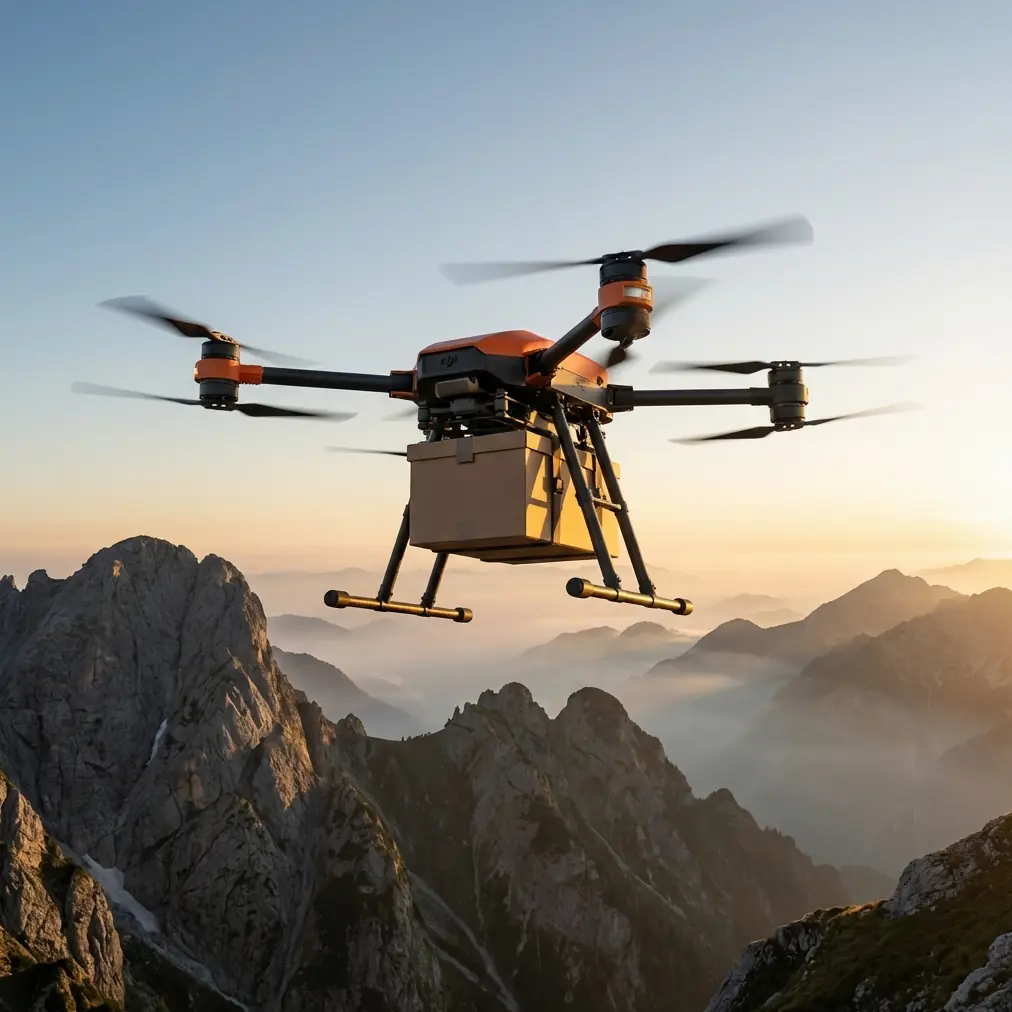
FlyCart 30 Vineyard Spraying in Windy Conditions: The Altitude, Airspace, and Route Decisions That Actually Matter
META: Practical FlyCart 30 guidance for vineyard spraying in wind, with flight altitude insight, route planning, safety systems, and why Zhejiang’s new UAV airspace rules matter for real operations.
Wind exposes every weak decision in vineyard spraying. It exaggerates drift, punishes sloppy route planning, and turns “close enough” flight height into wasted chemical, uneven canopy coverage, or a mission that should never have launched.
For operators looking at the FlyCart 30 for vineyard work, that matters because this aircraft is often discussed through a logistics lens. Yet many of the same traits that make it useful for transport missions also shape how it behaves when precision and consistency are the real priority. In vineyards, especially on sloped ground and broken terrain, performance is not just about carrying material. It is about carrying it steadily, at the right height, on a route that fits the site and the rules.
That last part just became more relevant in Zhejiang.
As of May 14 at 00:00, Zhejiang officially put a new version of its applicable UAV flight airspace into use. This adjustment was implemented under the Interim Regulations on the Administration of Unmanned Aircraft Flights and related work requirements from the central air traffic management authorities. On paper, that sounds administrative. In practice, it changes how serious operators should think about vineyard spraying with a platform like the FlyCart 30.
The aircraft can only perform as well as the airspace, route structure, and risk controls around it.
Why Zhejiang’s airspace adjustment matters to vineyard spraying crews
A vineyard operator may be tempted to see airspace updates as something for urban delivery teams or large infrastructure operators. That is a mistake.
When a province redefines and republishes the scope of suitable UAV flight airspace, it affects where missions can be planned with confidence, how dispatch teams structure recurring routes, and how much pre-mission uncertainty gets baked into a job. If you spray vineyards on a fixed agricultural schedule, uncertainty is expensive. Crops do not wait for paperwork friction to sort itself out.
For the FlyCart 30, this matters in two ways.
First, route repeatability improves when the airspace framework is clearer. Vineyard spraying is repetitive by design. Same blocks, similar paths, recurring treatment windows, changing only for weather, growth stage, and product plan. If your legal-operational map is unstable or poorly defined, route optimization remains theoretical. If the applicable airspace is clearly redrawn and formally published, you can build more disciplined flight planning around it.
Second, BVLOS planning becomes less casual and more structured. Not every vineyard mission needs beyond visual line of sight capability, but larger estates and segmented plots often push operators in that direction. Airspace clarity does not automatically authorize every mission style, but it creates a firmer planning base. That is a big distinction. Experienced teams know the operational win is not “flying farther.” It is reducing ambiguity before launch.
The real question in windy vineyards: how high should the FlyCart 30 fly?
If I had to give one operational answer that improves most windy vineyard spray missions, it would be this:
Fly lower than your instinct suggests, but not so low that rotor wash destabilizes canopy penetration or terrain margin disappears.
For a platform in the FlyCart 30 class, the best working altitude in windy vineyard conditions is usually found by balancing four competing forces:
- crosswind drift
- downdraft interaction from the rotors
- canopy shape and row spacing
- terrain and obstacle clearance
That is why there is no single magic number. Still, there is a practical rule.
My preferred altitude starting point
For vineyard spraying in wind, start by evaluating a low-above-canopy operating band, typically around 2 to 3 meters above the vine canopy, then adjust based on slope, gust spread, and row geometry.
Why that range?
At that height, you usually gain three advantages:
Reduced lateral drift window
The longer droplets travel, the more time wind has to move them off target. Keeping the aircraft closer to the canopy shortens that exposure.More consistent deposit pattern across rows
In vineyards, missing the shoulder and underside of foliage is common when altitude creeps up. Wind makes that worse. Lower flight reduces the chance that the spray cloud disperses before it interacts with the target zone.Better route discipline in irregular blocks
Vineyards are rarely as neat as field-crop maps suggest. Headlands are uneven. Trellis heights vary. Some rows bend, some climb. A lower, carefully managed profile forces the operator to respect the actual geometry of the site instead of pretending it is flat.
That said, the lower edge of that range only works when your terrain model, obstacle survey, and pilot proficiency are solid. If wind shear is sharp near a slope break, or the vines sit on stepped terrain, a little extra height may actually produce a cleaner, safer pass.
The point is not “always fly at 2 meters.” The point is that in windy vineyards, excess altitude is usually a bigger problem than conservative low flight, provided obstacle margins remain intact.
How FlyCart 30 characteristics shape spray behavior
The FlyCart 30 is often evaluated through transport metrics like payload ratio, winch system utility, and mission efficiency. Those are not irrelevant to spraying. They reveal how the aircraft handles weight, transitions, and energy management under load.
Payload ratio affects more than carrying capacity
In vineyards, payload ratio is not just a bragging-rights spec. It influences how stable the aircraft remains as tank weight changes across a mission segment. A platform that handles changing mass well can maintain more consistent altitude and groundspeed behavior as it lightens. That matters because in wind, a drifting speed profile leads directly to uneven application.
The practical takeaway: if you are using the FlyCart 30 in a spray-adjacent adaptation or workflow where payload mass is variable, do not tune your mission only for a full load. Tune it for the middle and final thirds too. That is when many aircraft begin to “feel different” and operators overcorrect.
Dual-battery thinking improves field rhythm
The dual-battery concept matters because vineyards reward tight turnarounds. Spray windows can open and close quickly when wind fluctuates. A system that supports efficient power management reduces idle time at the field edge and makes it easier to launch during the short periods when conditions are actually favorable.
This is not just about endurance. It is about operational rhythm. In a windy day scenario, the strongest teams do not force missions through bad air. They pause, watch, relaunch, and use stable intervals. Battery strategy supports that discipline.
The winch system still matters, even if you are not hauling cargo
At first glance, a winch system seems unrelated to spraying. In vineyard operations, though, it signals something important about platform versatility in uneven ground logistics.
Steep vineyard terrain creates support headaches: batteries, refill supplies, water access, and crew movement are often harder than the flying itself. A platform designed with winch-enabled task logic reflects a broader operational philosophy: work can be separated from landing zones. That matters on terraced or constrained vineyard sites where staging areas are limited. Even when the aircraft is not actively used in a hoist configuration for spraying, the same mission mindset helps crews place launch and service points more intelligently.
Route optimization in vineyards is not about shortest distance
Many operators misunderstand route optimization. They think it means minimizing total flight length. In vineyards, the better goal is minimizing instability.
A route is optimized when it reduces the number of moments where wind, slope, and aircraft inertia combine to degrade application quality.
For the FlyCart 30, that usually means:
- aligning primary spray legs with the row orientation whenever possible
- using entry and exit points that avoid abrupt crosswind corrections
- segmenting blocks by terrain behavior, not just map boundaries
- avoiding long ferry legs at spray height
- planning turns where gust exposure is lowest, not just where geometry is easiest
In other words, the “best” route often looks less elegant on a screen than a clean automated grid. But it performs better in the air.
On hillside vineyards, I prefer breaking the site into micro-zones based on wind exposure. The upper shoulder of the slope may need a different pass timing than the lower rows near shelter. That is route optimization in a form that matters agronomically.
Safety systems are not paperwork features
When wind pushes the aircraft near its operating margins, backup systems stop being theoretical.
Emergency parachute
An emergency parachute matters most where vineyards sit near roads, service structures, worker paths, or fragmented terrain. It is not a substitute for conservative flying, but it changes the risk profile of edge-case failures. In commercial agriculture, the strongest safety feature is the one you hope never to validate. Still, having a mitigation layer matters when operations occur in mixed-use rural environments.
Airspace compliance is a safety system too
Zhejiang’s revised suitable UAV airspace framework should be treated as part of the safety stack, not just the legal stack.
Because it was formally enabled on May 14, and because it reflects implementation under national unmanned aircraft flight management rules, operators now have less excuse for informal planning assumptions. The significance is operational: better defined airspace boundaries should lead to cleaner go/no-go decisions before a team even loads the aircraft.
That is especially relevant for repeating vineyard work across multiple plots. If your estate spans areas with different access conditions or nearby restrictions, revised airspace publication is not background noise. It is part of mission design.
A practical windy-day setup for FlyCart 30 vineyard work
If I were briefing a crew for a windy vineyard day, this is the sequence I would emphasize.
1. Check the airspace first, not last
In Zhejiang, the newly activated suitable airspace map is now the baseline. Do not build a route and then ask whether it fits. Start with the revised airspace boundaries and construct the mission from there.
2. Walk the slope transitions
Wind rarely behaves uniformly across a vineyard. Ridge edges, access roads, and breaks in vegetation create turbulence pockets. Mark those zones before launch.
3. Start at 2 to 3 meters above canopy
Use that as a test band, not a fixed doctrine. Watch droplet behavior, canopy interaction, and lateral movement on the first passes.
4. Reduce speed before raising altitude
When coverage looks inconsistent, many crews climb first. In wind, that often makes the problem worse. Slow down and preserve a lower profile before deciding the aircraft needs more height.
5. Build turns outside the problem zones
Do not force tight directional changes where gusts hit the rows broadside. Set turns where the aircraft can reset attitude cleanly.
6. Use battery planning to exploit better weather windows
A dual-battery workflow helps the team pause intelligently rather than push through unstable conditions.
7. Treat every repeated route as a data asset
Wind notes, best altitude band, problematic corners, and safe staging points should be recorded block by block. Vineyard spraying gets better when local knowledge becomes structured knowledge.
If your team is trying to map that process to a real site plan, this direct WhatsApp line for operational questions is a simple place to compare mission assumptions before deployment.
The bigger lesson from Zhejiang’s update
The most useful thing about Zhejiang’s airspace adjustment is not that it gives operators one more notice to read. It is that it reinforces a maturing operating environment.
Commercial UAV work is moving away from improvised decision-making and toward integrated planning where aircraft capability, provincial airspace structure, and field-level execution all have to line up. The FlyCart 30 sits right in the middle of that shift. It is powerful enough that poor planning becomes obvious, and capable enough that disciplined planning pays off quickly.
For vineyard operators spraying in wind, the takeaway is simple.
Do not obsess over headline capability while ignoring flight height, route logic, and legal-operational context. In real vineyards, those details decide whether the mission produces clean canopy coverage or a long list of excuses.
The best altitude is usually lower than many crews want. The best route is usually less tidy than software first suggests. And the best missions begin with airspace clarity, especially now that Zhejiang has formally activated a revised suitable UAV airspace framework.
That is where professional operation starts.
Ready for your own FlyCart 30? Contact our team for expert consultation.