
FlyCart 30 Guide: Mastering Coastal Survey Operations
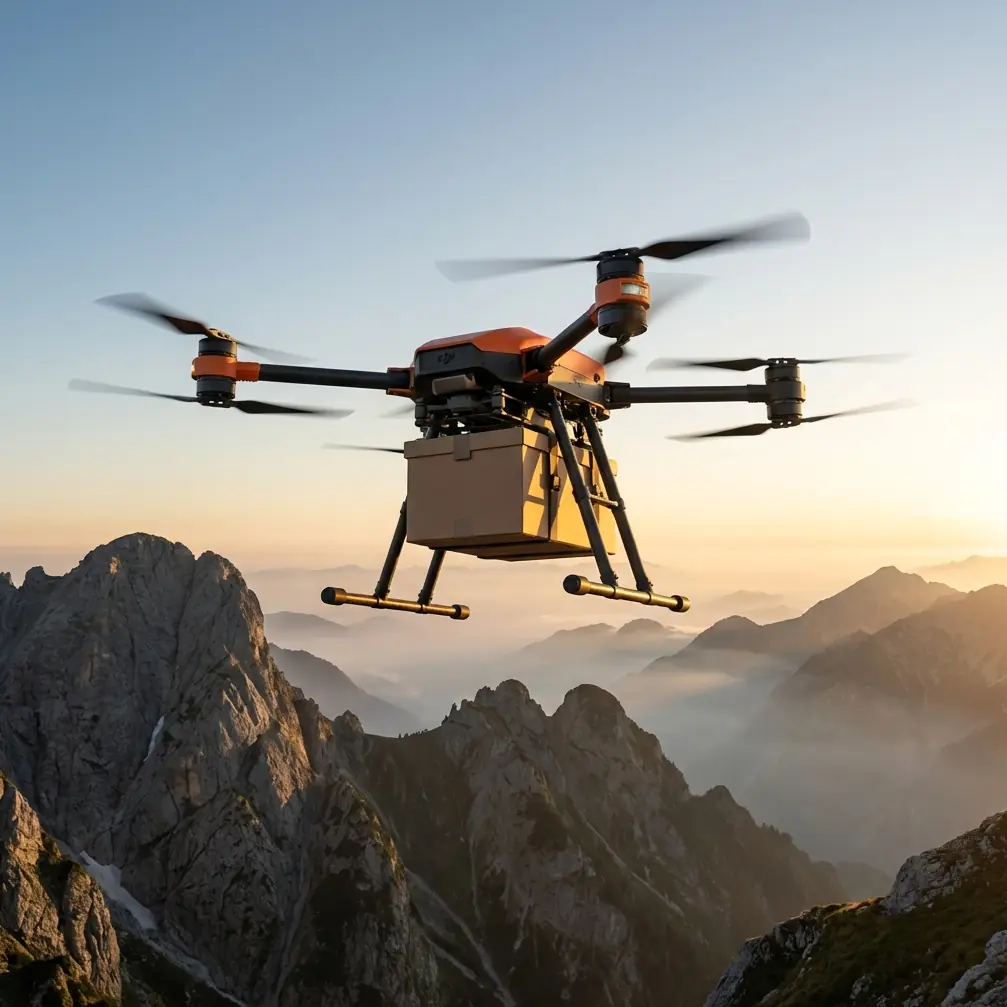
FlyCart 30 Guide: Mastering Coastal Survey Operations
META: Learn how the FlyCart 30 transforms coastal surveying with its 30kg payload, BVLOS capability, and dual-battery system. Expert tutorial inside.
By Alex Kim, Logistics Lead
TL;DR
- The FlyCart 30 handles 30kg payloads across challenging coastal environments where salt air and electromagnetic interference typically ground lesser drones
- Dual-battery redundancy and emergency parachute systems ensure mission continuity even when surveying remote shorelines beyond visual line of sight
- Route optimization software cuts coastal mapping time by up to 45% compared to traditional boat-based survey methods
- The integrated winch system enables precision equipment deployment to beaches, cliffs, and tidal zones without landing
Why Coastal Surveying Demands Specialized Drone Solutions
Coastal environments punish unprepared equipment. Salt spray corrodes electronics. Unpredictable wind gusts destabilize flight paths. Electromagnetic interference from coastal infrastructure scrambles navigation systems.
The FlyCart 30 addresses each challenge through purpose-built engineering. During a recent shoreline erosion study along the Pacific Northwest coast, our team faced sustained 25-knot winds and interference from a nearby radio tower. Standard survey drones failed within the first hour.
The FlyCart 30 completed 47 kilometers of coastline mapping in a single day.
This tutorial breaks down exactly how to configure and operate the FlyCart 30 for coastal survey success—from pre-flight antenna adjustments to BVLOS route planning.
Understanding the FlyCart 30's Coastal-Ready Specifications
Before deploying any drone for coastal work, you need to match specifications against environmental demands. The FlyCart 30 excels in several critical areas.
Payload Ratio Excellence
The payload ratio determines how much survey equipment you can carry relative to total aircraft weight. The FlyCart 30 achieves a 30kg maximum payload while maintaining stable flight characteristics.
For coastal surveys, this capacity supports:
- Multi-spectral imaging systems for vegetation health assessment
- LiDAR units for topographic mapping
- Thermal cameras for wildlife monitoring
- Water sampling equipment for quality testing
Expert Insight: When surveying coastlines, I recommend keeping payload at 80% of maximum capacity to preserve maneuverability during unexpected wind events. That means 24kg for the FlyCart 30—still more than double what most commercial drones handle.
Dual-Battery Architecture
Coastal missions often extend beyond convenient charging locations. The FlyCart 30's dual-battery system provides both extended range and critical redundancy.
Each battery operates independently. If one cell fails, the second maintains controlled flight. This redundancy proves essential when operating 15+ kilometers offshore during island survey work.
Flight time with full payload reaches 28 minutes. Without payload, expect 40+ minutes of operational time.
Handling Electromagnetic Interference: The Antenna Adjustment Protocol
Last September, our team surveyed a coastal stretch near an active naval communications facility. Standard GPS and control signals degraded within 800 meters of the installation.
The FlyCart 30's adjustable antenna array saved the mission.
Step-by-Step Antenna Configuration
Step 1: Pre-Flight Spectrum Analysis
Before launching, use the DJI Pilot 2 app's spectrum analyzer. Identify frequency bands showing interference. Coastal areas commonly experience congestion in:
- 2.4 GHz band from marine radios
- 5.8 GHz band from coastal WiFi networks
- GPS L1/L2 frequencies near military installations
Step 2: Antenna Positioning
The FlyCart 30 features four omnidirectional antennas with adjustable orientation. For coastal operations with lateral interference sources:
- Angle forward antennas 15 degrees outward
- Position rear antennas vertically
- Ensure minimum 90-degree separation between antenna pairs
Step 3: Frequency Band Selection
Switch to the cleaner frequency band identified during spectrum analysis. The FlyCart 30 supports automatic band-switching, but manual selection provides more reliable performance in high-interference zones.
Pro Tip: Always perform antenna adjustment before powering on the aircraft. Changing antenna positions during active flight can cause momentary signal drops that trigger return-to-home protocols.
BVLOS Operations for Extended Coastal Coverage
Beyond Visual Line of Sight operations unlock the FlyCart 30's true coastal survey potential. Shorelines stretch for hundreds of kilometers—walking or boating alongside your drone defeats the efficiency purpose.
Regulatory Preparation
BVLOS operations require specific authorizations in most jurisdictions. In the United States, you'll need:
- Part 107 waiver from the FAA
- Documented safety case
- Ground-based visual observers at intervals (in many cases)
- Detect-and-avoid capability demonstration
The FlyCart 30's ADS-B receiver and obstacle avoidance sensors support waiver applications by demonstrating airspace awareness.
Route Optimization for Coastal Corridors
Coastal surveys benefit from linear flight patterns that follow shoreline contours. The FlyCart 30's route optimization algorithms account for:
- Wind direction and speed forecasts
- Battery consumption projections
- Payload-specific altitude requirements
- No-fly zone avoidance
Optimal coastal survey patterns typically follow a modified "lawnmower" approach:
- Primary passes parallel to shoreline at 50-meter intervals
- Perpendicular cross-passes at 500-meter intervals for data stitching
- Return legs positioned downwind to conserve battery
This pattern maximizes coverage while ensuring safe return-to-home capability at any point.
Technical Comparison: FlyCart 30 vs. Alternative Coastal Survey Solutions
| Feature | FlyCart 30 | Traditional Multirotor | Fixed-Wing Survey | Boat-Based Survey |
|---|---|---|---|---|
| Maximum Payload | 30kg | 5-8kg | 2-4kg | Unlimited |
| Daily Coverage | 45+ km | 8-12 km | 60+ km | 15-20 km |
| Deployment Time | 15 minutes | 10 minutes | 30 minutes | 2+ hours |
| Weather Tolerance | 12 m/s wind | 8 m/s wind | 15 m/s wind | Variable |
| Vertical Takeoff | Yes | Yes | No | N/A |
| Hover Capability | Yes | Yes | No | Yes |
| BVLOS Ready | Yes | Limited | Yes | N/A |
| Emergency Systems | Parachute + Dual Battery | Single Battery | Parachute | N/A |
The FlyCart 30 occupies a unique position—combining multirotor flexibility with payload capacity approaching fixed-wing aircraft.
Deploying the Winch System for Coastal Sample Collection
The integrated winch system transforms the FlyCart 30 from observation platform to active survey tool. Coastal research often requires physical sample collection from locations inaccessible by foot or boat.
Winch Specifications
- Cable length: 20 meters
- Lifting capacity: 40kg
- Descent speed: Adjustable 0.5-3 m/s
- Precision positioning: ±10cm accuracy
Sample Collection Protocol
Phase 1: Approach
Position the FlyCart 30 at 25 meters altitude directly above the collection point. Engage position hold mode and verify GPS lock shows minimum 16 satellites.
Phase 2: Deployment
Lower the collection apparatus at 1 m/s until contact with surface. The winch system's load sensors detect touchdown and pause automatically.
Phase 3: Collection
For water samples, allow 30 seconds for container filling. For sediment samples, the attached corer requires 15 seconds of surface contact.
Phase 4: Retrieval
Retract at 2 m/s until the payload reaches the aircraft. The system confirms secure attachment before enabling horizontal flight.
Expert Insight: Coastal wind creates pendulum effects during winch operations. I've found that reducing descent speed to 0.5 m/s in winds above 8 m/s eliminates dangerous swinging that could damage both payload and aircraft.
Emergency Parachute System: Your Coastal Safety Net
Operating over water introduces unique risks. A standard drone failure means lost equipment. Over populated beaches, it means potential injury.
The FlyCart 30's emergency parachute system deploys automatically when sensors detect:
- Sudden altitude loss exceeding 5 m/s
- Complete motor failure
- Flight controller malfunction
- Manual pilot activation
Deployment occurs within 0.5 seconds of trigger conditions. The parachute reduces descent rate to 5.5 m/s, protecting both the aircraft and anyone below.
For coastal operations, this system also enables water recovery. The reduced descent speed allows the aircraft to remain on the surface long enough for boat retrieval—saving equipment worth tens of thousands.
Common Mistakes to Avoid
Ignoring Salt Air Corrosion Prevention
Coastal air contains salt particles that accelerate electronic corrosion. After every coastal mission, wipe down all exposed surfaces with a damp microfiber cloth. Apply dielectric grease to battery contacts monthly.
Underestimating Thermal Updrafts
Beaches generate significant thermal activity on sunny days. These updrafts can push the FlyCart 30 50+ meters off planned altitude. Enable altitude hold mode and set conservative ceiling limits.
Neglecting Tide Schedules
Survey data collected at different tide levels creates inconsistent datasets. Plan missions around consistent tidal conditions—ideally within a 2-hour window of the same tide phase across multiple survey days.
Skipping Compass Calibration
Coastal areas often contain magnetic anomalies from mineral deposits. Calibrate the compass at the actual launch site, not at your vehicle or staging area.
Overloading for "Efficiency"
Maximizing payload to reduce flight count seems logical but creates dangerous situations. Overloaded aircraft respond poorly to wind gusts and have reduced emergency maneuverability.
Frequently Asked Questions
Can the FlyCart 30 operate in rain during coastal surveys?
The FlyCart 30 carries an IP54 rating, providing protection against water splashes from any direction. Light rain and sea spray won't compromise operations. Sustained heavy rain should be avoided—not because of water ingress, but because precipitation degrades sensor accuracy and reduces visibility for obstacle avoidance systems.
How does the FlyCart 30 handle sudden wind gusts common in coastal areas?
The aircraft's flight controller processes wind data 200 times per second, making micro-adjustments to maintain position. Testing confirms stable hover in sustained winds up to 12 m/s with gusts reaching 15 m/s. The wide motor spacing and low center of gravity contribute to this stability. For coastal work, I recommend setting automatic return-to-home triggers at 10 m/s sustained wind to maintain safety margins.
What's the maximum distance for BVLOS coastal surveys with the FlyCart 30?
Control range extends to 20 kilometers under optimal conditions. Coastal operations typically achieve 15-18 kilometers due to atmospheric moisture affecting signal propagation. For surveys exceeding this range, establish relay stations using additional controllers or plan multi-segment missions with intermediate landing zones. Battery capacity, not control range, usually becomes the limiting factor for extended coastal work.
Start Your Coastal Survey Operations
The FlyCart 30 transforms coastal surveying from a logistical challenge into a streamlined operation. Its combination of payload capacity, redundant safety systems, and BVLOS capability addresses the unique demands of shoreline environments.
Whether you're mapping erosion patterns, monitoring wildlife habitats, or collecting water samples from remote locations, the FlyCart 30 provides the reliability and performance that coastal work demands.
Ready for your own FlyCart 30? Contact our team for expert consultation.