
FlyCart 30 for Mountain Coastline Survey Support
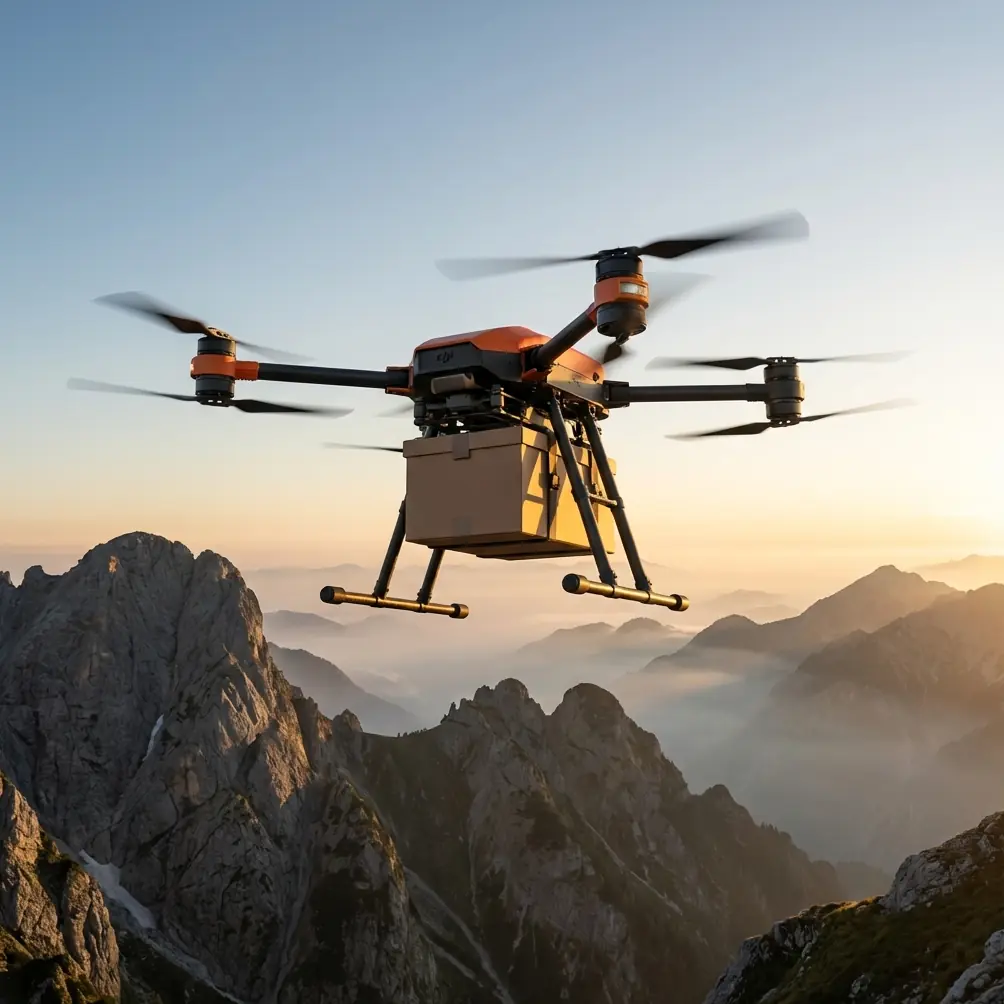
FlyCart 30 for Mountain Coastline Survey Support: A Technical Review from the Field
META: A field-focused technical review of FlyCart 30 best practices for mountain coastline survey support, covering route planning, safety checks, winch workflow, battery management, and camera composition tips that improve usable data.
Mountain coastline work punishes weak assumptions.
You can have a solid airframe, a capable crew, and a clean mission brief, then lose efficiency because the site itself refuses to behave like a standard corridor survey. Cliffs shear wind upward. Salt hangs in the air. Landing options shrink. Hike-in access drags out setup times. The result is that support equipment, battery rotation, and delivery precision matter almost as much as the sensor package doing the actual capture.
That is where the FlyCart 30 becomes interesting—not as a generic cargo drone, but as a practical support platform inside a survey operation that has to move gear, batteries, markers, and field essentials across hard terrain without turning every reposition into a manual carry.
I approach this from the logistics side. My concern is not only whether the aircraft can lift a load, but whether it can do so repeatedly, safely, and with enough workflow discipline to improve the survey day instead of adding complexity. For mountain coastline crews, the FlyCart 30 fits best when you treat it as part transport system, part risk-reduction tool, and part time compressor.
Why coastline survey teams should care about a transport drone
A lot of readers looking up FlyCart 30 are actually trying to solve a broader problem: how to keep a field team productive when geography keeps interrupting the work.
In a mountain coastal environment, survey crews often need to shift batteries, RTK accessories, landing pads, lightweight tripods, communication gear, weather instruments, or emergency supplies between staging points. On paper, these are minor movements. On the clock, they become the hidden cost center of the mission. Every climb burns crew energy. Every delayed battery handoff increases idle time. Every awkward drop-off point creates exposure to slip hazards and unstable footing.
This is where payload ratio starts to matter operationally. Not just raw carrying ability, but the relationship between what the aircraft can move and what the team actually needs moved per rotation. A good payload ratio means fewer shuttle cycles and less time spent breaking loads into inefficient increments. In a mountainous coastal survey, that changes planning. It can turn a two-stage human relay into a direct aerial transfer to an overlook, ridge shelf, or temporary observation point.
The FlyCart 30 is at its best in exactly that role: not replacing survey aircraft, but enabling them.
The winch system is more than convenience
If you are supporting survey work along cliffs or uneven shoreline access, the winch system deserves special attention.
A conventional landing is not always the smartest handoff method. On a rocky promontory or narrow plateau, asking a transport drone to touch down may create more risk than value. Surface conditions can be unstable. Rotor wash can disturb loose material. Crew members may need to approach the aircraft in awkward positions. A winch-based delivery changes the geometry of the job. The drone can hold a stable hover while lowering a payload into a safer pickup area.
That operational difference is not cosmetic. It affects site selection, crew movement, and mission tempo. It also broadens the list of useful support tasks. Instead of finding a full landing zone, the team can identify a controlled receiving point. For mountain coastline work, that often means the difference between direct support and a long workaround.
If your survey schedule includes battery swaps for separate aircraft operating down-route, a winch transfer can keep those rotations moving without forcing a support landing at every rugged node.
BVLOS thinking starts before takeoff
Even when local operational approval and procedures govern whether a mission extends beyond visual line of sight, the planning mindset should be BVLOS-grade from the start.
In mountain coastal corridors, terrain and visibility can collapse your margins quickly. Ridge lines interrupt line of sight. Sea haze affects depth perception. Wind changes on one face of a cliff may not match what you measured at launch. Route optimization, then, is not about drawing the shortest line. It is about building a route that respects terrain shielding, emergency alternatives, communication reliability, and retrieval practicality.
With FlyCart 30 support operations, I recommend route logic that answers four questions before the props spin:
- Where are the clean staging and receiving points?
- Which leg is most exposed to rotor-disturbing crosswinds?
- If the aircraft cannot complete the intended transfer, where is the least problematic abort zone?
- Which delivery sequence reduces total crew idle time, not just flight distance?
That last point gets overlooked. The “best” route on a map may be a poor route in field economics if it delivers the wrong item first. Moving a battery pair or a charging accessory to the team that is about to time out may matter more than serving the nearest waypoint. Route optimization should track operational urgency, not merely geometry.
Dual-battery discipline is a workflow issue, not just a hardware feature
The dual-battery concept often gets discussed as if redundancy alone is the story. It is not.
For real survey support work, dual-battery management is about consistency under a punishing duty cycle. Mountain coastline jobs rarely offer the forgiving pattern of short, flat, low-stress segments. You are dealing with climbs, hover precision, possible winch use, and return legs influenced by changing winds. That means battery planning has to reflect actual load profiles rather than brochure assumptions.
A strong workflow separates batteries by mission role and condition. Do not mix your freshest pair into a low-priority run if a longer exposed transfer is still pending. Do not rotate packs solely by charge percentage without logging how hard each pair worked. Hovering with a suspended load near a cliff face is not equivalent to a light cruise leg over open ground.
Crews that get the most out of FlyCart 30 usually build a simple but strict battery rhythm:
- inspect
- assign by mission priority
- log stress exposure
- cool appropriately
- clean before reinstallation
That last step matters more on the coast than many teams expect.
The pre-flight cleaning step most crews rush
Salt mist and fine grit love safety systems.
If I had to pick one habit that separates careful operators from rushed ones, it would be the pre-flight cleaning check focused specifically on safety-critical components. Everyone remembers lenses and airframe cosmetics. Fewer people consistently inspect and clean around the emergency parachute housing, release areas, battery interfaces, and winch contact points.
For coastline work, this is not housekeeping. It is risk control.
Residue buildup can interfere with smooth mechanical operation over time. Damp salt contamination around access seams or mounting interfaces can also become a reliability issue if ignored across repeated field days. Before launch, I want a deliberate wipe-down and visual inspection of:
- parachute deployment area
- battery contacts and seating surfaces
- winch hook and line path
- payload attachment points
- sensors and exterior vents exposed during transport
The emergency parachute is especially worth treating with respect. Its value is not theoretical. In mountain coastal operations, where people, rocks, surf, and inaccessible slopes often sit below the aircraft, every passive safety feature deserves a clean operational envelope. A parachute system should never be an afterthought hidden beneath routine.
Why camera composition still matters in a FlyCart 30 article
At first glance, smartphone photography composition seems unrelated to a cargo drone review. In the field, it is not unrelated at all.
One of the reference ideas I keep coming back to is the beginner photography method built around the nine-grid composition. It starts with the rule of thirds and overlays vertical and horizontal third lines to create a “井”-shaped frame—nine sections with four intersection points. That sounds basic, because it is basic. And that is exactly why it is useful.
Survey support crews routinely use phones to document landing zones, delivery points, site hazards, equipment placement, and line-of-sight obstructions. Most of these images are not art. They are decision tools. When those reference images are badly framed, they become less useful for route briefings and less reliable for handoff instructions.
A simple nine-grid approach improves operational communication fast. Place the intended drop marker near one of the four intersection points. Use the grid to keep a ridge edge or shoreline horizon stable across images. Capture a receiving zone with enough contextual space in adjacent grid sections so remote team members can understand slope angle, obstacles, and approach clearance.
This is not a photography lesson for its own sake. It is a logistics advantage. Clean composition reduces ambiguity. Reduced ambiguity saves radio time. Saved radio time lowers coordination friction during active operations.
If your team is building a mission packet for a mountain coastline survey, even basic smartphone shots framed with a third-line grid can make FlyCart 30 routing and delivery handoff decisions much more precise.
A practical mission scenario
Picture a coastline survey team working along elevated terrain where the main sensor crew is operating from a narrow shelf above the waterline. Access from the base staging area requires a steep foot approach that turns every battery replenishment into a 25-minute interruption. Wind on the lower trail is manageable, but the upper shelf has variable crossflow and limited flat ground.
Here, FlyCart 30 does not replace the survey platform. It supports the survey ecosystem.
The base team packs a battery pair, a lightweight weather meter, and a marked utility pouch. Rather than attempting a tight landing near the shelf, the crew uses the winch system to lower the load into a predefined receiving spot documented earlier with smartphone grid-based photos. Those images clearly showed the pickup tarp aligned inside the nine-section frame, with the safest foot access visible in the adjacent lower third.
Because the route was optimized around terrain exposure rather than direct distance, the transport path avoids the sharpest rotor-disrupting cliff edge. The flight is scheduled with the stronger battery set because the outbound leg includes the heaviest payload and the return may face a sea breeze increase. Before launch, the operator performs a fast but disciplined cleaning pass around the battery mounts, winch hardware, and emergency parachute area, removing visible salt residue from the prior sortie.
Nothing about that workflow is glamorous. All of it is useful.
That is the value proposition of FlyCart 30 in a serious commercial setting: less wasted motion, fewer improvised handoffs, tighter battery logistics, and better support for crews doing high-value field capture in places that are physically awkward.
Where teams usually get it wrong
The most common failure is treating the aircraft as a lift solution only.
When that happens, teams underestimate the importance of payload packaging, receiving-point design, route sequencing, and visual documentation. They assume that if the aircraft can carry the weight, the mission is ready. In mountain coastline work, that mindset breaks down quickly. A payload that swings badly, a receiving area with poor visibility, or a battery assignment made without regard to wind and hover demands can erode the margin you thought you had.
Another mistake is neglecting post-sortie turnaround discipline. Coastal residue accumulates silently. Safety systems do not usually fail with a dramatic warning first. They more often degrade through neglect.
The better approach is procedural. Clean. Inspect. Log. Reassign. Verify. Launch.
Final assessment
For mountain coastline survey support, FlyCart 30 makes the most sense when deployed as a logistics multiplier rather than a headline aircraft. Its practical strengths show up in the messy parts of field operations: moving mission-critical gear, enabling safer handoffs through the winch system, supporting route optimization under difficult terrain conditions, and maintaining reliable sortie cadence through disciplined dual-battery management.
The less obvious lesson is that support quality often depends on small habits. A pre-flight cleaning step around the emergency parachute and winch hardware. A better-framed smartphone image using a simple nine-grid method with four intersection points. A route built around real operational urgency instead of map neatness.
Those details are not side notes. They are what make the aircraft useful in the kind of environment where every avoidable delay expands into a field problem.
If your team is evaluating how to integrate FlyCart 30 into rugged coastal survey workflows and wants to compare deployment methods, staging logic, or receiving-point setups, you can message our flight operations desk here.
Ready for your own FlyCart 30? Contact our team for expert consultation.