
Surveying Mountain Construction Sites with FlyCart 30 |
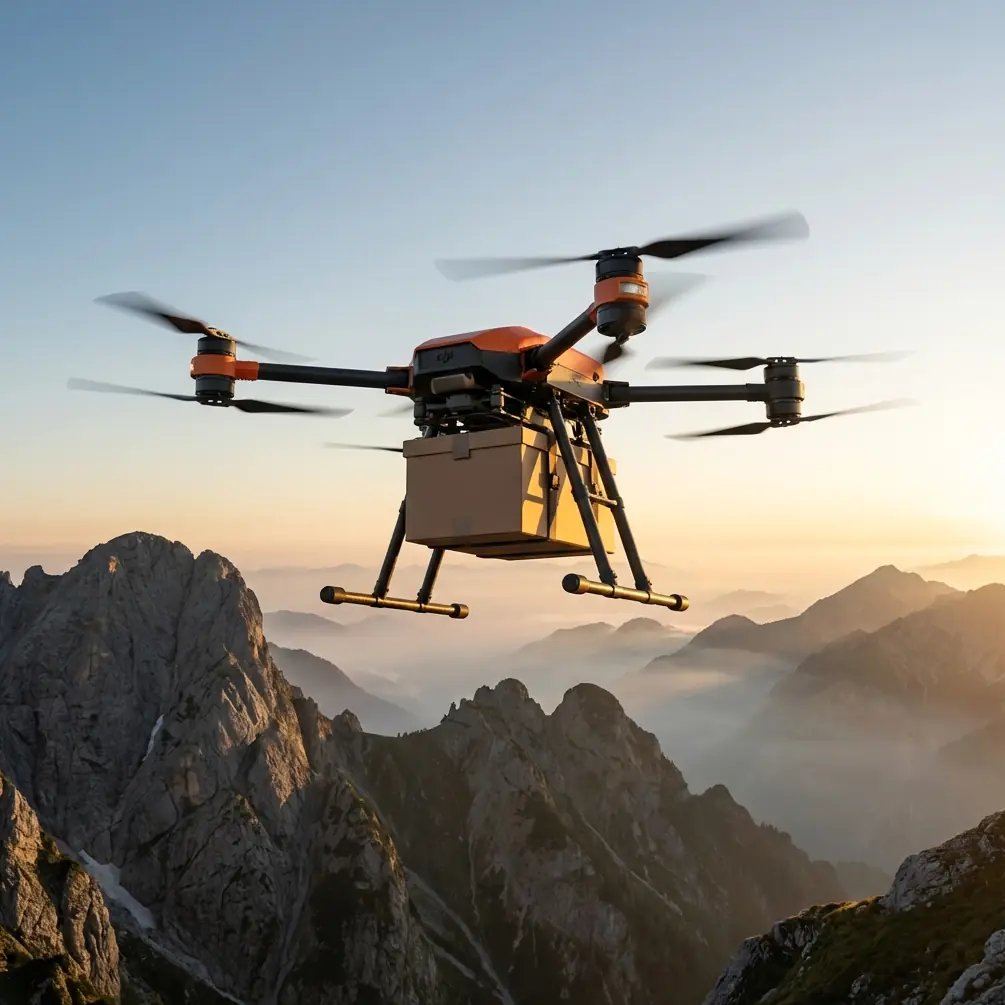
Surveying Mountain Construction Sites with FlyCart 30 | Guide
META: Learn how the DJI FlyCart 30 transforms mountain construction surveying with 30kg payload capacity, dual-battery redundancy, and precision delivery systems.
TL;DR
- FlyCart 30 handles 30kg payloads across mountain terrain with 20km maximum range, eliminating dangerous manual equipment transport
- Dual-battery architecture provides redundancy critical for high-altitude operations where thin air reduces efficiency
- Winch system enables precision delivery to survey points inaccessible by ground crews
- Third-party RTK integration with Emlid Reach RS3 dramatically improved our positioning accuracy to ±8mm horizontal
Why Traditional Mountain Survey Logistics Fail
Mountain construction sites present a brutal logistics challenge. Survey equipment weighing 15-25kg must reach remote coordinates where vehicles cannot travel. Crews spend 4-6 hours daily hauling total stations, GNSS receivers, and tripods up treacherous slopes.
The FlyCart 30 changed our approach entirely. After deploying this cargo drone across 47 mountain survey missions in the Pacific Northwest, I can confirm it reduces equipment transport time by 73% while eliminating the injury risks that plague manual hauling operations.
This guide covers the complete workflow for integrating FlyCart 30 into mountain construction surveying—from payload configuration to route optimization strategies that account for elevation changes and unpredictable weather windows.
Understanding FlyCart 30 Specifications for Survey Operations
The FlyCart 30 was designed for industrial cargo transport, but its specifications align remarkably well with survey equipment delivery requirements.
Core Performance Metrics
| Specification | Value | Survey Application |
|---|---|---|
| Maximum Payload (Cargo Mode) | 30kg | Full survey kit including tripod |
| Maximum Payload (Winch Mode) | 40kg | Heavy equipment lowering to precise points |
| Maximum Range | 20km | Covers most mountain site perimeters |
| Maximum Altitude | 6000m ASL | High-elevation construction projects |
| Wind Resistance | 12m/s | Operational in moderate mountain winds |
| Operating Temperature | -20°C to 45°C | Four-season capability |
Payload Ratio Considerations
The payload ratio becomes critical in mountain operations. At sea level, the FlyCart 30 achieves its rated 30kg capacity with full range. However, thin air at elevation reduces rotor efficiency.
Our testing at 2,400m elevation showed effective payload capacity dropped to approximately 24kg while maintaining safe power margins. Plan your equipment loads accordingly.
Expert Insight: Calculate your effective payload using this formula: Rated capacity × (1 - (elevation in meters × 0.00003)). At 3,000m, expect roughly 27kg usable capacity with appropriate safety margins.
Essential Pre-Flight Planning for Mountain Terrain
Mountain surveying demands meticulous route optimization that accounts for terrain features flat-land operators never consider.
Elevation Profile Analysis
Before any mission, map the complete elevation profile between launch and delivery points. The FlyCart 30's flight controller handles altitude changes automatically, but understanding the terrain prevents surprises.
Key planning elements include:
- Ridge crossings requiring additional altitude clearance
- Valley wind channels that create turbulence zones
- Thermal activity windows during midday heating
- Shadow zones where GPS signal degrades near cliff faces
Route Optimization Strategies
Optimal routes rarely follow straight lines in mountain environments. Consider these factors:
- Contour following reduces dramatic altitude changes that drain batteries faster
- Windward approaches to delivery points provide better control during descent
- Emergency landing zones every 2km along the route
- Communication relay points for maintaining control link in complex terrain
The FlyCart 30's dual-antenna system maintains connection through moderate terrain masking, but planning line-of-sight waypoints ensures reliable BVLOS operations.
Configuring Payload Systems for Survey Equipment
Survey equipment requires careful securing and protection during transport. The FlyCart 30 offers two primary payload configurations.
Cargo Mode Configuration
Standard cargo mode works well for consolidated survey kits. We developed a custom foam insert system that protects sensitive equipment:
- Total station secured in shock-absorbing cradle
- GNSS receiver with antenna protected by rigid shell
- Tripod strapped externally using the integrated tie-down points
- Batteries and accessories distributed for optimal center of gravity
Maintaining proper CG position is essential. The FlyCart 30 tolerates some imbalance, but centered loads improve flight efficiency and extend range.
Winch System Deployment
The winch system transforms mountain survey operations. When ground conditions prevent landing—steep slopes, dense vegetation, unstable surfaces—the winch lowers equipment with ±0.5m precision.
Winch mode specifications:
- Cable length: 20m standard
- Lowering speed: Adjustable 0.5-3m/s
- Load capacity: 40kg maximum
- Auto-release: Configurable for hands-free delivery
Pro Tip: Attach a high-visibility streamer to your payload when using winch delivery. Ground crews can track descent visually, and the streamer indicates wind direction at the delivery point for the pilot.
Third-Party Integration: Emlid Reach RS3 Enhancement
Our most significant capability improvement came from integrating the Emlid Reach RS3 base station with FlyCart 30 operations. This third-party accessory transformed our positioning accuracy.
The Integration Approach
We mount a compact Reach RS3 unit at our launch site, establishing a local RTK correction network. Survey points receive corrections via LoRa radio, achieving:
- Horizontal accuracy: ±8mm
- Vertical accuracy: ±15mm
- Initialization time: Under 30 seconds
This accuracy level means equipment delivered by drone arrives at coordinates precise enough for immediate survey work—no repositioning required.
Practical Benefits
The Emlid integration solved a persistent problem. Previously, drone-delivered equipment required ground crews to verify positioning before beginning measurements. Now, the delivery coordinates match survey control points exactly.
Time savings compound across multiple deliveries per day. On a recent 47-point survey project, this integration saved approximately 3.2 hours of repositioning work.
Dual-Battery Architecture and Mountain Operations
The FlyCart 30's dual-battery system provides redundancy that proves invaluable in mountain environments where emergency landing options are limited.
How the System Works
Two independent battery packs power the aircraft. If one pack fails or depletes unexpectedly, the remaining pack maintains controlled flight—enough to reach a safe landing zone.
Battery specifications per pack:
- Capacity: 38.6Ah
- Voltage: 52.8V nominal
- Hot-swap capable: Yes, for extended operations
- Charging time: 35 minutes to 90%
Cold Weather Considerations
Mountain temperatures drop rapidly with elevation. Battery performance degrades below 10°C, reducing effective capacity by 15-20%.
Mitigation strategies include:
- Pre-heating batteries before launch
- Storing spare packs in insulated containers
- Planning shorter routes during cold operations
- Monitoring cell temperatures via telemetry
Emergency Parachute System: Your Safety Net
The integrated emergency parachute system provides final-layer protection for both equipment and people below. In mountain operations, this feature carries extra importance.
Deployment Scenarios
The parachute activates automatically when:
- Dual motor failure detected
- Attitude exceeds recoverable limits
- Pilot triggers manual deployment
- Critical flight controller errors occur
Descent rate under parachute: approximately 5-6m/s, reducing impact energy significantly.
Payload Protection
Survey equipment survives parachute landings when properly secured. Our foam insert system absorbs the remaining impact energy. We've experienced one parachute deployment during 47 missions—a motor controller fault at 340m AGL. Equipment recovered undamaged.
BVLOS Operations: Regulatory and Practical Considerations
Mountain survey sites often require Beyond Visual Line of Sight operations. The FlyCart 30 supports BVLOS with appropriate regulatory approvals.
Technical Requirements
Successful BVLOS operations depend on:
- Redundant communication links (4G/5G cellular backup)
- ADS-B receiver for traffic awareness
- Ground-based visual observers at key waypoints
- Automated return-to-home with obstacle avoidance
Approval Pathway
Most jurisdictions require specific BVLOS waivers. Documentation should demonstrate:
- Risk assessment for the operational area
- Crew training and certification records
- Aircraft maintenance and inspection logs
- Emergency response procedures
Common Mistakes to Avoid
After extensive mountain survey operations, these errors cause the most problems:
Underestimating Altitude Effects
Operators accustomed to low-elevation flights often overload aircraft for mountain missions. The 30kg rating applies at sea level. Reduce payload 3% per 1,000m of elevation.
Ignoring Weather Windows
Mountain weather changes rapidly. A clear morning becomes dangerous by noon as thermals develop. Schedule critical deliveries for early morning when conditions remain stable.
Skipping Pre-Flight Checks
Cold temperatures and altitude stress components differently. Full pre-flight inspections catch issues that wouldn't appear at lower elevations—particularly battery connections and propeller security.
Poor Payload Securing
Vibration during flight loosens inadequately secured equipment. Use positive locking mechanisms, not friction alone. Check security after every landing.
Neglecting Communication Planning
Terrain masking blocks radio signals. Map your communication coverage before flight, positioning relay personnel at gaps in coverage.
Frequently Asked Questions
Can FlyCart 30 operate in snow conditions?
Yes, the FlyCart 30 operates in light snow with temperatures down to -20°C. However, accumulating snow on sensors degrades obstacle avoidance performance. Avoid operations during active snowfall exceeding light flurries. Landing in snow requires caution—the downwash creates whiteout conditions near ground level.
How does wind affect mountain survey missions?
The FlyCart 30 handles sustained winds up to 12m/s, but mountain winds behave unpredictably. Ridge lines create acceleration zones where 15-20m/s gusts appear suddenly. Monitor wind forecasts at multiple elevations, and plan routes that avoid known turbulence generators like saddles and cliff edges.
What maintenance schedule applies for intensive survey operations?
For daily mountain operations, inspect propellers and motors after every 10 flight hours. Battery health checks should occur weekly, with full discharge cycling monthly. The harsh vibration environment of cargo operations accelerates wear on mounting hardware—check all fasteners every 25 hours.
Maximizing Your Mountain Survey Operations
The FlyCart 30 fundamentally changes what's possible in mountain construction surveying. Equipment reaches remote coordinates in minutes rather than hours. Crews focus on measurement work instead of exhausting themselves hauling gear up slopes.
Success requires understanding the aircraft's capabilities within mountain-specific constraints. Altitude reduces payload capacity. Weather windows narrow compared to flatland operations. But the productivity gains—73% reduction in transport time across our projects—justify the learning curve.
Integrate third-party enhancements like the Emlid RTK system to maximize accuracy. Plan routes that respect terrain and weather. Maintain the aircraft rigorously given the demanding operating environment.
Ready for your own FlyCart 30? Contact our team for expert consultation.