
FlyCart 30 in Thin Air: A High-Altitude Survey Case Study
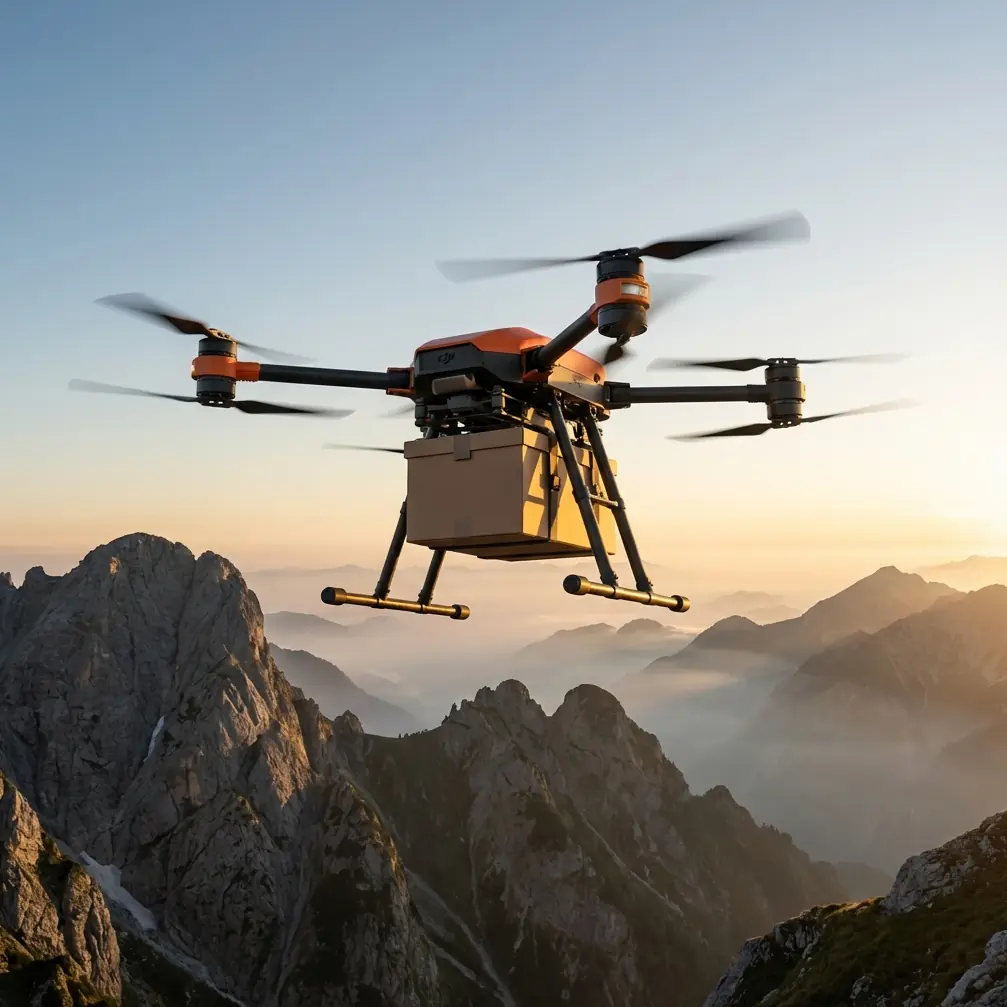
FlyCart 30 in Thin Air: A High-Altitude Survey Case Study from the Field
META: A field-based FlyCart 30 case study for high-altitude construction surveying, covering battery management, route planning, winch workflow, exposure strategy, and operational discipline in misty mountain conditions.
High-altitude construction work exposes every weak point in an aerial workflow. Air is thinner. Weather shifts quickly. Terrain blocks line of sight. Batteries that look healthy at ground level can behave very differently after a long climb and repeated lift cycles. When teams talk about survey efficiency in these environments, they often focus on aircraft range or payload alone. That misses the bigger story.
What matters is how the platform behaves when conditions stop being forgiving.
I’ve seen this most clearly on mountain construction sites where the aircraft is expected to do more than one job. The FlyCart 30 may enter the conversation as a logistics platform, but on a high-altitude project it can support a broader site-surveying workflow when the team treats transport, observation, and route discipline as one connected system rather than separate tasks.
This case study comes from that perspective: not from a spec-sheet reading, but from operational thinking shaped by real site pressure.
The site problem: survey work where roads are not reliable
A remote construction corridor at elevation usually creates the same chain of problems. Survey teams need repeated movement between staging areas and upper work zones. Markers, batteries, compact instruments, communication gear, and safety supplies all need to go uphill. The crews also need recurring visual checks of access paths, slope conditions, drainage changes, and placement progress.
On paper, those are simple tasks. On a mountain site, they turn into delays.
The first issue is route inefficiency. A crew may spend more time walking equipment to a survey point than collecting the data that justifies the trip. The second is timing. Early morning often delivers the calmest conditions and the clearest operational window, but it also introduces mist, changing light, and low-temperature battery behavior. The third is visibility. Ridge lines and tree cover can complicate route confirmation and visual situational awareness.
That combination is why the FlyCart 30 becomes interesting in a surveying context. Not because it replaces survey methods, but because it reduces the friction around them.
Why the morning window matters more than people think
There is a visual detail from a recent photography reference that translates surprisingly well into drone field practice. Forests at dawn or after rainfall often contain suspended moisture. When sunlight breaks through gaps in the canopy, the moisture reflects the light and makes the beams visible. Anyone who has worked near wooded mountain roads has seen this effect: shafts of light cutting through mist, beautiful to the eye, but operationally tricky.
That same condition tells you two things as a FlyCart 30 operator supporting a survey team.
First, the air mass is carrying moisture. Second, the lighting contrast is likely to be severe.
The reference makes a precise point: getting a strong beam effect depends on accurate exposure, and the real challenge is choosing the right metering point so bright highlights do not wash out to featureless white while darker subjects still retain detail. In field terms, that matters when you are using the aircraft’s live view to inspect terrain, temporary structures, staging zones, or landing areas near tree lines. If your exposure judgment is poor, you lose texture in bright cloud gaps and lose detail in dark under-canopy sections. On a construction survey mission, that can hide loose materials, washed-out edges, or access hazards.
This is not an artistic side note. It is operational image discipline.
When a site sits near wooded slopes, I tell teams to treat misty morning flights as information-rich but exposure-sensitive. Rainfall the night before often improves visibility of light beams in the forest, exactly as described in the reference, because moisture hangs in the air and catches the sun. It also creates deceptive contrast. If the operator exposes for the brightest opening in the canopy, the lower work area can become too dark to read. If they expose too far into the shadows, the bright areas lose structure. Both mistakes reduce the usefulness of the flight for survey support.
How we used the FlyCart 30 on a high-altitude construction survey cycle
On one project, our workflow was simple by design.
The lower camp acted as the control point and logistics base. Upper terraces held active construction segments where teams needed recurring checks and lightweight equipment resupply. Instead of sending personnel uphill repeatedly with batteries, target markers, compact field tools, and communication packs, we grouped those movements into scheduled drone runs. That changed the survey rhythm immediately.
Rather than burning crew time on transport, we used the FlyCart 30 to pre-position what the surveyors would need before they climbed. The result was not just faster deployment. It reduced fatigue before data collection even started, which matters at altitude more than most managers admit.
The winch system was the key operational feature here.
On uneven ground, direct landing is often the part that introduces unnecessary risk and delay. A rough terrace, a muddy shoulder, or a slope-edge drop zone can all turn a simple delivery into a precision event. Using a winch-based drop and retrieval workflow gave us more flexibility. We did not need to land in every upper-zone handoff point. We could hold a more stable position and transfer loads where terrain made touchdown less desirable.
For survey support, that translated into cleaner staging. The upper team could receive what it needed without clearing a broad landing footprint each time. Less disturbance. Less time on the ground. Fewer variables near active work faces.
Payload ratio is not just about lifting more
A lot of discussions around the FlyCart 30 drift toward headline lift capability. That is understandable, but on survey-oriented mountain work, payload ratio has a more practical meaning.
The question is not simply how much the aircraft can carry. The better question is how much useful site support you can move per sortie without forcing inefficient battery turnover or route fragmentation.
At altitude, every unnecessary trip has a cost. A sensible payload ratio helps you combine essentials: spare batteries for handheld gear, control stakes, radios, weather protection, compact instruments, and emergency site consumables. If the aircraft can consolidate these into fewer well-planned runs, route optimization improves naturally. Surveyors spend more of the day working from prepared positions instead of waiting on piecemeal delivery.
This is where discipline matters. Teams often overload the mission plan with “while we’re at it” requests. Resist that. Build sorties around survey-critical bundles, not convenience bundles. The aircraft should support the survey objective, not become a general errand system.
A battery management tip from the field
Here is the battery lesson I insist on in high-altitude operations: never judge pack readiness by percentage alone after a long ascent cycle.
Cold air, elevation, and repeated climb demands can make a battery look acceptable on the display while masking how quickly it will sag under the next heavy lift. The dual-battery architecture gives the FlyCart 30 a valuable layer of operational resilience, but that does not eliminate bad battery habits.
My rule is straightforward. If a battery pair has just completed a demanding uphill route with load and the next mission includes another climb plus hover time for a winch delivery or visual confirmation, I do not schedule it immediately for the most energy-intensive follow-up task, even when the remaining percentage appears workable. I rotate that pair to a lighter cycle or inspection-support run and assign the freshest balanced set to the next heavy movement.
That one decision reduces rushed returns and preserves safety margin.
In practice, this also improves route planning. You stop thinking of batteries as simple fuel tanks and start treating them as mission-matched assets. Heavy climb plus hold. Light reposition. Visual site check. Upper-slope delivery. Each profile draws differently on the system. Pair the battery state with the mission type, not just the time slot.
This becomes even more relevant in BVLOS-oriented planning environments, where route confidence and energy reserve discipline need to be stronger, not weaker. Even when regulations and site procedures shape exactly how flights are conducted, the operational mindset is the same: plan the route, payload, and battery pairing as one integrated decision.
Mist, contrast, and why good metering improves survey support
Let’s come back to the forest-light reference because it deserves more than a passing mention.
The source highlights three practical conditions: forests are especially suitable for visible light beams, early morning or post-rain timing often creates the needed moisture, and the main challenge is accurate exposure with correct metering so highlights stay textured while dark subjects retain detail.
For a FlyCart 30 team supporting mountain surveying, these are not abstract photography notes. They point to a repeatable visual challenge near tree-lined access roads and cut-slope corridors.
When the aircraft is checking upper access paths after rain, the scene often includes bright shafts of sun, reflective mist, dark soil, and shaded equipment zones in one frame. If the pilot or camera operator is not thinking carefully about where the image is being “read,” the visual feed becomes misleading. A washed-out opening can hide the edge profile of a route. Over-dark shadows can mask ground clutter or unstable surfaces around a transfer point.
Operational significance: your metering choice changes what the team on the ground believes is safe, clear, or ready.
That is why I prefer a short pre-task visual pass in these conditions before committing to the main support cycle. We use it to understand where the contrast traps are, where sunlight is breaking through canopy gaps, and whether the handoff zone needs adjustment. A five-minute evaluation can prevent a messy delivery sequence later.
Emergency systems matter most when terrain gives you no good options
High-altitude sites are not forgiving when something goes wrong. There may be limited flat recovery space, long drop-offs, and narrow access routes below the flight path. That is where built-in safety thinking stops being a brochure topic and becomes part of mission acceptance.
For this reason, I view features like an emergency parachute as operationally significant in mountain construction support. Not because teams should become casual, but because remote work demands layered contingency planning. The same goes for disciplined route optimization and battery handling. Safety systems are not a substitute for judgment. They are the backup that helps when terrain removes easy alternatives.
That is also why I recommend documenting recurring uphill and downhill corridors rather than improvising every trip. Once the route is validated, stay consistent unless weather, site changes, or visibility force a revision. Predictability helps the flight team and the ground crew.
What changed after the workflow matured
Once our process settled, the benefits were not dramatic in the cinematic sense. They were better than that. The day stopped slipping away in fragments.
Survey crews arrived with the right gear already staged. Upper work zones stayed cleaner because handoff points were chosen around terrain rather than around forced landings. Battery turnover became less reactive. Morning mist became something we planned around instead of something that surprised us. And image interpretation improved because we understood how quickly bright canopy gaps and dark forest margins could distort what we thought we were seeing.
If your team is evaluating a FlyCart 30 for high-altitude construction surveying support, the key question is not whether it can fly in the mountains. The better question is whether your operating method is mature enough to use its strengths properly: winch-based delivery where landing is awkward, dual-battery planning that respects energy behavior after climbs, route optimization that reduces crew fatigue, and visual discipline in misty, high-contrast terrain.
Get those four things right and the aircraft becomes more than a transport tool. It becomes a stabilizing part of the survey workflow.
If you want to compare route setups or discuss how teams handle mountain staging and battery rotation in practice, you can message our field team here.
Ready for your own FlyCart 30? Contact our team for expert consultation.