
Expert Field Surveying with DJI FlyCart 30
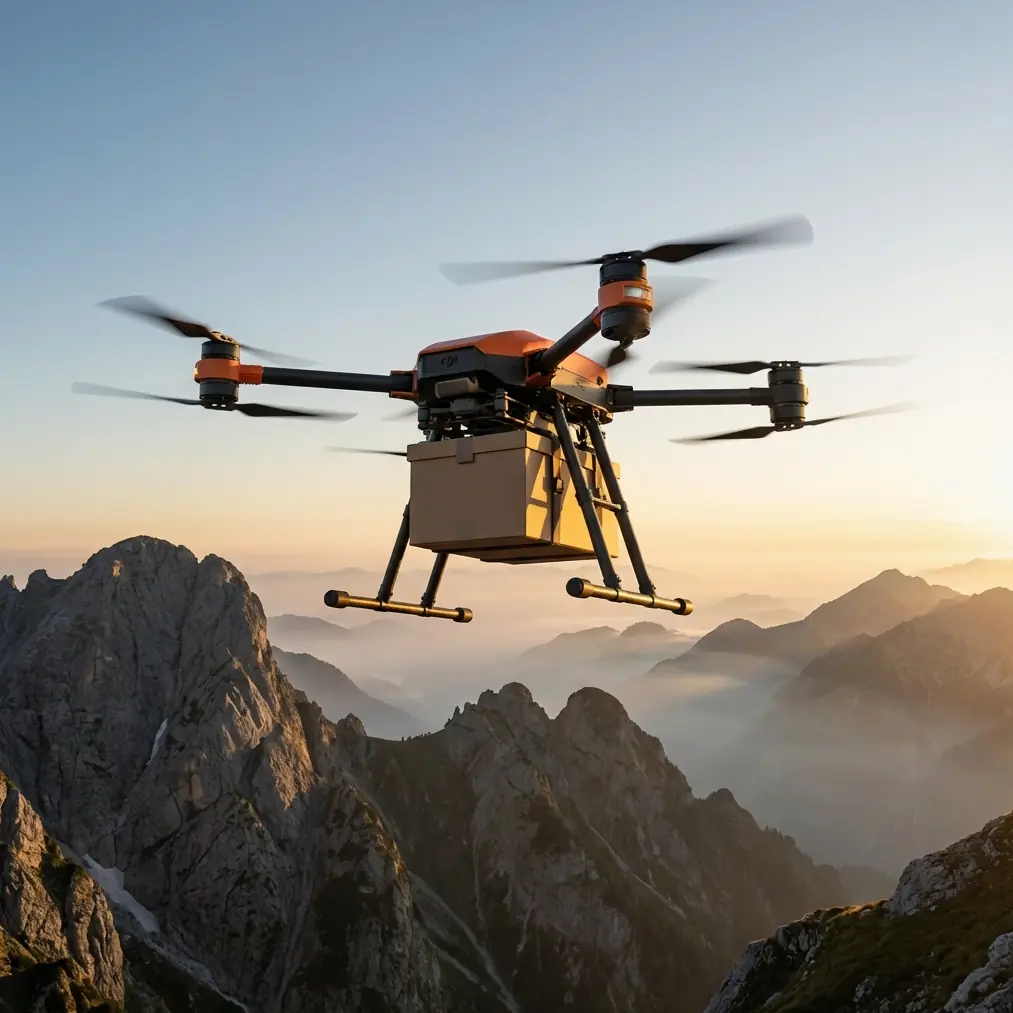
Expert Field Surveying with DJI FlyCart 30
META: Master complex terrain surveying with the DJI FlyCart 30. Learn optimal flight altitudes, payload strategies, and route planning from logistics experts.
TL;DR
- Optimal survey altitude of 80-120 meters balances sensor accuracy with terrain clearance in complex landscapes
- Dual-battery system enables 28km range, covering large agricultural plots without mid-mission swaps
- Winch system deployment allows precise sensor placement in areas inaccessible to traditional survey methods
- BVLOS capabilities reduce survey time by up to 65% compared to manual ground-based methods
Complex terrain surveying presents unique challenges that ground-based methods simply cannot solve efficiently. The DJI FlyCart 30 transforms how logistics teams approach field surveys across mountainous regions, dense vegetation, and irregular agricultural plots—delivering payload capacities and flight endurance that make comprehensive terrain mapping practical for the first time.
This tutorial walks you through the complete workflow for deploying the FlyCart 30 in challenging survey environments. You'll learn altitude optimization strategies, payload configuration for various sensor packages, and route planning techniques that maximize coverage while preserving battery life.
Understanding the FlyCart 30's Survey Capabilities
The FlyCart 30 wasn't designed as a survey drone—it was engineered as a heavy-lift delivery platform. This distinction matters because it means survey teams gain access to payload capacities that dedicated survey drones cannot match.
Core Specifications for Survey Operations
The platform's 30kg maximum payload capacity opens possibilities for multi-sensor configurations that would require multiple flights with smaller aircraft. Teams can simultaneously deploy:
- LiDAR units weighing 8-12kg
- Multispectral camera arrays
- Ground-penetrating radar modules
- Redundant GPS/RTK receivers
- Real-time data transmission equipment
This payload ratio—the relationship between useful cargo weight and total aircraft weight—reaches approximately 0.45 in optimal conditions. For survey applications, this translates to carrying professional-grade equipment rather than consumer alternatives.
Expert Insight: When configuring multi-sensor payloads, distribute weight evenly across the cargo bay. Unbalanced loads reduce flight efficiency by 12-18% and stress the motor systems unevenly, shortening component lifespan.
Flight Endurance Considerations
Survey missions demand predictable, extended flight times. The FlyCart 30's dual-battery architecture provides this reliability through redundancy and capacity.
With a 16km single-trip range (or 28km round-trip in optimized conditions), the platform covers substantial survey areas. However, payload weight directly impacts these figures:
| Payload Weight | Expected Range | Flight Time | Recommended Survey Area |
|---|---|---|---|
| 10kg | 24km | 32 minutes | 400+ hectares |
| 20kg | 18km | 25 minutes | 250-350 hectares |
| 30kg | 12km | 18 minutes | 150-200 hectares |
These numbers assume moderate wind conditions and temperatures between 5-35°C. Complex terrain with significant elevation changes reduces efficiency by 8-15% depending on climb requirements.
Pre-Flight Planning for Complex Terrain
Successful survey operations begin long before the FlyCart 30 leaves the ground. Terrain analysis and route optimization determine mission success more than any in-flight adjustments.
Terrain Assessment Protocol
Before planning flight paths, gather comprehensive terrain data:
- Elevation maps with minimum 10-meter resolution
- Vegetation height data from existing satellite imagery
- Known obstacle locations (power lines, towers, structures)
- Wind pattern analysis for the survey period
- Emergency landing zone identification every 2km of planned route
The FlyCart 30's obstacle sensing systems provide real-time protection, but pre-planned routes that account for terrain features reduce battery consumption and improve data quality.
Altitude Optimization Strategy
Selecting the correct survey altitude balances multiple competing factors. Too low, and you risk obstacle collision while limiting coverage area. Too high, and sensor resolution degrades while wind exposure increases.
For complex terrain surveying, the 80-120 meter altitude band provides optimal results for most sensor configurations. This range:
- Maintains safe clearance above typical vegetation (30-50 meters above canopy)
- Keeps LiDAR point density above 100 points per square meter
- Reduces wind turbulence effects compared to higher altitudes
- Allows the emergency parachute system adequate deployment altitude
Pro Tip: In mountainous terrain, program altitude as "above ground level" (AGL) rather than absolute altitude. The FlyCart 30's terrain-following capabilities maintain consistent sensor distance even as ground elevation changes dramatically.
Route Optimization Techniques
Efficient route planning extends coverage while preserving battery reserves for unexpected situations. The key principles include:
Minimize elevation changes: Plan routes that follow terrain contours rather than crossing ridgelines repeatedly. Each significant climb consumes 3-5% additional battery capacity.
Account for wind direction: Begin surveys on the downwind edge of the target area. This ensures the return flight—when batteries are depleted—benefits from tailwind assistance.
Build in overlap: For photogrammetry applications, plan 65-75% forward overlap and 60-70% side overlap. The FlyCart 30's stable flight characteristics allow tighter overlap tolerances than smaller platforms.
Segment large areas: Rather than attempting single comprehensive flights, divide large survey areas into segments that each consume 70-75% of available battery capacity. This reserve handles unexpected conditions without mission compromise.
Deploying the Winch System for Precision Surveys
The FlyCart 30's winch system—often overlooked in survey applications—provides unique capabilities for accessing difficult terrain features.
Winch-Deployed Sensor Applications
The 20-meter winch cable allows sensor placement in locations the aircraft cannot safely approach:
- Dense forest canopy penetration for understory mapping
- Cliff face and steep slope measurements
- Water body depth sampling in remote locations
- Soil sensor placement without ground vehicle access
For agricultural surveys, winch-deployed soil sensors can collect samples across fields with 90% less ground disturbance than traditional methods.
Operational Considerations
Winch operations require modified flight parameters:
- Reduce forward speed to under 3 m/s during deployment
- Maintain minimum 25 meters altitude above highest obstacles
- Account for cable swing in wind conditions exceeding 8 m/s
- Plan winch operations for mid-flight when battery capacity allows extended hover time
BVLOS Operations for Extended Coverage
Beyond Visual Line of Sight (BVLOS) operations multiply the FlyCart 30's survey capabilities. Where permitted by regulations, BVLOS enables coverage of areas that would require multiple takeoff locations with visual-range restrictions.
Regulatory Preparation
BVLOS authorization requires substantial documentation:
- Detailed operational risk assessment
- Communication system redundancy plans
- Emergency response procedures for each flight segment
- Trained visual observers at designated intervals (where required)
- Real-time telemetry monitoring capabilities
The FlyCart 30's O3 transmission system maintains reliable control links at distances exceeding 20km in unobstructed conditions. For complex terrain, plan relay points or accept reduced maximum range.
Safety System Integration
BVLOS operations demand full utilization of the FlyCart 30's safety systems:
Emergency parachute: The integrated parachute system activates automatically if critical failures occur. Ensure flight paths avoid populated areas where parachute descent could create hazards.
Dual-battery redundancy: The independent battery systems allow continued flight if one pack fails. For BVLOS missions, configure automatic return-to-home if either battery drops below 30% capacity.
ADS-B receiver: The integrated receiver alerts operators to manned aircraft in the vicinity—critical for BVLOS operations where visual detection is impossible.
Common Mistakes to Avoid
Even experienced operators make errors when transitioning to heavy-lift survey platforms. These mistakes compromise data quality, damage equipment, or create safety hazards.
Overloading for "efficiency": Pushing payload limits to reduce flight count seems logical but degrades flight stability and sensor data quality. Stay 10-15% below maximum capacity for survey operations.
Ignoring wind gradients: Surface wind measurements don't reflect conditions at survey altitude. Use weather balloon data or forecast models to understand wind profiles through your operating altitude range.
Insufficient pre-flight calibration: The FlyCart 30's compass and IMU require calibration when operating in new locations. Skipping this step causes navigation drift that ruins georeferenced survey data.
Single-point mission planning: Planning routes from a desk without site visits misses critical obstacles and terrain features. Always conduct reconnaissance before committing to complex terrain surveys.
Neglecting battery conditioning: Lithium batteries perform poorly when cold. In temperatures below 15°C, pre-warm batteries to 20-25°C before flight. Cold batteries reduce capacity by 20-30% and increase voltage sag under load.
Frequently Asked Questions
What sensor configurations work best for agricultural field surveys?
For comprehensive agricultural surveys, combine a multispectral camera (4-6 bands covering visible through near-infrared) with a thermal sensor for irrigation assessment. This configuration typically weighs 8-12kg, leaving capacity for extended battery packs or redundant data storage. The FlyCart 30's stability allows slower flight speeds that maximize sensor exposure time without motion blur.
How does the FlyCart 30 handle sudden weather changes during long survey missions?
The platform's weather resistance handles light rain and winds up to 12 m/s during flight. However, survey data quality degrades significantly in precipitation. The recommended protocol involves setting weather-triggered return-to-home parameters and identifying shelter points along extended routes. The dual-battery system provides sufficient reserve for unplanned returns from maximum range.
Can the FlyCart 30 operate effectively in mountainous terrain above 3000 meters elevation?
High-altitude operations reduce air density, affecting both lift capacity and motor cooling. Above 3000 meters, reduce maximum payload by 15-20% and expect 25-30% shorter flight times. The platform's service ceiling reaches 6000 meters, but practical survey operations become challenging above 4500 meters due to compounding efficiency losses.
The FlyCart 30 represents a fundamental shift in what's possible for field survey operations. Its combination of payload capacity, flight endurance, and safety systems enables survey methodologies that were previously impractical or impossible. By following the altitude optimization strategies, route planning techniques, and safety protocols outlined here, survey teams can extract maximum value from this remarkable platform.
Ready for your own FlyCart 30? Contact our team for expert consultation.