
FlyCart 30 for High-Altitude Fields: What Actually Matters
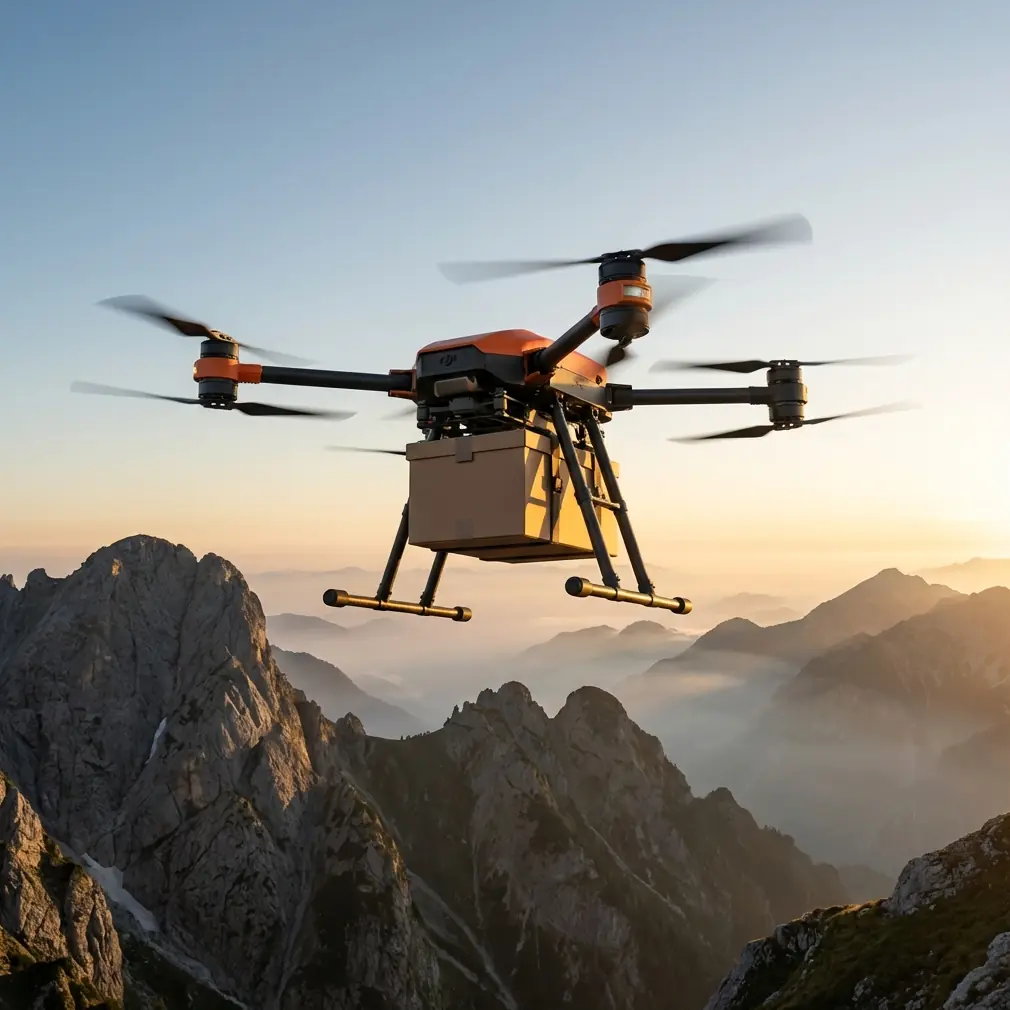
FlyCart 30 for High-Altitude Fields: What Actually Matters When Conditions Shift
META: A field-tested look at using FlyCart 30 in high-altitude agricultural surveying, with practical insight on route planning, vertical imaging logic, weather shifts, and operational stability.
High-altitude field work punishes assumptions.
On paper, a mission can look simple: launch, follow a route, gather visuals, return home. In mountain agriculture or terraced growing zones, that neat sequence starts to break apart fast. Air density changes aircraft behavior. Wind drifts over ridgelines instead of flowing cleanly across open ground. Light shifts by the minute. And when the goal is not just to fly, but to capture usable field intelligence, the margin between “mission completed” and “mission repeated” gets narrow.
That is where the FlyCart 30 becomes interesting. Not because it is a generic heavy-lift platform, and not because every field operation needs the same setup, but because in high-altitude surveying the aircraft’s core logistics DNA starts to solve imaging problems too.
I’ve seen this firsthand in operations where the original brief sounded straightforward: assess crop conditions across steep plots, document drainage behavior, and gather visual references for follow-up logistics planning. Then the weather changed mid-flight. It usually does. A clean morning can turn into variable crosswind and flatter, colder light before the second route segment is complete. In those moments, the aircraft matters, but so does the way you think about the imagery.
One surprisingly useful lesson came from an unlikely source: flower photography.
A recent visual composition piece from Chinahpsy focused on vertical framing for flowers and branches. Its argument was simple but sharp. Vertical composition strengthens the tension of vertical lines, creates more visual impact, and works especially well when paired with a dark background and deliberate negative space. Applied to flowers, that approach reveals shape, line, and mood more clearly.
At first glance, that has nothing to do with FlyCart 30 or agricultural surveying. In practice, it maps neatly onto high-altitude field work.
The Problem: High-Altitude Surveys Often Produce Busy, Weak Imagery
Survey teams working elevated farmland deal with a recurring issue: the field is not visually clean.
Branches from windbreak trees cut across the frame. Irrigation poles, netting, and terrace edges create clutter. Backgrounds are rarely neutral. If the weather turns and the light drops, contrast collapses and the image starts to flatten. You may still have footage, but not footage that helps an agronomist, land manager, or operations lead make a quick call.
That is the real operational problem. Data collection is not the same as decision-ready observation.
When I’m planning a FlyCart 30 mission over mountain fields, I don’t just think in terms of route optimization or battery management. I think about how the field will read visually when conditions become less cooperative. If crop rows, support structures, drainage cuts, or tree lines are running vertically down a slope, horizontal framing often wastes the aircraft’s position advantage. It includes too much irrelevant lateral information and weakens the subject.
The Chinahpsy point about vertical framing emphasizing vertical tension is directly relevant here. On terraced or steep agricultural land, many of the most meaningful visual cues are vertical or near-vertical in relation to the camera angle: trunk lines, branch structures, slope channels, row drop, trellis alignment. Framing for those lines can make the difference between a vague overview and a useful field record.
Why FlyCart 30 Fits This Better Than People Expect
The FlyCart 30 is usually discussed through transport logic: payload ratio, delivery flexibility, winch workflows, dual-battery redundancy, and long-route reliability. Those are valid topics. But for high-altitude field surveying, those same characteristics have a second value: they support repeatable positioning when the environment gets unstable.
That matters more than many teams admit.
When weather changed during one high-elevation field mission, the first thing we lost was visual confidence, not flight capability. Gusts started rolling unevenly across the slope. Light dropped behind the ridge, and the terrain background darkened in patches. On a less stable platform or with a less disciplined route plan, we would have rushed the pass and accepted mediocre imagery just to close the mission.
Instead, the FlyCart 30 gave us room to stay methodical.
Its route optimization advantages are not just about efficiency. They reduce unnecessary repositioning, which reduces the number of moments where the pilot or mission lead has to improvise under pressure. That becomes critical when the wind stops behaving consistently. If your pathing is already clean, you can dedicate more attention to framing and observation.
The dual-battery architecture also changes the psychology of the mission. In high-altitude work, reserves matter. They matter because return calculations can tighten quickly when the weather shifts. They also matter because rushed crews make bad visual choices. With stronger energy management confidence, the team is less likely to force poor angles or skip a needed second pass over an area where canopy structure or slope erosion signs were not clearly visible on the first run.
That is operational significance, not brochure language.
The Imaging Insight: Vertical Composition Is Not Just Artistic
Let’s return to the composition reference, because it carries more weight than it seems.
The source specifically highlights three elements:
- vertical framing increases expressive strength by emphasizing vertical lines
- dark backgrounds can make the subject stand out more clearly
- leaving appropriate negative space helps show form and line beauty while improving mood
In a field context, those are not just aesthetic observations.
When surveying orchards, vine supports, or flowering edge zones in mountain agriculture, vertical framing can isolate plant architecture and slope relationship in one view. That makes it easier to identify whether growth is uniform, whether support structures are leaning, and whether wind exposure is affecting upper sections differently from lower ones.
The dark-background point is equally practical. In the mission I mentioned, cloud cover moved over the ridge and threw the back slope into shadow. Normally, crews complain about that because bright, even light is easier to work with. But in this case, that darker background actually improved image readability for several target areas. Branch and flowering structures separated better from the terrain behind them. The reference source describes dark background plus negative space as a way to reveal the shape and line beauty of flower branches and strengthen image mood. In field surveying, that translates into cleaner subject isolation and better visual interpretation.
Negative space matters too. Operators often fill the frame because they are afraid of missing detail. But overcrowded images hide structure. A little breathing room around a branch cluster, row section, or trellis segment can make alignment problems obvious at a glance. On steep land, where visual complexity is the norm, restraint often produces better field intelligence than maximal coverage inside a single frame.
Mid-Flight Weather Shift: What Happened and Why the Aircraft Held Up
Here is how this plays out in the real world.
We launched into a stable morning window for a high-altitude agricultural survey focused on crop edge condition and access path review. The route had been optimized around terrain transitions, with planned pauses for closer visual assessment over selected sections rather than one long, brute-force sweep.
About halfway through the mission, wind direction shifted. It was not a dramatic event, but that is often how trouble starts in elevated terrain: not with a storm, but with inconsistency. The aircraft encountered uneven lateral airflow near a ridge-facing field boundary. At the same time, light conditions dropped enough to alter the contrast profile of the scene.
This is where FlyCart 30’s broader platform strengths helped.
The aircraft’s stability under changing load logic is often discussed in relation to transport, but that translates well to disciplined flight behavior during observation tasks. Add in the confidence of a dual-battery setup, and the crew does not have to treat every environmental change as a reason to cut the mission short. We adjusted the pass order, tightened the route, and shifted imaging priority to areas where the now-darker background improved subject separation.
One section of flowering border vegetation near a terrace edge became far more readable after the light changed. Instead of fighting the darker hillside behind it, we used it. We reframed vertically, allowed more negative space around the subject zone, and captured clearer visual evidence of branch distribution and wind stress.
That result came straight out of the composition logic from the reference material, even though the mission itself was purely commercial and field-focused.
Winch System, Payload Ratio, and Why Survey Teams Should Care
A lot of people see “winch system” and think only about delivery drops. That is too narrow.
For high-altitude field operations, a winch-equipped platform can reshape mission design even when the primary task is survey-adjacent rather than pure logistics. If you are supporting a remote agricultural team, the ability to move small tools, sensors, or sample containers without forcing a landing on uneven ground can keep the aerial operation continuous. The aircraft becomes part of a broader field workflow, not a one-task machine.
Payload ratio matters in a similar way. It is not only about carrying more. It is about preserving mission flexibility. In mountain environments, flexibility is what prevents wasted flights. If a route changes, if a field team requests a secondary item, or if you need to support a mixed survey-logistics workflow in the same operational block, a stronger payload profile gives you options without changing platforms.
For teams building BVLOS-ready operating procedures where regulations and approvals allow, that versatility becomes even more valuable. A drone that can support route discipline, carry workflow-relevant payloads, and remain dependable when terrain and weather introduce variability is easier to standardize into repeatable field operations.
And yes, safety systems matter here too. An emergency parachute is not a marketing footnote in mountainous agricultural zones. It is part of the risk architecture. High-altitude field work often means fewer ideal emergency landing options. Any serious discussion of operational suitability should acknowledge that.
The Bigger Lesson: Better Field Results Come From Better Visual Thinking
The most useful takeaway from the source material is not “shoot vertically because it looks nice.” It is that framing choices can directly improve operational outcomes.
The reference article makes a specific visual argument: vertical structure becomes more forceful in a vertical frame, and dark backgrounds plus proper negative space help reveal shape and line. In high-altitude field surveying, those ideas can help crews document plant structure, field edges, support systems, and terrain-linked crop patterns with more clarity.
That matters because decision-makers rarely need “more images.” They need images that explain something.
A branch line against a darker slope can show wind exposure. A vertically framed row section can reveal support drift. A carefully spaced composition can make terrace edge encroachment obvious. Those are field decisions hiding inside image decisions.
The FlyCart 30 earns its place here not just because it can fly a route, but because it gives teams the stability and operational confidence to make smarter choices when the environment changes. High-altitude missions are rarely won by raw endurance alone. They are won by aircraft reliability, disciplined planning, and a camera strategy that respects what the terrain is actually trying to show you.
If your team is designing high-altitude survey workflows and wants to talk through route structure, payload planning, or how to adapt field imaging methods for FlyCart 30 operations, you can message an operations specialist here.
The best missions are not the ones with the most footage. They are the ones where every pass has a reason, every frame carries meaning, and the aircraft gives you enough control to adapt when the mountain changes its mind.
Ready for your own FlyCart 30? Contact our team for expert consultation.