
FlyCart 30 for Urban Field Surveys: A Practical Guide
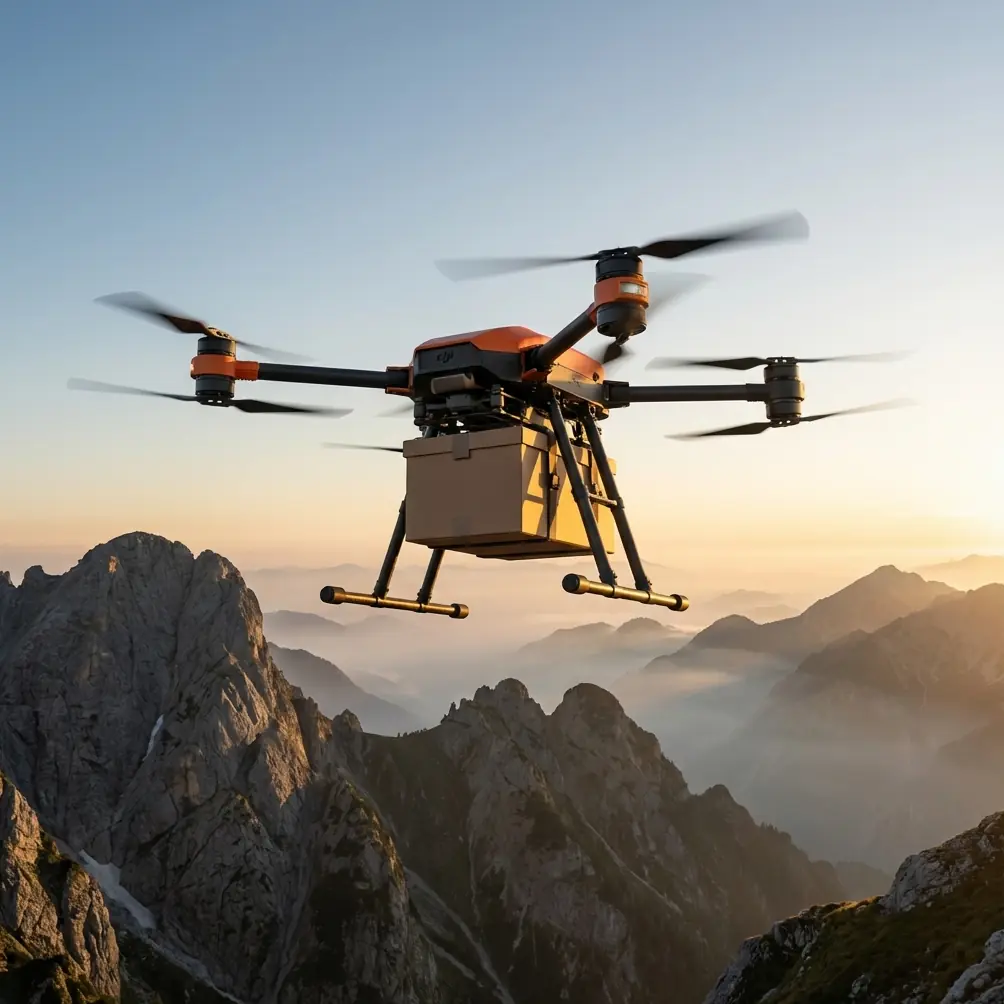
FlyCart 30 for Urban Field Surveys: A Practical Guide from the Logistics Side
META: A field-tested FlyCart 30 guide for urban surveying workflows, covering payload logic, winch use, dual-battery planning, route discipline, and why camera feature mastery matters in real operations.
I’ve seen a strange pattern on survey jobs in urban-edge fields: teams obsess over airframes, batteries, and route plans, then leave image capture on default settings as if documentation is an afterthought. That habit costs time.
The reason this matters for FlyCart 30 work is simple. In real operations, you are rarely doing just one thing. You may be moving sensors, dropping lightweight field markers, lowering a tool with the winch system, checking boundaries, documenting obstacles, and handing over visual proof to clients or site managers. If the aircraft side is well planned but the camera side is lazy, the workflow breaks at the last meter.
A recent technology post made a point that hits surprisingly close to this kind of work. It argued that most people only press the shutter button on a phone camera and leave the rest of the tool unused. It also said one article could explain 7 core shooting features, including a large aperture mode that keeps the subject sharp while softening the background. That may sound unrelated to FlyCart 30 at first glance, but on urban field surveys, it is exactly the kind of mindset shift operators need.
This article is about that connection: how to run FlyCart 30 more effectively in urban field conditions when you stop thinking of the mission as “fly, deliver, done” and start treating documentation as part of the payload workflow.
The challenge urban field teams actually face
Urban field surveying is messy in a very specific way.
You are not deep in open farmland with unlimited approach angles. You are often dealing with narrow access roads, utility lines, small staging zones, edge development, temporary fencing, mixed-surface landing spots, and stakeholders who want evidence fast. Sometimes the “field” is really a patchwork of undeveloped plots surrounded by buildings, drainage channels, parked vehicles, and pedestrian activity.
That means the aircraft’s transport role and the crew’s information-capture role overlap constantly.
A few seasons ago, my team had a recurring problem on jobs like this. We could move equipment to hard-to-reach points efficiently, but our visual records were inconsistent. One operator would take a clean contextual shot. Another would grab a flat image that made a marker stake disappear into visual clutter. A third would document a lowered payload from too far away, so the site client could not tell whether the package landed clear of brush or debris. The aircraft did its job. The reporting package did not.
That’s where FlyCart 30 changed the workflow for us, not because the platform magically solves every survey issue, but because it rewards disciplined operations. Once you start using its payload logic, winch workflow, route planning, dual-battery management, and safety stack properly, you realize the mission needs the same discipline on the image side too.
Why FlyCart 30 suits urban field surveys better than many crews expect
FlyCart 30 is usually discussed as a logistics platform, and that is fair. But in urban field survey support, its real advantage is controlled task execution.
The payload ratio matters because survey support rarely means carrying one perfect, uniform load all day. One sortie might move field flags, another a compact sensor kit, another a line reel, another a lightweight measurement tool. A platform that handles variable tasking with composure lets the crew stop improvising around equipment constraints.
Then there’s the winch system, which is more useful in urban-edge field work than many new operators realize. If the landing area is uneven, obstructed, muddy, or too close to surface hazards, lowering a payload is often cleaner than forcing a touchdown. Operationally, that reduces disturbance at the delivery point and helps preserve site integrity. On survey jobs, that can mean dropping a device or consumable exactly where the ground team needs it without compressing soft terrain or stirring up unnecessary dust.
The dual-battery setup also has practical significance beyond endurance talk. In urban field scenarios, reserves are not just about staying airborne longer. They support decision quality. If your battery margin is weak, crews rush. Rushed crews skip alternate approach checks, shorten hover confirmation, and cut corners on documentation. Dual-battery planning gives a better cushion for route integrity, safer return logic, and cleaner task completion.
And for teams operating in corridors where BVLOS planning may be part of broader workflow design, route discipline becomes critical. Not because distance itself is the goal, but because repeatability is. A route that can be optimized and repeated with confidence allows better scheduling of field crews, better turnover between staging points, and cleaner handoff of survey materials.
Finally, the emergency parachute matters because urban-adjacent operations demand layered risk control. It is not a shortcut to fly carelessly. It is part of a system where planners accept that populated or infrastructure-dense environments require stronger contingency thinking than wide-open rural tasks.
The camera lesson most drone teams still ignore
Let’s go back to that phone-camera article.
Its core point was that many users waste the tool by doing nothing beyond pressing the shutter. That idea is painfully familiar in UAV operations. Teams invest in air logistics and then treat visual capture like clerical work. They assume any image is enough as long as there is an image.
It usually isn’t.
The article highlighted large aperture mode, where the subject remains clear and the background is blurred. For consumer photography, that creates atmosphere. For field operations, the operational significance is different: it isolates what matters.
Say your FlyCart 30 lowers a compact survey package beside scrub growth, fencing, and construction debris. A standard wide shot may technically show the placement, but not clearly enough for a remote reviewer to confirm orientation or condition. A subject-isolating capture style makes the payload, connection point, or field marker immediately readable. Less visual clutter. Faster verification. Fewer follow-up calls.
The same applies to documenting:
- a payload hook connection before dispatch
- a field marker after placement
- a sensor case condition at drop-off
- a temporary obstacle near the pickup zone
- a staging box position relative to a boundary reference
That article mentioned 7 core shooting features. Even though it was written for phone users, the larger operational lesson is this: crews should know the capture tools they already carry. Most survey teams do have phones on site. Many use them for quick evidence shots, handoff records, team messaging, and incident notes. Yet those same teams rarely train operators to use camera modes intentionally.
That gap is easy to fix, and FlyCart 30 missions benefit from fixing it.
A practical FlyCart 30 workflow for urban field surveys
Here is the method I now recommend when FlyCart 30 is supporting urban field survey work.
1. Define the sortie by task type, not just route
Before launch, classify the mission properly:
- equipment transfer
- marker placement support
- tool retrieval
- visual condition confirmation
- repeated shuttle between staging points
Why this matters: route optimization should follow the task. A payload moved by winch into a constrained area needs different hover discipline than a straightforward transport to a clear zone. If you build routes without recognizing the final action, you end up with technically efficient flight paths that create awkward, slow, or risky delivery moments.
2. Match payload behavior to the landing reality
This is where the winch system earns its place.
In urban field surveying, many target points are usable but not truly landable. The ground may be acceptable for a tool drop but poor for an aircraft touchdown. If surface integrity matters, or obstacles force a tight geometry, use the winch plan from the start rather than as a last-minute rescue option.
Operational significance:
- less disruption to soft or uneven ground
- cleaner payload placement
- better standoff from fencing, rubble, or standing water
- fewer rushed decisions on final approach
3. Treat battery planning as decision margin
With a dual-battery system, crews often talk about confidence, but confidence is too vague. Think instead in terms of decision margin.
Decision margin is what gives you room to:
- pause over the drop zone and verify clearance
- reset the approach if people drift into the area
- perform a cleaner route back instead of a direct scramble
- capture a proper completion record
This is especially important in urban field scenarios where ground conditions and human activity can change mid-mission.
4. Build a documentation step into every payload handoff
This is where the phone-camera article becomes surprisingly useful. Do not let the person with the nearest phone just “take a quick shot.”
Train the crew to capture:
- one contextual image showing placement area
- one subject-focused image isolating the payload, marker, or tool
- one image showing condition if there is any exposure to dirt, moisture, or impact risk
If the phone supports subject isolation or a large aperture mode, use it for the close confirmation shot. The goal is not artistic flair. The goal is visual certainty.
That one change has saved us a lot of avoidable back-and-forth.
Route optimization is not just about speed
People hear route optimization and think of time reduction. In survey support, that is only half the story.
The stronger reason to optimize FlyCart 30 routes in urban field work is consistency. If the same field edge needs repeated shuttles for consumables or equipment, a repeatable route lowers crew confusion and sharpens risk awareness. Everyone learns the exposure points: where visual clutter increases, where staging gets congested, where the winch descent needs extra caution, where communications need to be crisp.
This also helps if your operation grows toward more structured BVLOS planning within the bounds of local rules and approvals. Repeatable route architecture is the foundation of scalability. Without it, every mission behaves like a custom improvisation.
Safety systems only matter if they shape behavior
The emergency parachute is one of those features people mention quickly and then mentally file away. On urban-adjacent jobs, it should shape planning from the beginning.
Not because you expect failure, but because it reinforces the right operating mindset: layered mitigation, not single-point confidence.
The same principle applies to every system on the aircraft. The winch is not there to excuse poor landing-zone assessment. Dual batteries are not there to justify sloppy power discipline. Route optimization is not there to force flights through marginal corridors. A safety-capable platform only performs like one when the crew uses its features as design inputs, not marketing bullets.
The simplest upgrade most FlyCart 30 crews can make this week
If you operate FlyCart 30 for urban field survey support, here’s the most immediate improvement I would push:
Run a 30-minute team drill on payload documentation using the phones you already have.
Have each crew member capture:
- a full-scene image of a mock drop zone
- a close subject image with background separation if available
- a handoff proof image showing orientation and condition
That suggestion comes directly from the same logic as the camera article: most users underuse the tool in their hands. The article framed it around 7 core features and pointed specifically to large aperture mode. For FlyCart 30 teams, the lesson is bigger than mobile photography. It is about operational maturity. Better aircraft workflows deserve better proof-of-work habits.
If your team is refining field logistics, winch procedures, or route planning for urban survey jobs, you can compare notes with our operators here: message the FlyCart workflow team.
What FlyCart 30 really improves on these jobs
From a logistics lead’s perspective, FlyCart 30 is not just useful because it carries things. It is useful because it makes structured field support possible in places where casual workflows fall apart.
In urban field surveying, that means:
- payload movement without overcommitting to touchdown zones
- repeatable route logic for recurring transfers
- battery reserve that supports calmer decisions
- safety planning suited to denser operating environments
- better integration between aerial movement and proof-of-completion records
And that last point is where too many teams still leave performance on the table.
A phone-camera article should not have to remind UAV crews that tools have modes, and modes exist for a reason. But in practice, it does. If your FlyCart 30 sorties end with weak, cluttered, low-value documentation, then part of the mission is still running on autopilot in the worst way.
Master the aircraft. Master the handoff. Master the evidence.
That is how urban field survey support becomes reliable instead of merely impressive.
Ready for your own FlyCart 30? Contact our team for expert consultation.