
How FlyCart 30 Changes Coastal Field Survey Work When Inspec
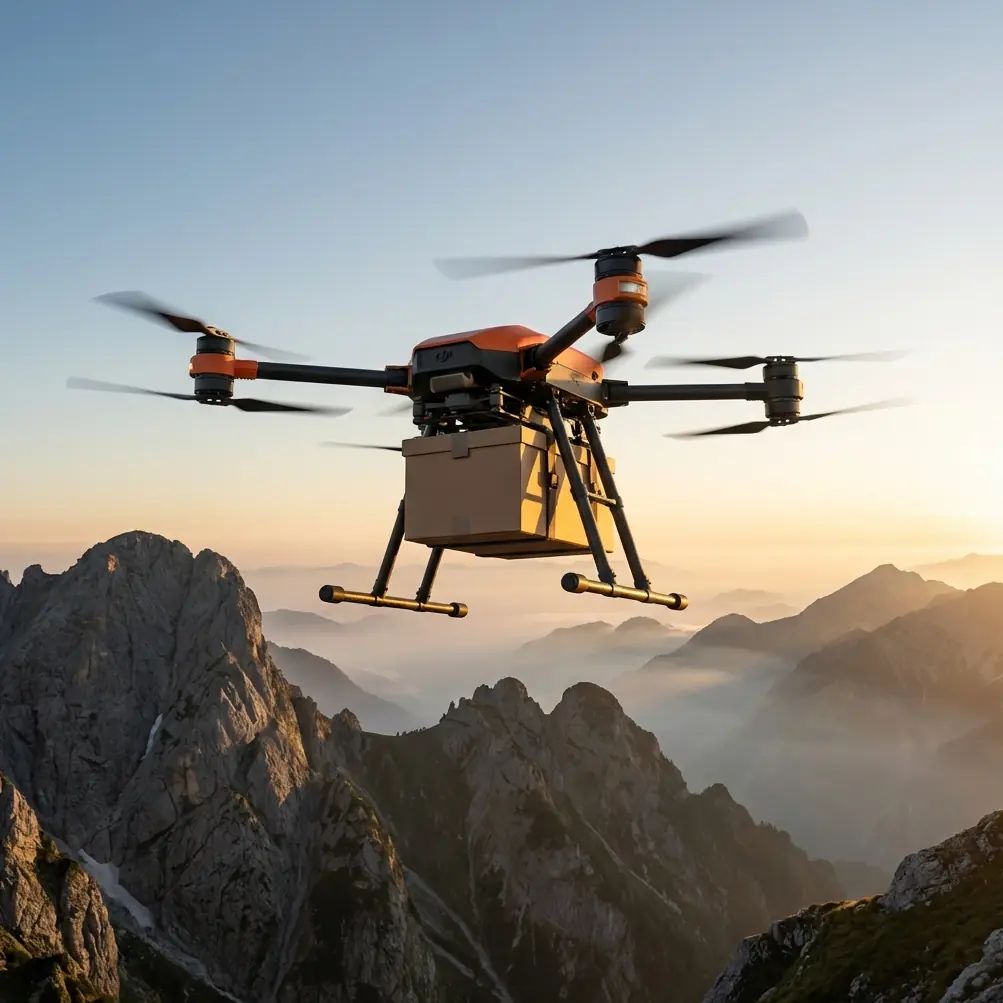
How FlyCart 30 Changes Coastal Field Survey Work When Inspection Moves Beyond “Eyes and Hammer”
META: A practical expert look at using FlyCart 30 for coastal field surveying, inspired by a new AI wall-inspection breakthrough that replaces manual checks with infrared, vision, and drone-based workflows.
I spend a lot of time thinking about where drone operations actually create value, not where they merely look advanced. The most useful signal in the latest UAV news did not come from a glossy product launch. It came from a very specific pain point in building inspection.
Students at Hebei Building Materials Vocational and Technical College developed an infrared-plus-visual dual-modal AI detection system for identifying wall hollowing and leakage. That matters because it targets a stubborn problem that has long depended on a basic routine: human eyes and a hammer. Inspectors look, tap, listen, guess, document, and then repeat that process across a large façade. The reported innovation shifts that workflow toward AI plus drones, which is more than a technology swap. It is a change in how field data is collected, validated, and acted on.
For anyone evaluating the FlyCart 30 in coastal survey operations, that shift is the real story.
At first glance, wall quality inspection and field surveying seem like separate categories. One deals with buildings; the other with land, crops, drainage, and logistics. In practice, they share the same operational bottleneck: too much depends on manual interpretation in environments that are large, repetitive, weather-exposed, and time-sensitive. Coastal work intensifies that pressure. Salt air reduces visibility. Wind changes without much warning. Ground conditions can slow teams down. And once your survey plan depends on people crossing muddy berms or revisiting the same edge conditions by foot, efficiency collapses.
That is where the FlyCart 30 becomes more interesting than its name suggests.
Most people know it as a heavy-lift logistics platform. Fair enough. But in the field, especially near the coast, utility is not defined only by payload capacity. It is defined by how a platform supports a repeatable workflow when conditions are changing under you. If your survey operation includes sensors, collection kits, marker drops, sample transfer, temporary relay supplies, or equipment movement between disconnected points, the FC30 can sit inside the survey chain rather than beside it.
The inspection story from Hebei points to the key idea: combine sensing modes, automate interpretation where possible, and remove the weakest parts of manual routine. In the wall-inspection case, the weakness was the old “look and tap” method. In coastal field surveying, the weakness is often the stop-start nature of the job. Teams carry gear into wet ground, reposition to maintain line of sight, double back to verify anomalies, then lose time when weather turns and batteries become a scheduling problem rather than just a power source.
A well-planned FC30 workflow addresses that friction in a few important ways.
First, payload strategy. Coastal surveying is rarely one clean mission type. One pass may focus on imagery; the next on sample retrieval; another on placing or collecting lightweight markers in difficult access zones. That is why payload ratio matters operationally. It is not just a spec-sheet talking point. A strong payload ratio means the aircraft remains useful after you account for the real equipment stack: mounting interfaces, protective casing, transport containers, spare field items, and in some cases a winch system to lower or lift materials without forcing a landing on unstable ground.
That winch capability is especially relevant in soft coastal terrain. If you have ever tried to land near irrigation channels, salt-marsh edges, or wind-cut embankments, you know that a precision hover and controlled lowering sequence can be safer and faster than touching down. This is where logistics and surveying blend together. The aircraft is not simply “mapping” or “transporting.” It is maintaining survey continuity by moving what the mission needs, exactly when it is needed, without exposing crew or hardware to bad ground.
Second, route discipline. Coastal fields can look open on a map and still behave like fragmented airspace in practice. Tree lines, utility corridors, reflective water, variable wind lanes, and access roads all break up your ideal route. Route optimization therefore becomes less about drawing the shortest line and more about preserving useful flight margins. If you are running repeated survey support missions with the FC30, the best route is often the one that keeps reserve capacity intact for diversions, not the one that saves a few seconds on paper.
This is where the Hebei inspection example offers a subtle lesson. Their dual-modal AI approach does not rely on a single source of truth. It pairs infrared with visual data because one sensing stream can miss what the other reveals. The same mindset works in FC30 field operations. Do not depend on one decision variable. Build routes around weather, terrain, battery state, retrieval options, and task priority together.
I saw the value of that during a coastal job that started in stable morning conditions and changed quickly around mid-flight. The mission itself was straightforward: support a field survey team working across wet agricultural plots close to a tidal zone. The FC30 was carrying equipment for a distributed survey setup, including supplies that needed to be delivered to a team operating on the far side of a drainage boundary. The initial route was conservative, with clear spacing from exposed edges and room for a return path. Then the weather shifted.
The first sign was not rain. It was the wind. Coastal gusts have a way of arriving as if someone opened a side door in the sky. Ground observers felt it seconds after the aircraft had already begun compensating. That is the difference between theoretical planning and real operations: the aircraft reacts before the team fully processes the change. The FC30 held the mission profile, but the route logic changed immediately. We shortened the active task window, prioritized delivery completion, and preserved return margins rather than pushing the full planned sequence.
This is where dual-battery architecture becomes more than redundancy language. In unstable weather, power management is operational confidence. When a mission profile has to adapt in real time, you need battery design that supports continuity, not fragility. The same applies to systems like an emergency parachute. Nobody plans a civilian survey mission around failure, but a safety layer changes the way risk is assessed over fields, access roads, and scattered work crews. In a coastal environment, where gusts can build faster than inland teams expect, those safeguards are part of responsible planning.
The aircraft completed the support leg, weather continued to deteriorate, and the team cut the broader mission into phases rather than forcing full completion in one window. That decision saved time overall. A lot of crews make the opposite mistake. They chase a schedule after conditions change, then lose more time to rework, battery stress, repositioning, or avoidable safety pauses.
For FC30 users, this is the larger point: the drone earns its place not when everything goes right, but when the operation stays organized after the environment stops cooperating.
There is also a strong argument for the FC30 in BVLOS planning discussions, though this always depends on local regulations, approvals, crew qualification, and operational framework. In coastal agricultural and land-management scenarios, distance is often not the main issue. Fragmentation is. Teams get separated by water channels, mud access limits, and infrastructure gaps. A platform that can support extended operational reach within a compliant BVLOS structure changes staffing assumptions. It can reduce wasted transit, shorten response time to anomalies, and help centralize decision-making around live mission data rather than field guesswork.
That mirrors the logic behind the wall-inspection innovation. When the Hebei team built a system to detect hollowing and leakage with a dual-modal AI method, they were not just digitizing an old task. They were making the output less subjective. In surveys, especially in coastal environments, subjectivity creeps in through delay. The longer it takes to get tools, verify a finding, revisit a boundary, or collect comparison data, the more the mission depends on memory and interpretation. Support aircraft like the FC30 reduce that delay. The result is cleaner decision cycles.
There is another practical benefit here that rarely gets enough attention: training quality.
When people move from manual workflows into drone-assisted operations, they often assume training should begin with the aircraft. Usually it should begin with the task model. The old building-inspection method of “eyes plus hammer” is easy to picture because it is physical and immediate. The same is true for many field survey habits. People trust what they can walk to and touch. Introducing the FC30 works best when teams understand which parts of the old workflow are being replaced, which are being accelerated, and which still require human judgment.
For example, AI can help identify patterns. A drone can deliver equipment or gather data from difficult terrain. But a good survey lead still decides whether an anomaly deserves a second pass, a different sensor, a ground sample, or a revised route. That balance matters. It keeps the drone inside a professional workflow rather than turning it into a floating shortcut.
If you are building a coastal survey program around the FlyCart 30, I would frame the mission in this order:
- Define where manual movement is slowing data quality.
- Identify which items or tools need aerial delivery rather than full crew repositioning.
- Use the winch system where landing risk is higher than hover transfer risk.
- Build route optimization around weather margin and retrieval logic, not just distance.
- Treat dual-battery resilience and emergency parachute safeguards as planning tools, not afterthoughts.
- If your operation may scale, design for compliant BVLOS processes early rather than retrofitting them later.
That may sound procedural, but it is exactly how useful drone programs avoid becoming scattered collections of flights.
The building-inspection breakthrough from Hebei is a reminder that the best UAV stories are usually grounded in an old job done badly for too long. Manual wall checks depended on eyes and hammer strikes. Their new system uses AI, infrared, and visual sensing to make the inspection more precise. In coastal field surveying, the equivalent shift is moving from walking everything, carrying everything, and improvising around weather, to a workflow where the aircraft is part of the operational structure from the start.
The FC30 fits that future best when you stop asking, “Can this drone fly here?” and start asking, “Which part of this field workflow becomes more accurate and less fragile if this aircraft is integrated correctly?”
That is the right question for coastal teams. It is the right question for infrastructure-adjacent survey work. And it is the reason logistics platforms increasingly belong in inspection and survey conversations.
If you are comparing payload planning, field setup options, or coastal operating considerations for the FC30, you can message our flight operations desk here to discuss a practical deployment scenario.
Ready for your own FlyCart 30? Contact our team for expert consultation.