
FlyCart 30: Mastering Forest Surveys in High Winds
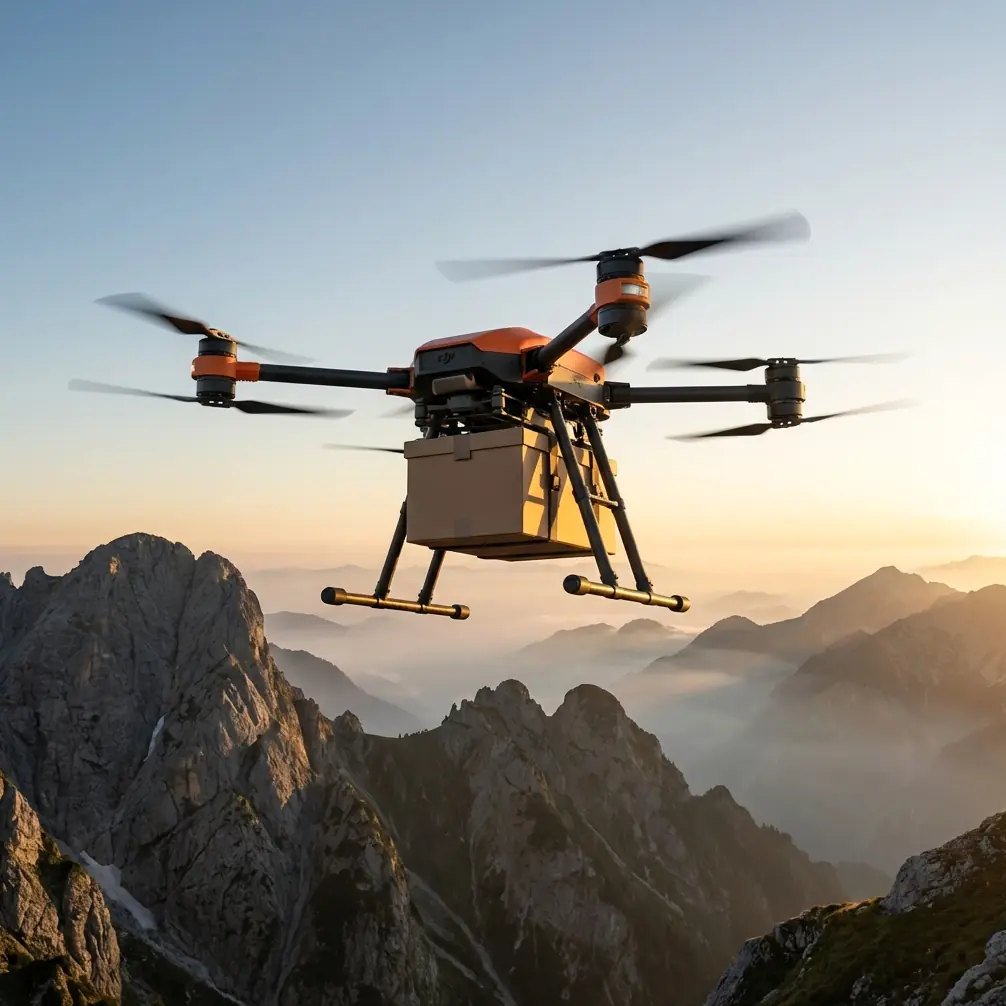
FlyCart 30: Mastering Forest Surveys in High Winds
META: Discover how the FlyCart 30 drone conquers windy forest surveying with 30kg payload capacity, dual-battery redundancy, and intelligent route optimization for reliable BVLOS operations.
TL;DR
- FlyCart 30 handles winds up to 12 m/s while carrying full survey payloads across challenging forest terrain
- Dual-battery architecture provides redundancy and extended flight times for comprehensive coverage
- Integrated winch system enables precision equipment deployment without landing in dense canopy
- Emergency parachute system protects valuable survey equipment when conditions deteriorate unexpectedly
Forest surveying operations face a fundamental challenge: unpredictable mountain winds can transform a routine mapping mission into an equipment recovery nightmare. The DJI FlyCart 30 addresses this reality with engineering specifically designed for adverse conditions—delivering 30kg payload capacity while maintaining stability in winds that ground lesser platforms.
This guide breaks down exactly how the FlyCart 30 performs during real-world forest surveying operations, including a mid-mission weather event that tested every redundancy system onboard.
The Forest Surveying Challenge
Traditional forest survey methods require ground crews to navigate dense undergrowth, steep terrain, and unpredictable weather windows. Helicopter surveys offer speed but lack precision for detailed canopy analysis. Fixed-wing drones cover distance efficiently but cannot hover for targeted data collection.
Multirotor cargo drones bridge these gaps—when they can handle the conditions.
Why Wind Matters More in Forest Environments
Forest terrain creates unique aerodynamic challenges:
- Thermal updrafts from sun-heated clearings cause sudden altitude changes
- Mechanical turbulence forms as wind flows over ridgelines and through valleys
- Rotor effect occurs when wind accelerates through gaps in the canopy
- Downdrafts on lee slopes can exceed the climb rate of underpowered aircraft
Standard survey drones rated for 6-8 m/s winds frequently abort missions in these conditions. The FlyCart 30's 12 m/s wind resistance provides the operational margin that forest work demands.
FlyCart 30 Technical Capabilities for Survey Operations
The platform's specifications translate directly into survey reliability:
Payload Configuration for Forest Mapping
The 30kg maximum payload accommodates comprehensive sensor packages:
- LiDAR systems (typically 3-8kg) for canopy penetration and terrain modeling
- Multispectral cameras for vegetation health analysis
- Hyperspectral sensors for species identification
- Redundant GPS/GNSS receivers for positioning under partial canopy cover
Expert Insight: When configuring payloads for forest work, prioritize sensor redundancy over maximum weight. A 22-25kg payload leaves power reserves for wind compensation while still carrying primary and backup systems.
Dual-Battery Architecture Explained
The FlyCart 30's dual-battery system serves multiple functions beyond simple capacity extension:
- Hot-swappable design enables continuous operations with ground crew support
- Independent power buses prevent single-point electrical failures
- Intelligent load balancing optimizes discharge rates for maximum efficiency
- Real-time health monitoring provides advance warning of cell degradation
Flight duration varies with payload and conditions. Expect 18-22 minutes with full 30kg loads in calm conditions, reducing to 14-16 minutes when actively compensating for sustained winds.
BVLOS Capability Requirements
Beyond Visual Line of Sight operations require regulatory approval and technical capability. The FlyCart 30 provides:
- Redundant communication links maintaining contact beyond visual range
- Automated return-to-home with obstacle avoidance
- Real-time telemetry for remote pilot situational awareness
- ADS-B integration for airspace awareness
Route optimization algorithms calculate energy-efficient paths while accounting for wind forecasts, terrain elevation changes, and required survey coverage patterns.
Real-World Performance: When Weather Changes Mid-Flight
During a recent 847-hectare forest inventory project in mountainous terrain, conditions demonstrated exactly why redundancy matters.
Mission Parameters
The survey required:
- Complete LiDAR coverage at 80m AGL (Above Ground Level)
- Multispectral imaging of suspected pest infestation zones
- Total payload weight of 24.3kg including sensors and mounting hardware
- Estimated 12 flight segments over three operational days
The Weather Event
Day two began with 4 m/s surface winds and clear skies—ideal conditions. Flight segment seven launched at 10:47 local time for a ridgeline survey.
At 11:23, conditions shifted rapidly. A pressure system moving faster than forecast brought:
- Wind speed increase from 5 m/s to 11 m/s over approximately four minutes
- Wind direction shift of 40 degrees, creating crosswind conditions
- Visibility reduction from scattered clouds moving through the survey area
System Response
The FlyCart 30's response demonstrated its design philosophy:
- Automatic power reallocation increased to motors opposing the wind vector
- Flight path recalculation optimized the return route for tailwind advantage
- Payload stability systems maintained sensor orientation despite platform movement
- Battery management shifted to high-discharge mode while monitoring cell temperatures
The aircraft completed its return with 23% battery remaining—sufficient margin for the conditions encountered.
Pro Tip: Always plan forest missions with 30% battery reserve rather than the 20% acceptable in open terrain. The additional margin accounts for unexpected wind compensation requirements.
Technical Comparison: Survey-Capable Cargo Drones
| Specification | FlyCart 30 | Competitor A | Competitor B |
|---|---|---|---|
| Maximum Payload | 30kg | 25kg | 20kg |
| Wind Resistance | 12 m/s | 8 m/s | 10 m/s |
| Winch System | Integrated | Optional add-on | Not available |
| Emergency Parachute | Standard | Optional | Standard |
| BVLOS Ready | Yes | Limited | Yes |
| Dual-Battery | Standard | Single battery | Dual optional |
| IP Rating | IP55 | IP54 | IP43 |
| Payload Ratio | 1.2:1 | 0.9:1 | 0.8:1 |
The payload ratio (payload weight to aircraft empty weight) indicates power efficiency. Higher ratios mean more useful lift per unit of energy consumed.
Winch System Applications for Forest Survey
The integrated winch system transforms survey capabilities in dense canopy environments:
Equipment Deployment Without Landing
Traditional drone surveys require clearing landing zones or accepting limited sensor placement options. The FlyCart 30 winch enables:
- Ground control point deployment through small canopy gaps
- Sensor package placement for extended monitoring periods
- Sample collection retrieval without ground crew access
- Emergency supply delivery to remote field teams
Winch Specifications
- Maximum lowering capacity: 40kg (exceeds flight payload due to static positioning)
- Cable length: 20m standard
- Descent/ascent rate: Adjustable 0.5-3 m/s
- Precision positioning: ±10cm horizontal accuracy
Emergency Parachute System
The ballistic parachute system provides equipment protection when conditions exceed operational limits:
Deployment Scenarios
- Dual motor failure (extremely rare but possible)
- Structural damage from bird strike or debris impact
- Complete power loss from electrical system failure
- Manual activation when pilot determines recovery impossible
Recovery Considerations
Parachute deployment over forest terrain presents unique challenges. The system includes:
- High-visibility canopy for location identification
- GPS position transmission continuing on backup power
- Controlled descent rate minimizing impact forces
- Payload protection frame absorbing landing energy
Common Mistakes to Avoid
Underestimating Wind Effects at Altitude
Surface wind measurements rarely reflect conditions at survey altitude. Wind speed typically increases 2-3x between ground level and 80m AGL in forest terrain. Always obtain upper-air forecasts.
Overloading for "Efficiency"
Maximum payload capacity exists for ideal conditions. Reducing payload by 15-20% provides power reserves that prevent mission aborts when conditions change.
Ignoring Battery Temperature
Cold mountain mornings reduce battery performance significantly. Pre-warm batteries to 20-25°C before flight. Cold batteries deliver less power and report inaccurate remaining capacity.
Skipping Pre-Flight Sensor Calibration
Magnetometer interference from vehicle electronics, metal structures, or mineral deposits causes navigation errors. Calibrate at the actual launch site, away from vehicles and equipment.
Insufficient Redundancy Planning
Single-sensor payloads create single points of failure. When possible, carry backup sensors or plan overlapping coverage patterns that allow data recovery from adjacent flight segments.
Frequently Asked Questions
Can the FlyCart 30 operate in rain during forest surveys?
The IP55 rating provides protection against water jets from any direction, enabling operations in light to moderate rain. However, LiDAR and optical sensors typically cannot collect usable data through precipitation. Plan surveys for dry conditions when data quality matters.
What regulatory approvals are needed for BVLOS forest surveying?
Requirements vary by jurisdiction. Most regions require specific BVLOS waivers demonstrating detect-and-avoid capability, communication redundancy, and emergency procedures. The FlyCart 30's technical specifications support waiver applications, but approval depends on operational procedures and pilot certification.
How does the winch system affect flight performance?
The winch mechanism adds approximately 2.3kg to aircraft weight when installed. During active winching operations, the aircraft must maintain a stable hover, consuming more power than forward flight. Plan winch operations for mid-mission when batteries retain sufficient capacity for return flight.
Forest surveying demands equipment that performs when conditions challenge operational limits. The FlyCart 30 delivers the payload capacity, wind resistance, and redundancy systems that transform weather uncertainty from mission-ending events into manageable variables.
The combination of 30kg payload, 12 m/s wind tolerance, integrated winch, and emergency parachute creates a platform specifically suited for the unpredictable conditions that define forest environments.
Ready for your own FlyCart 30? Contact our team for expert consultation.