
FlyCart 30 for Forest Survey Work in Extreme Temperatures
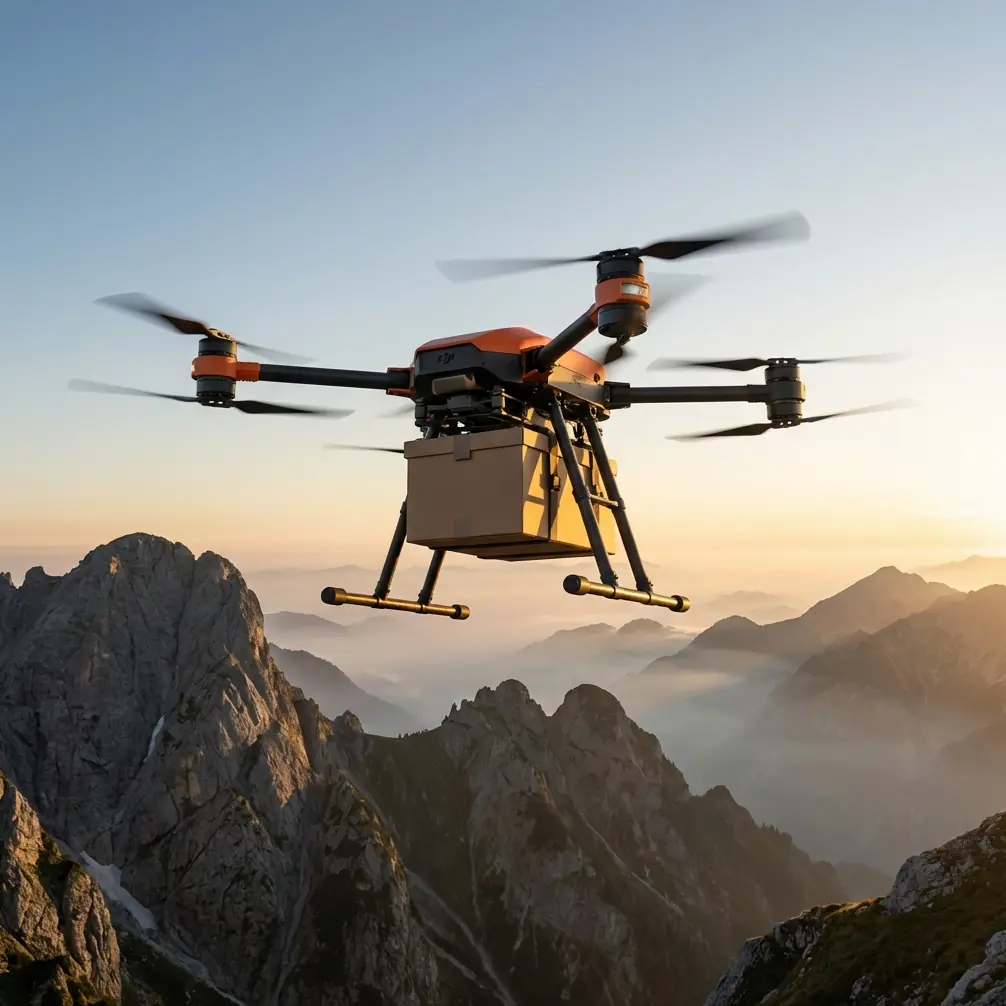
FlyCart 30 for Forest Survey Work in Extreme Temperatures: What Actually Matters in the Field
META: A technical review of FlyCart 30 performance for forest survey support in harsh temperatures, with practical notes on battery management, route planning, winch use, BVLOS considerations, and what urban normalized drone operations signal for commercial deployment.
Forest survey work punishes equipment in quiet ways. Heat softens margins. Cold steals battery confidence. Dense canopy disrupts line of sight, and the mission itself rarely forgives delays. That is why any serious discussion of the FlyCart 30 has to move past brochure-level specs and into operational behavior: payload ratio, route discipline, winch efficiency, battery handling, and risk controls that still make sense when conditions are ugly.
I’ve spent enough time around drone logistics programs to know that forest operations are not really about the aircraft alone. They are about whether the whole system keeps working when temperatures swing, landing options disappear, and every unnecessary hover minute becomes expensive. For teams looking at the FlyCart 30 as part of a forest survey workflow, especially in remote or temperature-stressed environments, the better question is not “Can it fly?” It is “Can it reliably support the survey mission without creating new bottlenecks?”
That distinction matters.
Why a cargo platform belongs in a forest survey conversation
At first glance, putting a transport drone into a survey article sounds slightly cross-disciplinary. In a way, that mirrors a detail emerging from Jinan’s current low-altitude planning conversation. One project, described as a “Shandong low-altitude integrated media normalized drone light show,” sits inside a larger blueprint spanning 40 scenarios, and was even characterized as feeling somewhat cross-boundary within that map. That detail matters more than it appears to.
When a city explores normalized drone operations across dozens of use cases, it signals something bigger than a single aircraft category. It suggests that low-altitude systems are maturing into infrastructure. Not just for inspection. Not just for logistics. Not just for visual performance. Infrastructure.
For forest survey teams, that shift has real consequences. Once drones are treated as part of a broader operational ecosystem, support aircraft like the FlyCart 30 become easier to justify. Survey work in forests often depends on moving batteries, sensors, emergency kits, line payloads, communications relays, and replacement parts into places where trucks cannot go and crews should not waste daylight hiking. A survey aircraft collects the data, but a logistics aircraft preserves the tempo.
That is where FlyCart 30 earns attention.
Payload ratio is not a spec-sheet vanity metric
In forest operations, payload ratio decides whether the aircraft is useful or just technically capable. Those are not the same thing.
A cargo drone can look impressive on paper and still fail to improve a survey program if too much of its effort is consumed by carrying its own compromises. In practical terms, the more efficiently the FlyCart 30 converts lift into mission value, the more it reduces support friction for survey crews. That can mean transporting LiDAR batteries to ridge teams, delivering GNSS base station components, hauling sample containers, or lowering a sensor package into a small opening without forcing a full landing.
A good payload ratio changes the shape of field planning. Teams stop overloading people. They stop padding schedules around manual movement. They stop treating every remote plot as a half-day access problem.
In extreme temperatures, this becomes even more decisive. Cold conditions reduce battery performance and can tempt crews to launch heavier than they should, hoping to complete more tasks per sortie. Heat does the opposite, pushing operators to shorten segments and preserve thermal headroom. A better payload ratio gives planning flexibility in both directions. It lets you choose whether to maximize delivery efficiency or preserve reserve margins, rather than being forced into one mode.
The dual-battery question: field reality, not theory
The most useful battery advice I can offer from field experience is simple: in extreme temperatures, stop treating both batteries as if they age or discharge identically just because they launched together.
On a dual-battery aircraft, crews sometimes assume symmetry where none exists. One pack may have had a colder soak before insertion. One may warm faster in a sun-exposed staging area. One may show slightly different voltage behavior under climb load. In forest environments, those differences can stay hidden until the aircraft transitions from efficient cruise into a power-hungry phase like ascent over a tree line, hover for winch deployment, or a return leg with shifting winds.
My rule is to watch not only total battery percentage but pack balance behavior under load. If one battery consistently sags earlier in cold weather, retire that pair from the most demanding routes and assign it to shorter shuttles. Do not wait for the flight controller to teach the lesson for you.
This is where a dual-battery architecture can be a real advantage if managed correctly. It provides redundancy and operational continuity, but only if the team runs disciplined pairing, temperature conditioning, and rotation logs. In winter work, pre-warm batteries before dispatch. In heat, avoid sealing packs in cases that trap residual warmth between sorties. After landing, let field notes capture the environmental context of any abnormal sag. Over time, these records become more valuable than generalized assumptions about battery health.
Extreme-temperature forest operations are won by habits, not slogans.
The winch system is more than a convenience
Forest crews often overfocus on takeoff and landing performance while underestimating what a winch system changes operationally. In remote survey support, the ability to deliver or retrieve payloads without committing the aircraft to a full touchdown can reshape mission safety.
That matters in several common situations:
- sloped terrain with unstable footing
- narrow openings under partial canopy
- muddy or snow-covered clearings
- protected vegetation areas where touchdown is undesirable
- survey teams positioned near obstacles or uneven rock shelves
A winch allows the FlyCart 30 to remain in a cleaner air envelope while the payload handles the last vertical segment. For survey support, that could mean lowering a battery case, radio relay, compact weather sensor, or medical kit to a field crew without exposing the aircraft to branches, debris ingestion, or awkward ground effects.
There is another benefit that only appears after repeated use: the winch reduces pressure to “force” a landing zone where no good landing zone exists. That single change improves decision quality. Crews stop improvising unsafe touchpoints just to complete delivery. They can choose a better hover position, keep horizontal separation from canopy edges, and finish the transfer with less risk.
In extreme temperatures, less ground contact also means less contamination and less delay. Snow, slush, dust, and damp leaf litter are not kind to turnaround times.
BVLOS potential only matters if route optimization is disciplined
People talk about BVLOS as if it is a magic multiplier. It isn’t. BVLOS only creates value when route design is deliberate, repeatable, and conservative enough to survive environmental drift.
Forest survey support is one of the clearest civilian cases for BVLOS-enabled logistics because work areas are distributed, access is slow, and the drone is often moving between known points rather than improvising in dense urban clutter. But long-distance utility does not come from simply extending flight range. It comes from route optimization.
For the FlyCart 30, route optimization in forest terrain should account for four things at minimum:
Vertical profile management
Avoid unnecessary climbs over terrain if contour-following can preserve energy without sacrificing safety margins.Canopy and clearing behavior
Some routes look shorter on a map but force poor delivery geometry at the endpoint. A slightly longer path to a better hover/drop zone can produce a safer, faster mission.Thermal and wind exposure
Ridgelines and open cuts behave differently than sheltered forest corridors. In heat, rotor and battery stress accumulates quickly. In cold, headwinds can expose weak battery pairs earlier than expected.Return-path reserve logic
Outbound confidence is cheap. Return assurance is the real metric. Plan reserve around the least favorable return condition, not the nicest outbound leg.
If your team is considering route architecture for forest logistics support, it often helps to compare real mission patterns with operators who have already built commercial workflows around this type of aircraft. A quick field-oriented conversation can save months of trial and error; this is one useful point of contact: message a FlyCart operations specialist.
Emergency parachute systems should influence mission design, not just compliance checklists
An emergency parachute is often framed as a final layer of protection, which is true but incomplete. In professional operations, it should also shape how routes are approved in the first place.
Over forested terrain, a parachute does not erase all consequences. Trees, slopes, water crossings, and retrieval difficulty still matter. But the presence of an emergency parachute changes acceptable risk in transitional zones, especially when flights connect staging areas to crews near inaccessible sections of forest. It can support a more robust risk case for operations over difficult terrain, provided planning is realistic about descent area outcomes and payload security.
What matters most is not merely having the parachute installed. It is understanding where deployment would create manageable consequences versus where it would produce a retrieval or safety problem that disrupts the survey campaign. That should be mapped before operations begin. I prefer mission reviews that mark not only preferred routes but also “bad-failure geography” where any contingency event becomes disproportionately costly.
That kind of thinking separates aircraft ownership from aviation management.
What extreme temperatures reveal about FlyCart 30 suitability
The FlyCart 30 makes the strongest case for itself in forest survey support when the mission suffers from distance, terrain friction, and repeated resupply needs. Extreme temperatures sharpen all three issues.
In the cold, the platform’s value comes from reducing human exposure and preserving survey labor hours. Instead of sending crew members on repeated hikes for battery swaps or support gear, a logistics drone keeps specialists in position. Data collection continues while support moves through the air. The time savings are obvious, but the deeper advantage is consistency. Crews stay on task. Fatigue drops. The survey day becomes less vulnerable to access inefficiency.
In heat, the platform’s discipline matters more than its ambition. High temperatures punish sloppy dispatch practices, overloaded sorties, and long hover events. This is where payload ratio, route trimming, and efficient winch use combine into real productivity. The aircraft does not need to do everything in one flight. It needs to do the right tasks predictably without thermal overreach.
That is an operational maturity test, not a hardware test.
A practical deployment model for survey teams
If I were integrating FlyCart 30 into a forest survey program, I would structure it as a support node rather than a heroic centerpiece.
- Stage the aircraft at a reliable clearing or mobile field base.
- Use it to push consumables, replacement batteries, and specialized tools to distributed teams.
- Standardize winch deliveries for terrain where touchdown quality is inconsistent.
- Build BVLOS routes only after repeated VLOS validation and environmental logging.
- Segment battery pairs by temperature behavior and route difficulty.
- Predefine parachute consequence zones as part of route approval.
This model avoids one of the most common mistakes in drone adoption: asking a platform to justify itself with dramatic one-off missions instead of embedding it into routine operational flow.
And that brings us back to Jinan’s low-altitude planning signal. A city experimenting with normalized drone activity across 40 scenarios is not just imagining more flights in the sky. It is normalizing drones as repeatable tools across different functions, even when one project appears “cross-boundary,” like a routine drone light-show concept folded into a broader use-case map. For commercial operators, that is a useful lens. The biggest future for aircraft like FlyCart 30 will not come from novelty. It will come from being folded into ordinary workflows so effectively that teams stop talking about the drone and start talking about the output.
For forest survey operations, that output is simple: more productive field crews, fewer access delays, lower exposure to temperature stress, and more dependable support in terrain that resists every ground-based shortcut.
The FlyCart 30 is not the survey sensor. It is often the reason the survey keeps moving.
Ready for your own FlyCart 30? Contact our team for expert consultation.