
FlyCart 30 for Windy Highway Corridors: A Field Tutorial
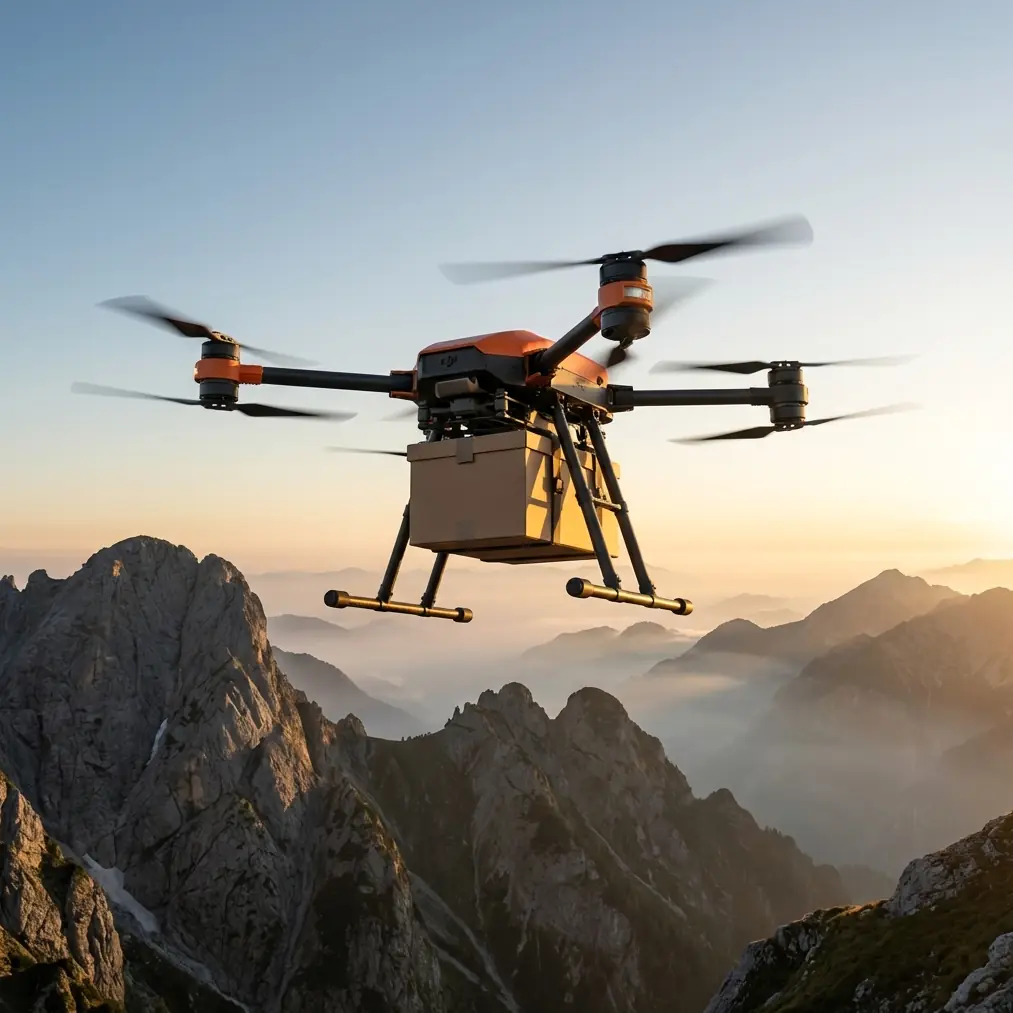
FlyCart 30 for Windy Highway Corridors: A Field Tutorial from a Logistics Lead
META: Practical FlyCart 30 tutorial for windy highway operations, covering route planning, payload balance, dual-battery strategy, winch use, BVLOS workflow, and mid-flight weather response.
Most people point a camera at a flower and end up with a picture that feels flat. The subject is there, but the life is missing.
That idea showed up in a 2026-04-29 technology piece by 御空逐影 about mobile flower photography. Its premise was simple: flowers are everywhere in every season, yet strong flower images are still hard to make. The article promised five ways to avoid the usual “tourist-style” result and produce something more vivid. That observation translates surprisingly well to highway drone work. Fly a large UAV over a road corridor in wind, and you learn the same lesson fast: seeing the subject is not the same as capturing what matters.
For FlyCart 30 operators working around highways, that distinction matters. Plenty of crews can get a drone in the air. Fewer can build a repeatable workflow that keeps the aircraft stable in shifting weather, preserves data quality, and moves payloads or support gear efficiently along a long linear asset. This guide is built around that operational reality.
I’m framing it from the perspective of a logistics lead because that role sits at the crossroads of flight safety, schedule pressure, and field utility. And with the FlyCart 30, those three things are tightly connected.
Why the FlyCart 30 changes the highway workflow
The FlyCart 30 is usually discussed as a transport platform, but that undersells it in corridor operations. On windy highway projects, it becomes a support aircraft that can move inspection kits, sensor packages, batteries, safety supplies, and small field components to teams spread across difficult access points. If your survey program includes embankments, bridges, median barriers, drainage cuts, or remote work zones where vehicle access is slow, the FC30 saves more than walking time. It reduces the stop-start friction that quietly erodes productivity all day.
That is where payload ratio starts to matter. A drone used for corridor support is not judged only by top payload on a spec sheet. It is judged by how sensibly it carries what the mission actually needs without wrecking endurance, stability, or route margin. In highway work, payload planning is a discipline. You are balancing the mission against wind, distance, launch options, and the probability that conditions will deteriorate before recovery.
The crews that get value from the FlyCart 30 are the ones that stop treating payload as a bragging number and start treating it as a route variable.
Start with the real corridor, not the map
Linear infrastructure creates a planning trap. On paper, highways look simple. In the field, they are turbulent. Cut slopes channel crosswinds. Overpasses create uneven air. Heat from asphalt can shift local conditions. Passing heavy vehicles alter the near-surface airflow enough to matter during lower-altitude transitions.
So the first rule is this: plan around the corridor’s behavior, not just its geometry.
Before launch, break the route into segments based on exposure:
- Open elevated sections
- Bridge approaches
- Depressed cuttings
- Interchanges with obstacle density
- Temporary work zones
- Areas with poor vehicle access for retrieval
This matters for both BVLOS workflow and emergency decisions. A highway route that looks like one mission often needs to be flown like four or five different environments stitched together. If you define those zones before takeoff, the FC30 becomes easier to manage because every segment has its own performance expectation.
That sounds obvious until the weather shifts.
The day the wind changed mid-flight
One of the more instructive corridor runs I’ve seen started clean and became a lesson by minute twelve.
The mission was straightforward: move field gear between separated highway survey points and support a corridor team that was documenting surface defects, drainage transitions, and bridge-edge conditions. Early wind checks were acceptable. Route optimization had already trimmed unnecessary lateral movement, which gave the aircraft a useful reserve.
Then the weather changed.
Not dramatically. That is the dangerous version. No storm wall, no instant abort signal. The corridor simply started producing stronger side gusts around an elevated section than the launch area suggested. The aircraft was stable, but the profile had changed. Ground crew could feel it before the telemetry made the story obvious.
This is where a mature FC30 setup earns its keep.
The dual-battery architecture became operationally significant immediately. Instead of treating battery status as a crude go/no-go threshold, the crew treated it as maneuvering insurance. Because they had not overcommitted payload and had planned route margin conservatively, they had room to shorten the mission, adjust the path, and recover without forcing the aircraft into a narrow power window.
That is the first major takeaway for windy highway work: dual-battery strategy is not just about endurance. It is about decision space. When weather drifts away from the morning forecast, the extra resilience buys better choices.
How to build a better dual-battery strategy
Too many teams discuss dual batteries as if the benefit ends at longer flight time. On highway corridors, that is the least interesting part.
Use a dual-battery plan for three things:
1. Wind reserve
Do not budget flight time as if outbound and return conditions will match. On long road alignments, they often do not. Reserve capacity for the least friendly segment, not the easiest one.
2. Recovery flexibility
If your primary delivery or support point becomes unstable because of wind, traffic movement, or temporary access restrictions, battery reserve gives you options for repositioning.
3. Data integrity
Even if the FC30 is not the mapping sensor itself, it may be carrying gear that supports the survey workflow. A rushed recovery can damage or delay the entire operation. Battery margin protects the larger job, not just the aircraft.
This is the same principle hidden inside that flower photography article’s core idea. Common subjects are easy to see, but not easy to render well. Highway flying is common enough now that people forget how much quality depends on control rather than mere access.
The winch system is more than a convenience
On highway projects, the winch system deserves more respect than it gets.
If your corridor includes embankments, drainage channels, median restrictions, or unsafe landing surfaces, the value of a controlled suspended delivery is obvious. But the operational significance goes further than avoiding a rough touchdown.
A winch lets the aircraft remain in a more stable hover position while lowering or lifting material from a safer standoff point. In windy conditions, that means you can avoid committing the aircraft to a bad landing zone just to complete a transfer. That can reduce the risk around uneven ground, roadside obstacles, and traffic-adjacent turbulence.
There is also a workflow benefit. Survey teams do not always need the entire drone to arrive at their exact position. Often they need a battery case, measurement accessory, compact sensor pack, or field tool. The winch turns the FC30 into a vertical handoff platform rather than a point-to-point aircraft that must fully land every time.
For highway support, that changes everything. It speeds turnover and reduces pressure on landing-site selection.
BVLOS only works when route optimization is honest
BVLOS is often discussed like a badge. For highway operations, it should be treated as an exercise in honesty.
If the route was optimized only to shorten distance on paper, it was not optimized. Real route optimization for the FC30 in a windy corridor weighs:
- Wind direction along each segment
- Obstacle density near interchanges and structures
- Emergency descent or diversion options
- Communication continuity
- Payload effect on handling
- Recovery alternatives if weather shifts
A direct line is not always the safest or most efficient line. Sometimes the better route is slightly longer but less exposed, easier to monitor, and more forgiving if the aircraft needs to divert.
That is especially true around raised structures and bridge zones where the airflow can become inconsistent. If the mission depends on predictable performance, choose predictability over geometric neatness.
For teams still building their procedures, I usually recommend rehearsing a corridor in layers:
- Empty or reduced-load familiarization
- Payload-balanced daylight route verification
- Wind-conditioned operational run
- Contingency drill for reroute or shortened return
That progression sounds slower. In practice, it prevents the expensive kind of delay.
Emergency parachute thinking should start before takeoff
An emergency parachute is not there to make risky planning acceptable. It is there to add a final protective layer when something has already gone wrong.
For highway missions, that matters because the ground environment is complicated. You are dealing with moving traffic, roadside infrastructure, crews on foot, variable terrain, and sometimes narrow safe zones. The presence of an emergency parachute should influence your route segmentation and contingency logic from the start.
Ask practical questions:
- Which route sections pass over the least forgiving ground environment?
- Where would a loss of normal control create the greatest secondary risk?
- Can those sections be shortened, shifted, or crossed at a different profile?
- Is the payload configuration creating unnecessary exposure during the highest-risk segment?
The parachute is part of the risk stack, but it should never be your plan A. Good corridor operators know that the real safety gains come from route discipline, conservative reserve planning, and realistic weather calls.
A practical field method for windy highway jobs
Here is the FC30 workflow I would hand to a corridor team tasked with highway support in unstable wind:
Pre-mission
Confirm what the aircraft is actually carrying and why. Strip the load to mission essentials. Every unnecessary kilogram narrows your options later.
Corridor segmentation
Mark open spans, elevated sections, bridges, cuttings, and retrieval-friendly zones. Build your route around those behavioral sections, not just waypoints.
Battery policy
Set a return threshold based on the most demanding likely segment, not the current local conditions at launch. This is where dual-battery planning earns trust.
Winch decision
If the field team only needs a transfer, do not force a landing just because it feels more traditional. Use the winch when the landing environment is inferior to the hover environment.
BVLOS discipline
Keep route optimization tied to communications, diversion logic, and wind exposure. The shortest line is often a trap.
Weather trigger points
Define what changes will cause a route reduction, alternate drop, or recovery. Waiting to “see how it feels” wastes the margin you carefully built.
Post-flight review
Compare the planned power usage, wind assumptions, and actual segment performance. This is how your next mission gets sharper.
Where the human factor shows up
One thing the 2026 article about flower photography got exactly right is that ordinary subjects still demand thought. Spring peach blossom, summer lotus, autumn sunflower, winter plum blossom — the article ran through seasonal examples to make the point that familiarity does not produce quality on its own.
Highway drone work has the same problem. A corridor is a familiar subject. That makes crews casual. Casual crews misread wind, overrate payload confidence, and underplan recovery options.
The FlyCart 30 is a serious machine. To get serious value from it, the team has to think beyond the launch and landing. They need to think in terms of movement chain, handoff efficiency, weather tolerance, and the cost of small errors repeated over many kilometers.
That is why the best FC30 operators I know are not obsessed with dramatic flights. They are obsessed with smooth ones.
When to pause and ask for a second operational view
Some corridor jobs sit right on the edge between manageable and needlessly ambitious. That is usually where outside input helps. If you are planning a windy highway workflow and want a sanity check on route structure, payload balance, or winch-based handoff logic, it can help to get a field-oriented second opinion through this direct operations chat.
That is not about chasing a generic recommendation. It is about pressure-testing your assumptions before the road and weather do it for you.
The real lesson
The flower article that sparked this comparison was not about drones at all. It was about how easy it is to capture something common badly. It was published on 2026-04-29, and its promise of five ways to avoid generic results applies here more than you might think.
Windy highway operations with the FlyCart 30 are not won by having the aircraft alone. They are won by avoiding the “tourist-style” version of corridor planning: simplistic route lines, lazy payload thinking, battery optimism, and landing choices made out of habit.
Use payload ratio as a control tool, not a boast. Treat dual-battery capacity as decision margin. Use the winch system to avoid forcing the aircraft into poor landing environments. Build BVLOS routes around actual corridor behavior. Keep the emergency parachute where it belongs: in the final layer, not the first idea.
Do that, and when the weather changes mid-flight, the FC30 does not become a problem. It remains what it should be — a workable, resilient part of the highway survey operation.
Ready for your own FlyCart 30? Contact our team for expert consultation.