
FlyCart 30 for High-Altitude Power Line Survey Work
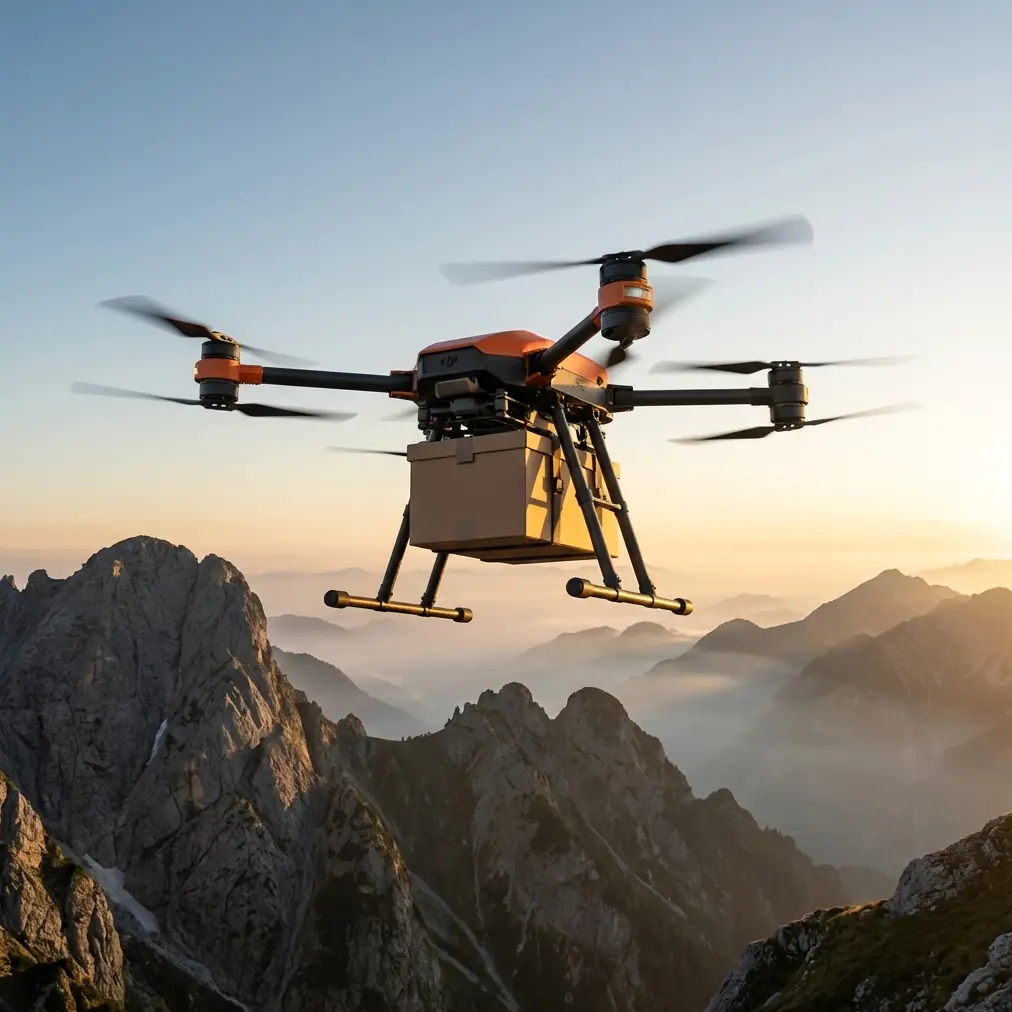
FlyCart 30 for High-Altitude Power Line Survey Work: What Actually Matters When Conditions Turn Mid-Flight
META: Practical FlyCart 30 insights for high-altitude power line survey operations, including payload ratio, winch use, dual-battery planning, route optimization, parachute safety, and weather response.
I’ve seen plenty of discussions about the FlyCart 30 that focus on headline specs but miss the harder question: what happens when you take it into the kind of environment that exposes every weak decision in your flight plan?
High-altitude power line survey work does exactly that.
This is not the easy version of drone operations. The aircraft is dealing with thinner air, shifting winds along ridgelines, changing temperature bands, and long linear corridors that punish poor route design. Add the practical realities of sensor carriage, spare components, and remote access to the work zone, and the FlyCart 30 stops being a brochure product. It becomes a logistics system.
That is the lens that matters.
I’m writing this from the perspective of a logistics lead, because in mountain utility work, survey quality is only half the story. The other half is whether the aircraft can get the right payload where it needs to be, stay stable when the weather turns, and recover safely if the mission profile changes faster than expected.
The real problem with high-altitude line surveys
Power line surveys in elevated terrain are usually discussed as imaging or inspection tasks. That is true, but incomplete.
Before the first image is captured, there is a transport problem. Teams need to move equipment into difficult corridors. Some routes are steep, narrow, or inaccessible by vehicle. Launch areas are often compromised by terrain rather than distance. Even when the line itself is straightforward on a map, the airspace around it is rarely simple. Valleys funnel wind. Towers create local turbulence. Temperature shifts can happen within a single leg of the mission.
A drone used here has to do more than fly. It has to support field workflow under stress.
That is where the FlyCart 30 becomes interesting for survey operations, even though many people still think of it primarily as a cargo platform.
Why a logistics drone fits a survey mission
At first glance, a heavy-lift drone may seem like the wrong tool for power line surveying. But in practice, its value often starts before the survey payload is airborne.
A FlyCart 30 can support line work by moving batteries, compact sensors, communications gear, repair tools, and lightweight field equipment to staging points that would otherwise cost a team significant time and energy to reach on foot. In high-altitude environments, shaving an hour off a hill climb is not just about productivity. It preserves crew energy and opens up more of the day for actual data capture.
This is where payload ratio matters operationally, not just technically.
A useful payload ratio determines whether one trip can carry a complete field set for a tower segment or whether the crew is forced into multiple rotations. That difference cascades through the entire day. More sorties mean more battery cycling, more exposure to changing weather, and more opportunities for launch-site congestion. In mountain survey operations, every unnecessary flight has a cost.
The FlyCart 30’s mission value grows when the aircraft is treated as part of a route-optimized survey chain rather than an isolated aircraft. You are not simply dispatching a drone. You are sequencing transport, staging, survey readiness, and recovery in a way that keeps the team ahead of the terrain.
Mid-flight weather change: where the aircraft earns its place
One mission stands out.
We were working a power corridor at elevation, tracking a line segment that looked manageable on the morning forecast. Visibility was good. Wind was acceptable at launch. The route had been optimized to minimize exposure at the ridge crossing and preserve battery margin for the return leg.
Then the weather changed.
Not dramatically at first. Just enough to make the aircraft work harder. You could see it in the behavior over the exposed section where the valley began feeding crosswind into the route. This is exactly the sort of moment where high-altitude planning either proves itself or collapses.
The dual-battery architecture mattered immediately.
In stable conditions, people tend to talk about battery systems as endurance numbers. In real operations, the value is resilience. When wind increases mid-flight, energy planning stops being a spreadsheet exercise and becomes a live safety margin. A dual-battery setup gives the operator more confidence in the face of changing load demand, especially when the drone is already carrying useful equipment rather than flying clean.
That day, we had enough reserve to avoid turning a weather adjustment into a rushed recovery. The aircraft had room to hold discipline. We revised the return logic, shortened the exposure window, and brought it back without forcing the platform into an aggressive, battery-hungry correction pattern.
This is the difference between aircraft capability and operational survivability.
The winch system is not just for delivery jobs
For high-altitude power line work, the winch system deserves more attention than it usually gets.
There are launch sites where landing with full precision is less practical than maintaining a safe hover and lowering gear into position. Uneven rock, brush, tower access constraints, and narrow clearings can all make ground interaction messy. A winch reduces the need to commit the full aircraft to compromised terrain.
That has several benefits.
First, it limits rotor exposure near obstacles. Second, it keeps landing gear out of unstable surfaces. Third, it allows equipment handoff without forcing the drone into a low-altitude hover for longer than necessary. In a survey context, this can be the cleanest way to move batteries or sensor modules to a team working near a structure or slope edge.
Operationally, that means faster transitions and less risk during equipment transfer.
If your line survey involves moving support payloads along the route, the winch changes what counts as a usable drop point. That expands your field options, which feeds directly into route optimization. A mission with more viable transfer points is a mission with more ways to adapt when weather or access changes.
BVLOS planning starts with discipline, not distance
Power line corridors tempt teams into thinking about BVLOS as a coverage benefit. It is that, but the stronger advantage is continuity.
When a route stretches through high-altitude terrain, breaking the mission into too many visual-line handoffs can create inefficiency and increase exposure during launch and recovery phases. Thoughtful BVLOS planning can reduce those interruptions, provided the operation is structured around terrain, comms reliability, and emergency decision points rather than pure corridor length.
This matters even more when weather turns mid-mission.
The mistake is assuming BVLOS is about flying farther. The real value is maintaining a coherent operation across a route that would otherwise become fragmented. In power line surveys, fragmentation leads to duplicated setup work, additional battery consumption, and more human error at transition points.
The FlyCart 30 fits this kind of planning best when operators define route segments around terrain behavior, not map symmetry. A ridge crossing may deserve its own energy margin. A valley section may need alternate return logic. A tower cluster may justify a support drop via winch before the primary survey sequence begins.
This is route optimization in the field, not just on software.
Emergency parachute thinking should change how you plan the route
Most teams mention an emergency parachute as a safety feature and move on. That understates its significance.
In high-altitude utility work, emergency recovery options are limited by the environment. Slopes, trees, rocky shelves, and restricted access corridors all shrink your margin when something goes wrong. A parachute system does not remove that complexity, but it gives planners another layer to work with when evaluating acceptable route geometry.
That should influence where you cross exposed terrain, how closely you commit to tower approaches, and which sections you treat as low-margin transit zones.
A safety system only becomes meaningful when it shapes behavior before the mission starts. If the aircraft includes an emergency parachute, use that fact to improve conservative planning rather than justify aggressive choices. The best teams do not rely on the feature. They let it reinforce disciplined corridor design.
What the wrong reference story teaches us anyway
The reference material behind this article included a news item about a directed-energy counter-drone program at five military installations, announced by the U.S. Department of Defense as part of an effort to strengthen defenses against unmanned aircraft systems. That has nothing to do with civilian power line surveying directly, and it should stay that way.
But there is still one useful lesson in it for commercial operators: the wider drone sector is maturing around system-level reliability, site selection, and mission-specific infrastructure.
Even in that unrelated defense context, the key facts are about choosing five specific installations and building capability in designated operating environments rather than treating drone operations as generic. Commercial utility teams should think the same way. High-altitude surveying is not a standard flight task transplanted into the mountains. It requires designated procedures, designated launch logic, and designated contingency planning built for that environment.
The operational significance is simple. Specialized conditions deserve specialized deployment design.
That is also why the FlyCart 30 should be evaluated by how it integrates into a utility workflow, not by isolated spec sheets.
Building a practical FlyCart 30 workflow for power lines
If I were setting up a repeatable high-altitude survey program around the FlyCart 30, I would build it in layers.
1. Use the aircraft to establish the work zone
Get batteries, compact support gear, and essential field tools to the first difficult access point before the main survey cycle begins. This reduces crew fatigue and shortens time to usable data collection.
2. Design route optimization around terrain energy costs
A straight line is often the worst route in mountain conditions. Build legs around wind exposure, altitude transitions, and alternate return options. Save battery margin for the sections most likely to deteriorate after launch, not the sections that look hardest on the map.
3. Match payload ratio to mission phase
Do not treat every sortie as equivalent. Some flights are transport-heavy. Others are endurance-critical. Some are support drops via winch to maintain survey continuity. Payload decisions should change with mission phase rather than remain fixed out of habit.
4. Use the winch where terrain creates bad landing decisions
If the ground is poor, stop trying to make it a landing zone. Controlled lowering can be the safer and faster method for field handoff.
5. Reserve dual-battery margin for weather, not optimism
Forecast confidence tends to collapse first in mountain environments. The reserve you protect at launch is the reserve that saves your mission when the return leg stops behaving as planned.
6. Treat the parachute as a planning tool
Emergency systems belong in pre-mission corridor design, crew briefing, and route acceptance criteria. They are not decorative.
A final thought on field credibility
The FlyCart 30 makes the most sense in high-altitude power line work when it is used by teams that understand one basic truth: logistics determines survey quality more often than people admit.
The best imagery in the world does not help if your batteries are in the wrong place, your crew arrives exhausted, your route ignores ridge wind, or your handoff point forces unsafe landings. A drone platform that can carry meaningful loads, support flexible transfer with a winch system, and preserve operational margin through dual-battery planning has a real place in this kind of work.
And when the weather changes mid-flight, as it often does, the aircraft’s value stops being theoretical.
It becomes obvious.
If you’re refining a corridor workflow or trying to decide whether the FlyCart 30 fits your terrain and survey profile, you can message our operations team here to compare mission assumptions before you commit to a field setup.
Ready for your own FlyCart 30? Contact our team for expert consultation.