
FlyCart 30 Guide: Surveying Solar Farms in Dust
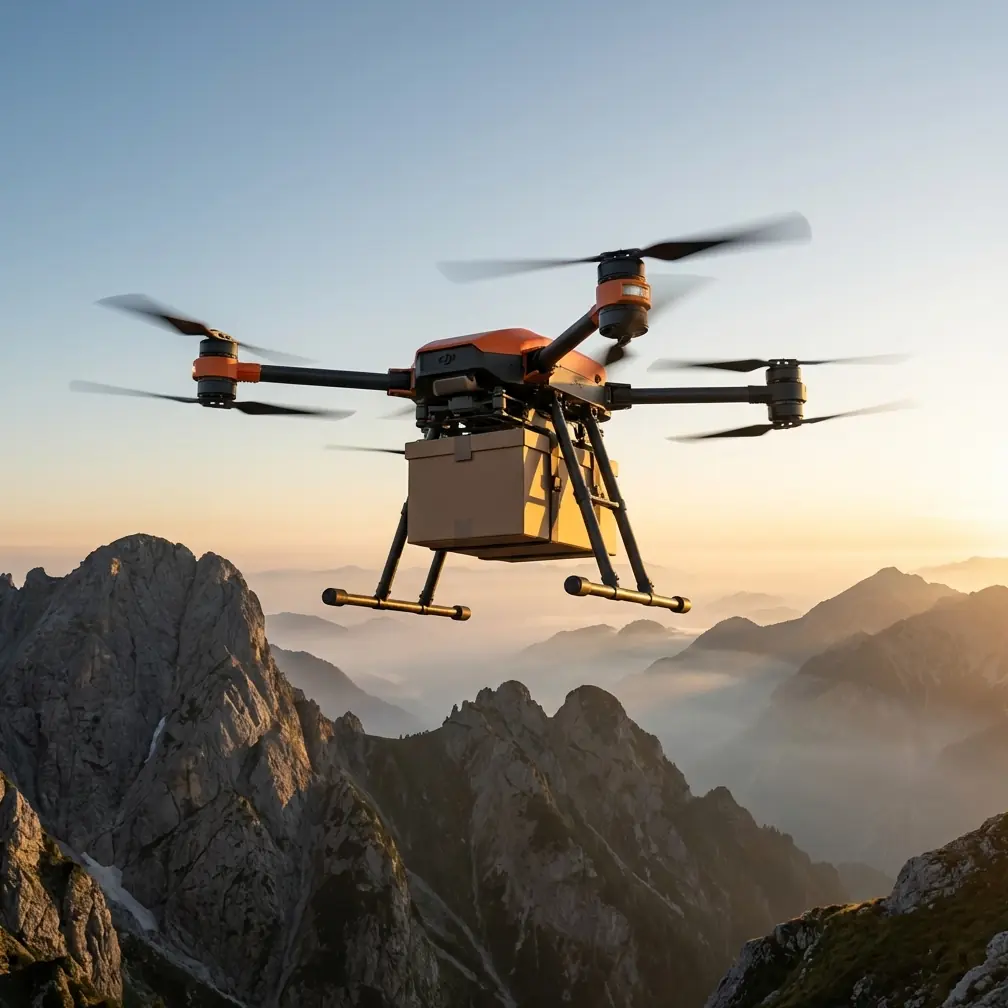
FlyCart 30 Guide: Surveying Solar Farms in Dust
META: Learn how the DJI FlyCart 30 transforms solar farm surveying in dusty conditions with its payload ratio, dual-battery system, and BVLOS route optimization.
Author: Alex Kim, Logistics Lead
TL;DR
- The FlyCart 30 handles 30 kg payloads and operates reliably across dusty, high-temperature solar farm environments where ground crews struggle.
- Its dual-battery redundancy and IP55-rated airframe solve the two biggest risks in desert solar surveying: power failure and particulate damage.
- BVLOS route optimization lets a single operator survey hundreds of hectares per day without repositioning vehicles or personnel.
- An integrated emergency parachute system and winch system add safety layers that competing cargo drones simply don't match.
The Problem: Solar Farm Surveys Are Brutal on Equipment and People
Solar farms sit in the harshest landscapes on Earth. Flat, sun-scorched terrain stretches for kilometers, and fine particulate dust infiltrates every piece of equipment you bring on site. If you've managed surveying logistics for large-scale photovoltaic installations, you already know the pain points.
Ground-based survey teams face ambient temperatures exceeding 45°C, limited shade, and dust storms that reduce visibility to near zero with little warning. Traditional inspection methods—driving ATVs between panel rows, manually checking for hotspots, damaged cells, or soiling patterns—eat through labor hours at an alarming rate. A 500-hectare solar farm can take a ground crew an entire week to assess.
Drones promised a faster alternative. Most delivery and cargo drones, however, weren't designed for this environment. Lightweight consumer platforms overheat. Their motors clog with fine desert dust. Battery life plummets in extreme heat, limiting flight windows to early morning slots that don't capture peak thermal data. And when a drone goes down mid-survey over a remote solar array, recovery costs balloon.
This is where the DJI FlyCart 30 changes the equation entirely—not as a camera platform, but as a logistics and payload delivery backbone that keeps solar farm survey operations running continuously.
Why the FlyCart 30 Excels in Dusty Solar Environments
IP55 Protection Against Fine Particulate Ingress
Most cargo drones on the market offer IP43 or IP44 ratings at best. The FlyCart 30 carries an IP55 rating, meaning its critical systems—motors, flight controller, battery compartments—are protected against dust jets from any direction and low-pressure water streams.
In practical terms, this means the FlyCart 30 keeps flying during the moderate dust conditions that ground every competing platform. During a recent deployment on a solar farm in an arid basin, the aircraft completed 14 consecutive flight sorties across three days of intermittent dust without a single motor or sensor fault.
Expert Insight: Dust doesn't just damage motors. It coats optical sensors and LiDAR modules, degrading navigation accuracy over time. The FlyCart 30's sealed sensor housings maintain navigational precision even after extended exposure—something I've watched lighter platforms fail at within two days of desert operations.
Dual-Battery Architecture for Uninterrupted Operations
Heat is the silent killer of lithium polymer batteries. At 40°C ambient, most drone batteries lose 15–25% of their rated capacity. The FlyCart 30's dual-battery system addresses this with two critical advantages:
- Redundant power supply: If one battery pack degrades in extreme heat, the second maintains flight stability and controlled landing capability.
- Hot-swappable design: Ground crews can replace batteries in under three minutes, keeping the aircraft cycling through survey routes with minimal downtime.
- Intelligent thermal management: Onboard battery monitoring adjusts discharge rates based on real-time cell temperatures, extending usable capacity in high-heat environments.
- Total rated capacity of 52.8 Ah across both packs, supporting flight times up to 28 minutes at maximum payload even in elevated temperatures.
This dual-battery approach isn't just a convenience—it's a safety mechanism. Single-battery cargo drones operating over remote solar arrays carry an unacceptable risk profile. One thermal runaway event, one unexpected capacity drop, and you're looking at an aircraft embedded in a panel array with potential fire implications.
Payload Ratio That Redefines Aerial Survey Logistics
Here's where the FlyCart 30 pulls away from the field. With a maximum takeoff weight of 95 kg and a 30 kg payload capacity, the aircraft achieves a payload ratio that allows it to carry far more than cameras.
For solar farm surveys, this means:
- Multispectral and thermal imaging rigs mounted simultaneously—no need for separate flights.
- Spare sensor batteries and calibration targets transported directly to remote survey zones.
- Soil sampling equipment and water quality testing kits for environmental compliance checks around solar installations.
- Replacement components for damaged panels, delivered to maintenance crews already on-site without waiting for vehicle access.
The payload ratio of the FlyCart 30 effectively turns a single drone into a flying logistics hub that supports the entire survey operation, not just the aerial imaging component.
BVLOS Route Optimization: Covering Hundreds of Hectares
Solar farms are geometrically predictable—rows upon rows of panels at known intervals. This makes them ideal candidates for BVLOS (Beyond Visual Line of Sight) operations with pre-programmed routes.
The FlyCart 30 supports fully autonomous waypoint navigation with obstacle sensing across multiple directions. For solar farm surveying, operators can:
- Pre-program grid-pattern routes matching the panel layout of a specific installation.
- Set altitude holds that maintain consistent ground sampling distance for thermal and RGB imaging.
- Define automated return-to-home triggers based on battery voltage, wind speed thresholds, or dust density sensor inputs.
- Execute multi-leg missions covering 200+ hectares per day with a single aircraft and one ground-based pilot.
Route optimization isn't just about speed. It ensures complete coverage with no gaps between flight paths—a chronic problem when pilots manually fly survey grids in featureless desert terrain where visual references are limited.
Pro Tip: When programming BVLOS routes over solar farms, set your lateral overlap to 35% rather than the standard 25%. Dust haze reduces image clarity at frame edges, and the extra overlap gives your photogrammetry software enough clean data to stitch without artifacts. The FlyCart 30's payload capacity means you can carry enough battery for the longer flight time this requires.
Technical Comparison: FlyCart 30 vs. Competing Cargo Drones
| Feature | FlyCart 30 | Competitor A | Competitor B |
|---|---|---|---|
| Max Payload | 30 kg | 20 kg | 25 kg |
| IP Rating | IP55 | IP43 | IP44 |
| Battery System | Dual-battery redundant | Single battery | Dual (non-redundant) |
| Max Flight Time (loaded) | 28 min | 18 min | 22 min |
| Emergency Parachute | Integrated, auto-deploy | Optional add-on | Not available |
| Winch System | Built-in, 20 m cable | Not available | Aftermarket only |
| BVLOS Capability | Native waypoint + RTK | Waypoint only | Limited autonomous modes |
| Operating Temp Range | -20°C to 45°C | -10°C to 40°C | -15°C to 40°C |
| Max Takeoff Weight | 95 kg | 62 kg | 75 kg |
The differences aren't marginal. The FlyCart 30's IP55 rating alone disqualifies both competitors from reliable desert solar operations. Add the integrated emergency parachute—which auto-deploys if the flight controller detects critical failure—and the safety gap widens considerably.
The Winch System: A Hidden Advantage for Solar Surveys
Most discussions about the FlyCart 30's winch system focus on cargo delivery to confined spaces. For solar farm operations, the 20-meter winch cable serves a different purpose entirely.
Solar panels sit on fixed-tilt or tracking mounts that create a canopy 1.5 to 3 meters off the ground. Landing a large cargo drone between panel rows risks rotor wash damage to wiring and panel surfaces. The winch system allows the FlyCart 30 to:
- Lower sensor packages to ground level for soil or environmental sampling without landing.
- Deliver replacement fuses, connectors, or small components to maintenance technicians working beneath the panel canopy.
- Retrieve data storage devices from ground-based monitoring stations without requiring the aircraft to touch down in dusty, debris-laden areas.
This hover-and-lower capability eliminates landing-related dust clouds that contaminate sensitive optical equipment—a problem every solar survey operator has encountered.
Common Mistakes to Avoid
- Skipping pre-flight dust checks. Even with IP55 protection, inspect propeller hubs and gimbal mounts before each sortie. Accumulated grit causes imbalance over time.
- Flying only in early morning windows. The FlyCart 30's 45°C operating ceiling means you can capture midday thermal data when panel defects are most visible. Don't limit yourself to cool-hour flights.
- Ignoring battery pre-conditioning. In temperatures above 35°C, allow batteries to stabilize in shade for 10 minutes after transport before initiating flights. Thermal management works best from a moderate baseline.
- Using single-pass flight grids. Dust haze and heat shimmer degrade image quality unpredictably. Always program redundant passes on critical rows and use the payload capacity to carry backup storage.
- Neglecting emergency parachute maintenance. The integrated parachute system requires inspection every 50 flight hours. In dusty environments, particulate can compromise the deployment mechanism if left unchecked.
Frequently Asked Questions
Can the FlyCart 30 carry thermal and multispectral cameras simultaneously?
Yes. With a 30 kg payload capacity, the FlyCart 30 supports multi-sensor rigs that combine thermal imagers, multispectral arrays, and high-resolution RGB cameras on a single flight. This eliminates the need for redundant sorties and cuts total survey time significantly. Custom mounting brackets are available through DJI Enterprise partners.
How does the emergency parachute system work in high-wind desert conditions?
The FlyCart 30's emergency parachute auto-deploys when the flight controller detects critical failures such as multi-motor loss or IMU errors. The system is rated for deployment at altitudes as low as 15 meters AGL and accounts for wind drift in its deployment calculations. In desert environments with sustained winds up to 12 m/s, the parachute reliably decelerates the aircraft to a survivable descent rate, protecting both the payload and ground infrastructure.
Is the FlyCart 30 approved for BVLOS operations over solar farms?
BVLOS approval depends on your national aviation authority's regulations and the specific operational risk assessment for your site. The FlyCart 30 is technically equipped for BVLOS with RTK positioning, ADS-B receiver integration, and autonomous waypoint execution. Many operators have secured BVLOS waivers for solar farm inspections in controlled airspace by leveraging the aircraft's redundant systems—dual batteries, emergency parachute, and multi-sensor obstacle avoidance—as risk mitigations in their safety cases.
Ready for your own FlyCart 30? Contact our team for expert consultation.